
 Worksheets
Critical Activities Identification Worksheet
Total questions: 20
Worksheet time: 10mins
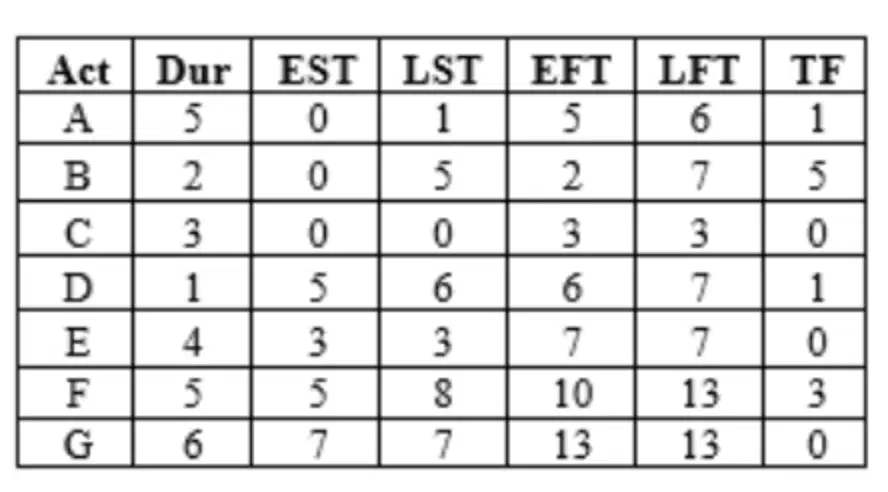
Based on the tabulated data below, identify the critical activities?
A, B and D.
B, D and F.
C, E and G.
D, E and G.
Which of the following is categorized as an Activity on Arrow (AOA)?
I. Critical Path Method (CPM).
II. Precedence Diagram Method (PDM).
III. Program Evaluation Review Technique (PERT).
I and II.
I and III.
II and III.
I, II and III.
Which of the following statements does NOT represent an advantage of the Precedence Diagram technique?
Precedence diagrams are simple to draw, and easier to read and understand than other systems.
Dummy activities are not compulsory, therefore reducing the number of activities in a network.
The technique is not readily adaptable to both manual and computer programming.
It is easier to expand and modify the network, thus overlapping activities are more easily represented.
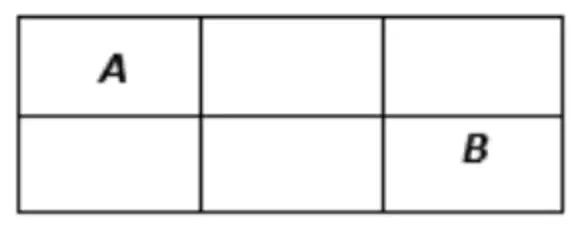
In the following Precedence Diagram Method (PDM), B is
Earliest start.
Earliest finish.
Latest start.
Latest finish.
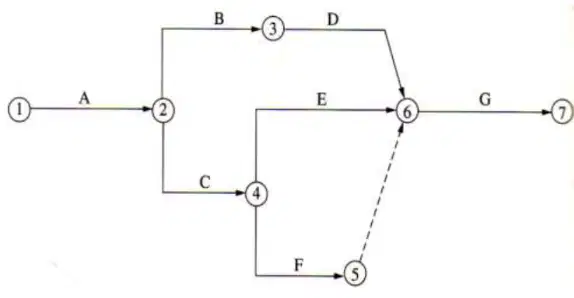
Which statement best describes the following Arrow Network Diagram?
B & C follow A; D & E follow C; F follow B & D; G follow E & F.
B & C follow A; D & E follow B; E follows C; F follows D & E.
B & C follow A; D follow B; E & F follow C; G follows D & E & F.
D. B & C follow A; D & E follow B; E follows C; F follows D & E, G follow F.
What is the fourth stage in Maslow's Hierarchy of Needs?
Physiological Needs.
Self-Actualization.
Esteem.
Love and Belonging.
Free Float (FF) primarily serves the following purposes:
Determine which activities can be delayed without impacting the total float of the preceding activity.
Identify the activities which can be delayed without affecting the total float of succeeding activities.
Establish priorities.
Identify activities that can be delayed without impacting the total float of either the preceding or succeeding activities.
What do "5M" or "4MT" refer to in site management?
Manpower, Machineries, Material, Money, Tool
Methodology, Manpower, Machineries, Time
Manpower, Machineries, Material, Money, Method/Time
Methodology, Manpower, Money, Timetable
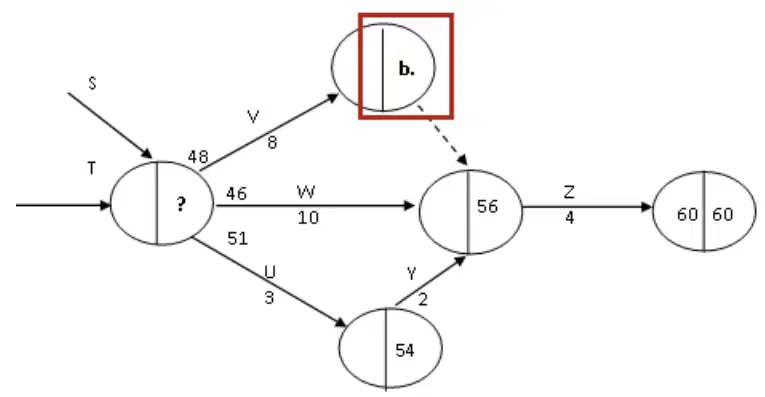
During the backward pass, which figure represents "b"?
48
46
51
56
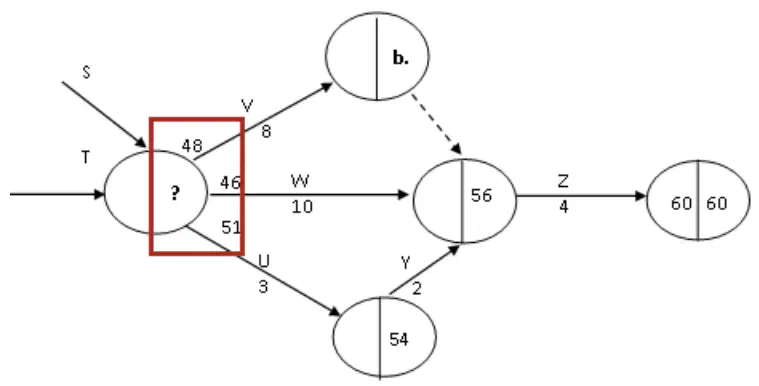
During the backward pass, which figure is used at the node?
48
46
51
56
When creating an arrow network diagram, you should consider three key questions for each operation:
I. What activity must occur immediately before this activity?
II. What activity can occur immediately after this activity?
III. What activities can happen at the same time as this activity?
IV. Which activities are classified as dummy activities?
I, II and IV.
I, II and III.
II, III and IV.
I, III and IV.
What are the main skills that a project manager needs to manage a construction project successfully?
I. Intelligence.
II. Leadership.
III. Problem-solving.
IV. Communication.
I and II
II and IV
II, III and IV
I, II and III
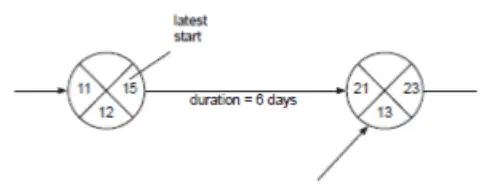
Calculate the Total Float (TF).
23 - 11 - 6 = 6 days total float.
21 - 11 - 6 = 4 days total float.
21 - 15 - 6 = 0 days total float.
23 - 15 - 6 = 2 days total float.
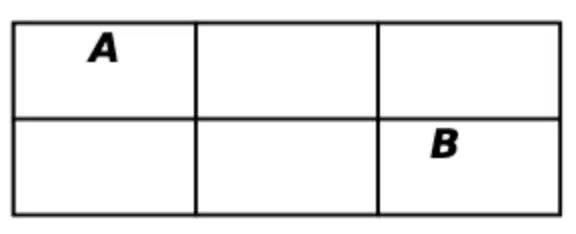
In the Precedence Diagram Method (PDM), what is A?
Earliest start.
Earliest finish.
Latest start.
Latest finish.
Total Float (TF) is defined as:
Latest Start Time (LST) – Earliest Start Time (EST) – Duration.
Latest Finish Time (LFT) – Earliest Start Time (EST) – Duration.
Earliest Start Time (EST) – Latest Finish Time (LFT) – Duration.
Earliest Finish Time (EFT) – Latest Start Time (LST) – Duration.
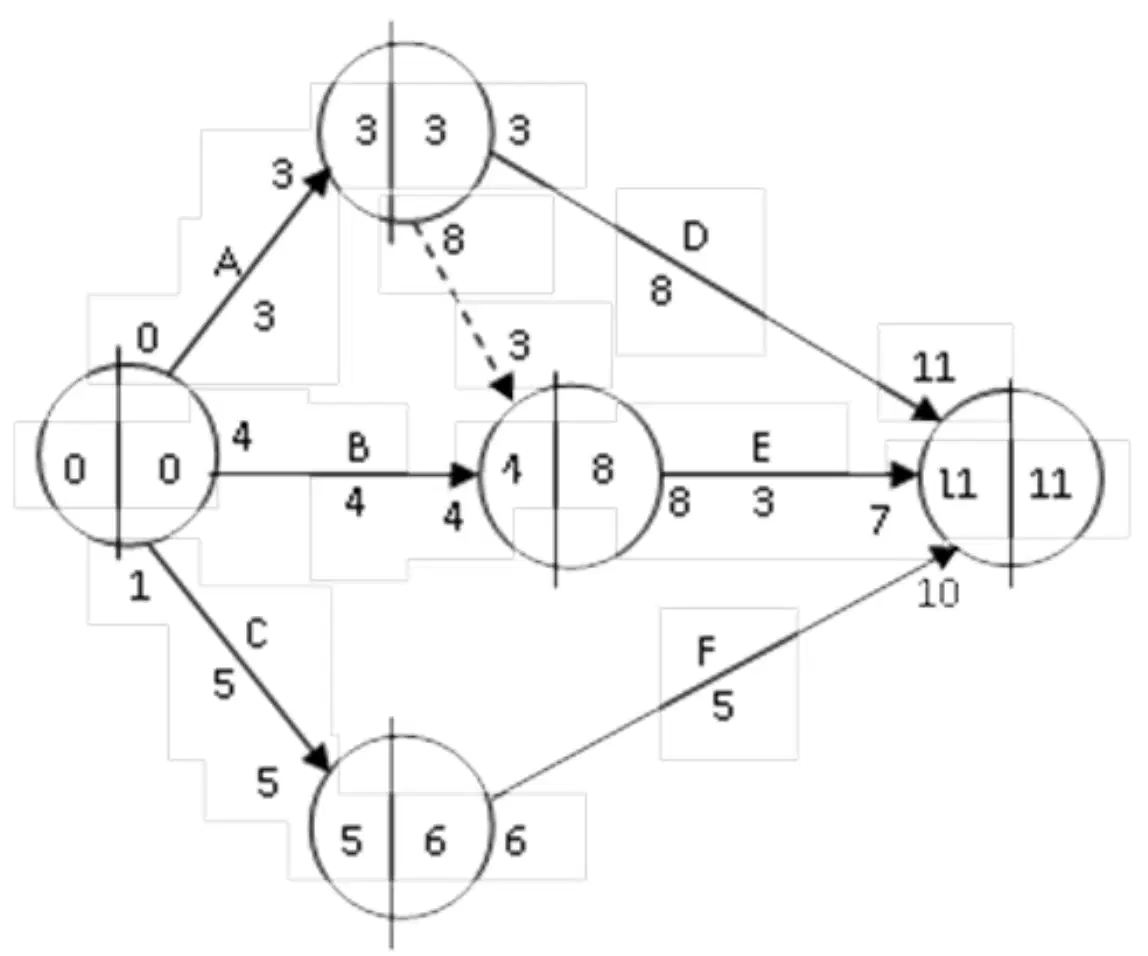
Based on the Arrow Network Diagram (ADM), which activities are part of the Critical Path?
A – D
A – dummy – E
B – E
C – F
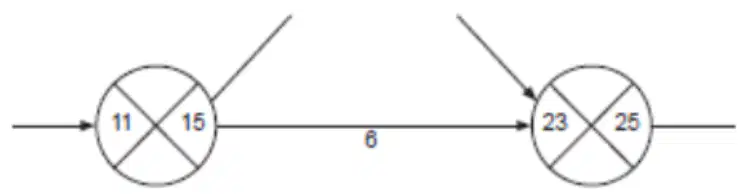
Calculate the Independent Float (IF).
25 - 11 - 6 = 8 days.
25 - 15 - 6 = 4 day.
23 - 11 - 6 = 6 days.
23 - 15 - 6 = 2 days.
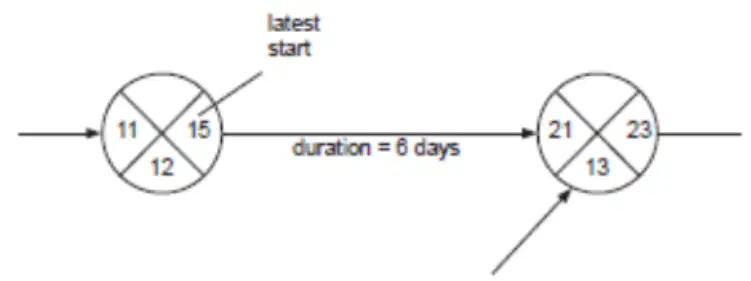
Calculate the Free Float (FF).
23 - 11 - 6 = 6 days free float.
21 - 11 - 6 = 4 days free float.
21 - 15 - 6 = 0 days free float.
23 - 15 - 6 = 2 days free float.
Which of the following options does NOT represent a dummy activity?
A dummy activity does not represent any actual operation and utilizes no resources; however, it can provide a distinct identity to another activity.
The symbol representing a dummy activity consists of a straight line with an arrowhead indicating the direction of travel.
Dummy activities serve two primary purposes: one as a distinguished restraint and the other as a logical restraint.
Distinguished restraints are utilized solely to uphold the unique numbering system and entail no consumption of time or resources.
Independent Float (IF) is equal to:
latest finish for succeeding activity – earliest start for succeeding activity – duration.
latest finish for preceding activity – earliest start for preceding activity – duration.
earliest start for preceding activity – latest finish for succeeding activity – duration.
earliest start for succeeding activity – latest finish for preceding activity – duration.
![Level 2 Cold Water Plumbing Exam [QUIZ 1]](https://cf.quizizz.com/image/image-loader.svg)
