
 Worksheets
OBGYN TEST #2
Total questions: 260
Worksheet time: 2hrs 10mins
A 68 year old patient presents to the sonography department complaining of vaginal bleeding. The most likely cause of her bleeding is:
Endometrial carcinoma
Endometrial polyps
Endometrial atrophy
Endometrial fibroids
ORAL CONTRACEPTIVE PILLS PREVENT CONCEPTION BY INHIBITING
MENSES
OVULATION
DYSFUNTIONAL UTERINE BLEEDING
NONE OF THE ABOVE
The hormone responsible for estrogen stimulation is:
Progesterone
LH
FSH
Androgen
Select the cervical anomaly that does not cause bleeding:
Leiomyoma
Nabothian cyst
Polyp
Hyperplasia
A 28-year-old woman presents with pelvic pain. Her last menstrual period was 2 weeks ago. Sonographically, the uterine body displays a highly echogenic structure in the endometrial cavity. This most likely represents:
Endometritis
Calcified submucosal fibroid
an intrauterine contraceptive device (IUD)
a calcified arcuate arteries
ALL ARE CLINICAL FINDINGS OF PCOS EXCEPT:
HIRSUTISM
HEAVY BLEEDING
INFERTILITY
OBESITY
A KRUKENBERG TUMOR SHOULD BE CONSIDERED IN WHICH OF THE FOLLOWING CIRCUMSTANCES?
WHEN THE PATIENT PRESENTS WITH A FAMILY HISTORY OF OVARIAN CA
IN POSTMENOPAUSAL PATIENT WITH VAGINAL BLEEDING & AN ENLARGED UT
WHEN BILATERAL SOLID MASSES ARE IDENTIFIED IN A PATIENT WITH HISTORY OF GASTRIC CA
ANY TIME FREE FLUID IS SEEN IN THE POSTERIOR CUL DE SAC
The inferior portion of the cervix closest to the vagina is the:
Cornu
Internal os
External os
Posterior fornix
ALL OF THE FOLLOWING ARE ASSOCIATED WITH FIBROID EXCEPT:
CYSTIC MASS WITH NO CALCIFICATION
INFERTILITY
INTENTATION INTO BLADDER
HEAVY BLEEDING
The sonographic evidence of a hyperemic fallopian tube is consistent with:
Hyprosalpinx
Hematosalpinx
Endometritis
Salpingitis
FEMALE CAUSES OF INFERTILITY INCLUDES ALL OF THE FOLLOWING EXCEPT:
POLYCYSTIC OVARIES
ENDOMETIOSIS
DIVERTOCULOSIS
CHRONIC PID
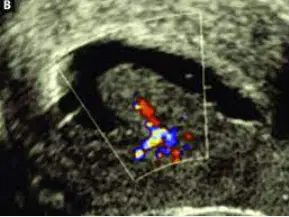
THIS IMAGE SHOWS:
FIBROID WITH SIS
POLYP WITH SIS
NORMAL ENDOMETRIAL CAVITY
NONE OF THE ABOVE
A PATIENT IS REFERRED FOR A PELVIC U/S FOR RLQ PAIN, WHICH OF THE FOLLOWING IS NOT A POSSIBLE CONSIDERATION?
APPENDICITIS
ECTOPIC PREGNANCY
ENDOMETRIOMA
ENDOMETRITIS
Which of the following is usually a predominantly cyctic mass?
Teratoma
Hydrosalpinx
Ovarian abscess
Mucinous cystadenoma
The paired muscles that are located lateral to the uterus & anterior to the iliac creat are the:
Iliopsoas muscles
Rectus abdominis muscles
Obturator interni muscles
Periformis muscles
Complex appearing fluid within the fallopian tubes seen with PID is most likely:
Pyometra
Pyosalpinx
Hydrosalpinx
Hematpmetra
Which of the following is an estrogen-producing ovarian tumor?
Cystic teratoma
Fibroma
Thecoma
Endometrioma
All of the following are considered risk factors for PID except:
IUCD
Multiple sexual partners
Post childbirth
Uterine leiomyoma
Increase levels of Hcg may cause:
Hemorrhagic cyst to develop
Teratoma
Theca lutein cysts
Polycystic ovaries
Hydrometra would appear sonographically as:
A sonolucent tubular structure in the adnexa
An echogenic thickening of the emdometrium
A sonolucent fluid collection in the uterine canal
A sonolucent fluid collection in uterus & vaginal
PID can lead to all of the following except:
Infertility
Polycystic ovarian disease
Ectopic pregnancy
Adhesion formation in fallopian tubes
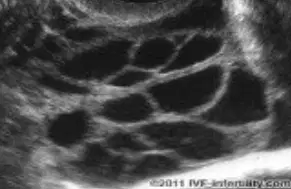
THIS IMAGE OF A PATIENT WHO IS TAKING INFERTILITY DRUGS SHOWS:
POLYCYSTIC OVARY
HYPERSTIMULATED OVARY
NORMAL OVARY
ENDOMETIROSIS
Leiomyosarcoma of the uterus denotes:
The benign invasion of endometrial
The ectopic location of endometrial tissuein adnexa
The malignant counterpart of a fibroid
An complex cyst
The right ovarian artery branches off the:
Internal Iliac artery
Uterine artery
Aorta
Right renal artery
A 34 year old patient presents to the ultrasound department for endovaginal ultrasound complaining of intermenstrual bleeding. The ultrasound findings include a focal irregularity & enlargement of one area of the endometrium. The most likely diagnosis is:
Intramural leiomyoma
Endometrial polyps
Endometrial carcinoma
Endometrial atrophy
ALL ARE U/S APPEARANCE OF POLYP EXCEPT:
HAS A FEEDING VESSEL
PUNDUNCULATED
INTRAUTERINE
INTRAMURAL
ENDOCRINE DISORDER WHICH INDUCES THE PITUITARY TO SECRETE GONADOTROPINS EARLIER THAN USUAL, RESULT IN WHICH OF THE FOLLOWING?
DERMOID CYST
HEMATOMETRACOLPOS
ENDOMETRIOSIS
PRECOCIOUS PUBERTY
The most common initial presentation of PID is:
Endometritis
TOA
Vaginitis
Pyosalpinx
Which of the following is strongest risk factor for ovarian cancer:
Premenopausal female
Multiparity
Family history of lung cancer
Family history of ovarian cancer
An 18-yr-old female presents for pelvic U/S with the history of 2 vaginas. The U/S images demonstrate 2 uterine horns & 2 cervices. This would be most consistent with which of the following?
Uterus didelphys
Uterus aplasia
Bicornuate uterus
Septate uterus
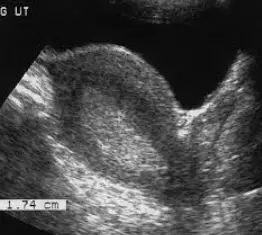
THIS IMAGE SHOWS WHICH DAY OF MENSTRAL CYCLE?
DAY 1-5
DAY 6-13
DAY 14
DAY 15-28
ALL ARE PHASES OF OVARIAN CYCLE EXCEPT:
FOLLICULAR
SECRETORY
OVULATORY
LUTEAL
What statement about Meige’s syndrome is false?
It is associated with ovarian mass.
It includes massive ascites.
It is associated with theca lutein cysts.
It includes pleural effusions.
WHICH OF THE FOLLOWING IS NOT A CLINICAL INDICATION FOR DOING U/S ON THE WOMEN WITH IUD?
LOST IUD
TWIN PREGNANCY
ABNORMAL BLEEDING
WRONG LOCATION
Endometrial hyperplasia may be caused by all of the following except:
HRT
Estrogen replacment therapy
Endometrial atrophy
Tamoxifen
A 34-yr-old female present with irregular, heavy periods. The sonographer notes a diffusely enlarges uterus containing multiple hypoechoic masses. This would be most consistent with:
PID
Leiomyomas
Uterine cancer
Endometriosis
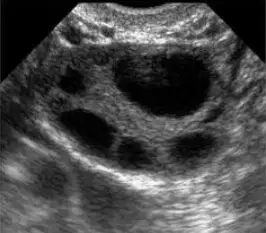
THIS IMAGE SHOWS:
NORMAL OVARY
POLYCYSTIC OVARY
HYPERSTIMULATED OVARIAN SYNDROME
NONE OF THE A
All of the following statements concerning PID are true except:
PID is typically a unilateral
PID can be caused by douching
PID can lead to TOA
Dyspareunia is a clinical finding in acute PID
WITH INCREASING AGE, THE OVARIES BECOME UNRESPONSIVE TO GONADOTROPINS & STOP PRODUCTION OF:
Estrogen
Dominant follicle
Progesterone
All of the above
The innominate bones of the pelvis consist of the:
Sacrum, ischium, & Ilium bones
Sacrum, coccyx, & pubic bones
Ischium, ilium, & pubic bones
Ilium, sacrum, & coccyx bones
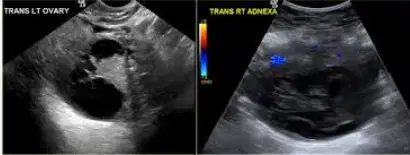
IMAGE A OF THE OVARY SHOWS
Simple ovarian cyst
solid ovarian mass
complex ovarian mass
None of the above
ALL OF THE FOLLOWING DESCRIBE LOCATION OF FIBROID EXCEPT:
Intramural
Intraperitoneal
subserosal
Submucosal
The ultrasound appearance of the myometrium may be described as:
Heterogenous
Homogeneous with smooth borders
Heterogeneous with smooth borders
Homogenous with irregular borders
A 23-yr-old female presents for a pelvic U/S with the history of right adnexal mass palpated on clinical exam. The sonographer identifies a mass in right adnexa that is complex in appearance; including echogenic foci, that casts a strong acoustic shadow. This would be most consistent with which of the following pathologies?
Corpus luteum cyst
Endometrioma
Mucinous cystadenoma
Teratoma
All are U/S appearance of dermoid tumor except:
Dermoid plug
Low amplitude echoes with enhancement
Fat-fluid level
High amplitude echoes with shadowing
Complications in delivery may occur with pregnancy if a fibroid is located:
Near the fundus
Pedunculated off the fundus
Near the cervix
Near the ovary
Which of the following would be described as functional cysts that are found in the presence of elevated levels of human chorionic gonadotropin?
Endometrial cyst
Corpus luteum cyst
Chocolate cyst
Theca lutein cysts
WHAT STRUCTURE OF THE OVARY PRODUCES PROGESTERONE?
Graafian follicle
Medulla
Functional cyst
Corpus luteum
Sonographic finding of Ovarian hyperstimulated syndrome includes all of the following except
Cystic enlargement of the ovaries
Ascites
Pleural effusions
Oliguria
ONE OF THE FOLLOWING IS CHARACTERIZED BY CYST DEVELOPED FROM ADHISION PERITONEAL SURFACE CAUSED BY PREVIOUS SURGERY OR INFECTION. THIS PATHOLOGY CAN CAUSE CHRONIC PELVIC PAIN:
Cystic teratoma
Diverticulosis
Appendicitis
Peritoneal inclusion cyst
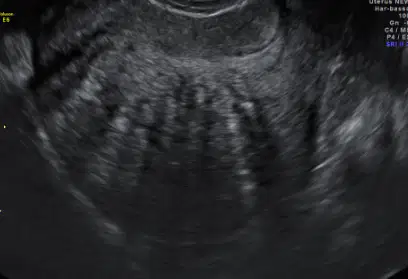
The image below is:
Endometrioma
complex cyst
adenomyosis
Solid mass
The uterine vessels are found in the:
Round ligament
Cardinal ligament
Broad ligament
Uterosacral ligament
Ultrasound finding of an endometrium polyp include:
Infertility
Intermenstrual bleeding
Menometrorrhagia
Diffuse thickening of endometrium
paraovarian cyst is a:
Large cystic mass with prominent septations
Benign teratoma in which ectodermal elements are predominant
The largest of the functional cysts, associated with trophoblastic disease
Cyst that arises from the broad ligament
Subserosal leiomyoma is a type of leiomyoma, which deformed the myometrium
True
False
Fluid noted anterior to the uterus would most likely be located within the:
Pouch of Douglas
Vesicouterine pouch
Space of retzuis
Rectouterine pouch
All of the following are clinical findings with endometrial hyperplasia except:
Obesity
Hursutism
Abnormal uterine bleeding
Thickened Endometrium
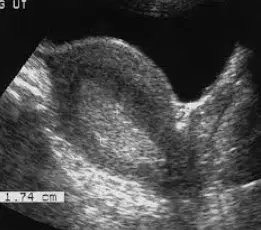
THIS PHASE OF MENSTRAL CYCLE HAS A EFFECT BY
Estrogen
FSH
Progesterone
LH
All of the following are ultrasound findings consistent with adenomyosis except:
Diffuse, enlarged uterus
Myometrium cysts
Complex adnexal mass
Hypoechoic areas adjacent to the endometrium
Which vessels supply blood to the deeper layers of the myometrium?
Radial arteries
Spiral arteries
Straight arteries
Arcuate arteries
The periovulatory phase may also be referred as the:
Early secretory phase
Late proliferative phase
Late secretory phase
Early proliferative phase
The best description for endometrial polyps is:
Malignant nodules that causes bleeding
Benign lesions associated with cervical stenosis
malignant nodules that are associated with endometrial atrophy
Benign nodules of hyperplastic endometrial tissue
The most common female genital tract malignancy is:
Ovarian carcinoma
Cervical Carcinoma
Endometrial carcinoma
Pelvic inflammatory disease
Peritoneal spaces located posterior to the broad ligament are referred to as the:
Rectouterine spaces
Anterior cul-de-sac
Adnexa
Posterior cul-de-sac
What congenital malformation of the uterus is common and has a clear association with an increased risk for spontaneous abortion?
Anteflexed uterus
Retroverted uterus
Dextroverted uterus
Septate uterus
ABNORMAL VAGINAL BLEEDING MAY BE ASSOCIATED WITH ALL OF THE FOLLOWING EXCEPT:
Endometritis
Multiple myomas
endometrial polyps
ALL OF THE ABOVE
A mucinous cystadenoma is all except which of the following?
Large cystic mass with multiseptated cystic spaces
Variable fluid echogenicity
Cystic tumor
Thick with irregular walls and septations
Although clinical signs for endometrial cancer & leiomyosarcomas are nonspecific, most present it as:
Significant amount of free fluid
Uterine bleeding & pain
Irregular bowel habits
Hydronephrosis
Degenerative changes occur when myomas:
Become larger than 3 cm
Become painful
Outgrow their blood supply
Fibrotic menorrhagia occurs
IF THE ENDOMETRIUM MEASURE MORE THAN 14 mm IN THE POSTMENOPAUSAL FEMALE WITHOUT HRT, THE SONOGRAPHER SHOULD THINK OF:
ADENOMYOSIS
ENDOMETRITIS
ENDOMETRIOMA
ENDOMETRIAL HYPERPLASIA
Precocious puberty may be associated with all of the following except:
Ovarian tumor
Adrenal tumor
Liver tumor
Brain tumor
All are ultrasound appearance of peritoneal inclusion cyst except:
Multiloculated
Pressure on bladder
Presence of an intact ovary
Present as adnexal mass
Which is NOT a bone of the pelvic girdle?
Pelvic
Inomiante
Coccyx
Sacrum
A 15-yr-old female presents for a pelvis U/S examination because of intense pelvic pain. The sonographer should focus on which of the following?
The endometrium for sign of endometrial cancer
The ovaries for evidence of a dermoid
The uterus for evidence of a fibroid
The ovaries for sign of torsion
A dermoid is:
A large cystic mass with prominent septation
A benign teratoma in which ectodermal elements are present
The most common large cystic mass, which may contain thin-walled septations
The largest of the functional cysts, associated with trophoblastic disease
THE RECTUS ABDOMINIS MUSCLE FORMS MUCH OF THE
Pelvic floor
Pelvic side wall
Anterior abdominal wall
Rectal margin
OVARIAN MALIGNANCY CAN SPREAD VIA:
DIRECT INVASION OF ADJACENT STRUCTURE
THE LYMPHATIC SYSTEM
PERITONEAL FLUID TRANSPORT TO OTHER REGIONS OF THE ABDOMINO-PELVIC CAVITY
All of the above
All of the following adnexal masses may appear sonographically similar to a uterine leiomyoma except:
Thecoma
Paraovarian cyst
Fibroma
Granulosa cell tumor
Which of the following is typically not a clinical complaint of women who are suffering from adenomyosis?
Amenorrhea
Dysmenorrhea
Dyspareunia
Menometrorrhagia
The most common cause of tubal obstruction is:
Adenomyosis
Endometrioma
Hydrometrocolpos
Pelvic inflammatory disease
Both the straight & spiral arteries are branches of the:
Common iliac artery
Radial artery
Arcuate artery
External iliac artery
Which of the following is said to be common cause of dysfunctional uterine bleeding?
Hursutism
Polycystic ovary syndrome
Fibroids
Pelvic inflammatory disease
All are the muscles of true pelvis except:
Obturator internus Muscle
Iliopsoas muscle
Piriformis Muscle
Levator ani muscle
Which condition will not cause the endometrium appear thickened?
Endometrial hyperplasia
Menstrul cycle follicular phase
Cervical cancer
Myomas
The temporary endocrine gland that results from rupture of the graafian follicle is the:
Trophoblastic cells
Corpus luteum
Cumulus oophorus
Corpus albicans
UNOPPOSED ESTROGEN ADMINSTRATION MAY CAUSE ALL OF THE FOLLOWING EXCEPT:
INCREASE IN ENDOMETRIAL THICKNESS
ENDOMETRIAL HYPERPLASIA
POSTMENOPAUSAL BLEEDING
SEROUS CYSADENOCARCINOMA
THE CENTRAL ECHOGENIC LINE OF THE ENDOMETRIAL CAVITY REPRESENTS:
HYDROMETROMA
POLYP FORMATION
APPOSITION OF THE 2 SIDES OF ENDOMETRIAL TISSUE
APPOSITION OF THE 2 SIDES OF MYOMETRIAL TISSUE
THE BROAD LIGAMENT ENCLOSES ALL OF THE FOLLOWING EXCEPT:
BLADDER
OVARIES
UTERUS
UTERINE TUBES
The rigid region of the uterus located between the vagina & the isthmus is the:
CERVIX
CORNU
CORPUS
FUNDUS
All of the following are ultrasound findings of the TOA except:
The presence of 10 or more small cysts along the periphery of the ovaries
Fluid in cul de-sac
Thickened, irregular endometrium
Fusion of the pelvic organs as a matted mass
Cervical stenosis is an acquired condition with obstruction of the cervical canal:
True
False
A patient presents to the ultrasound department with fever, chills, & vaginal discharge, sonographically, what finding would you most likely not encounter?
Fluid in Cul-de-sac
Uterine adhesions
Dilated uterine tubes
Ill-defined uterine border
an endometrioma most likely appears as a:
Simple, anechoic mass with through transmission
Complex mass with internal shadowing components
Mostly cystic mass with low-level echoes
Solid, Hyperechoic shadowing mass
Theca lutein cysts are:
The largest of the functional cysts, associated with trophoblastic disease
Large cystic mass with prominent septation
A benign teratoma in which ectodermal elements are present
A cyst that arises from the broad ligament
The uterine arteries supply blood to all of the following except:
Rectum
Fallopian tube
Ovaries
Uterus
U/S DETECTION OF AIR BUBBLE IN THE UTERINE CAVITY MAY BE DUE TO ALL OF THE FOLLOWING EXCEPT:
RECENT INSTRUMENTATION
ENDOMETRIAL HYPERPLASIA
INFECTION
ALL OF THE ABOVE
Which of the following would be most indicative of a leiomyosarcoma?
Rapid growth
Vaginal bleeding
Dysuria
Large hypoechoic mass
The malignant ovarian mass that is associated with pseudomyxoma peritoneal is the:
Dysgerminoma
Sertoli- Leydig cell tumor
Serous cystadenocarcinoma
Mucinous cystadenocarcinoma
The vagina is located _________ to the uterus:
Anterior
Posterior
Inferior
Medial
THE HYPER ECHOIC, LINEAR STRUCTURE, IN THE ENDOMETRIAL CAVITY WHICH CAUSES POSTERIOR SHADOW IS:
Menstrual Phase
Adhesions
Intrauterine polyp
Contraceptive device
When measuring the lateral ventricular system of the fetal head, the most accurate level to use is the:
Frontal horn
Lateral ventricle parallel to the falx
Lateral ventricle atrium
Cisterna magna
Myelomeningocele is the herniation of:
Meninges and nerve tissue
nerve tissue only
meninges only
none of the above
The fetal position that offers a true sagittal view of the spine is:
Transverse
Oblique
Cephalic
Prone
Midline falx is important landmark to visualize because its presence implies that separation of __________ has occurred.
cisterna magna
cerebellum
Cerebrum
lateral ventricles
All are true for the ultrasound of the fetal heart except for:
Left ventricle is closest to the chest wall
Lies transversely in thoracic cavity
Left atrium is closest to the spine
The apex of the heart is directed toward the left anterior chest
Which structure is obliterated in spinal bifida?
Lateral ventricle
Cisterna magna
Sulci and gyri
Partial cephalocele
The placenta is responsible for all the following except?
Exchange of nutrients
Hematopoiesis
Oxygen exchange
Barrier to some medications
Polyhydramnios happens when there is obstruction to which fetal system in utero?
Digestive system
Urinary system
Nervous system
Respiratory system
Oligohydramnios happens when there is obstruction to which fetal system in utero?
Digestive system
Urinary system
Respiratory system
Nervous system
What covers the umbilical cord?
allantois
Whartons Jelly
Yolk sac
Amniotic fluid
Measurement of the cerebellum is best made at the level of the:
Thalamus, hippocampus, midbrain
Vermis, midbrain, cisterna magna
sphenoid, temporal bone, pituitary stalk
foramen magnum, pons, fourth ventricle
A percentage of the fetal blood from the IVC is shunted from
Left to right atrium
Right to left atrium
Ductus venosus to left atrium
Right atrium to ductus arteriosus
An embryo presents with an outpouching from the anterior abdominal wall into the base of the umbilical cord and is covered by a membrane. This is MOST likely to be?
Gastroschisis
Umbilical hernia
Omphalocele
Normal herniation of the fetal gut
The Spalding sign is most often associated with
Fetal hydrops
IUGR
Fetal demise
Pleural effusion
The "lemon" and "banana" sign are usually associated with:
Renal agenesis
Dandy-Walker malformation
Arnold-Chiari malformation
Duodenal atresia
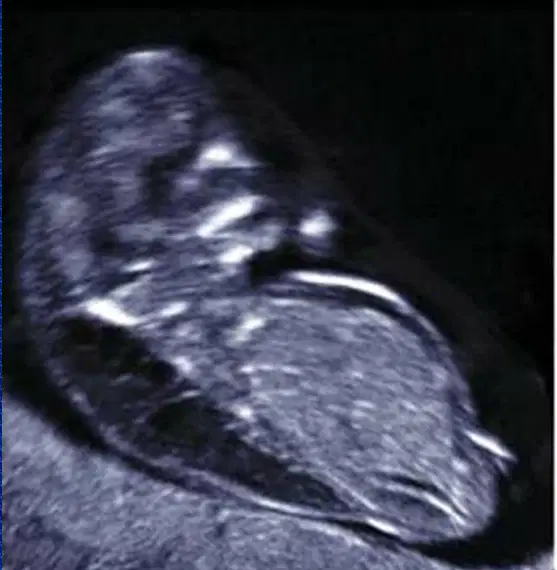
A complex mass appearing on either side of the fetal neck is mostly likely a:
Meningomyelocele
Cystic hygroma
Cephalocele
Choroid plexus cyst
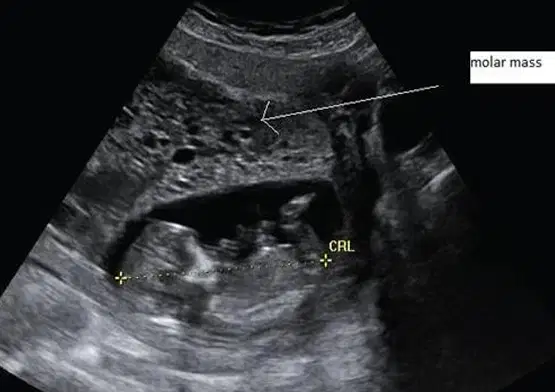
Which of the following is not a sonographic finding of a hydatidiform mole?
Theca lutein cyst
Grapelike clusters throughout the uterus
Homogenous uterine texture
Low-impedance, high flow doppler pattern
The most common cause of painless bleeding in the 2nd and 3rd trimester in pregnancy is:
Trauma
ectopic pregnancy
Placental abruption
Placenta previa
Which of the following is a double fold of dura mater that separates the cerebral hemispheres and is a BPD landmark?
Thalamus
Falx cerebri
Cisterna magnum
Cavum septum pellucidi
What references or landmarks should be used to document the biparietal diameter?
Thalamus, cavum septum pellucid, falx cerebri, 3rd ventricle
Thalamus only
Cerebellum, cisterna magnum, nuchal fold
Falx, cisterna magnum, 4th ventricle
Hydrops fetalis is characterized by?
Cystic masses within the lungs
Edema, ascites, pleural or pericardial effusion
dilated ventricles
Pericardial effusion only
If an anterior abdominal wall mass is seen just to the right of the umbilical cord, the most likely diagnosis is:
Gastroschisis
Omphalocele
Hernia
Limp-body wall defect
Trophoblastic disease which extends outside the uterus and spreads to the lungs or brain is called:
Choriocarcinoma
Hydatidiform mole
Endometrioma
Lung gestational molar
BPD diameter should be taken from:
Outer to outer
Outer to inner
Inner to inner
Inner to outer
A 22-year-old gravid patient presents with oligohydramnios. Which of the following would be least likely?
Anencephaly
Post term pregnancy
renal agenesis
Premature rupture of the membranes
Acrania is partial or complete absence of the cranium, the fetus has an abnormally shaped head referred to as _____.
Blueberry head
Mickey mouse head
Lemon Head
Banana head
Which of the following is a dilation of the ventricular system without enlargement of the cranium and shows the choroid plexus "dangling"
Ventriculomegaly aka Hydrocephaly
Cephalocele
Holoprosencephaly
Dandy-walker malformation
Failure of the prosencephalon to divide into 2 cerebral hemispheres & ventricles is known as?
Holoprosencephaly
dandy walker malformation
ventriculomegaly
cephalocele
Cystic dilation of the 4th ventricle with agenesis of the cerebellum is known as?
Acrania
cystic hygroma
Dandy walker malformation
Spina bifida
Brain necrosis from occlusion of the internal carotid artery is known as?
Cephalocele
Hydranencephaly
Acrania
Spina bifida
A midline cranial defect with herniation of the brain and meninges primarily in the occipital area is known as?
Spina bifida
Cephalocele
Ventriculomegaly
Anencephaly
A pregnancy that has both an intrauterine (normal) and extrauterine (ectopic) pregnancy is known as?
none of the above
Cervical pregnancy
Heterotopic pregnancy
Interstitial pregnancy
Which of the following is the most life threatening of all ectopic pregnancy's?
Ampulla pregnancy
Cornual or interstitial pregnancy
Abdominal Pregnancy
Ovarian Pregnancy
A gestational sac without an embryo is?
Placental hematoma
anembryonic pregnancy or blighted ovum
complete abortion
subchorionic hemorrhage
The most common occurrence of bleeding in the first trimester is from?
Blighted Ovum
Fetal Demise
Subchorionic Hemorrhage
Placental hematomas
What is the most accurate ultrasound measurement for determining gestational age in the first trimester?
BPD
FL (femur length)
Crown rump length
Head circumference
At what gestational age can the gestational sac first be visualized on transvaginal ultrasound?
3-4 weeks
4-5 weeks
5-6 weeks
6-7 weeks
The side-by-side appearance of the amnion and the yolk sac is described as the:
"double bleb sign"
"Mickey Mouse sign"
"Lemon Sign"
"double decidual sign"
Two echogenic rings around the sac are called the ____ the outer ring is the decidua parietalis, the inner ring decidua capsularis. The presence of this sign is highly indicative of early IUP
Banana sign
double decidual sign
double bleb sign
Mickey mouse sign
Which structure appears at 5-6 weeks in early pregnancy and is the 1st structure to function?
brain
stomach
Heart
liver
What is the fetal portion of the placenta called and what is the maternal portion of the placenta?
Decuidua basalis and yolk sac
Chorion plate and decidua basalis
none of the above
Embryonic disk and chorion villi
What percentage does the heart occupy in the fetal thoracic cavity?
1/4
1/5
1/3
2/3
Most commonly PID is caused by:
Perihepatic inflammation
Peritonitis
Sexually transmitted diseases
ruptured appendix
When periovarian adhesions that distort anatomy form, the ovary cannot be separated from the inflamed dilated tube it is called the _____.
Salpingitis
Tubo-ovarian complex
Ademyosis
pyosalpinx
The most common pelvis mass associated with pregnancy is the:
Uterine leiomyoma
Dermoid cyst
Theca luteum cyst
Corpus luteum cyst
Dangling choroid sign is associated with:
Ventriculomegaly
Hydranencephaly
Lissencephaly
Meckel gruber syndrome
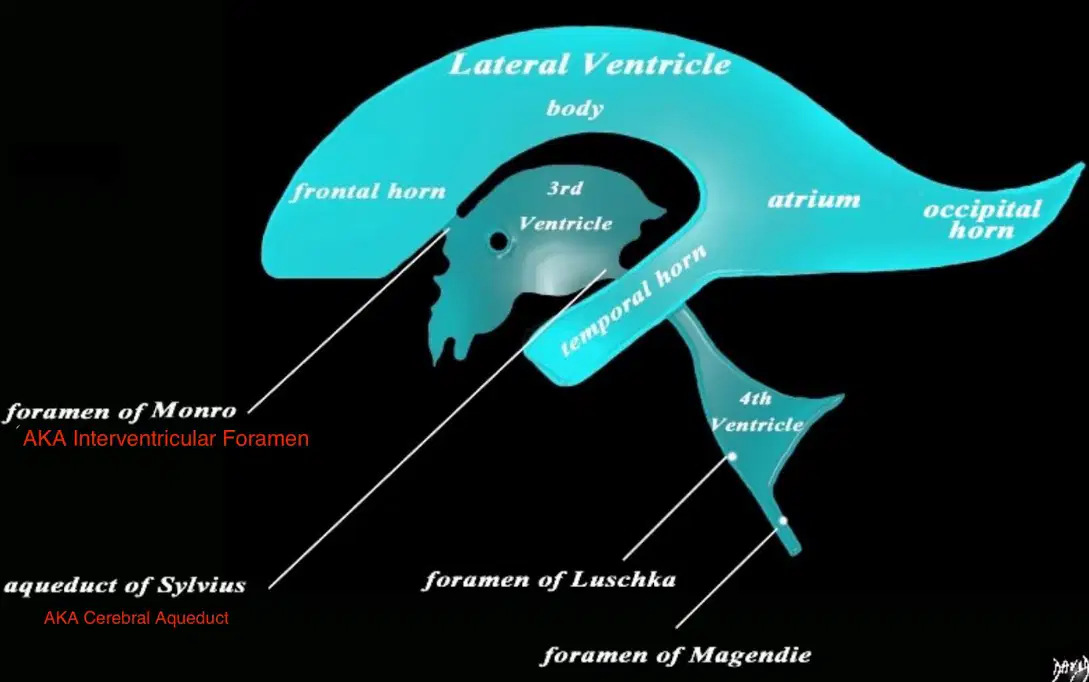
The most common cause of hydrocephalus in utero is:
Cerebral Hemorrhage
Holoprosencephaly
Brain tumors
Aqueductal stenosis
The band of tissue that allows communication between the right and left cerebral hemispheres is the:
Falx cerebri
Corpus callosum
Cerebellar vermis
CSP
Causes of female infertility include all of the following except:
Previous IUD use
PCOS
Asherman syndrome (Synechiae)
Endometriosis
All of the following are possible locations for fibroids except:
Intraligamentus
Subserosal
submucosal
tubal
What vessels are often seen around the periphery of the uterus, and what vessels arise from branches of these vessels?
Arcuate & radial vessels
Myometrial & endometrial vessels
Internal iliac & cortical vessels
Uterine & ovarian vessel
The ligaments that attach the ovaries to the lateral pelvic sidewall are the:
Suspensory ligaments
Broad ligament
Round Ligament
Lateral ligament
What effects do high levels of FSH have?
Growth & maturation of ovarian follicles
Growth & maturation of the corpus luteum
Growth & maturation of endometrium
Stimulates ovulation
WHICH OF THE FOLLOWING MUSCLES IS SEEN SONOGRAPHICALLY ANTERIOR &LATERAL TO THE URINARY BLADDER?
PSOAS
PIRIFORMIS
LEVATOR ANI
OBTURATOR INTERNUS
Which of the following about the ovaries is false?
The ovaries are attached at the anterior aspect of the broad ligaments
The ovaries are almond shaped
The ovaries lie in the ovarian fossa
The ovaries receive blood from the ovarian and uterine arteries
WHAT HORMONE IS RELEASED BY THE PITUITARY GLAND?
FSH
GnRH
ESTROGENN
PROGESTERONE
A 24 yr old female presents for a sonographic exam of the pelvis. The sonographer notices that the endometrium is isoechoic to the myometrium & outlined by a hyperechoic line, with another hyperechoic line in the center. One would assume that the patient is in which stage of her menstrual cycle?
Late proliferative
Early proliferative
Secretory phase
Luteal phase
Sonographic evidence of a hypoechoic, hypervascular, irregular-shaped structure within the ovary most likely represents which of the following?
Secondary ovarian follicle
Corpus luteum
Primordial follicle
Graafian follicle
The pituitary gland releases what two hormones during the
ovarian endocrine cycle?
LH & PROGESTERONE
GnRH & LH
ESTROGEN & PROGESTERON
FSH & LH
The rectouterine space is also known as which one of the following?
Anterior cul-de-sac
Space of Retzius
Posterior cul-de-sac
Pouch of dodd
All are regions of the broad ligament except:
Mesovarium
Mesosalpinx
Mesometrium
Mesomyometrium
Corpus luteum immediately begins secreting:
LH
FSH
Estrogen
Progesterone
The average menstrual cycle lasts approximately ___ days, beginning with the first day of menses.
12 days
31 days
28 days
2 days
FUNDUS IS THE PORTION OF THE URETUS SUPERIOR TO THE:
Cervix
Round ligament
Cornua
Uterine artery
What muscle group may be seen in the false pelvis along the lateral side walls of the pelvis?
Obturator Internus
Iliopsoas
Rectus sheath
Psoas major
The anterior cul de sac, or ___________________pouch, is located anterior to the fundus of the uterus between the ______________ and the _____________.
Vesicouterine pouch, bladder & pubic symphysis
Vesicouterine pouch, rectum & pubic symphysis
Vesicouterine, bladder & uterrus
Rectouterine, bladder & pubic symphysis
Secretory phase of endometrial cycle corresponds to _____________ of ovarian cycle.
Luteal phase
Follicular phase
Ovulatory phase
none of the above
Flexion refers to the axis of the uterine body relative to the:
fundus
cervix
vagina
cornua
This hormone can benefit women by reducing the risk of endometrial hyperplasia/cancer however it can lead to breast cancer
Progesterone
FSH
LH
Estrogen
Bicornuate uterus is a congenital malformation that results from incomplete fusion of the:
Mullerian ducts
wolffian ducts
Graafain ducts
Bartholin ducts
Which of the following ovarian masses does not secrete hormones?
Infected cyst
corpus luteum
Theca luteum cyst
follicular cyst
Which type of leiomyoma tends to be the most symptomatic?
Submucosal
Intramural
Interstitial
Subserosal
Which of the following vessels is also known as the hypogastric artery?
Ovarian artery
Internal iliac artery
Internal iliac vein
External artery
ADENOMYOSIS IS ECTOPIC ENDOMETRIUM:
MUSCULAR LAYER
OVARIES
BROAD LIGAMENT
UTERINE TUBES
which of the following will appear as a cyst in the cervical region of the uterus?
Nabothian cyst
Gartner duct cyst
Cervical stenosis
Myometrium cyst
The following are all benefits of estrogen replacement therapy EXCEPT
Alleviates menopausal symptoms
Reduces risk of osteoporosis
Reduces risk of heart attacks
Decrease the risk of endometrial hyperplasia/cancer
Which of the following will appear as a cyst in the vaginal region?
Cervical cancer
Cervical cancer
Gartner duct cyst
Nabothian cyst
Benign invasive growth of the endometrium that may cause heavy, painful menstrual bleeding:
Intramural leiomyoa
Adenomyosis
Submucosal leiomyoma
Subserosal leiomyoma
What is the most common type of leiomyoma that deforms the myometrium?
Intramural
Submucosal
Pedunculated
Subserosal
Sonohysterography is a common procedure used to determine some causes of infertility, including
ALL OF THE ABOVE
Endometriosis
Endometrial polyp
Adenomyosis
The most dangerous location for an ectopic pregnancy is______________
Abdominal
Ampullary
Ovarian
Cornual
Location of uterine fibroid do not include:
Intraligamentus
Submucosal
Subserosal
Tubal
A patient who has never had a menstrual period is said to have:
Menopause
Precocious puberty
Primary amenorrhea
Secondary amenorrhea
ALL ARE CLINICAL FINDING OF POLYP EXCEPT:
FEEDING VESSEL
INFERTILITY
MENORRHAGIA
HEAVY BLEEDING
Pelvic inflammatory disease is most commonly caused by:
Ruptured ovarian cyst
Sexually transmitted diseases
IUCD
hydrosalpinx
A fibroid is sonographically indistinguishable from:
Nabothian cyst
Adenomyosis
Endometrial carcinoma
Leiomyosarcoma
NORMAL PHYSIOLOGICAL FLUID IN THE POSTEROR CUL-DE-SAC IS COMMON WITH:
PID
ECTOPIC PREGNANCY
OVULATION
UTERINE FIBROID
All are true for normal gestational sac except:
YS is present when GS is larger than 1.2 cm
Anechoic trophoblastic wall
Embryo is present when GS is larger than 25 mm
Round or oval with smooth border
The inner cell mass develop into all except:
Yolk sac
Embryo
Amnion
Chorion
Select the fetal position that offers a true sagittal view of the spine:
Prone
Transverse
Oblique
Cephalic
Choose the anatomy that can be detected in the fetal neck:
Anterior communicating artery
Carotid bifurcation
Brachial Artery
Superior vena cava
A patient is seen with heavy bleeding 5 days after delivery. Ultrasound reveals an enlarged postpartum uterus with an echogenic mass. this suggests which of the following?
Partial mole
Placenta previa
Retained product of conception
Retroplacental hemorrhage
Normal fetal brain parenchyma appears _____________ because of small size reflectors and high water content in tissue.
Hyperechoic
Hypoechoic
Homogenous
Heterogenous
Most common clinical presentation for complications of 1st trimester is:
Irregular GS
Dilated internal OS
GS in lower uterine segment
Vaginal spotting or bleeding
All of the following are associated with a decreased serum hCG except:
Partial mole
Incorrect dates
Embryonic demise
Missed abortion
The etiology of hydatidiform mole is:
Swelling of the retained placenta in missed abortion
none of the above
Trophoblastic changes in a blighted ovum
Fertilization of an ovum without any active chromosomal material
Cerebellar hemisphere is join by:
Vermis
Corpus collosum
Logitudinal fissure
Sulci & gyri
Women with endometriosis may have:
Dyspareunia
Metromenorrhagia
Dysmenorrhea
All of the above
All of the following structure are seen in posterior fossa except:
Cisterna magna
Cerebellar hemisphere
Nuchal fold
Cervical vertebra
SIS is useful in diagnosis of ovarian pathology:
True
False
The cause of endometrioma is same as endometriosis:
True
False

Type of fibroid found to deform the endometrial cavity & causes heavy or irregular bleeding is subserosal fibroid
True
False
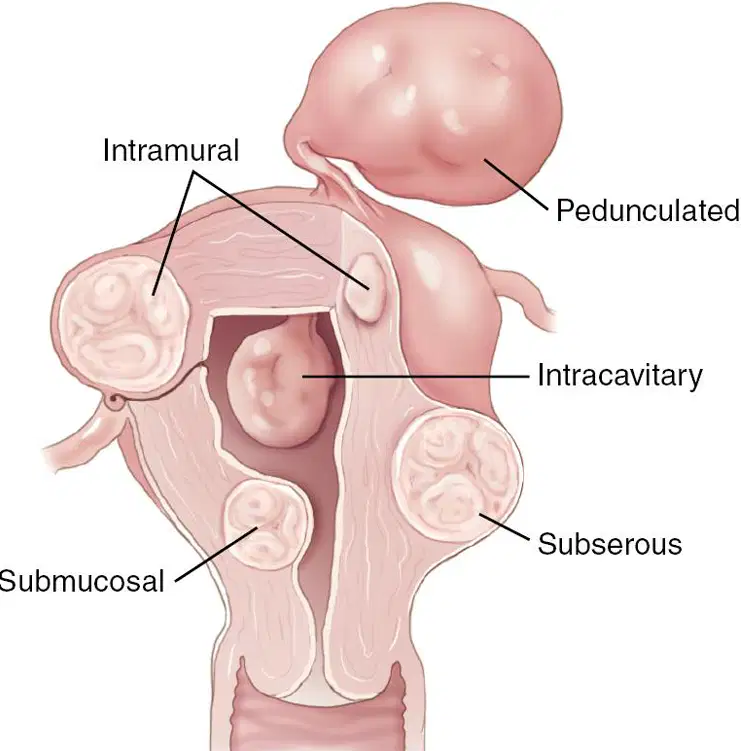
Type of fibroid that may become pedunculated & appear as extrauterine mass is:
Intraligamentary
Intramural
Subserosal
Submucosal
Space of Retzius is also called as retropubic or prevesical space:
True
False
Hemorrhagic cyst is a functional cyst:
True
False
Broad ligaments hold the uterus forward:
True
False
All of the following are reasons for High hCG levels except:
Incorrect dates
More than one embryo
Ectopic pregnancy
Molar pregnancy
All are Tripple screen hormones used to check for chromosomal abnormalities except:
Estriol aka unconjugated estrogen
Alpha-fetoprotein (AFP)
hCG
PAPPA (plasma protein)
The reduction in blood return to the maternal heart caused by the gravid uterus compressing the maternal IVC describes:
Edwards syndrome
Pulmonary obstructive syndrome
Supine hypotensive syndrome
Recumbent hypotensive syndrome
The quadruple screen includes an analysis of all the following except:
hCG
alpha-fetoprotein
Inhibin A
PAPPA
Typically with Gastroschisis the AFP value will be:
Elevated
Decreased
This laboratory finding is not helpful
unchanged
What fetal suture is located within the frontal bone along the midline of the forehead?
Lambdoidal suture
Sagittal suture
Metopic suture
Squamosal suture
A patient has a history of endometriosis and presents with sudden onset of LLQ pain. The βhCG is pending and her LMP was 2 ½ weeks ago. The sonographer identifies a 4 cm adnexal mass with low level echoes & posterior acoustic enhancement. What is the most likely diagnosis?
Endometrioma
Ovarian torsion
Hemorrhagic ovarian cyst
Mucinous cystadenoma
The diagnosis of placenta previa is most accurately made:
Transabdominally with full maternal bladder
Transabdominally with an empty maternal bladder
Transrectally
Transvaginal
What occurs when there is fetal demise and the gestational parts remain in utero?
Incomplete or missed abortion
Spontaneous abortion
Blighted ovum
Ectopic pregnancy
On color Doppler U/S. most malignant ovarian tumors yield flow signals that are best characterized as:
Avascular
High impedance
Low Impedance
No flow
The cavum septum pellucidi is observed in front of the:
Thalamus
Peduncles
Cerebellum
Corpus callosum
A sonographic examination was performed on a pregnant patient who complained of vaginal bleeding. Sonographically, a crescent shaped anechoic area is noted adjacent to the gestation sac. The gestation sac contained a 6-week single live intrauterine pregnancy. What is the most likely diagnosis?
Ectopic pregnancy
Molar pregnancy
Subchorionic hemorrhage
Anembryonic gestation
All the statements about broad ligament are true except:
It’s a double folds of peritoneum
It is major suspensory ligament of uterus
It drapes over fallopian tube, ovaries & uterus
Extend from lateral side of uterus to side wall
A patient presents with a dilated cervical os and an irregular shaped gestational sac in the lower uterine segment. This is most likely a:
Inevitable Abortion
Blighted ovum
Complete Abortion
Threatened Abortion
the nonfunctional layer of the endometrium is the:
Basal Layer
Myometrium
Endometrial cavity
Functional Layer
ALL ARE SIGN OF SEPTIC ABORTION EXCEPT?
SEEN AFTER MISSED ABORTION
AIR BUBBLE WITHIN THE UTERUS
SEEN AFTER COMPLETE ABORTION
SEEN AFTER INCOMPLETE ABORTION
Which of the following is not a potential cause of PID is?
IUCD
Pyelonephritis
Postabortion
Chlamydia
The most dependent recess in the body is the:
Morisons pouch
Anterior Vaginal fornix
Posterior vaginal fornix
Posterior cul-de-sac
A patient presents with cramping and heavy vaginally bleeding with clots, and is 8 weeks pregnant. what is the most likely differential diagnosis?
INCOMPLETE ABORTION
THREATENED ABORTION
SYMPTOMS ARE NOT SPECIFIC
INEVITABLE ABORTION
The vagina may be partially / completely absent or obstructed by a membrane in early development, this may result in the following.
Hematocolpometra
Hematocolpos
Hematometra
All of the above
What is a typical Doppler waveform pattern for trophoblastic flow?
Low resistance, high velocity
High resistance, High velocity
Low resistance, low velocity
High resistance, low velocity
The decidual reaction that changes in the endometrium opposite the site of implantation is:
Decidua Basalis
Decidua Capsularis
Decidua frondosum
Decidua Parietalis
The velamentous placenta refers to a/an:
Membranous insertion of the cord
Insertion of the umbilical cord at the margin of the placenta
Insertion of the umbilical cord near the edge of the placenta
Arteriovenous anastomosis of the vessels within the placenta
Prolong severe oligohydramniosis most likelyto leadto which of the following condition?
Pulmonary hypoplasia
Femus dysplaia
Posterm pregancy
Single umbilical artery
Because of the low density of brain tissue, the texture of the brain may appear:
Hypoechoic
Hyperechoic
Inhomogeneous
Echogenic
The amount of amniotic fluid is regulated by all except which of the following?
The production of fluid
The removal of the fluid by swallowing
Fluid exchange within the heart
The membranes and cord
SUPINE HYPOVOLUMIC SYNDROME CAUSES ALL EXCEPT:
DECREASE BP
INCREASE CARDIAC OUTPUT
AKA IVC SYNDROME
DECREASE VENOUS OUTPUT
Oligohydramnios is associated with all except which of the following?
Fetal renal anomolies
Gastrointestinal disorders
Rupture of the intrauterine membranes
Postdate pregnancy
THE CM APPEARS ON U/S WHEN THE FETUS IS SUPINE POSITION, AS AN
ANECHOIC SPACE SUPERIOR TO THE CEREBELLUM
ECHOGENIC SPACE INFERIOR TO THE CEREBELLUM
ECHOGENIC SPACE SUPERIOR TO THE CEREBELLUM
ANECHOIC SPACE INFERIOR TO THE CEREBELLUM
Which of the following is a cystic lesion of the umbilical cord caused by persistent dilation of the omphalomesenteric duct, most commonly affects females and is associated with Meckel diverticulum?
Hemangioma
Gastroschisis
Ophalomesenteric cyst
Omphalocele
What is the most common cord entanglement in the fetus, it is associated with a long cord?
Nuchal cord
False knots
Thrombosis of the umbilical vein
True Knots
A battledore placenta is?
Fundal placenta attachment
Placenta located over the internal OS
Cord insertion into the margin of the placenta
Cord insertion into the fetal membranes
A Velamentous insertion refers to?
An accessory lobe of the placenta
Umbilical cord that attaches to the fetal membranes first then the placenta
Umbilical cord that attaches to the margin of the placenta
Placenta that lies over the internal cervical os
Amniotic band syndrome consists of?
All of the above
A syndrome that occurs after the fetus swallows to much fluid
Adhesions of torn amniotic membrane wrapped around fetal parts and producing congenital amputations
complications of placenta abruption
A growth restricted fetus will show a doppler pattern in the umbilical cord that is?
Low resistance
High resistance
Normal
Increased diastolic flow
When placental tissue is seen to extend beyond the external uterine wall into the bladder this condition is?
Placenta Previa
Placenta Percreta
Placenta increta
Placenta accreta
Causes of polyhydramnios include all of the following:
Congenital abnormalities
heart failure
Gastrointestinal anomalies
amniotic bands
All of the following statements regarding hydatidiform mole are true except:
Considered as tumor of trophoblastic tissue, they are incapable of metastasizing
Previous mole result in increased risk for recurrence
It is associated with marked elevated hCG levels
The U/S appearance is similar to that of a degenerating myoma
The following are causes of infertility among couples except:
Theca –Lutein cysts
Endometriosis
Ovulatory failure
Asherman’s syndrome
Meigs syndrome is associated with what ovarian tumor?
Fibroma
Ovarian cystadenoma
Cysticteratoma
Yolk sac tumor
The largest part of the uterus is the:
Fundus
Corpus
cervix
Isthmus
2nd and 3rd trimester are also known as:
Development age
Growth age
Maturation age
none of the above
After 1st trimester hCG is a hormone produced by the:
Placenta
Trophoblastic cells
Chorion
Yolk sac
A succenturiate placenta is a:
Accessory lobe of the placenta
small placenta
early matured placenta
Benign tumor of the placenta
All of the following are characteristics of a grade 3 placenta except
Smooth homogenous
Interlobar septal calcifications
Indentations that reach the basal plate called "cotyledon formation"
Basilar calcifications
True or False: The placenta is hyperechoic to the myometrium
True
False
The most common tumor of the placenta is the:
Choriocarcinoma
Subplacental hematoma
Chorioangioma
Placenta percreta
The term fetus papyraceus refers to a condition where the fetus;
Is reabsorbed, leaving no detectable sign
Lacks normal bone structure
Dies, but persists as a flattened structure with bones
Lacks red blood cells rendering it white as paper
A 30 year old gravid patient, 32 weeks by date, now presents with painless vaginal bleeding that has lasted for 5 days. The first condition to rule out by sonography is:
Hydatidiform mole
Ectopic pregnancy
Placenta previa
Ovarian cyst
Which of the following is LEAST LIKELY to be found in the fetus of a diabetic mother?
Cardiac anomalies
IUGR
Microsomia
skeletal and CNS anomalies
The presence of hypertension in the 2nd or 3rd trimester is NOT LIKELY to increase the risk of:
Fetal hyrdops
IUGR
Placental abruption
Toxemia
Generalized swelling and edema of skin throughout the body is termed:
Asherman syndrome
Anasarca
Ascites
Pericardial effusion
True or False: Varix of the umbilical vein is a focal dilation of the vein nearly always intraabdominal but extrahepatic in location.
True
False
Sonohysterography is a common procedure used to determine some causes of infertility, including:
A.) Intracavitary fibroid
B.) Endometrial Polyp
C.) Endometriosis
D.) A and B both the intracavitary fibroid & Endometrial Polyp

