
NEW
Font size
 Worksheets
Classroom Etiquette Quiz
Total questions: 26
Worksheet time: 13mins
A student finds it hard to stay focused during lectures. Which strategy from the class etiquettes would best help them?
Take notes to remember key points
Use their phone to check messages
Talk to classmates about unrelated topics
Arrive late to class
Which concept refers to the reliance of different departments or functions on each other within an organisation?
Interdependence of functions
Market segmentation
Product differentiation
Outsourcing
How can strong interrelationships within an organisation be advantageous?
They can improve collaboration and efficiency
They increase communication barriers
They reduce employee motivation
They limit innovation
If an organisation changes its structure to better support collaboration between departments, which session content topic does this relate to?
Impact on Organisational Structure
Mission Statements
Product Pricing
Customer Service Policies
What is the primary purpose of an "Objective" in business planning?
To provide a qualitative statement of aims
To outline a long term plan for the business
To set a target that must be achieved to realize the stated aim
To describe the company’s products
How does an "Aim" differ from an "Objective" in business terminology?
An aim is a long term plan, while an objective is a specific target to achieve the aim
An aim is a financial goal, while an objective is a marketing strategy
An aim is a short-term target, while an objective is a long-term vision
An aim is a product description, while an objective is a customer review
Given the definitions, if a company wants to ensure its long-term direction is clear and measurable, which combination of elements should it focus on developing?
Mission, Aim, and Objective
Product, Price, and Promotion
Vision, Values, and Culture
Strategy, Tactics, and Operations
How does a mission statement provide value to a business from a strategic perspective?
It guides decision-making and sets a long-term direction
It lists all the products offered by the business
It details the daily operations of the business
It describes the company’s logo design
A mission statement often includes a vision for the future. Why is this important for a business?
It helps align the organization’s efforts towards common long-term goals
It increases the number of products sold
It reduces the need for employee training
It eliminates competition in the market
Which company’s mission statement emphasizes helping customers find and discover anything they might want to buy online?
Amazon
Tesla
Apple
What is an "aim" in the context of business?
Where the business wants to go in the future, its goals
The daily operations of a business
The financial statements of a business
The marketing strategy of a business
Why are objectives important for a business?
They provide a clearly defined target for the business
They increase the number of employees
They reduce the cost of production
They eliminate competition
A business wants to ensure its objectives are effective. Which approach should it use according to the material?
Make objectives vague and broad
Ensure objectives meet SMART target criteria
Focus only on short-term profits
Ignore measurable targets
Which of the following best describes the "S" in SMART objectives?
Specific – objectives are aimed at what the business does, such as filling 60% of hotel beds in October.
Simple – objectives should be easy to understand.
Strategic – objectives should align with the company’s long-term vision.
Sustainable – objectives should be environmentally friendly.
Why is it important for objectives to be "Agreed" in the SMART framework?
So that only the manager is responsible for the objective.
To ensure all those concerned are committed to achieving the objective.
To make the objective easier to change.
To allow for more flexible deadlines.
A business sets an objective to increase sales by £10,000 in the next half year. Which aspect of SMART objectives does this illustrate?
Realistic
Time specific
Measurable
Agreed
A company wants to achieve a certain objective by the end of the year. Which SMART criterion does this best represent?
Specific
Measurable
Time specific
Realistic
A hotel sets a goal to fill 60% of its beds each night during October. Using the SMART framework, explain how this objective meets at least three of the criteria.
It is specific, measurable, and time specific.
It is agreed, realistic, and marketable.
It is simple, manageable, and sustainable.
It is strategic, measurable, and realistic.
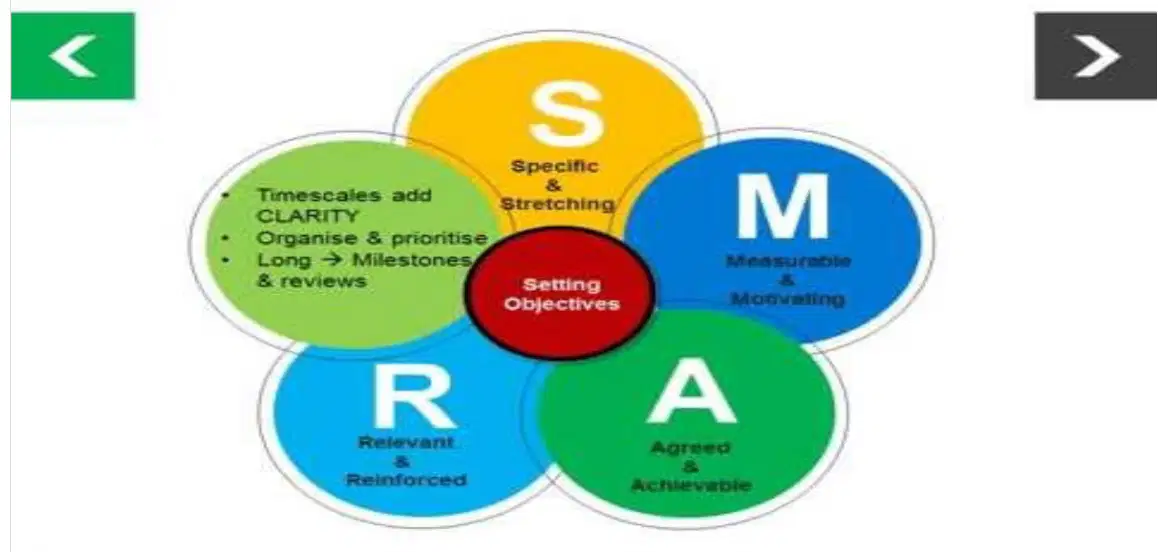
What does the "S" in SMART objectives stand for?
Specific & Stretching
Simple & Short
Strategic & Strong
Sensible & Secure
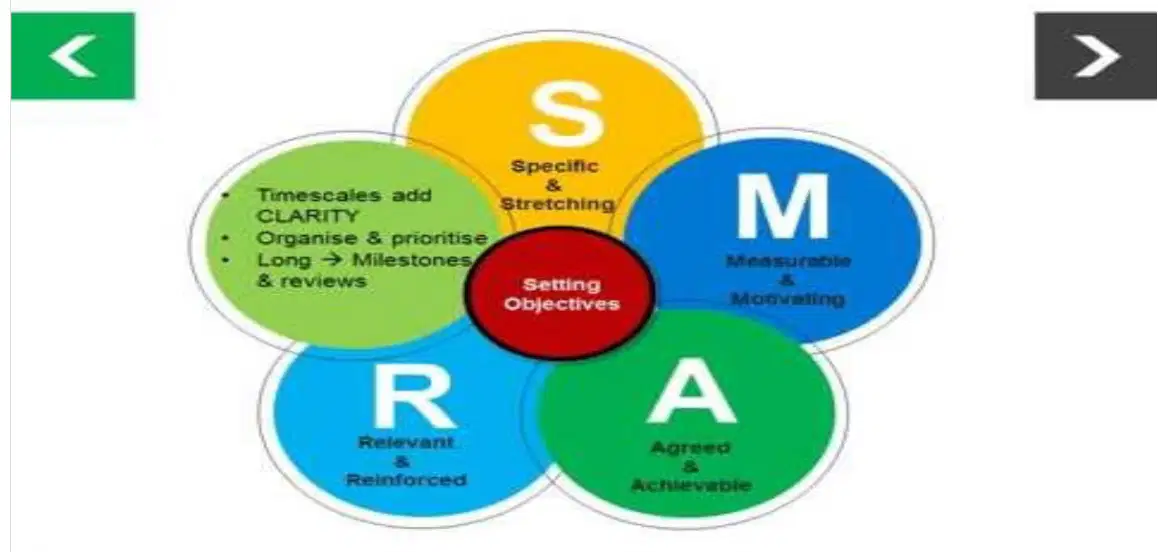
Which component of SMART objectives focuses on being "Measurable & Motivating"?
S
M
R
A
Which of the following best describes the interdependence of organisational functions?
Organisational functions operate independently and do not affect each other.
Organisational functions are inherently interrelated and work in tandem.
Organisational functions only interact during annual meetings.
Organisational functions compete for resources and avoid collaboration.
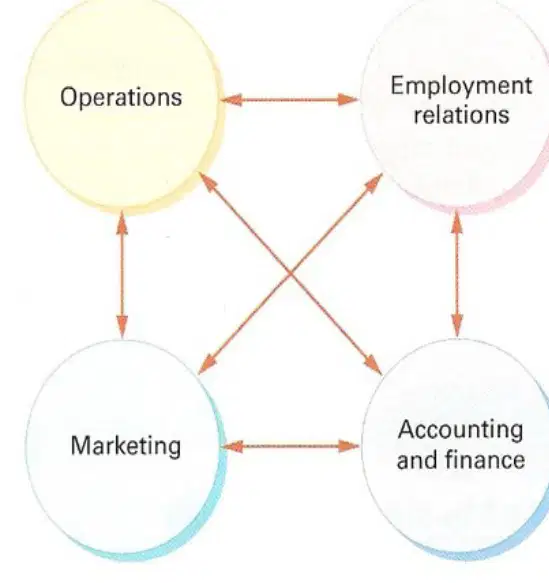
Based on the diagram, which organisational functions are shown to be interrelated?
Only Operations and Marketing
Only HR and Accounting
Operations, Employment relations, Marketing, and Accounting and finance
Only Marketing and Employment relations
Why might communication breakdowns occur between departments in an organization?
Because departments always agree on priorities
Because departments may have different goals and processes
Because employees are not allowed to talk to each other
Because there is too much communication

How could conflicting priorities between departments impact organizational performance?
They can lead to improved teamwork and faster decision-making
They can cause delays, inefficiencies, and hinder overall progress
They always result in higher profits
They have no impact on the organization
Which of the following is a benefit of strong interrelationships within an organization?
Improved efficiency and productivity through coordinated efforts.
Increased individual competition.
Reduced communication between departments.
Decreased focus on strategic goals.

What is the main benefit of seamless collaboration among Logistics, Technology, and Customer Service at Amazon?
Streamlined delivery and customer satisfaction
Increased product design innovation
Reduced marketing expenses
Enhanced manufacturing efficiency

