
 Worksheets
Computer Basics Majoring on Networks (Test)
Total questions: 95
Worksheet time: 48mins
In the world of computers, __________ is the practice of linking two or more devices together in order to share data.
networking
formatting
debugging
compiling
What is the primary function of a network interface card (NIC)?
To connect a computer to a power source
To manage the computer's memory
To facilitate communication between devices on a network
To enhance the computer's graphics performance
In order to connect to a network, a computer needs at least one network adapter.
True
False
What are networks built with?
Only computer hardware
Only computer software
A mix of computer hardware and computer software
Only network adapters
What is a network interface card (NIC)?
a hardware component that connects a computer to a network, enabling data transmission and communication
a broadband card that provides direct internet access
an internet card that provides direct internet access
a device that provides direct wireless internet access
Which of the following is a standard network adapter used on most desktop computers?
Wireless adapter
Ethernet card
Wi-Fi hotspot
Bluetooth adapter
Wireless network adapters have a visible connection socket like wired adapters.
True
False
List one drawback of using a wireless network compared to a wired network.
Wireless networks are generally slower than a wired connection.
Wireless networks are always more secure than wired networks.
Wireless networks require physical cables for every device.
Wireless networks cannot connect to the internet.
What is the main advantage of setting up a wireless network in homes and businesses?
It is much easier to set up a wireless network instead of routing physical wires through the walls to every location and desk that needs a connection.
Wireless networks are always faster than wired networks.
Wireless networks do not require any security measures.
Wireless networks can only be used for internet access, not for file sharing.
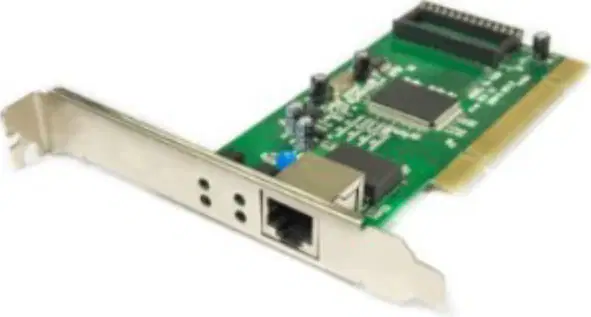
Is this an example of a wired or wireless adapter?
Wired adapter
Wireless adapter
Bluetooth dongle
Wi-Fi repeater
What is the main advantage of cellular data networks for mobile devices compared to Wi-Fi adapters?
They are always faster than Wi-Fi
They allow devices to move beyond the range of a Wi-Fi adapter
They are less expensive than wired adapters
They do not require a cell tower
Fill in the blank: The term ______ refers to the amount of data you can push through a network connection over a given time.
bandwidth
latency
protocol
encryption
Which type of network usually has the highest bandwidth?
Wired networks
Wireless access points
Cellular data networks
Bluetooth networks
Cellular data networks are generally faster than wired networks.
True
False
Fill in the blank: Cellular data networks will have the ______ speeds relative to wired networks or Wi-Fi hotspots.
slowest
fastest
same
variable
Which of the following statements is true about wireless access points?
They always provide higher bandwidth than wired networks
They can provide pretty good bandwidth for mobile devices
They are slower than cellular data networks
They do not allow streaming movies
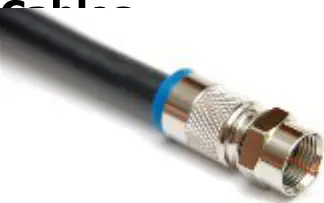
Over time, several different kinds of network cables have been created to physically connect computers together. The first type of cable that was used in networks is called ________ or "coax" cable. Fill in the blank.
coaxial
twisted pair
fiber optic
serial
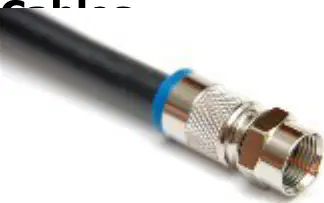
Over time, several different kinds of network cables have been created to physically connect computers together. What is the main material found in the inner wire of a coaxial cable?
Aluminum
Copper
Plastic
Steel
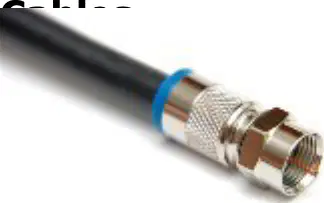
Over time, several different kinds of network cables have been created to physically connect computers together. In the 1980s and early 1990s, coaxial cables were used to build:
Televisions
Computer networks
Radios
Telephones
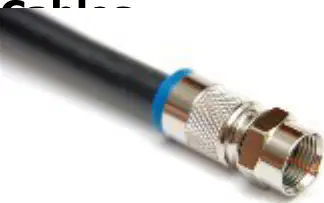
Over time, several different kinds of network cables have been created to physically connect computers together. True or False: Coaxial cables are very flexible and easy to install throughout a home or business.
True
False
In the 1990s, a new standard for network cables emerged. What is the name of this cable?
Twisted pair cable
Coaxial cable
Fiber optic cable
Ribbon cable
Twisted pair cables contain up to how many wires, wound together in pairs to minimize electromagnetic interference?
8 wires
2 wires
12 wires
16 wires
What is the main purpose of winding wires together in pairs in twisted pair cables?
To minimize electromagnetic interference
To increase the cable's weight
To make the cable waterproof
To improve the cable's color
Twisted pair cables became the standard ______ cables that we still use today to connect our personal computers to home and business networks.
HDMI
Ethernet
USB
Coaxial
Which category of Ethernet cable can handle up to 1 Gbps (gigabits per second)?
Category 3
Category 5
Category 5e
Category 6
True or False: The 'Category 3' Ethernet cable can transfer data at speeds up to 100 Mbps.
True
False
Match the following Ethernet cable categories with their maximum data transfer speeds:
10 Mbps
10 Mbps
100 Mbps
100 Mbps
1 Gbps
1 Gbps
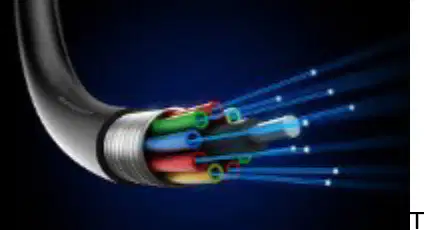
What is the latest innovation in network cables called?
Coaxial cable
Fiber optic cable
Twisted pair cable
Copper cable
Fiber optic network cables use tiny ________ and pulses of light to transfer data.
strands of glass
copper wires
plastic tubes
metal rods
Fiber-optic cables are very large and inflexible because they are made of glass.
True
False
What were fiber-optic cables initially used for?
Connecting home computers
Connecting networks that were far apart or needed to move a high volume of data
Sending television signals
Powering devices
In a baseband cable, data is sent using ________ signals that take up the entire bandwidth of the cable.
digital
analog
optical
radio
Baseband cables are ________, which means the same wire can be used to send and receive data signals.
bi-directional
unidirectional
optical
wireless
Broadband sends information in the form of a(n) ________ signal.
analog
digital
binary
modulated
What does it mean when communication is unidirectional?
It means one channel can only be used to send or receive, not both.
It means both channels can send and receive at the same time.
It means communication is always wireless.
It means information flows in a circular path.
For two-way communication, how many channels are needed?
One
Two
Three
Four
In most cases, are computers connected directly to each other on a network?
True
False
What is a network hub?
A device that connects computers and sends data only to the target computer
A central device that contains many different ports and repeats information to all connected computers
A device that stores data
A device that connects to the internet only
Fill in the blank: When data is sent from one computer through an Ethernet cable to a hub, the hub will repeat that information back to ________ connected to the hub.
all of the computers
only the destination computer
only the source computer
none of the computers
Which of the following best describes a switch?
A device that repeats information to all computers
A device that understands which computers are connected and sends data only to the target computer
A device that stores data
A device that connects to the internet only
True or False: A switch will broadcast information to all the other computers in the network.
True
False
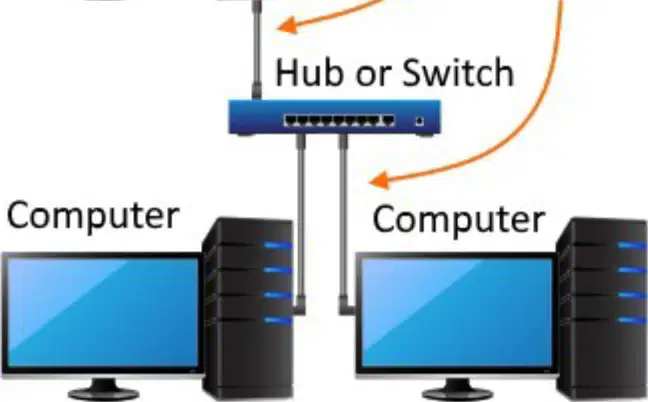
What do the Ethernet cables connect in the network?
Computers to the internet
Computers to the hub or switch
Computers to printers
Computers to each other directly
What is a router? Fill in the blank: A router is a device designed to pass information between _________.
multiple networks
computers and printers
software applications
storage devices
Routers are located at gateways, the places where two or more networks connect.
True
False
Which of the following is NOT a feature often found in routers?
A) Firewall to block unwanted traffic
B) Filter to block access to unwanted websites
C) Ability to report on data usage
D) Printing documents automatically
Routers are more intelligent than which of the following devices?
Network hub
Network switch
Both A and B
None of the above
Fill in the blank: When data is received from the external network, the router will figure out where the data is coming from and the ________ of the target device.
address
color
speed
temperature
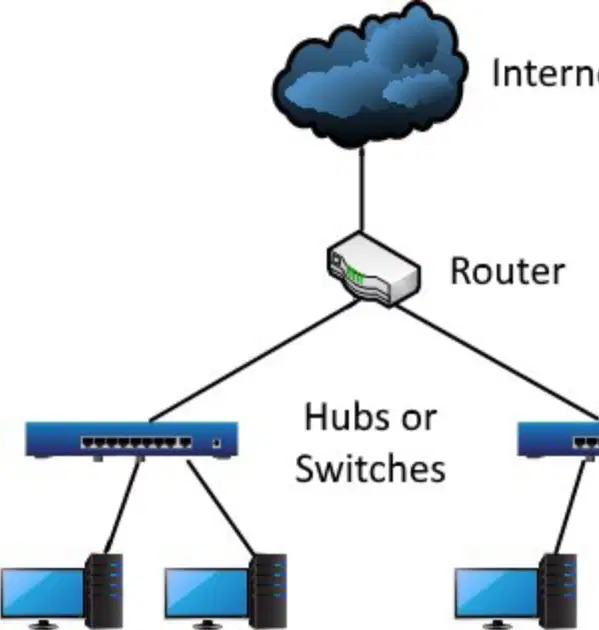
What device connects directly to the Internet in a typical home network setup?
Hub
Switch
Router
Computer
Home network routers are often called ________ routers. (Fill in the blank)
broadband
wireless
fiber
satellite
What is the function of a modem in a home network?
To connect computers to each other
To understand the particular type of network signal sent by an Internet Service Provider
To provide power to the network
To store data
A modem is often included in a home router.
True
False
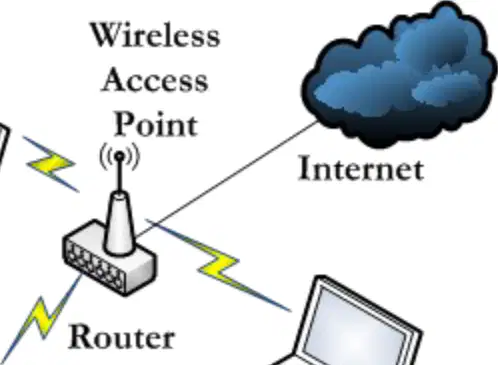
What does a Wireless Access Point (WAP) do in a network?
Acts as a hub or switch for wireless devices
Connects only wired devices
Provides power to devices
Stores data permanently
In a home network, the Wireless Access Point (WAP) is commonly part of the _________
router
printer
modem
desktop computer
The WAP can handle both wired Ethernet connections and wireless mobile devices in a home network.
True
False
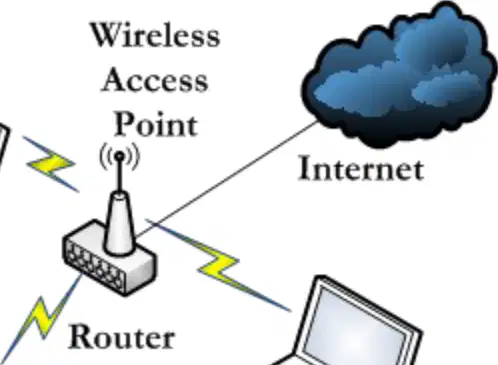
According to the diagram, which device connects directly to the Internet?
Laptop
Router
Wireless Access Point
Modem
What is the pattern formed by a group of networked computers, cables, hubs, and switches called?
network topology
network protocol
network address
network bandwidth
Which of the following best describes point-to-point communications?
One computer sends data to many computers
Two computers are tied directly together and transmit data directly between themselves
All computers are connected in a ring
Data is broadcast to all computers on the network
In a point-to-multipoint network pattern, data sent by one computer can be received by many other computers on the network.
True
False
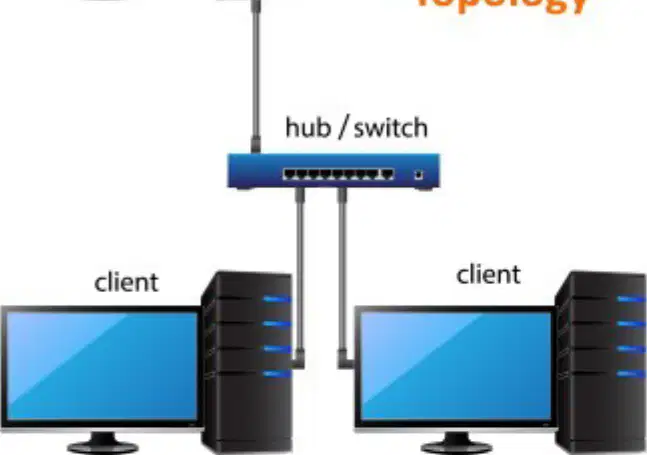
What does a star pattern mean in computer networking?
Each computer is connected to a central hub or switch
Each computer is connected in a ring
Each computer is connected to every other computer
Each computer is connected in a line
Refer to the passage about Star Topology. If one of the cables fails in a star topology, what happens?
The entire network fails
Only the computer connected to that cable is cut off
All computers continue to operate except the one with the failed cable
Both B and C
Fill in the blank: In a star topology, each computer is connected to a central ________ or switch.
hub
router
modem
printer
According to the passage, what is the main difference between a hub and a switch in a star topology?
A hub echoes data to all computers, while a switch routes data directly from one computer to another in a point-to-point manner.
A hub and a switch both route data only to the intended recipient.
A switch broadcasts data to all computers, while a hub sends data only to the destination computer.
A hub and a switch both operate only in a ring topology.
What does a bus topology connect all computers through?
Multiple cables
A single central cable
Wireless connection
Switches
In a bus topology, what happens if too many computers are connected to the same bus?
The network becomes less efficient because all of the computers are sending data to each other at the same time.
The network speed increases as more computers are added.
The network automatically divides into smaller segments to handle the load.
The network becomes more secure with more computers connected.
In a bus topology, whenever data is sent out by one computer, all computers receive the data on the bus.
True
False
Identify the network topology shown in the diagram labeled 'Bus Topology'.
Bus topology
Star topology
Ring topology
Mesh topology
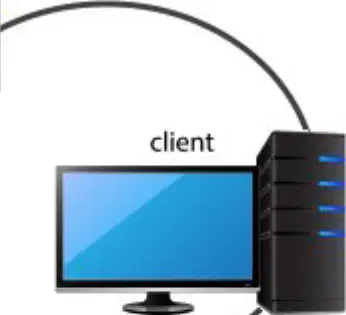
What is a ring topology in computer networks?
Each computer is connected to exactly two other computers, forming a ring.
Each computer is connected to a central hub.
Each computer is connected randomly to other computers.
Each computer is connected to only one other computer.
Refer to the passage about Ring Connections. In a ring topology, if any part of the ring breaks, what happens to the network?
Only the broken computer is affected
The entire network ring is disabled
The network continues to work normally
Data is rerouted automatically
Refer to the passage about Ring Connections. In order to send data to another computer in a ring topology, you need to pass it along the ring from ______ to ______, just like a game of telephone!
neighbor to neighbor
server to client
router to switch
hub to node
According to the passage, in most cases you'll be working with the traditional ______ topology.
star
mesh
bus
ring
What does NFC stand for?
Near Field Communications
Network File Connection
New Fast Connection
None of the above
To work, NFC devices need to be ______ close, less than four inches!
really
barely
rarely
hardly
Which of the following applications use NFC technology?
Google Pay
Samsung Pay
Apple Pay
All of the above
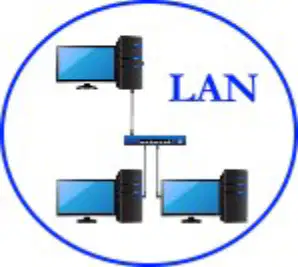
A network of computers in your home or office is called a _________.
Local Area Network or LAN
Wide Area Network or WAN
Metropolitan Area Network or MAN
Personal Area Network or PAN
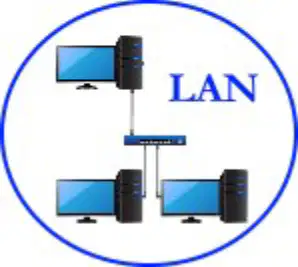
LAN is a _______ network, where only the computers within it can communicate directly with each other.
private
public
global
wireless
What does WAN stand for?
Wide Area Network
Wireless Area Network
Wired Area Network
Web Area Network
Fill in the blank: A business may have several office buildings in different areas, each with their own _____. These can be connected together into a Wide Area Network or WAN.
LAN
CPU
URL
HTML
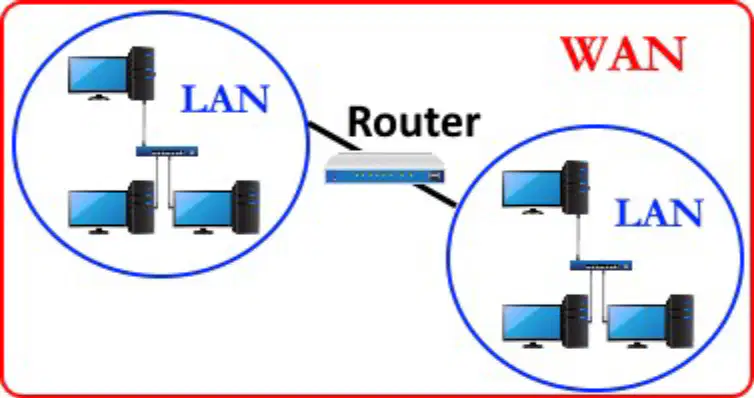
Refer to the diagram showing two LANs connected by a router to form a WAN. What device is used to connect multiple LANs into a WAN?
Switch
Router
Modem
Hub
True or False: All of the computers within the WAN are generally visible on the Internet.
True
False
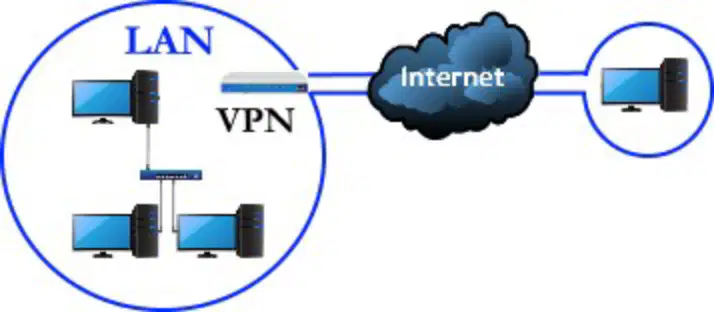
Refer to the diagram showing LAN, VPN, and Internet connections. What does VPN stand for?
Virtual Public Network
Virtual Private Network
Visual Private Network
Virtual Peer Network
What is the main purpose of using a Virtual Private Network (VPN) as described in the passage?
To give secure, encrypted access to the private network from the outside.
To increase the speed of the internet connection.
To provide free access to all websites without restrictions.
To allow multiple users to share the same IP address for gaming purposes.
All communications with the VPN server are through an ______ channel.
encrypted
public
unsecured
open
The term 'peer' in Peer-to-Peer Networks means:
Host
Equal
Server
Controller
What is a peer-to-peer network?
A network where computers rely on a central server
A network where computers have similar hardware and software features and share resources directly
A network only for large businesses
A network that does not allow file sharing
Peer-to-peer networks are often built between computers that are physically located near each other such as within homes, small businesses, or schools.
True
False
Fill in the blank: In a peer-to-peer network, you can subdivide computers in the network into smaller groups called ________.
workgroups
clusters
domains
nodes
What is the main advantage of large peer-to-peer networks?
They rely on central servers
They can handle a high volume of files or intensive processing tasks by sharing the load
They are only used in homes
They cannot share resources
What is a Network Operating System (NOS)?
An operating system for a single user without network connection
An operating system that connects computers and shares resources across a network
A type of hardware
A type of printer
Which of the following are early examples of network operating systems?
LANtastic
VINES
NetWare
LAN Manager
What is the term for the maximum and minimum rates at which data can be sent or received over a network, as defined by a service provider?
upload and download speeds
latency and jitter
IP address and subnet mask
firewall and encryption
What is the term for the maximum amount of data that can be used during a month, as defined by a service provider?
data usage
bandwidth
latency
upload speed
What is the term for the maximum amount of time a network can be unavailable during a year, as defined by a service provider?
downtime
throughput
latency
bandwidth
What is the term for the minimum or maximum time it takes for a network to respond to a request, which can affect real-time interactions?
response times
bandwidth
throughput
packet loss
What is a computer?
(a)
What is hardware?
Physical components of a computer system
Computer components we can not see and touch
Computer components that support the computer to work better
Sets of instructions on a computer

