
 Worksheets
NJCU Cytology Review Game
Total questions: 22
Worksheet time: 31mins
Name
Class
Date
1.
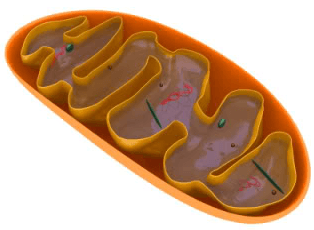
What are tiny organelles that convert glucose into ATP?
a)
Ribosomes
b)
Vesicles
c)
Cytoskeleton
d)
Mitochondria
2.
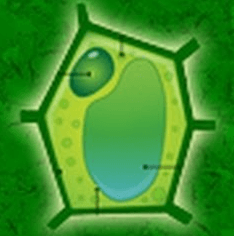
A rigid layer that lies outside the cell's membrane is...
a)
Cytoskeleton
b)
Cilia
c)
Cell Wall
d)
Flagella
3.

This is the brain or control center of the cell.
a)
Cytoplasm
b)
Nucleus
c)
Cell membrane
4.

It is the processing, packages and secretes proteins; proteins are transported in vesicles .
a)
Ribosomes
b)
Lysosomes
c)
Golgi apparatus
d)
Mitochondria
5.

It is the jelly-like fluid interior of the cell
a)
cytoplasm
b)
nucleus
c)
endoplasmic reticulum
d)
golgi bodies
6.

Letter D represents which cell organelle?
a)
smooth ER
b)
rough ER
c)
golgi body
d)
vacuole
7.

Letter J represents which cell organelle?
a)
cell wall
b)
cell membrane
c)
cytoplasm
d)
mitochondria
8.
What are examples of passive transport? Choose all that apply
a)
Simple Diffusion
b)
Cold Blood
c)
Facilitated Diffusion
d)
Scavenger
9.
In passive transport, molecules move from an area of __________ concentration to an area of __________ concentraiton
a)
high, low
b)
low, high
c)
water, salt
d)
active, passive
10.
What is it called when molecules move across the cell membrane from an area of high concentration to an area of low concentration through a carrier protein?
a)
Diffusion
b)
Osmosis
c)
Active Transport
d)
Facilitated Diffusion
11.

_______ regulates what enters and leaves a cell.
a)
Cell Membrane
b)
Nucleus
c)
Mitochondria
d)
Cytoplasm
12.
What can happen to a cell in a hypotonic solution?
a)
It can shrink and shrivel up.
b)
It can swell and burst.
c)
Nothing will happen.
d)
All of these are correct.
13.
Plants gather the sun’s energy using molecules called...
a)
glucose
b)
chloroplasts
c)
thylakoids.
d)
pigments
14.
The light reactions of photosynthesis provides the Calvin cycle with...
a)
protons and electrons.
b)
ATP and NADPH
c)
CO2 and glucose.
d)
light and chlorophyll.
15.
Organisms that make their own food are called heterotrophs.
a)
True
b)
False
16.
What is the name of the 1st step of cellular respiration?
a)
Glycolysis
b)
Kreb's Cycle
c)
ETC
d)
Anaerobic respiration
17.
What is the correct equation for cellular respiration?
a)
6O2 + C6H12O6 -> 6CO2 + 6H2O + Energy
b)
6O2 + C6H12O6 + Energy -> 6CO2 + 6H2O
c)
6CO2 + 6H2O -> 6O2 + C6H12O6 + Energy
d)
6CO2 + 6H2O + Energy -> 6O2 + C6H12O6
18.
What is cellular respiration?
a)
the breakdown of glucose to release ATP
b)
the breakdown of glucose to release NADH
c)
the breakdown of glucose to release FADH
d)
the breakdown of glucose to release carbon
19.
Which of the following is a reactant of cellular respiration?
a)
Glucose
b)
Carbon Dioxide
c)
Water
d)
ATP
20.
Which type of cell has no nucleus?
a)
Eukaryote
b)
Prokaryote
c)
Animal
d)
Plant
21.

Which type of cell?
a)
Prokaryote
b)
Eukaryote
22.
Where is the DNA found in a prokaryotic cell?
a)
floating around in the cytoplasm
b)
in the nucleus
100 %

