
NEW
Font size
 Worksheets
STEMI II
Total questions: 79
Worksheet time: 40mins
Which of the following is the most common clinical sign of pulmonary edema in patients with STEMI?
Jugular venous distension
S3 and S4 gallop sounds
Bradycardia
Cyanosis
According to the Killip classification, what does class IV heart failure indicate in patients with STEMI?
No signs of pulmonary or venous congestion
Moderate heart failure with rales at the lung bases
Severe heart failure with pulmonary edema
Cardiogenic shock with hypotension and peripheral vasoconstriction
What is the primary goal in the management of congestive heart failure (CHF) associated with STEMI?
Increase afterload
Avoidance of hypervolemia, diuresis, afterload reduction, and inotropic support
Increase sodium intake
Delay treatment until symptoms worsen
Which of the following statements best describes the effect of diuretics in patients with STEMI and pulmonary congestion?
They increase LV filling pressure and cardiac output
They are extremely effective as they diminish pulmonary congestion in the presence of systolic and/or diastolic heart failure
They should never be used due to risk of hypotension
They increase systemic blood pressure
A patient with STEMI develops hypotension and low vascular filling pressures. What is the most likely cause and appropriate management?
Hypervolemia; administer diuretics
Hypovolemia; identify and correct with fluids or medications
Hypertension; administer vasodilators
Hyperkalemia; administer insulin
Which of the following is a key indicator of right ventricular infarction in patients with STEMI?
Pulmonary edema
Jugular venous distension and Kussmaul’s sign
Hypertension
Bradycardia
Why is it important to avoid excessive diuresis in patients with STEMI and pulmonary congestion?
It can cause hyperkalemia
It can lead to hypovolemia and worsen hypotension
It increases afterload
It causes arrhythmias
What is the significance of ventricular premature beats in patients with STEMI?
They always require antiarrhythmic therapy
They are frequent and usually do not require therapy
They indicate immediate need for defibrillation
They are a sign of complete heart block
Which of the following best describes the impact of modern management on the incidence of cardiogenic shock after STEMI?
It has increased from 10% to 20%
It has remained unchanged
It has reduced from 20% to ~7%
It has eliminated the risk entirely
A patient with STEMI is found to have low cardiac output and high LV filling pressure. What is the most appropriate next step in management?
Increase diuretic dose
Administer fluids to increase preload
Use vasodilators cautiously to avoid systemic hypotension
Start beta-blockers immediately
Which of the following is recommended to reduce the risk of ventricular fibrillation in patients with STEMI?
Routine use of antiarrhythmic drugs in all patients
Beta-adrenergic blocking agents in patients with STEMI
High-dose magnesium in all patients
Immediate use of digoxin in all patients
What is the primary reason for using prophylactic antiarrhythmic drug therapy in STEMI patients?
To treat existing arrhythmias
To prevent the development of ventricular tachycardia and fibrillation
To increase heart rate
To reduce blood pressure
Which electrolyte imbalances are considered risk factors for ventricular fibrillation in patients with STEMI?
Hyperkalemia and hypermagnesemia
Hypokalemia and hypomagnesemia
Hypernatremia and hypocalcemia
Hyponatremia and hypercalcemia
According to the text, what is the recommended serum potassium concentration to reduce the risk of ventricular fibrillation in STEMI?
2.0–2.5 mmol/L
3.0–3.5 mmol/L
4.5–5.0 mmol/L
6.0–6.5 mmol/L
Why is the use of prophylactic lidocaine no longer recommended in STEMI patients?
It increases the risk of ventricular fibrillation
It causes excessive bradycardia and asystole
It does not improve overall mortality and may cause additional complications
It is too expensive for routine use
A patient with STEMI develops sustained ventricular tachycardia. What is the initial recommended treatment?
High-dose digoxin
Intravenous lidocaine or amiodarone
Oral beta-blockers only
Immediate defibrillation without medication
Which arrhythmia is most commonly associated with inferior wall infarction and may require temporary pacing?
Sinus tachycardia
Atrioventricular (AV) block
Ventricular fibrillation
Atrial flutter
What is the main reason for the increased risk of AV block in inferior infarction compared to anterior wall infarction?
Higher levels of potassium
Increased vagal tone and/or adenosine release
More extensive myocardial necrosis
Greater use of beta-blockers
Which of the following statements about supraventricular arrhythmias in STEMI is correct?
They are always treated with digoxin first
They are most often due to primary electrical disease
They are often secondary to another cause such as heart failure or anemia
They do not require any treatment
A patient with STEMI and bradycardia is unresponsive to drug therapy. What is the next recommended step?
Increase the dose of beta-blockers
Use noninvasive pacing electrodes in a 'demand' mode
Administer high-dose lidocaine
Start intravenous digoxin
Which of the following is a potential complication that can occur in about 10% of patients with STEMI and is often clinically silent?
Pericarditis
Thromboembolism
Left Ventricular Aneurysm
Recurrent Chest Discomfort
What is the recommended management for pericardial friction rubs or pericardial pain in patients with STEMI involving the epicardium?
Anticoagulants
Aspirin (650 mg four times daily)
Nitrates
Beta blockers
Which diagnostic tool is most useful for detecting arterial embolism originating in the left ventricle after STEMI?
Chest X-ray
Two-dimensional echocardiography
Cardiac MRI
Coronary angiography
What is the most common and easily detected complication of left ventricular aneurysm after STEMI?
Congestive heart failure
Paradoxical wall motion
Ventricular arrhythmias
Apical aneurysm
Which of the following statements about left ventricular aneurysm is TRUE?
It is usually detected by coronary angiography.
It is composed of scar tissue and neither possesses nor is associated with cardiac rupture.
It is most commonly associated with right ventricular infarction.
It is best managed with anticoagulants.
A patient with STEMI develops persistent bifascicular and transient third-degree heart block. What is the likely cause?
Pericarditis
Thromboembolism
Recurrent chest discomfort
Mechanical complication of MI
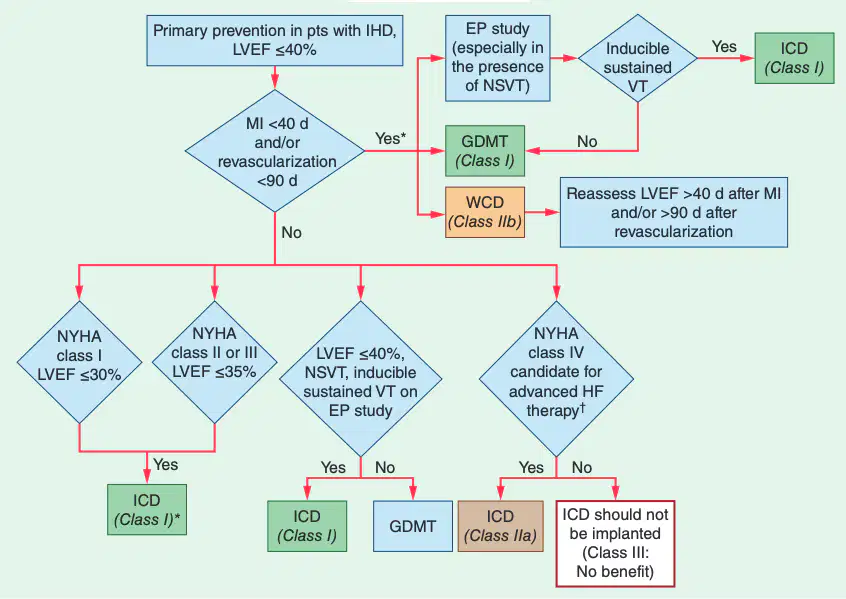
Which device is recommended for patients with ischemic heart disease, LVEF ≤40%, and inducible sustained VT on EP study?
WCD
GDMT
ICD
CRT
Which of the following is considered one of the most important factors influencing post-infarction risk stratification after STEMI?
Depressed left ventricular ejection fraction
High cholesterol levels
Family history of cancer
Low blood pressure
What is the usual duration of hospitalization for an uncomplicated STEMI?
1-2 days
3-5 days
7-10 days
14 days
Which medication is recommended for at least 2 years after STEMI to support secondary prevention?
Beta-adrenergic blocker
Calcium channel blocker
Nitrate
Digoxin
Why might warfarin be prescribed to patients after STEMI?
To reduce the risk of embolism in patients with atrial fibrillation
To lower cholesterol levels
To increase heart rate
To treat hypertension
A patient with a history of previous MI, age >75, and diabetes mellitus is being evaluated after STEMI. According to the text, what is the primary reason for individualized therapy in such patients?
To address the relative importance of risk factors
To reduce medication costs
To avoid all physical activity
To eliminate the need for hospitalization
Which of the following is a potential risk when combining warfarin with dual antiplatelet therapy after STEMI?
Increased risk of bleeding
Decreased heart rate
Increased cholesterol
Reduced blood pressure
A patient is being considered for a cardiac rehabilitation program after STEMI. What is a key component of such a program according to the text?
Progressive exercise supervised by a physician
Complete bed rest for 4 weeks
High-intensity weight lifting only
No education about the disease
Which of the following statements best describes the goal of secondary prevention after STEMI?
To improve long-term mortality and morbidity rates
To increase the length of hospital stay
To avoid all medications
To prevent patients from returning to normal activity
Who first introduced percutaneous transluminary coronary angioplasty (PTCA) as an alternative to coronary bypass surgery?
Charles Dotter
Andreas Gruentzig
David P. Faxon
Deepak L. Bhatt
What is the main advantage of drug-eluting stents introduced in 2003 for coronary interventions?
They are less expensive
They release antiproliferative drugs to reduce restenosis
They are easier to implant
They do not require anticoagulation
Which artery access sites are commonly used for percutaneous coronary intervention (PCI)?
Femoral or carotid artery
Radial or femoral artery
Jugular or subclavian artery
Brachial or popliteal artery
What is the primary purpose of inflating a balloon during balloon angioplasty?
To remove the plaque from the artery
To temporarily occlude the vessel and stretch the vessel wall
To deliver medication directly to the heart
To measure blood pressure in the artery
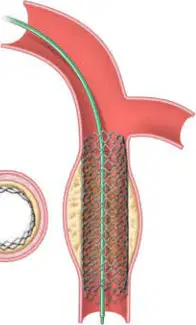
What is the function of the stent after balloon angioplasty?
It dissolves and is absorbed by the body
It acts as a scaffold to hold the vessel open
It delivers electrical impulses to the heart
It measures blood flow velocity
Which of the following is NOT a typical antiplatelet or anticoagulant used during PCI procedures?
Aspirin
Clopidogrel
Ibuprofen
Bivalirudin
Why did the introduction of coronary stents in 1994 represent a major advance in PCI?
They made the procedure faster
They reduced acute complications and late restenosis
They eliminated the need for anesthesia
They allowed for non-invasive procedures
Which statement best describes the main difference between balloon angioplasty and stenting?
Balloon angioplasty uses medication, while stenting does not
Balloon angioplasty temporarily opens the vessel, while stenting provides permanent support
Stenting is only used in peripheral arteries
Balloon angioplasty is always performed under general anesthesia
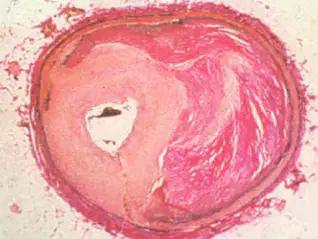
Which of the following is a primary purpose of drug-coated balloons in coronary interventions?
To prevent restenosis after stent placement
To dissolve blood clots in peripheral arteries
To increase the flexibility of the vessel wall
To measure blood pressure within the artery
What is the main advantage of rotational atherectomy in the treatment of coronary artery disease?
It removes large blood clots from the vessel
It is particularly useful in heavily calcified plaques that are resistant to balloon dilatation
It increases the elasticity of the vessel wall
It is the only method for treating restenosis
Which of the following best describes the mechanism by which stents prevent vessel recoil after angioplasty?
By dissolving the plaque completely
By holding the dissection flaps against the vessel wall
By increasing blood flow velocity
By reducing blood pressure in the vessel
A patient is at higher risk for serious complications after PCI if they:
Are under 40 years old and have no comorbidities
Are over 65 years old, undergoing an emergent or urgent procedure, or have chronic kidney disease
Have a history of mild hypertension only
Have no history of myocardial infarction
Drug-eluting stents are preferred over bare-metal stents in most cases of coronary angioplasty because:
They reduce the risk of restenosis and stent thrombosis due to the release of antiproliferative drugs
They are less expensive and easier to implant
They are more visible on imaging studies
They require no antiplatelet therapy after implantation
In a 70-year-old patient with chronic kidney disease scheduled for PCI, which of the following is an important precaution to minimize the risk of complications?
Use bare-metal stents to avoid drug interactions
Monitor for myocardial infarction and renal function closely, and consider the use of scoring systems to estimate risk
Avoid all forms of stenting and use only balloon angioplasty
Increase the dose of antiplatelet therapy beyond recommended levels
What is the most common complication of angioplasty and occurs in 20–50% of patients with balloon angioplasty alone?
Restenosis
Myocardial infarction
Stroke
Heart failure
According to the text, what is the main reason for the use of longer durations of DAPT (dual antiplatelet therapy) after stent implantation?
To reduce the risk of stent thrombosis
To lower blood pressure
To prevent arrhythmias
To treat heart failure
Which of the following is NOT a treatment option for symptomatic recurrent restenosis?
Re-stenting (three layers of stent)
Bypass surgery
Drug-coated balloons
Beta-blocker therapy
What is the primary endpoint measured in the SYNTAX trial comparing PCI with drug-eluting stent to CABG in patients with three-vessel coronary disease?
Death, myocardial infarction, stroke, or revascularization
Blood pressure reduction
Cholesterol level improvement
Arrhythmia prevention
Why is the risk of a second restenosis further increased after a patient has already had restenosis?
Because the risk factors for restenosis remain and may be compounded
Because the stent dissolves over time
Because the patient is cured after the first restenosis
Because the heart muscle becomes stronger
What do the images labeled "Pre," "Post," "4 months," "12 months," "24 months," and "48 months" most likely represent in the context of the text?
Progression of vessel patency after stent placement over time
Development of heart failure
Changes in blood pressure
Progression of arrhythmias
Which of the following is a significant risk factor for restenosis after PCI?
Diabetes
Asthma
Hypertension only
Liver disease
According to the American College of Cardiology (ACC)/American Heart Association (AHA) guidelines, which patients should be referred for a comprehensive discussion of indications for revascularization?
Patients with chronic stable angina
Patients with acute appendicitis
Patients with asthma
Patients with diabetes only
Which of the following is a key factor in determining the likelihood of success or failure of PCI (Percutaneous Coronary Intervention)?
Patient's age
Lesion characteristics
Type of anesthesia used
Length of hospital stay
What is the main reason for considering CABG (Coronary Artery Bypass Grafting) over PCI in patients with multivessel disease?
Lower cost of CABG
Higher procedural success rate of PCI
More extensive coronary disease in CABG candidates
Shorter recovery time with CABG
Which of the following best describes an "A lesion" in the context of PCI?
A lesion with high complication rate
A lesion with proximal location only
A lesion with high success rate and no significant calcification
A lesion that is always found in diabetic patients
Why is Fractional Flow Reserve (FFR) used in the assessment of coronary lesions?
To determine the patient's age
To measure the degree of vessel calcification
To assess the functional significance of intermediate lesions
To predict the risk of infection after PCI
Which of the following is NOT a typical indication for urgent PCI in patients with acute coronary syndrome?
Recurrent angina
New ST-segment depression
Recent PCI
High blood pressure
A patient with multivessel disease is being considered for revascularization. What should be favored when deciding which lesions to treat?
Complete revascularization of all lesions regardless of significance
Revascularization of only functionally significant lesions
Revascularization based on patient preference alone
Revascularization of the smallest lesions first
Which of the following statements about structural heart disease interventions is correct?
The most common anomaly treated is coronary artery stenosis
Closure of septal defects is a frequently performed procedure
Only surgical approaches are used for structural heart disease
All patients with patent foramen ovale (PFO) require closure

What is the main purpose of using a catheter in the treatment of structural heart disease?
To deliver medication directly to the heart muscle
To perform diagnostic imaging only
To place a closure device at the site of a defect
To measure blood pressure in the aorta
Which device is most commonly used for balloon dilation of the mitral valve in patients with mitral stenosis?
Inoue balloon
Edwards SAPIEN valve
CoreValve ReValving system
Lotus valve
What is the main advantage of the MitraClip device in treating severe mitral regurgitation?
It reduces regurgitation without the need for open-heart surgery
It replaces the mitral valve entirely
It is only used for aortic stenosis
It is a type of drug-eluting stent
Which of the following is a common complication of transseptal puncture during mitral valve procedures?
Severe mitral regurgitation due to valve leaflet damage
Aortic dissection
Pulmonary embolism
Myocardial infarction
What is the main purpose of using drug-eluting stents in peripheral artery interventions?
To reduce restenosis compared to balloon angioplasty alone
To increase blood pressure
To replace the artery
To treat heart valve disease
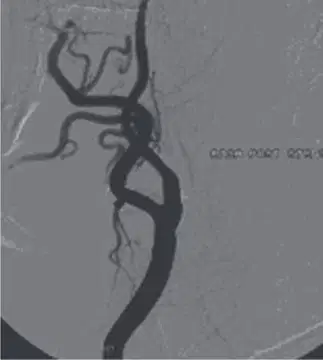
What does the angiographic image labeled "B" in Figure 276-4 demonstrate?
Successful carotid artery stenting
Failed balloon angioplasty
Mitral valve replacement
Aortic valve stenosis
Which of the following statements about percutaneous transcatheter aortic valve replacement (TAVR) is correct?
It is mainly used for patients who are not surgical candidates or as a bridge to surgery
It is only used for mitral valve disease
It is always performed through the carotid artery
It has a 0% mortality rate
What is the function of the percutaneous intraaortic balloon pump?
To increase early diastolic pressure and lower systolic pressure
To replace the aortic valve
To perform coronary artery bypass grafting
To treat mitral regurgitation
Why is the use of percutaneous interventions in peripheral arteries increasing?
Because of improvements in drug-eluting stents and better outcomes
Because open surgery is always preferred
Because it is only used for coronary arteries
Because it is less effective than medical therapy
Which of the following is a major complication associated with the use of the Impella catheter?
Thrombotic complications
Aortic regurgitation
Myocardial infarction
Pulmonary embolism
What is the primary treatment for deep vein thrombosis as mentioned in the text?
Intravenous anticoagulation
Oral antibiotics
Surgical removal of the vein
Physical therapy
Which procedure is used to selectively denervate renal sympathetic nerves in patients with refractory hypertension?
Low-power radiofrequency treatment
Balloon angioplasty
Stent placement
Thrombolytic therapy
Why might a centrifugal pump be used in patients with acute respiratory failure or cardiac failure?
To deliver oxygen directly to the lungs
To assist in pumping blood from the left atrium to the femoral artery
To remove excess fluid from the body
To regulate blood pressure
A patient with massive pulmonary embolism and hemodynamic instability who cannot receive systemic fibrinolysis may benefit from which intervention?
Surgical pulmonary embolectomy
Oral anticoagulation
Beta-blocker therapy
Renal denervation
Based on the text, what is a key advantage of using a Heart Team in the management of acute coronary syndromes?
It allows for individualized patient treatment decisions
It eliminates the need for drug therapy
It reduces the cost of care
It guarantees a cure for all patients

