
 Worksheets
plant kingdom
Total questions: 150
Worksheet time: 1hrs 9mins
these plants have a system of tubes to carry water and nutrients from the roots to the leaves
mosses
vascular
non-vascular
tropisms
these plants have a system of tubes to carry water and nutrients from the roots to the leaves (choose all that apply)
mosses
ferns
conifers
flowering plants

these plants are non-vascular and seedless
mosses
ferns
conifers
flowering plants
ALL plants are
eukaryotic
prokaryotic
unicellular
mutlicellular
Mosses are non-vascular, which means they do not have
tissue
blood
chloroplast
tubes

Plants are called __________ because they can make their own food (choose all that apply)
heterotrophs
autotrophs
consumers
producers
Mosses and ferns are seedless so they reproduce by
cones
flowers
spores
pollen

This group of plants is vascular and seedless. They reproduce with spores under their fronds.
mosses
ferns
gymnosperms
angiosperms

This group of plants is vascular and has seeds in flowers or fruits.
mosses
ferns
gymnosperms
angiosperms
Plants NEED these to DO photosynthesis
water
oxygen
carbon dioxide
glucose
the plant which have xylem and phloem are called
non vascular plants
mosses
vascular plants
pteridophytes
flowering plants are known as
gymnosperms
mosses
angiosperms
pteridophytes
the water conducting tissues of plants are known as
phloem
Xylem
epidermis
endodermis
phloem carries food from
roots to leaves
from stems to leaves
from leaves to all parts of the plant
from stem to roots
the reproductive organ of plant is
flower
root
leaves
stem
the phloem moves from
leaves to roots only
from leaves to roots only
from leaves to all parts of plant in both direction
carries food to flower onlu
the male part of the flower is
pistil
petals
stamens
sepals
female part of the flower is
stamen
pistil
sepals
petals
fertilization takes place in
stigma of carpel
ovary of pistil
sepals
petals
the pollen grains in stamen are
eggs of flower
sperms of flower
seed of flower
fruit of plant
the fruit we eat is
ripened flower
ripened ovary
petals part of plower
stamen of flower
these plants have a system of tubes to carry water and nutrients from the roots to the leaves
mosses
vascular
non-vascular
tropisms
these plants have a system of tubes to carry water and nutrients from the roots to the leaves (choose all that apply)
mosses
ferns
conifers
flowering plants
these plants are non-vascular and seedless
mosses
ferns
conifers
flowering plants
Plants are called __________ because they can make their own food (choose all that apply)
heterotrophs
autotrophs
consumers
producers
This group of plants is vascular and seedless. They reproduce with spores under their fronds.
mosses
ferns
gymnosperms
angiosperms

This group of plants is vascular and has seeds in cones. The name means "naked seeds."
mosses
ferns
gymnosperms
angiosperms
Gymnosperms all have 2 important characteristics that make them very unique. They are:
flowers
cones
needles
seed coats
these plants have a system of tubes to carry water and nutrients from the roots to the leaves
mosses
vascular
non-vascular
tropisms
these plants have a system of tubes to carry water and nutrients from the roots to the leaves (choose all that apply)
mosses
ferns
conifers
flowering plants
The stem provides support to the plant. Which of the following is another function of the stem?
It provides shade to the plant.
It produces seeds for the plant.
It transports food to all parts of the plant.
It purifies the water absorbed by the roots
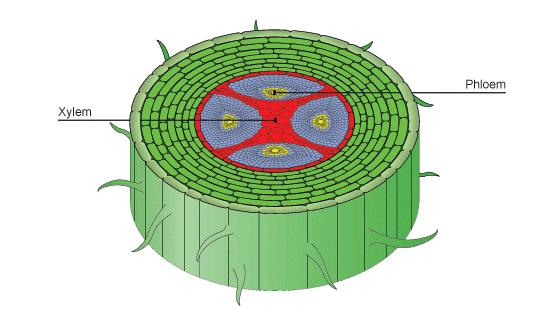
Specific type of plant tissue that transports water and minerals from the roots, through the stems, to leaves
vascular plant
nonvascular plant
xylem
phloem

Specific type of plant tissue that transports food (sugar) made in the leaves to the entire plant
vascular plant
nonvascular plant
xylem
phloem

Type of plant that is usually taller (longer) and has vascular tissue (xylem and phloem) that provides support
vascular plant
nonvascular plant
xylem
phloem
Examples of these plants include mosses, liverworts, and other plants with no xylem or phloem
dicot
vascular plant
monocot
nonvascular plant
A type of plant with a seed that has one food storage area
monocot
dicot
vascular
nonvascular
these plants have a system of tubes to carry water and nutrients from the roots to the leaves
mosses
vascular
non-vascular
tropisms
these plants have a system of tubes to carry water and nutrients from the roots to the leaves (choose all that apply)
mosses
ferns
conifers
flowering plants
these plants are non-vascular and seedless
mosses
ferns
conifers
flowering plants
ALL plants are
eukaryotic
prokaryotic
unicellular
mutlicellular
Mosses are non-vascular, which means they do not have
tissue
blood
chloroplast
tubes
Plants respond to stimuli such as light, touch, water or gravity. This is called a
tropism
dispersal
hormone
photosynthesis
Plants are called __________ because they can make their own food (choose all that apply)
heterotrophs
autotrophs
consumers
producers
Mosses and ferns are seedless so they reproduce by
cones
flowers
spores
pollen
This group of plants is vascular and seedless. They reproduce with spores under their fronds.
mosses
ferns
gymnosperms
angiosperms
This group of plants is vascular and has seeds in cones. The name means "naked seeds."
mosses
ferns
gymnosperms
angiosperms
This group of plants is vascular and has seeds in flowers or fruits.
mosses
ferns
gymnosperms
angiosperms

Flowering plants need pollinators. Pollination is important for what process?
photosynthesis
reproduction
respiration
tropisms
Gymnosperms all have 2 important characteristics that make them very unique. They are:
flowers
cones
needles
seed coats
Which group does NOT have roots?
mosses
ferns
gymnosperms
angiosperms
Tulips, daisies, sunflowers, apple trees, maple trees
mosses
ferns
gymnosperms
angiosperms
spruce, hemlock, fir, and pine trees
mosses
ferns
gymnosperms
angiosperms
Plants NEED these to DO photosynthesis
water
oxygen
carbon dioxide
glucose
Plants MAKE these PRODUCTS from photosynthesis
water
oxygen
carbon dioxide
glucose
Angiosperms have
flowers
naked seeds
cones
seed coats

a plant with a cycle of ONE year is a(n)
annual
biennial
perennial

a plant that comes back year after year is called a(n)
annual
biennial
perennial
Cyanobacteria are classified under
Protista
Monera
Plantae
Algae
The giant Redwood tree( Sequoia sempervirens) is a / an
Giant fern
Angiosperm
Gymnosperm
Bryophyte
Gemma cup is found in
Marchantia
Salvinia
Selaginella
Funaria
Holdfast, Stipe and frond are usually found in members of
Chlorophyceae
Phaeophyceae
Rhodophyceae
All algae
Which of the following is a Red alga?
Chara
Laminaria
Fucus
Polysiphonia
Which statement about Brown algae is correct?
Reserve food is Floridean starch
Two Equal apical flagella present
Cell wall made of cellulose and algin
Chlorophyll a and d present
Sphagnum is used as a packaging material to transport living plants because (most appropriate)
It is bushy
It lasts long
it is easily available
it retains huge amount of water
Which of the following is not a Pteridophyte?
Salvinia
Equisitum
Polytrichum
Dryopteris
Prothallus is a
sporophytic stage of fern
gametophytic stage of fern
Sporophytic stage of mosses
gametophytic stage of mosses
Conifers have several adaptive features to reduce water loss. Which one of the following is incorrect?
Needle like leaves
thick cuticle
sunken stomata
producing pollen grains
Find the incorrect match from the following pairs i) Psilopsida - Psilotum, ii) Lycopsida - Lycopodium iii) Sphenopsida - Selaginella iv) Pteropsida - Pteris
i)
ii)
iii)
iv)
Which of the following is not a gymnosperm?
Cycas
Gingko
Pinus
Equisetum
While most of the algal species are haplontic, which among the following is haplo-diplontic?
Fucus
Chara
Polysiphonia
Spirogyra
Study the paired combinations on Classification and find out the incorrect pair: i) Artificial system - based on few characteristics ii) Natural system - natural affinities among organisms iii) Phylogenetic - using computers comparing lot of characteristics iv) Cytotaxonomy- chromosome number, structure etc.
i)
ii)
iii)
iv)
Which of the following pairs is a true aquatic fern?
Azolla, Salvinia
Azolla, Selaginella
Azolla, Lycopodium
Salvinia, Equisetum
Independent alternation of generation is found in
Pteridophyta
Spermatophyta
Thallophyta
Bryophyta
Which of the following groups of plants shows the dominant phase of haploid gametophytic generation?
I. Angiosperms
II. Gymnosperms
III. Horsetails, ferns, club mosses (lycophytes and pteridophytes)
IV. True mosses, liverworts, and hornworts (bryophtyes)
I only
I, II, and III
III and IV
IV only
Which of the following is not heterosporous?
Selaginella
Pinus
Pteridium
Cycas
Hydrocolloid algin is obtained
Phaeophyceae
Rhodophyceae
Chlorophyceae
Xanthophyceae
Identify correct statement regarding Sphagnum.
(i) It is a liverwort.
(ii) It produces peat, used as fuel.
(iii) It is used as packing material for trans-shipment of goods.
Only (i)
Both (ii) and (iii)
Both (i) and (iii)
All (i), (ii) and (iii)
Select the incorrect feature regarding pteridophytes.
Their main plant body is differentiated into root stem and leaves.
They lack vascular tissues
They could be grown as ornamental plants.
They include horsetails and ferns.
Read the following statements and select the correct option.
Statement I: Ferns have macrophylls or large sized leaves.
Statement II: The event considered as precursor to the seed habit is observed in heterosporous pteridophytes.
Only statement I is correct
Only statement II is correct
Both statements are correct
Both statements are incorrect.
Poly-sulphated hydrocolloids are present in the cell wall of
Volvox
Gracilaria
Ectocarpus
Spirogyra
Read the following statements and select the correct option.
Statement I: Frond is the leaf-like photosynthetic structure present in the filament of brown algae.
Statement II: Filament of brown algae attaches the substratum with the help of stipe structure.
Only statement I is incorrect.
Only statement II is incorrect.
Both statements are incorrect.
Both statements are correct.
Select the mis-matched pair.
Gelidium – Synthesis of agar
Sargassum – Used as food source
Volvox – Colonial green alga
Dictyota – Phycoerythrin as the major pigment
Assertion : Algae show only anisogamous type of reproduction.
Reason : In algae, gametes can never be non flagellated.
Both Assertion and Reason are true and the Reason is the correct explanation of the Assertion.
Both Assertion and Reason are true but the Reason is not the correct explanation of the Assertion.
Assertion is true but Reason is false.
Both Assertion and Reason are false.
A similarity between alga Fucus and seed-bearing plants is the presence of dominant
Photosynthetic sporophytic phase
Gametophytic phase
Haploid phase
Gamete producing phase
The main plant body of bryophytes
Is haploid
Possess vascular bundle
Possess seed
Lack antheridia and archegonia
Consider the following features.
i. Heterosporous plant
ii. Siphonogamous or pollen tube mediated transfer of male gametes
iii. Dependent male and female gametophytes
Which among the following feature(s) is/are true for gymnosperms?
(i) only
(iii) only
(i), (iii) only
(i), (ii) and (iii)
Character common in bryophytes and pteridophytes is that they both
Are vascular plants
Are heterosporous organisms
Have sporophytic generation as the dominant one
Have flagellated male gametes
which group of algae has mannitol as the reserve food material?
chlorophyceae
phaeophyceae
rhodophyceae
Name the plant type with the haplo diplontic life cycle.
(a)
A plant that has seeds but no flowers.
(a)

Mark the parts in the diagram
(a)
what is heterspory?
Zygotic meiosis is the characteristics of
funaria
chlamydomonas
marchantia
fucus
Pick the mismatched pair
Cycas – Dioecious
Equisetum – Homosporous
Salvinia – Heterosporous
Pinus – Dioecious
Example of colonial algae
(a)
Conifers can tolerate extreme environments because of
Presence of vessels
Thick cuticle
Superficial stomata
Broad hardy leaves

Name the structure present in the thalli
(a)

Identify the picture
(a)

identify the picture
(a)

Name the part.
(a)

Name the part
(a)
what is the fusion of male gamete and polar nuclei called?
(a)
what is the ploidy of endosperm
(a)
Give an example for unbranched gymnosperm.
(a)
Marchantia is an example of
(a)
Hydrocolloids are made from
(a)
Name the pigment of red algae
(a)
these plants have a system of tubes to carry water and nutrients from the roots to the leaves
mosses
vascular
non-vascular
tropisms
these plants have a system of tubes to carry water and nutrients from the roots to the leaves (choose all that apply)
mosses
ferns
conifers
flowering plants
these plants are non-vascular and seedless
mosses
ferns
conifers
flowering plants
Plants respond to stimuli such as light, touch, water or gravity. This is called a
tropism
dispersal
hormone
photosynthesis
Plants are called __________ because they can make their own food (choose all that apply)
heterotrophs
autotrophs
consumers
producers
This group of plants is vascular and has seeds in cones. The name means "naked seeds."
mosses
ferns
gymnosperms
angiosperms
This group of plants is vascular and has seeds in flowers or fruits.
mosses
ferns
gymnosperms
angiosperms
Flowering plants need pollinators. Pollination is important for what process?
photosynthesis
reproduction
respiration
tropisms
Tulips, daisies, sunflowers, apple trees, maple trees
mosses
ferns
gymnosperms
angiosperms
Plants MAKE these PRODUCTS from photosynthesis
water
oxygen
carbon dioxide
glucose
The figures below show the roots of some plants. Which of the following will hold the plant most firmly to the soil ?


Cyanobacteria are classified under
Protista
Monera
Plantae
Algae
The giant Redwood tree( Sequoia sempervirens) is a / an
Giant fern
Angiosperm
Gymnosperm
Bryophyte
Gemma cup is found in
Marchantia
Salvinia
Selaginella
Funaria
Holdfast, Stipe and frond are usually found in members of
Chlorophyceae
Phaeophyceae
Rhodophyceae
All algae
Which of the following is a Red alga?
Chara
Laminaria
Fucus
Polysiphonia
Which statement about Brown algae is correct?
Reserve food is Floridean starch
Two Equal apical flagella present
Cell wall made of cellulose and algin
Chlorophyll a and d present
Sphagnum is used as a packaging material to transport living plants because (most appropriate)
It is bushy
It lasts long
it is easily available
it retains huge amount of water
Prothallus is a
sporophytic stage of fern
gametophytic stage of fern
Sporophytic stage of mosses
gametophytic stage of mosses
Conifers have several adaptive features to reduce water loss. Which one of the following is incorrect?
Needle like leaves
thick cuticle
sunken stomata
producing pollen grains

What part of the plant is this?
stem
flower
roots
leaves
Which of the following is the unique characteristics for Kingdom Plantae
cell wall consist of peptidoplycan
carbohydrate storage is glycogen
has alternation of generation
motile
Mosses and liverworts are called non-vascular plant because
they lack motile sperm
they lack seed
they lack vascular tissue
they lack true roots, stems and leaves
Angiosperms are the most successful terrestrial plants. Which of these features is unique to them and helps account for their success?
Dominant gametophytes
Fruits enclosing seeds
Embryos enclosed within seed coats
Sperm cells without flagella
Double fertilization is the characteristic of
Algae
Gymnosperms
Fungi
Angiosperms
The transport of male gametes in bryophytes and pteridophytes occurs through
Wind
Water
Birds
Insects
The cell wall of Spirogyra contains
Cellulose
Chitin
Lignin
Suberin
Funaria requires water because –
(a) fertilization occurs in water only
(b) Funaria is a hydrophyte
(c) plants dry up and die without water
(d) no branching and sex organs cannot develop without water

The ancestor of all living plants lives in water. What is its name.
moss
algae
ferns
gymnosperm

Which is true?
All plants do photosynthesis.
Vascular plants do photosynthesis, but mosses do not.
Which of these plants that have no stems, no roots, no leaves.
ferns
conifers
dicots
moss

Non-vascular means
It doesn't do photosynthesis
It does not circulate water and nutrients around its body.
It is not native to this area
It does not produce seeds.

This is a picture of
moss
algae
ferns
photosynthetic bacteria

Non-vascular plants never grow very tall because they need to get their water and nutrients
by diffusion (absorption)
by cellular respiration
by photosynthesis
by living next to live trees that feed it

This plant is a
gingko
conifer
fern
maple tree

A fern is
vascular
non-vascular
Which one of these is the equation for photosynthesis?
6CO2 + 6H2O + energy --------> C6H12O6 + 6O2
6CO2 + C6H12O6 + energy --------> 6O2 + 6H2O
C6H12O6 + energy --------> 6O2 + 6H2O + 6CO2
6H2O + 6O2 + energy --------> C6H12O6 + 6CO2
Select the types of plants create seeds. Could be more than one.
angiosperms
gymnosperms
ferns
mosses

The word "gymnosperm" means
naked seed
flowering plant
ancient tree
grandmother of ginkgo

This type of plant is a
angiosperm
non-vascular
conifer
gymnosperm

Do ferns produce seeds?
yes
no

