
Font size
 Worksheets
Quiz T1:L1 (The Early Middle Ages)
Total questions: 31
Worksheet time: 3hrs 43mins
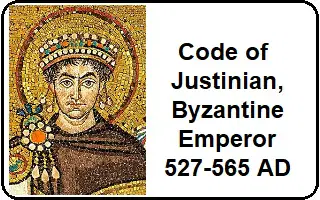
Justinian contributed to the flourishing of the Byzantine Empire after Rome’s decline by
freeing slaves throughout the empire.
reforming the laws of ancient Rome.
reducing poverty in Constantinople.
reviving the traditions of ancient Greece.

How did Justinian’s Code influence Western political and legal traditions?
It provided useful models for modern political campaigns.
It encouraged European rulers to decentralize their power.
It codified principles that many legal systems still use.
It supported the development of parliamentary democracy.

How did Germanic tribes carve Europe into small kingdoms?
Germanic leaders formed strong alliances.
Germanic traders set up free-trade zones.
Germanic priests unified religious groups.
Germanic kings waged wars of conquest.

Which of the following best describes the significance of Pope Leo III’s crowning of Charlemagne as Emperor of the Romans?
It helped Charlemagne battle Muslims in Spain.
It reunited the western and eastern parts of the Roman Empire.
It brought back the ideal of uniting Christendom.
It led to the break-up of Charlemagne’s kingdom after his death.

What elements of Constantinople’s location helped it to flourish as the capital of the Byzantine Empire?
Its location on a great river and surrounded by high mountains
Its location on a strait between seas and on key trade routes
Its location far from trade routes and close to threatening tribes
Its location beside a huge lake and bordered by two vast deserts

How did the collapse of the Western Roman Empire in 476 CE affect Western Europe?
Western Europe's traders became wealthy.
Western Europe supported classical learning.
Western Europe fell into disorder as invaders swept in.
The people of Western Europe moved to cities.

How did the culture of the Germanic tribes differ from that of the Romans?
Germanic peoples were mostly traders, so they traveled throughout Europe.
Germanic peoples lived in small communities governed by unwritten customs.
Germanic kings were chosen by single combat between warriors.
Germanic peoples lived in great cities administered by a central government.

Which BEST summarizes the impact of the Vikings on Western Europe?
They burned and looted in Western Europe and disrupted Mediterranean trade routes.
They mixed with local populations in Western Europe, helping to unify Charlemagne’s empire.
They burned and looted, but also established trade routes and settled in Western Europe.
They set up a colony in North America, but also disrupted trade routes to northern Europe.

Which factor most contributed to the survival of the Byzantine Empire after the fall of Rome?
Its alliance with Germanic tribes
Its isolation from trade routes
Its strong military and strategic location
Its lack of urban centers

What is another name for the Eastern Roman Empire after the fall of the West?
Ostrogoth Empire
Orthodox Empire
Justinian Empire
Byzantine Empire
Constantinople

Which letter marks the location where Constantinople was located before it was renamed Istanbul in the 1930s?
A
B
C
D
E
The Byzantine domed church shown here is known as the____
Dome of the Rock
Stonehenge
St. Peter's Basicalla

What was one major effect of Charlemagne’s rule over Western Europe?
The reunification of the entire Roman Empire
The end of Viking invasions
The decline of feudalism
The spread of Christianity and the revival of learning
Rejection of the pope in favor of Protestantism

____ was crowned the first Holy Roman Emperor by Pope Leo in 800 AD. He was a warrior who supported education and helped to spread Christianity.
King John
King Henry
Charlemagne
Constantine
Odom

Match the Germanic group with their geographic location
Visitigoths
Spain
Magyars
Hungary
Franks
France
Vikings
Scandanavia
Vandals
North Africa

Which Germanic tribe conquered Gaul and most of Western Europe?
Lombards
Vandals
Franks
Magyars
Visigoths

Who were the Vikings?
People conquered by the Romans
Pirates from northern France
Warriors from Scandinavia
Servants to the Normans
Looters from North Africa

_____ was a Germanic tribe that rebelled against Rome. They inflicted a crippling defeat on the Eastern Roman field army in 378 CE, at the Battle of Adrianople.
Vandals
Lombards
Magyars
Huns
Visigoths

When did the Western Roman Empire fall, marking the beginning of the Middle Ages?
509 BCE
44 BCE
180 CE
476 CE
669 CE

The fall of Rome resulted in:
the decline of Christianity
the lack of a central government
an end to attacks by barbarians
the growth of a strong economy
increased education and opportunities for learning

Why was the time immediately following the fall of Rome called the Dark Ages?
Emperors kept tight control of the people.
There was little formal education for the masses.
Artwork from Greece, not Rome, survived.
No building was being done.

Which group shown on the map (in green) settled in Eastern Europe and Hungary?
Vikings
Angles
Saxons
Magyars
Goths

Which group of sailors migrated from Scandinavia to Russia?
Magyars
Saxons
Vikings
Slavs
Goths

When Rome fell in AD 476, life in Europe changed. How did life in the early Middle Ages differ from Roman times?
trade increases
people moved from rural areas to cities
education and literacy declined
the population increases
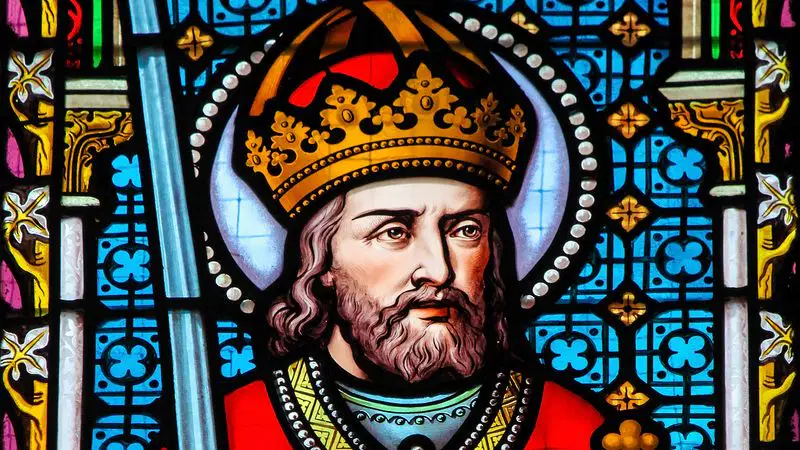
Charlemagne briefly united Western Europe when he formed an empire that reached across parts of Italy, Germany, and
Scandinavia
Ireland
Spain
France
Russia

Constantinople was conquered by the ____ ____ in 1453. A new military invention, bombard cannons, was used to overcome the Theodosian Walls.
Vandals
Magyars
Ottoman Empire
Visigoths
Vikings

_____ inflicted a crippling defeat on the Eastern Roman Army at the Battle of Adrianople, resulting in Emperor Valens being killed in 378 C.E.
Huns
Vandals
Visigoths
Sassanids
Franks
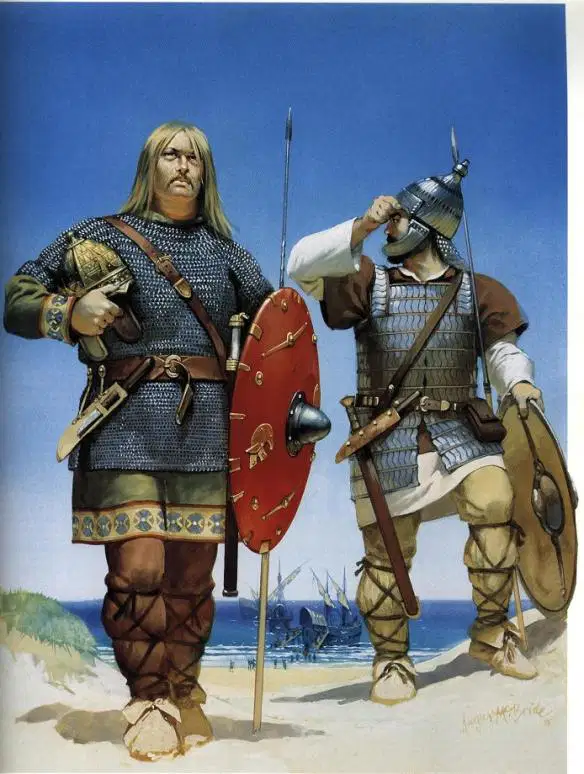
_____ established a kingdom out of the former Roman territory in Northern Africa, Sicily, Corsica, Sardinia, Malta, and the Balearic Islands in 429 C.E. Their navy controlled the Mediterranean. They sacked Rome in 455.
Ostrogoths
Byzantines
Vandals
Visigoths
Franks
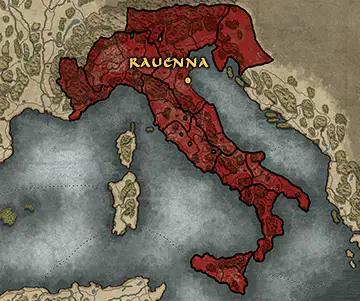
The Ostrogothic Kingdom was destroyed by the ______ in 554 AD, leaving Italy devastated and vulnerable to invasion from the Lombards.
Huns
Franks
Magyars
Visigothic Kingdom
Byzantine Empire

___ was the ruler of the Huns at the height of their power from 434 to 453 C.E. The fear he created earned him the title "Scourge of God".
Charlemagne
Genghis Khan
Attila
Cyrus the Great
Clovis I

Charles Martel defeated the Muslim Umayyads at the _____ in 732 C.E., by using disciplined infantry to form a defensive phalanx, forcing the Umayyad cavalry to charge uphill and through trees.
Battle of Tours
Battle of Verdun
Battle of Waterloo
Battle of Agincourt
Battle of Hastings

