
Font size
 Worksheets
MUTATIONS
Total questions: 44
Worksheet time: 22mins
When gametes (sex) cells, such as eggs or sp___ ___ ___ make copies of themselves, this is called m___ ___ ___sis.
sperm, meiosis
sperm, mitosis
egg, meiosis
egg, mitosis
When body (somatic) cells make copies of themselves, this is called _____________.
mitosis
meiosis
osmosis
cytokinesis
An example of a selective agent can be:
Predator
Fire
Climate change
Limited resources
Each strand of DNA has many genes. One gene is the code to make a specific pr___ ___e___n.
protein
carbohydrate
lipid
enzyme
The code that makes up one gene is made up of many nitrogen b___s___s.
bases
cells
fibers
chains
There are four different types of nitrogen bases, and their names are: A __________ T __________ G __________ C __________
Adenine, Thymine, Guanine, Cytosine
Adenosine, Threonine, Glutamine, Cysteine
Arginine, Tyrosine, Glycine, Cysteine
Alanine, Thymine, Glutamine, Cytosine
When DNA is copied, mis_______ can happen.
mistakes
directions
colors
numbers
Sometimes the wrong n________ base is used to make the copied strand of __ N __.
nitrogen, DNA
nucleotide, RNA
neutral, DNA
nitric, RNA
If the wrong nitrogen base is used to make the copied DNA, this is called a __________.
mutation
translation
replication
transcription
A mutation can involve one wrong nitrogen base or it can involve tens of thousands?
One or many nitrogen bases can be involved in a mutation.
A mutation always involves only one nitrogen base.
A mutation can only occur in pairs of nitrogen bases.
A mutation never involves nitrogen bases.
Mutations can occur __________ly or occur due to a mutagen damaging the nitrogen bases that make the “rungs” of the DNA ladder.
spontaneously
regular
mechanical
artificial
Three different types of mutagens are: 1. ______________________ 2. ______________________ 3. ______________________
1. Chemical 2. Physical (e.g., UV light) 3. Biological (e.g., viruses)
1. Chemical 2. Mechanical (e.g., friction) 3. Electrical (e.g., static)
1. Physical (e.g., sound waves) 2. Thermal (e.g., heat) 3. Magnetic (e.g., magnets)
1. Chemical 2. Nutritional (e.g., vitamins) 3. Environmental (e.g., weather)
If a mutation occurs in a body cell like a skin cell, pancreas cell or bowel cell, then these mutations can NOT be passed on. These mutations are called ______ mutations.
somatic
germline
hereditary
gametic
The THREE main types of mutations are: g_ _ _ , point and chr_ _ _ _ s _ _ _ al.
gene, chromosomal
genome, chromatic
germ, chromosome
giant, chromatin
Each set of three letters, is the code for one amino acid. Many amino acids make one pr_ _ ei_.
protein
vitamin
enzyme
lipid
Sometimes mutations can generate a protein that allows an organism to have a survival advantage. An example of this would be...
a mutation that makes bacteria resistant to antibiotics
a mutation that causes a genetic disease
a mutation that results in albinism
a mutation that leads to a nonfunctional enzyme
Anything that causes a mutation is called a ____________.
mutagen
enzyme
hormone
antigen
A mutagen that causes a change that leads to cancer is called a ________________.
carcinogen
antigen
pathogen
allergen
Mutagens are categorised into the three main groups: ______________________ ______________________.
physical, chemical, biological
physical, mechanical, electrical
chemical, thermal, magnetic
biological, electrical, optical
Mutagens can cause breaks in __ __ __ strands, the replacement of a normal base, form ab__ __ __ __al bonds between bases or activate genes that make cells go through mitosis repeatedly and unnecessarily, forming a cancerous t__m__r.
DNA, abnormal, tumor
RNA, abnormal, tumor
DNA, normal, tumor
DNA, abnormal, cyst
State the three main types of mutations and mutagens
The three main types of mutations are substitution, insertion, and deletion;
The three main types of mutations are replication, translation, and transcription
The three main types of mutations are duplication, inversion, and elongation
The three main types of mutations are deletion, condensation, and expansion
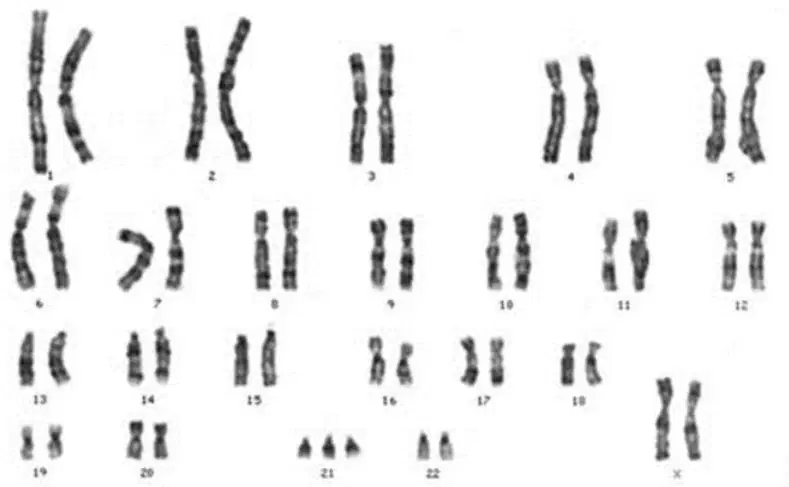
Refer to the karyotype diagram above. State the name of the chromosomes that determine the gender of a person.
sex chromosomes
autosomes
mitochondrial chromosomes
centromeres
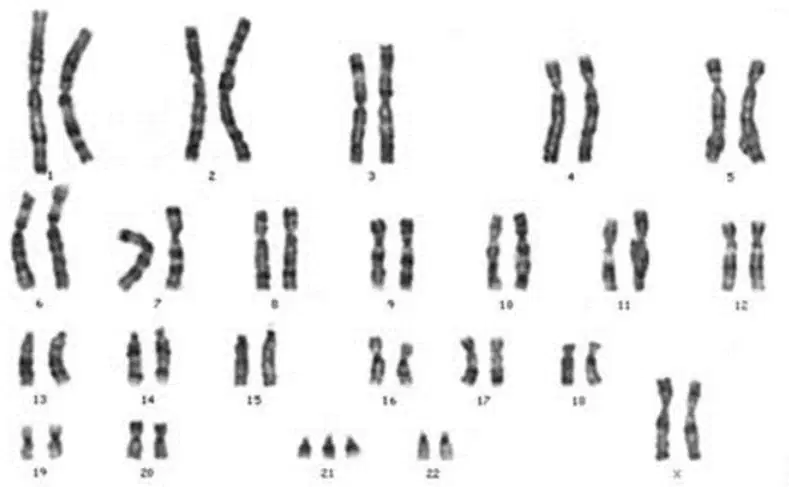
Refer to the karyotype diagram above. The sex chromosomes you can see in the karyotype above are:
X and Y chromosomes
Two X chromosomes
Two Y chromosomes
No sex chromosomes
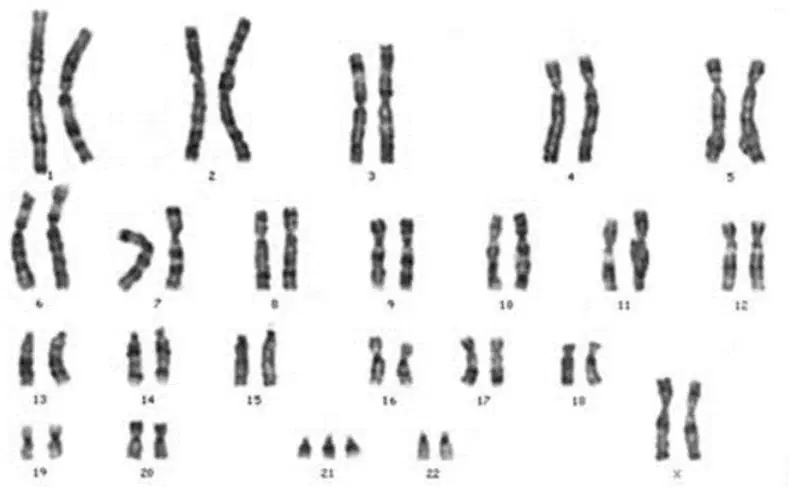
Refer to the karyotype diagram above. State the gender of the person these chromosomes belong to.
Male
Female
Cannot be determined
Both male and female
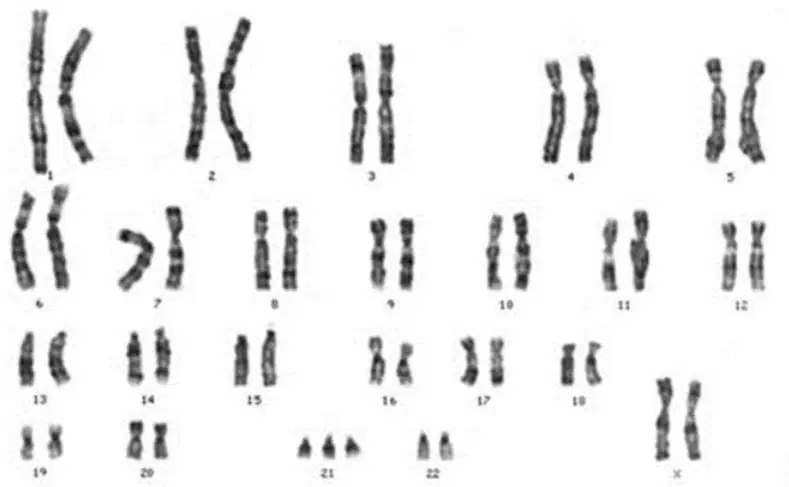
Refer to the karyotype diagram above. State how many pairs of autosomes (NON-sex chromosomes) there are in this karyotype
22
20
23
21
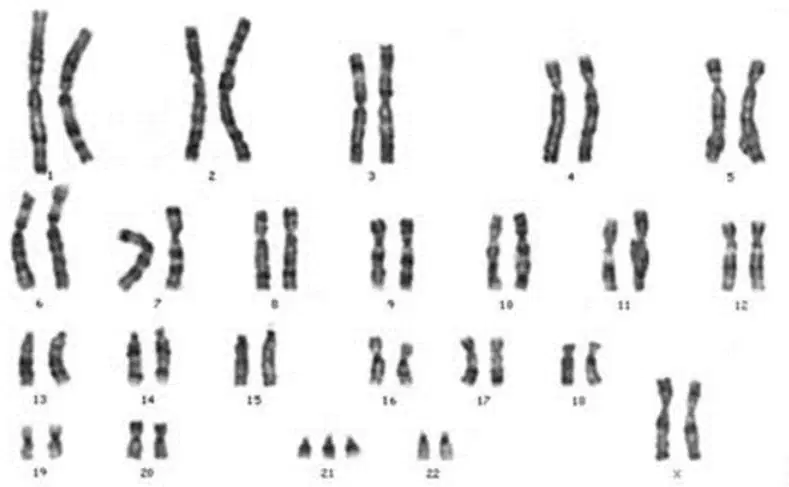
Refer to the karyotype diagram above. The chromosomes for this person shows they have Trisomy 21 or ____________?
Klinefelter syndrome
Turner syndrome
Edwards syndrome
Down syndrome
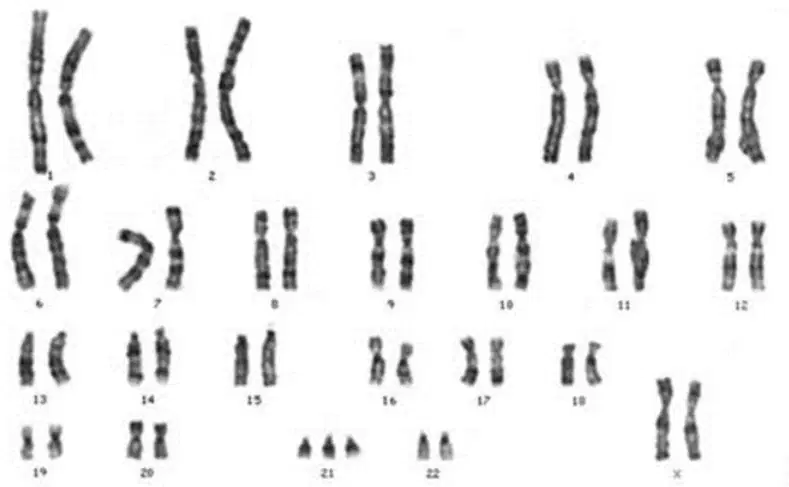
State the name of the main type of mutation this person has and explain why you made your choice.
Chromosomal mutation
Point mutation
Frameshift mutation
Silent mutation

Traits that help an organism survive in a specific environment.
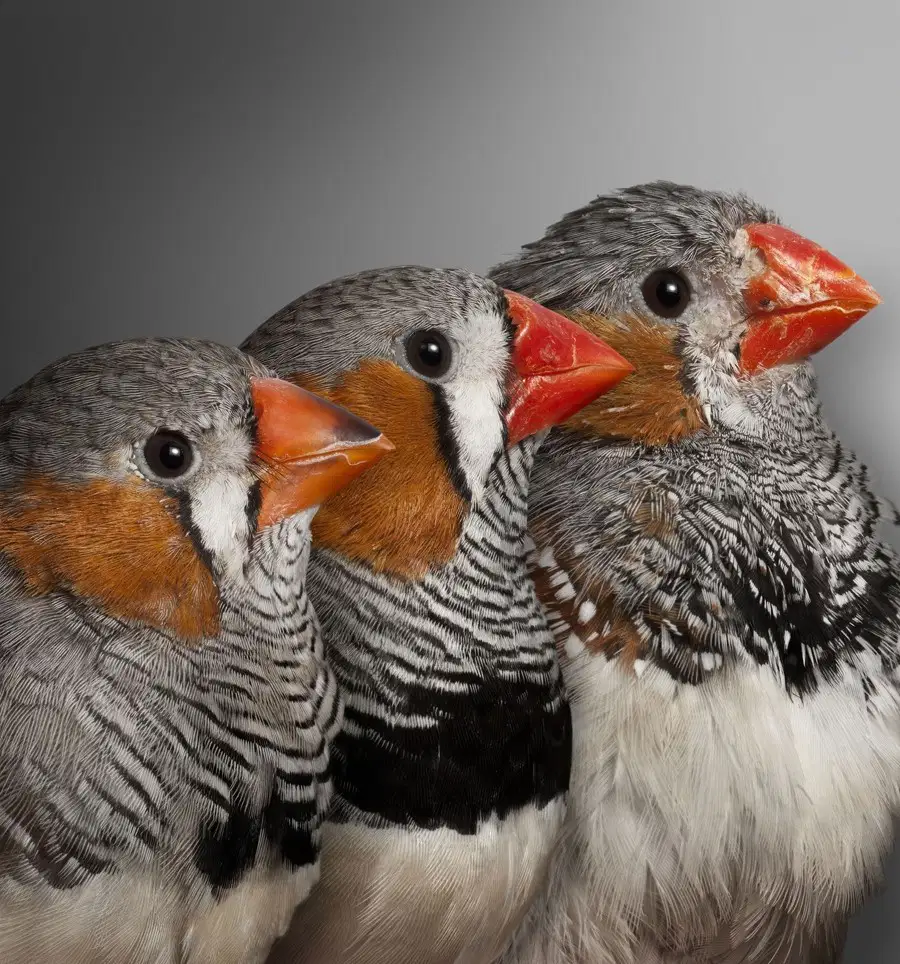
What is the advantage of having different shaped beaks?
To look cool
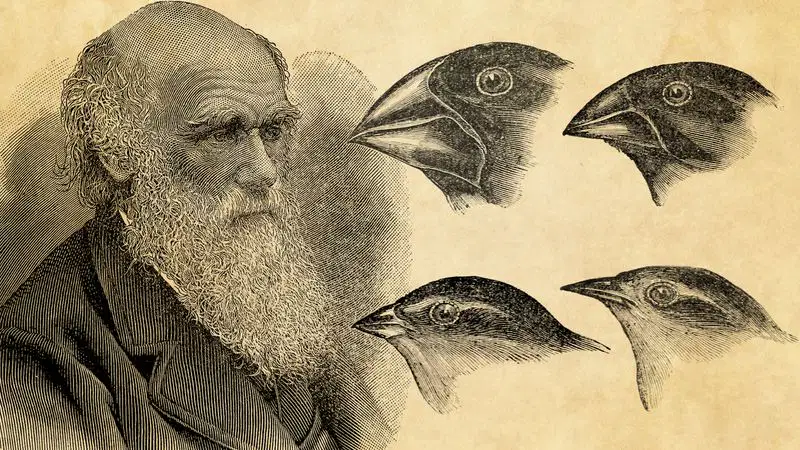
A theory that explains how life has changed over time.
Theory of natural selection

The trees these moths used to live on were white, but have been covered in soot(pollution) from coal factories. Which moth will be more successful in this environment?

A German Shepard would probably not survive in the wild because...
Is not evolved yet to compete with other species.
WIll take time to adapt to the new environment
Product of artificial selection.
Product of natural selection

Scientist have created larger and sweeter strawberries for humans to consume (eat). What process was used?
Artificial selection
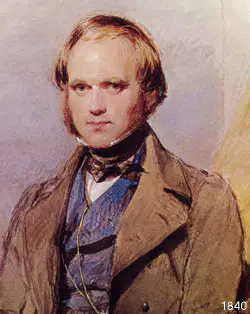
Darwin studied what animal on Galpogas Islands?
Otters
Turtles
Finches
Foxes
Edwards syndrome is a chromosomal mutation with ?
Downsyndrome is a chromosomal mutation of ?
extra chromosome 21
extra chromosome 18
extra chromosome 15
extra chromosome 22
Turners syndrome is ?
Fragile X affects ?
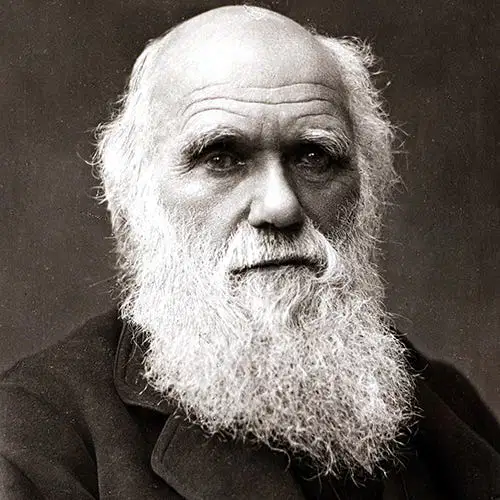
Darwin studied ?

A definition of species ?
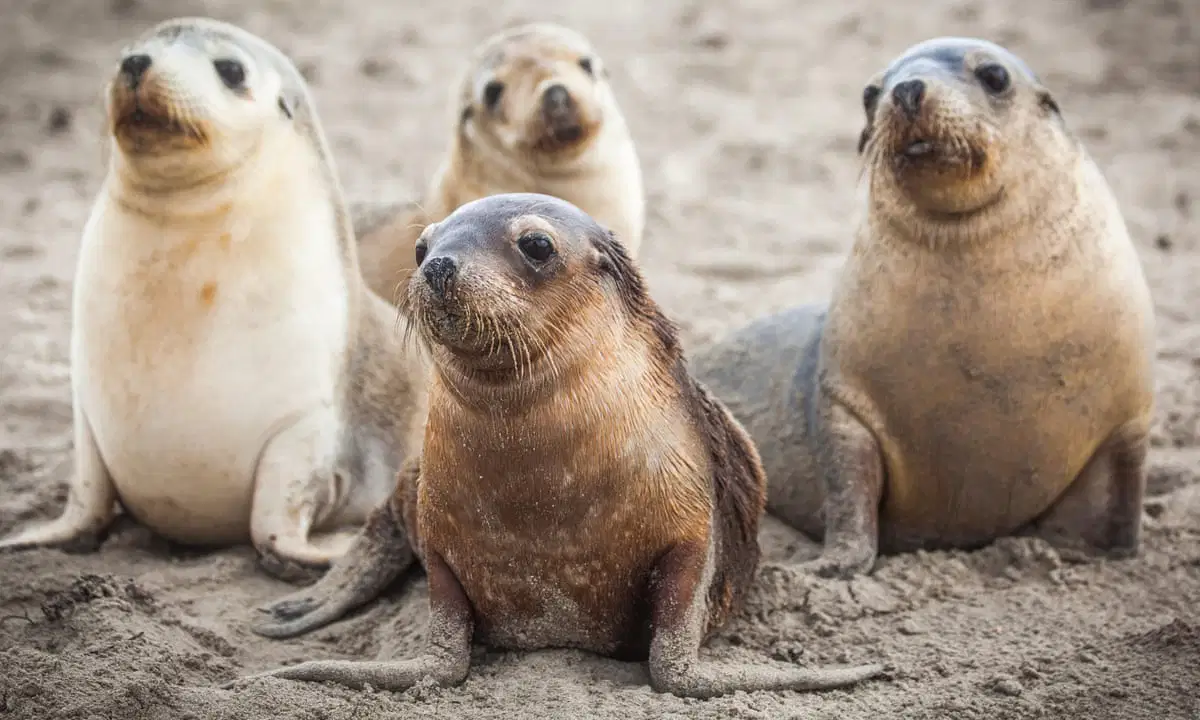
Definition of population?
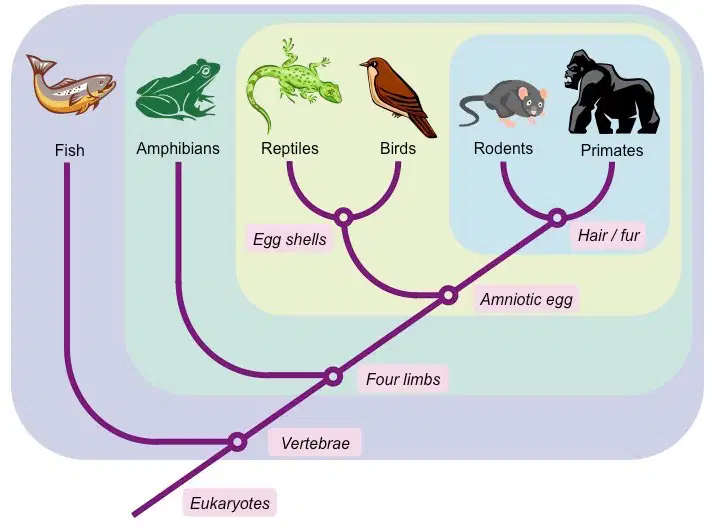
This cladogram suggests that Primates are most similar to ?
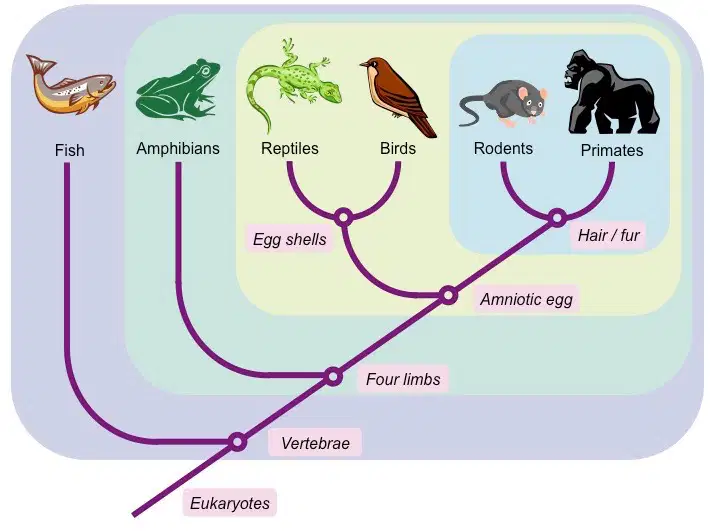
Reptiles are grouped to be similair to birds because they?
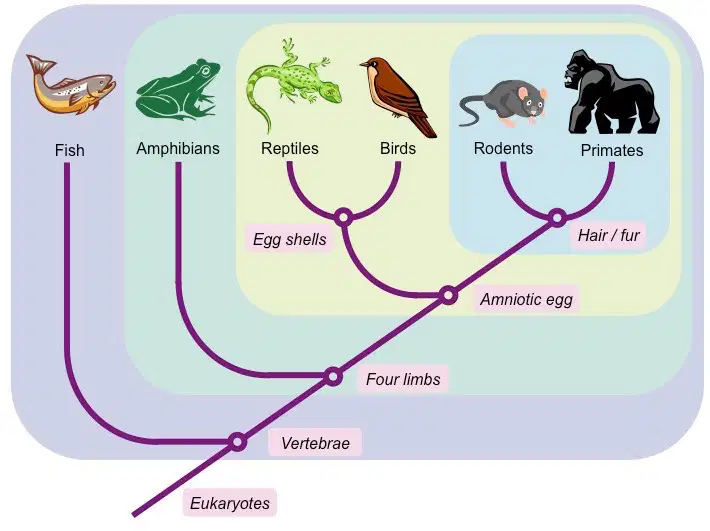
This cladogram suggests only ___________ and ______________ have hair/fur.

