
 Worksheets
Electronics III -Chapter 2
Total questions: 10
Worksheet time: 3mins
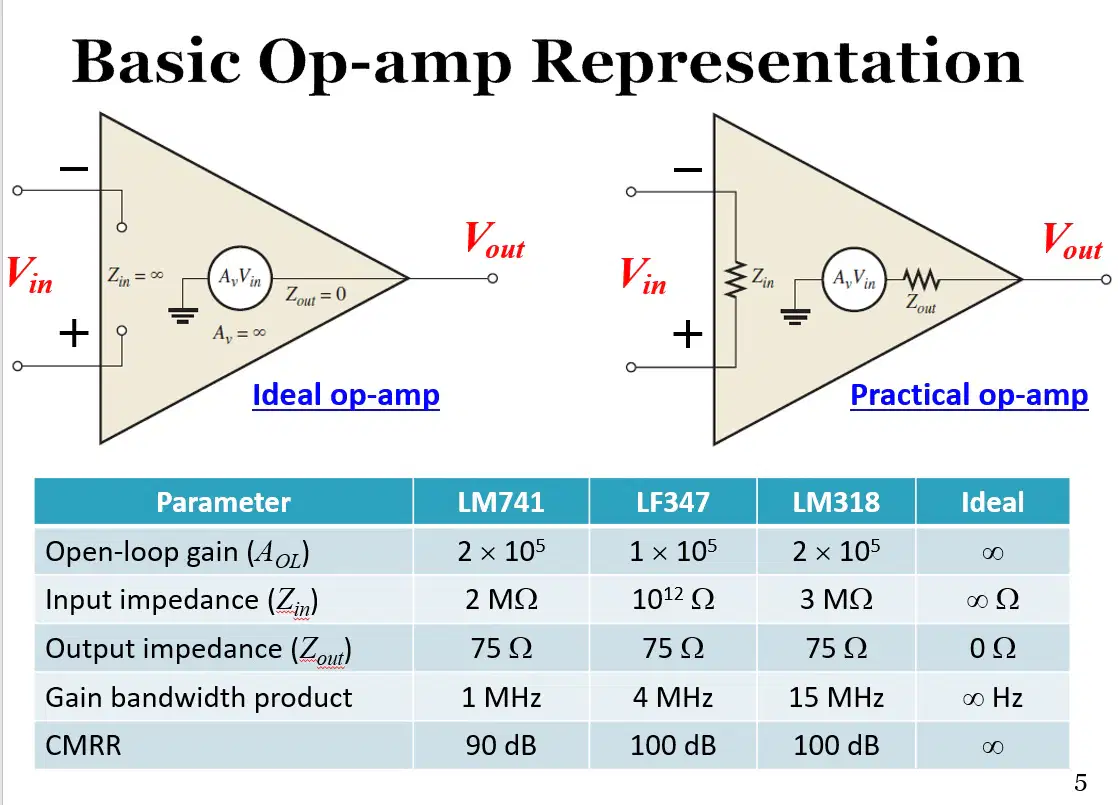
What is the CMRR for an ideal differential amplifier?
Zero
Unity
Infinite
100 dB

What causes the input offset current in a bipolar transistor op-amp?
Mismatched transistors in the input stage
High output impedance
Low common-mode gain
Temperature stability
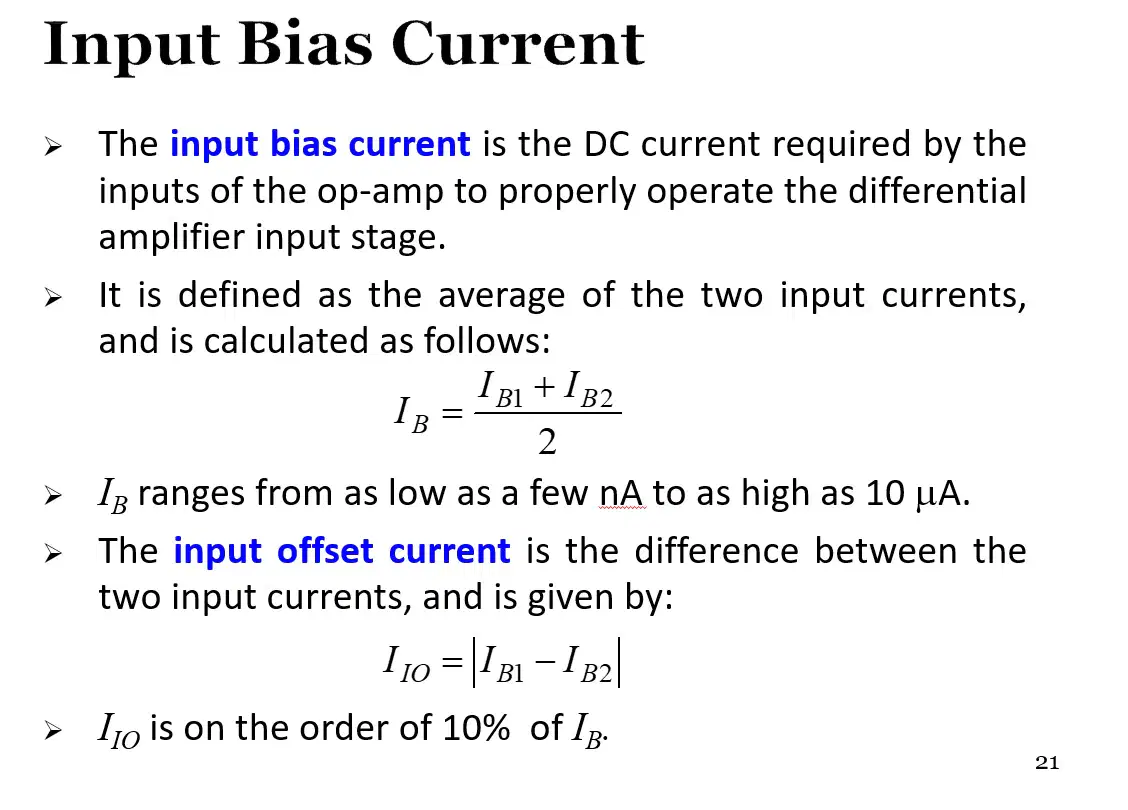
What is the input offset current (Ios) defined as in an op-amp?
The average of the two input bias currents
The difference between the two input bias currents
The current flowing through the output stage
The current required to null the output voltage
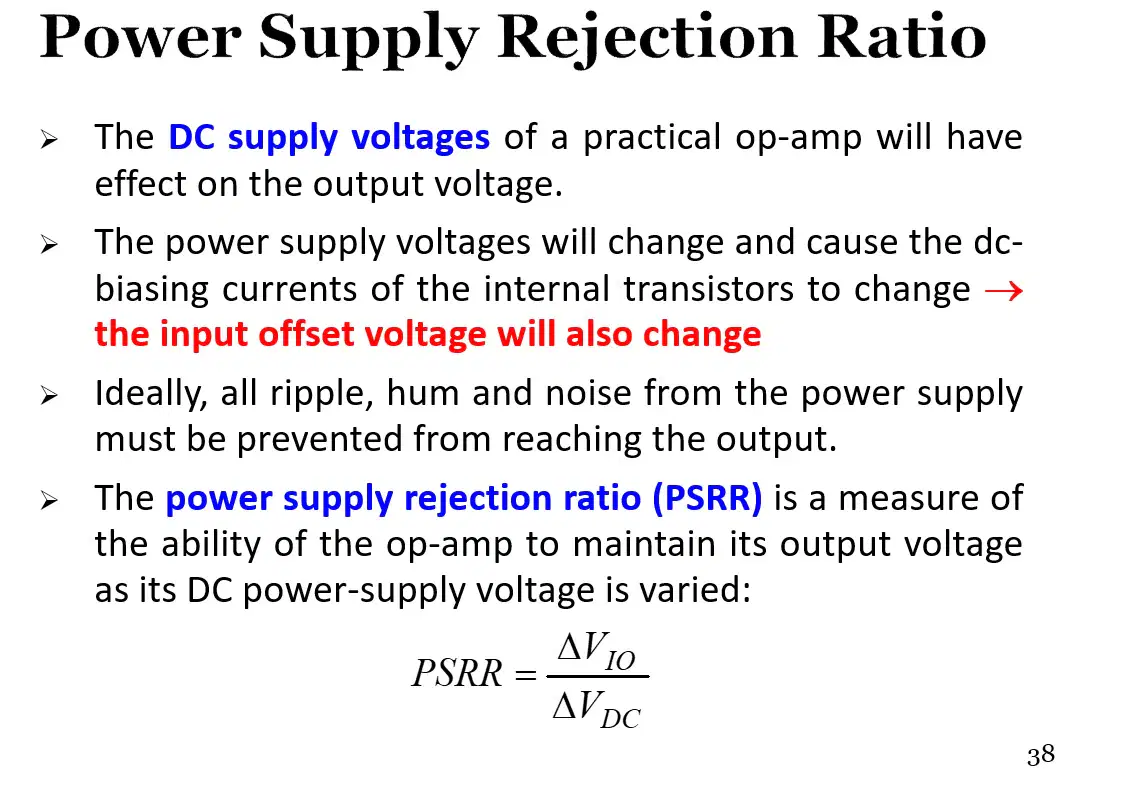
What is the power supply rejection ratio (PSRR) a measure of?
Change in output voltage due to input signal changes
Change in input offset voltage per unit change in DC supply voltage
Change in open-loop gain with frequency
Change in output impedance with load resistance
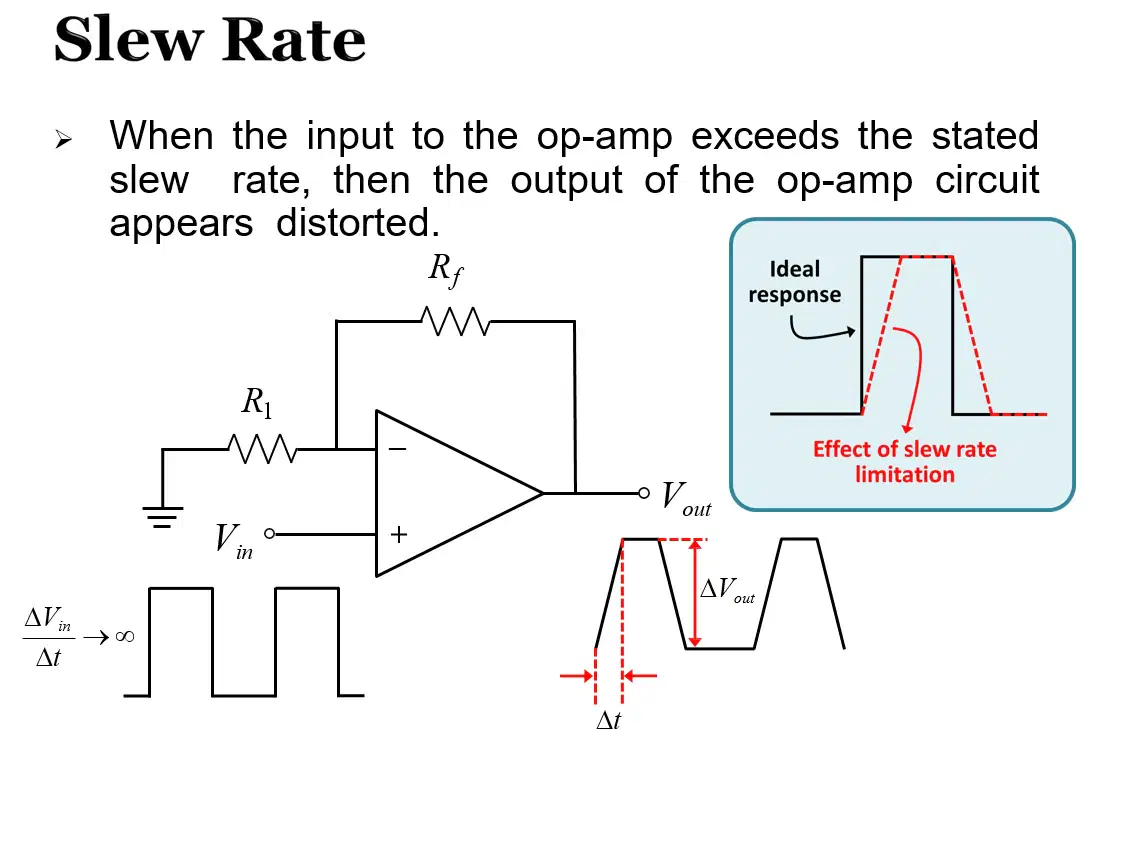
What is the primary effect of slew rate limitation in an op-amp?
It reduces the input impedance
It causes distortion in the output signal at high frequencies
It increases the open-loop gain
It eliminates the need for feedback

Why is a compensation network used in an op-amp?
To increase the open-loop gain
To shift the open-loop response and reduce bandwidth for stability
To eliminate the input bias current
To increase the output impedance
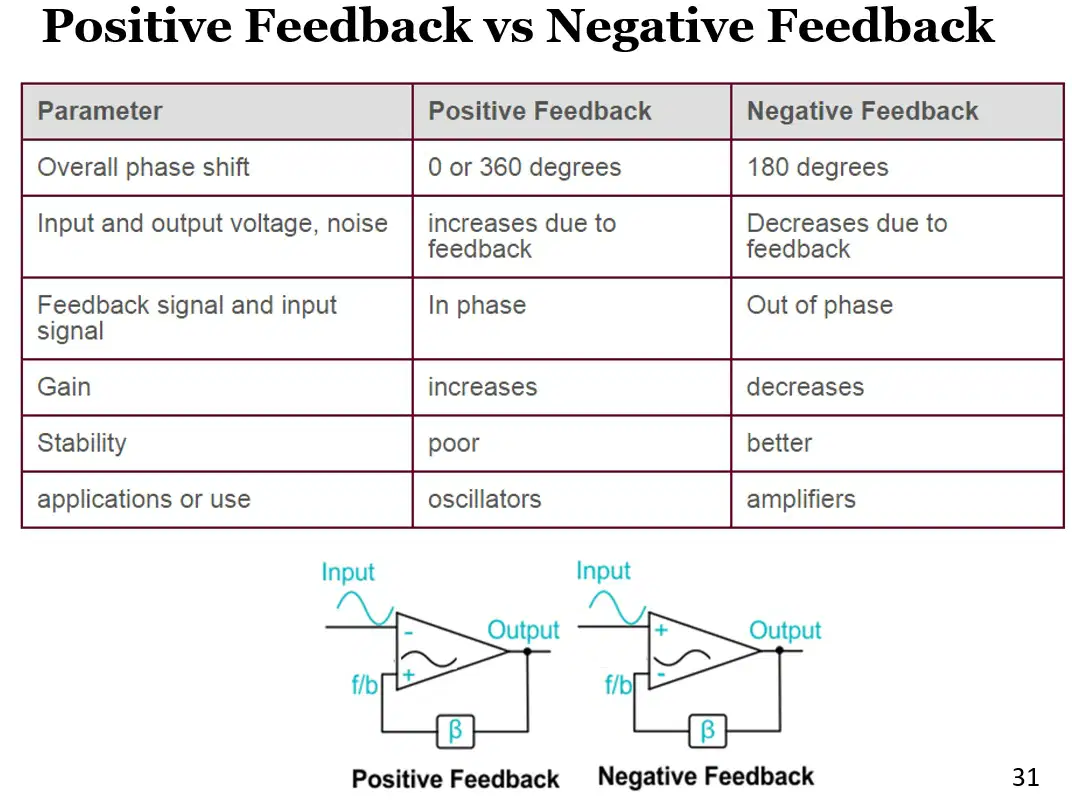
In an op-amp circuit, what is the primary purpose of using negative feedback?
To increase the input offset voltage
To stabilize the gain and reduce distortion by feeding the output signal back to the inverting input
To amplify the noise in the circuit
To reverse the polarity of the output signal
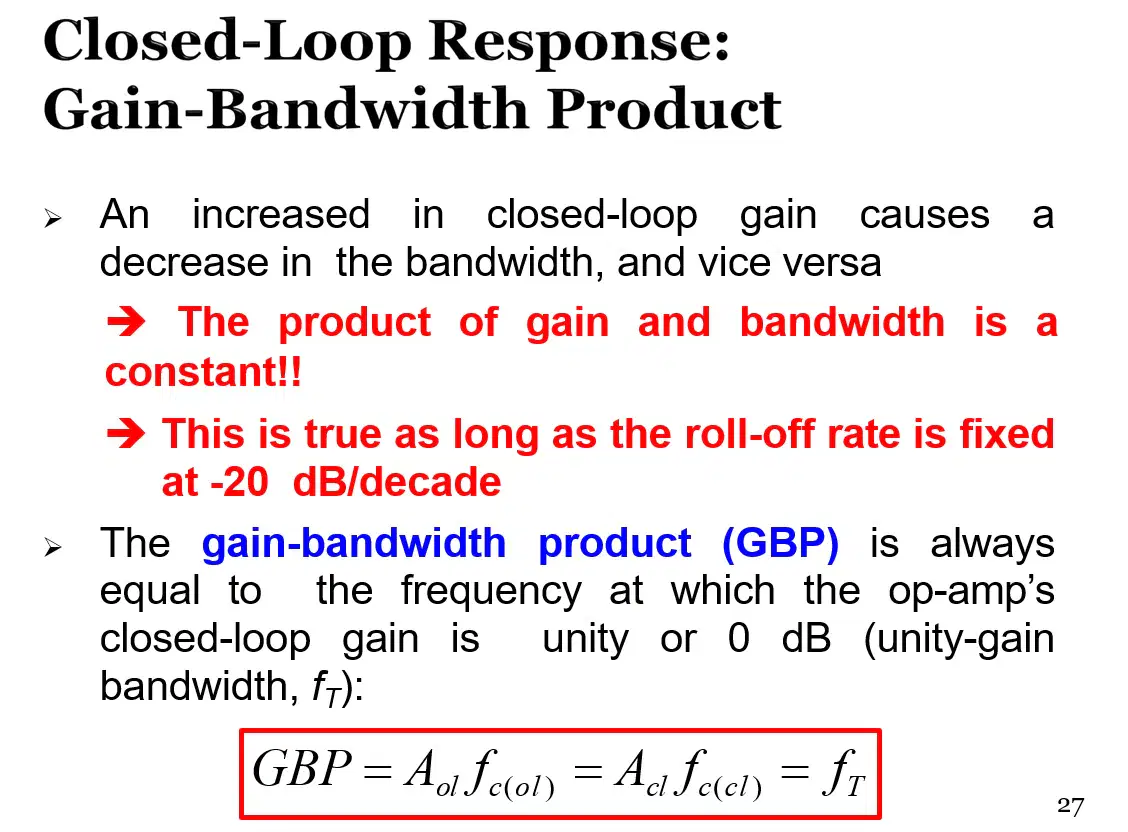
What is the gain-bandwidth product (GBP) of an op-amp?
The frequency at which the closed-loop gain is zero
The product of the midrange open-loop gain and the critical frequency
The frequency at which the open-loop gain is unity
The maximum output voltage swing
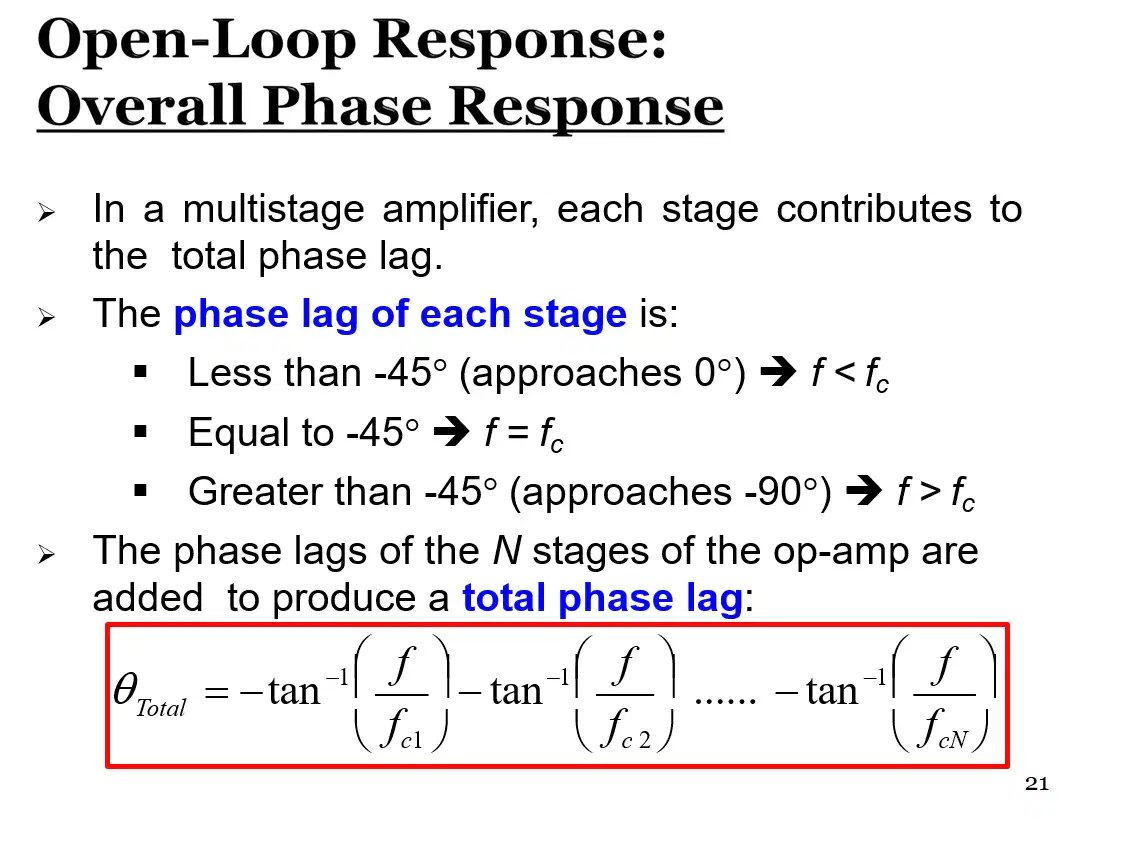
What is the phase shift contribution of a single RC lag network at its critical frequency?
0°
45°
90°
180°
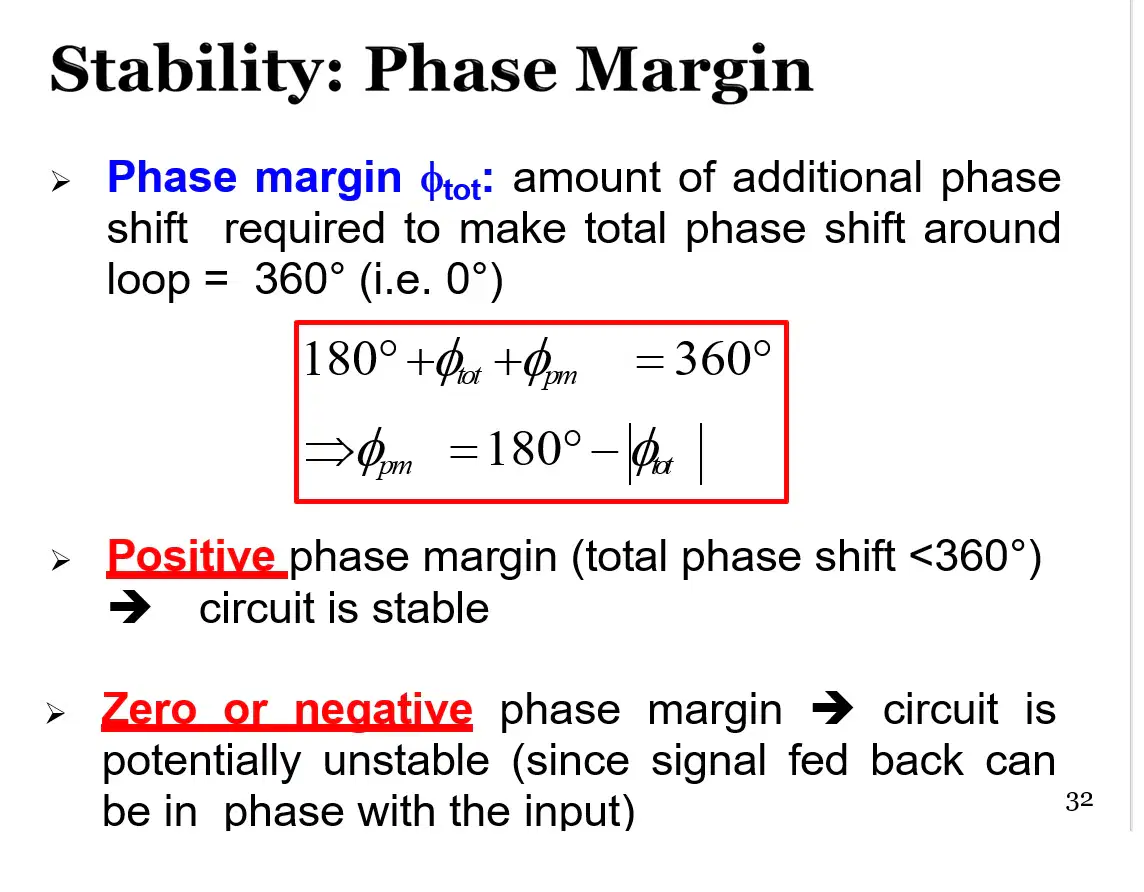
What is the phase margin of an op-amp with a total phase shift of 135° due to internal RC lag networks?
45°
90°
135°
180°

