
Font size
 Worksheets
Ontario Driving Test G1
Total questions: 100
Worksheet time: 50mins

What does this sign mean?
Stop sign 150 meters (500 ft) ahead
Bump 125 meters (400 ft) ahead
Stop at all times
Stop only if other vehicles are approaching

What does this sign mean?
Traffic signals ahead
Stop sign 150 metres (400 ft) ahead
Bump 125 metres (400 ft) ahead
Railway crossing ahead

What does this sign mean?
Pass to right of traffic island
Road turns right then left
Winding road ahead
Pass other traffic on the right

What does this sign mean?
Divided highway ends
Narrow bridge ahead
Road under construction
Divided highway ahead

What does this sign mean?
Destination board
School zone - watch for children playing
Provincial park
Pedestrian control sign meaning no active games

What does this sign mean?
X intersection for school vehicles
School crosswalk sign
Caution - school bus crossing
Regulatory sign
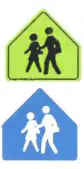
What do these signs mean?
Playground zone sign
Children playing in residential area
School zone sign
Directional sign for children
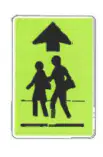
What does this sign mean?
School zone sign
Direction sign for children
School crosswalk sign
School zone ahead
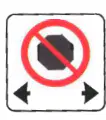
What does this sign mean?
No entry into intersection
This sign means no stopping
Vehicles approaching from the angle shown must stop
Need not stop for stop signs in direction of arrows
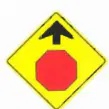
What does this sign mean?
You must not make a right turn
You are approaching traffic signal lights
You must not make a left turn
You are approaching a stop sign

What does this sign mean?
Stop sign ahead
Yield right-of-way
Dead end street ahead
Slow moving vehicle ahead
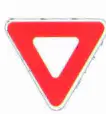
What does this sign mean?
School area ahead
Railway crossing ahead
You must give the right-of-way
You have the right-of-way

What does this sign mean?
Road slippery when wet
No right turn permitted
No left turn permitted
You must not make a "U" turn
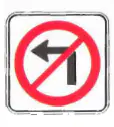
What does this sign mean?
You must make a right turn only
You must not make a left turn
Hidden intersection ahead
You are approaching a traffic island

What does this sign mean?
Road ahead slippery when wet
Bumpy road ahead
Winding road ahead
Railway crossing ahead
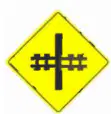
What does this sign mean?
You are approaching a four-way intersection
You are approaching a railway crossing
You are approaching a hospital zone
You are approaching a pedestrian crosswalk
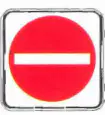
What does this sign mean?
Do not enter
Do not enter unless local traffic
Means a traffic circle ahead
Do not pass
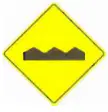
What does this sign mean?
Factory, slow down
Bump or uneven pavement
Construction zone
Bridge or viaduct
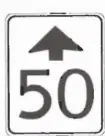
What does this sign mean
Maximum speed of 50 kilometers (30 miles) per hour from this sign to next sign
Speed limit for rural school zones
End of 50 kilometers (30 miles) per hour zone
Maximum speed of 50 kilometers (30 miles) per hour ahead
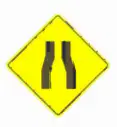
What does this sign mean?
Divided highway ahead
You are approaching a one-way street
Hidden intersection ahead
Pavement narrows
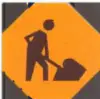
What does this sign mean?
Construction sign - slow down - obey flagman's directions
A construction sign replacing flagman on duty
Regulatory sign - reduce speed
This sign warns of highway works - Operations ahead
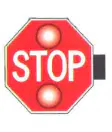
What does this sign mean?
Stop sign
You are approaching a stop sign
School bus arm
Yield right-of-way
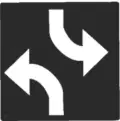
What does this sign mean?
Divided highway ahead
Center lane for left turn only
Right lane ends
Winding Road
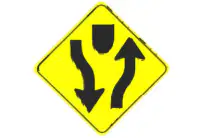
What does this sign mean?
Right lane ends
Center lane for left turn only
Winding Road
Divided highway ahead
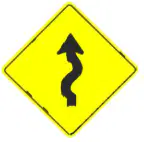
What does this sign mean?
Winding Road
Right lane ends
Divided highway ahead
Center lane for left turn only
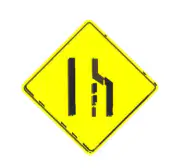
What does this sign mean?
Divided highway ahead
Center lane for left turn only
Right lane ends
Winding Road
When the light changes from green to amber when you approach the intersection, what must you do?
Stop, If the stop can't be made safely, proceed with caution.
Sound horn to warn pedestrians and other drivers.
Continue through the intersection without slowing or stopping.
Speed up to clear the intersection as quickly as possible.

Which of the following head-and-arm signal is correct for left hand turn?
Circle motion.
Straight and out.
Arm out and up.
Arm out and down.
In what lane of traffic should you drive when you intend to make right-hand turn?
Close to the right-hand side of the road.
Close to the left side of the road.
Close to the center line of the road
Doesn't matter.
While traveling on the highway, the driver of the motor vehicle is not permitted to carry, in a house or boat trailer.
Firearms.
Flammable material.
Persons.
Pets.
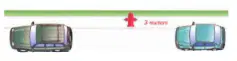
How close to a fire hydrant may you legally park?
3 meters (10 Ft.)
4.5 meters (15 Ft.)
1.5 meters (5 Ft.)
6 meters (20 Ft.)
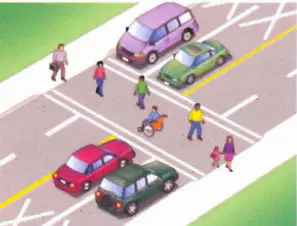
When a car is stopped to allow a pedestrian to cross the street at a marked crosswalk, you should:
Pass the stopped car on the left.
Sound horn for the driver of the stopped car to drive on.
Pass the stopped car to the right.
Not to pass any car stopped to allow a pedestrian to cross.
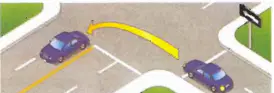
In what position on the roadway must you be before making a left turn from a one-way traffic street?
Close to the right-hand side of the roadway.
Close to the center line of the roadway.
Close to the left side of the roadway.
Doesn't matter provided you signal.
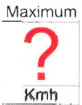
Unless otherwise posted, the maximum speed limit on the highway outside of a city, town, village, or built-up area is
100 kilometers (60 miles) an hour.
80 kilometers (50 miles) an hour.
60 kilometers (40 miles) an hour.
50 kilometers (30 miles) an hour.
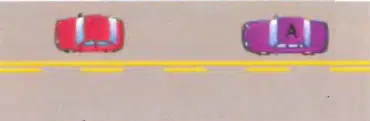
A solid centerline on the roadway is on your side of a broken centerline, What does the solid centerline mean?
It is unsafe to overtake and pass.
Pass only when no traffic is in sight.
It is safe to overtake and pass.
Pass at any time.
When may you lend your driver's licence?
Never.
To another person who is learning to drive.
For identification purpose only.
In emergencies.
To get your vehicle out of the skid, you should
Steer straight ahead.
Steer in the direction of the skid.
Steer against the direction of the skid.
Apply the brakes hard.
If you get caught drinking and driving at the level one or level two driver
Your licence will be cancelled
Suspension for 30 days.
You are going to receive a warning letter form the Ministry of Transportation.
You are going to be required to attend and interview
If you change your name or address, you must notify the Ministry of Transportation within:
60 days.
30 days.
15 days.
6 days.
At level one driver (G1), the most important thing to remember, you must drive:
Alone to avoid distraction
Both hands on the steering wheel.
A company with a fully licenced with at least four years experience.
During day time light hours only.
Your are at level one (G1) driver. Your company must be:
The only person in the front seat.
The owner of the vehicle.
A friend or a family member.
Taking a defensive driving course.
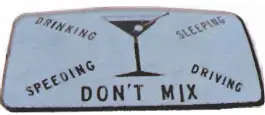
If you are a level one (G1) driver, your company driver must have blood alcohol level less than:
0.5
0.1
0.05
0.08
As a level one (G1) or level two (G2), the maximum alcohol in the blood must be:
0.5
zero
0.05
0.08
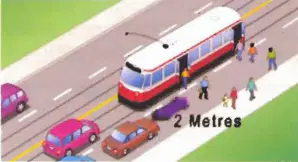
At streetcar stops, you must stop behind the rear door of the streetcar that's picking up or letting people off, at least:
2 meters.
12 meters.
40 meters.
1.5 meters.
When approaching a streetcar stop where an area has been set aside for streetcar passengers, you should:
Pass the streetcar
Pass on the right unless you are driving on one-way street.
Pass in a reasonable speed and be prepared for pedestrians to make a sudden or unexpected move.
Never pass.
The best way to avoid collision is to:
Have a caution of a space in the front, rear and sides of your vehicle, and adjust your speed to the condition of the road.
Do not drive in heavy traffic and rush hours.
Do not drive on rainy or snowy days.
Drive only during day time hours.
At night, when you meet another vehicle with bright headlights, the safest thing to do is:
Open and shut your eyes rapidly.
Turn your light on high beams.
Look slightly to the right-hand side of the roadway.
Look at the headlight of the oncoming vehicle.
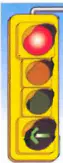
When a red signal light with a green arrow is shown at an intersection, it means:
Stop and wait for the light to be green before making the turn.
Proceed with caution in the direction of the arrow, yielding right-of-way to pedestrians and other traffic.
Stop and then proceed
The green arrow is a signal for pedestrians only.
You may drive when your licence is suspended, only if:
You have not surrendered your licence to the Ministry of Transportation.
You consider yourself a highly skilled driver.
Driving only during the day time.
You may not under any circumstance.
Some driving offences including conviction of careless driving, or driving 50 km/h over the speed limit, are:
Demerit points only.
Fine only.
Demerit points, fine, and suspension of your licence.
Suspension only.
As a G1 or G2 driver, the first time you collect the maximum number of demerit points, your licence will be suspended for:
30 days.
60 days.
90 days.
120 days.
As a level G1 or G2 driver, your licence will be suspended if you collect:
2 or more demerit points.
6 demerit points.
9 demerit points or more during a two year period.
10 or more demerit points.
To move from (G1) to (G2) licence, what must you do?
Spend mandatory time, and pass the (G1) road test.
Pass a (G2) written test.
To complete or a defensive driving course.
Do nothing; (G2) driving licence will be mailed to you automatically after you spend the mandatory time at level (G1).
If you must a phone call on a cellular phone when you are driving, the safest action is to do what?
Make the phone call only if you have hands-free system.
Make the call only after you pulled off the road and stopped your vehicle.
Make your call as long as you are not driving on a high-speed road.
Make your call at any time.
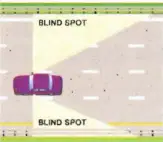
When driving, the most dangerous position on the road is:
Two-seconds distance or more behind another vehicle.
Two car lengths behind another vehicle and two lanes over.
In the blind spot of another vehicle.
Two car lengths in front of another vehicle.
If you cause a collision while you have been on a cellular phone, which of the following applies?
The insurance premium will increase.
You may be charged with careless driving but not convicted.
Could be charged with careless driving and if convicted, you will receive six demerit points, and a fine of $1000.00, and six months in jail.
You are not going to be charged.
As a level (G1) driver, you may not drive under one of these conditions:
During rush hour traffic, when traffic conditions are too complex
Half an hour before sunset to half an hour after sunrise.
From midnight to 5 am.
After dark and bad weather when conditions reduce visibility.
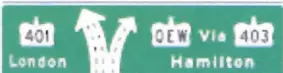
As a (G1) driver, you may drive with a posted speed limit over 80km/h, such as 400 series roads, QEW, DVP, and The Gardiner Express Way, only when:
A company with a full licenced driver with at least 4 years experience.
Drive short distance to gradual build up confidence on high-speed road.
To feel confident that you can safely merge into and exit from a high-speed road.
Accompanied by a licenced driving instructor.
As a (G2) licence, you must follow what restrictions?
You must not drive between midnight and 5 am.
You must have a blood alcohol level of zero when driving, and you carry only passengers with working seatbelts in the vehicle.
You must not drive on the road with a posted speed limit over 80 km/h such as 400 series roads, QEW, DVP, and the Gardiner Express Way.
There are no restrictions as (G2) driver is almost a G driver anyway.
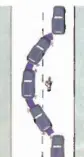
When approaching a cyclist in your lane on a multi-lane road, what is the safest action you can take?
Decide ahead of time whether or not the road is wide enough to share the cyclist. If it is not, go to the left.
Expect the cyclist to move out of the way since you have the right of way.
Sound a horn to the cyclist to move out of your way.
Check to make sure the way is clear, signal and move to the left and pass the cyclist from another lane.
When driving on undivided road, where another vehicle wants to overtake and pass you, what should you do?
Move closer to the right hand side of the road and be prepared to slow down, to let the passing driver get beside you.
The passing is not necessary.
Signal to the other driver not to pass.
Slow down.
It is important to be aware of motorcycles on the roadway because of:
It is hard to see because of their size and its easy to misjudge their speed.
It is the motorcycles' responsibility to ensure their safety and to stay away from other vehicles.
They are very expensive.
They are not causing any problems on the road because they are small and easy to share the road with.
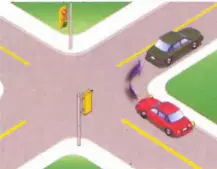
When you make a right turn with the red light facing you, you should do what?
Make your turn without stopping.
Make a complete stop, then make your turn.
Come to a complete stop, look left and right and left again, check your blind spot for smaller vehicles, bicycles and pedestrians. Make your turn only when the way is clear.
Come to a complete stop, and wait for the light to change to green.
When driving in fog, you should use:
You should avoid passing, changing lane, and crossing traffic.
In severe conditions, you pull off the road in a safe parking area, and wait for the fog to lift.
Slow down gradually and drive in a speed to suit the condition.
All of the above.
When approaching a pedestrian cross-over, you should never pass another vehicle within how many meters from the cross walk?
30 meters.
60 meters.
90 meters.
100 meters.
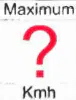
The maximum speed limit, otherwise posted, in a city, town, village or built-up area is:
100 kilometers (60 miles) an hour.
80 kilometers (50 miles) an hour.
60 kilometers (40 miles) an hour.
50 kilometers (30 miles) an hour.
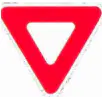
Upon approaching a yield sign, what does the law require you to do?
Slow down, check right and check left, enter the intersection only when the way is clear.
Stop, then enter the traffic slowly.
Stop, then enter the traffic quickly.
Speed up and force your way into traffic.
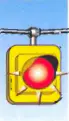
A flashing red signal light at an intersection means:
Stop. Proceed only when it is safe to do so.
Signal light is out of order, proceed with caution.
Slow down and drive with increased caution.
Slow down and, if necessary, yield right-of-way to car approaching from the left or right
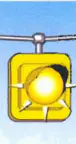
At an intersection where there is a flashing amber (yellow) traffic light, you must:
Stop if making right turn
Continue at the same speed.
Stop if making a left turn.
Slow down and proceed with caution.
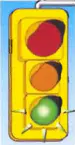
A flashing green light at the intersection, means what?
You may turn to the left if the way is clear.
You may turn to the right if the way is clear
You may proceed straight through, right and left.
None of the above.
You should under all conditions drive at a speed, which will allows you to:
Stop within 90 meters (300 feet).
Stop within 60 meters (200 feet).
Stop within a safe distance.
Stop within 150 meters (500 feet)
Never change lanes in traffic without:
Giving proper signals and looking to make sure the move is made safely.
Decreasing speed and giving correct signal.
Looking into the rear view mirror only.
Blowing your horn and looking to the rear.
Only when you intend to overtake and pass another vehicle, or when you intend to make a left turn, you should:
Always drive in the right lane.
Always drive in the left lane.
Drive in the center of the roadway.
Drive on the shoulder of the highway.
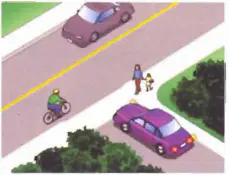
What must a driver do before entering a highway from a private road or driveway?
Yield right-of-way to all vehicles approaching on the highway.
Enter or cross the highway as quickly as possible.
Give hand signals then take right-of-way.
Sound horn and proceed with caution.
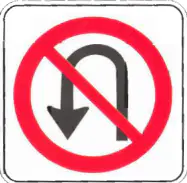
When you decide whether or not to make a U-turn, your first consideration should be to check:
Turning radius of your car.
Presence of trees, fire hydrants, or poles near the curb.
Height of curb.
Traffic regulations.
Before moving your car from a parked position, you should:
Signal and pull from curb.
Sound horn and move from curb.
Check other traffic, signal and pull from curb when it is safe to do so.
Check other traffic, signal and pull from curb quickly.
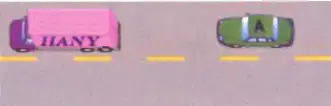
The broken center line on a roadway means you may:
Pass only during daylight hours.
Pass if the way is clear
Pass at any time.
Never pass.
If the traffic light changes while a pedestrian still in the intersection, which of the following has the right-of-way?
The pedestrian
Motorists making turns.
Motorists turning right.
Motorists turning left.
When descending a steep hill, a good safe driving practice is to:
Disengage the clutch and coast.
Gear down and use motor to assist with braking.
Place the gear shift to neutral.
Turn the ignition off.
Most automobile skids are the result of:
Driving too fast
Ice or snow on the road.
Over inflated tires.
Under inflated tires.
If your right wheels drop off the roadway, what is the best way to get back on the roadway?
Apply brakes and steer hard to the left.
Steer hard to the left.
Apply brakes to reduce speed.
Take foot off gas pedal, get back when the vehicle has slowed.
If you are in the middle of the intersection, intend to make a left turn and the light changes from green to red, what should you do?
Yield the right-of-way to pedestrians and other vehicles, and complete the turn with caution.
Do not go anywhere because the light is red.
Back up so you can clear the intersection to the other traffic.
Sound horn and complete the turn quickly, so you can clear the intersection.
When driving a motor vehicle on the highway at night, you should use low beam headlights when:
Blinded by the headlights of an approaching vehicle.
Meeting or following another vehicle.
Approaching an intersection.
Another driver dims his lights.
When approaching an intersection where traffic light is not working and no one is directing the traffic, how do you treat it?
Stop and go.
Go through
Treat it as an all-way stop sign.
Sound horn and proceed.
If you fail or refuse to give breath or blood sample when asked by the police, your licence will be suspended at the scene, for at least:
60 days.
90 days.
120 days.
180 days.
If you are a (G1) or (G2) license, and you don't follow the specific rules of their class of license, your license will be suspended for:
30 days.
60 days.
90 days.
120 days.
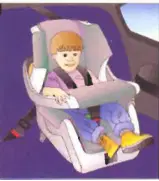
If the driver fails to ensure that the passenger under 16 of age is wearing a seat belt, he will lose:
2 demerit points.
4 demerit points.
5 demerit points.
3 demerit points.
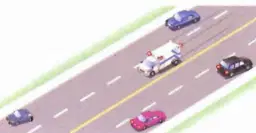
When a street designed for two way traffic, you hear a siren of an emergency vehicle, what does the law require you to do?
Speed up and get out of the way.
Signal the driver to pass.
Pull to the right as far as possible and stop.
Continue at the same speed.
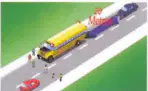
A school bus with red signal lights flashing, what does the law require you to do?
Does not matter provided you sound the horn.
Stop until the bus proceeds or the signal lights are no longer flashing.
Wait for approaching vehicles to pass.
Reduce speed and pass with care.
Flashing blue light mounted on the motor vehicle indicates:
A motor vehicle carrying explosives.
Snow removal equipment.
An ambulance.
A police emergency vehicle.
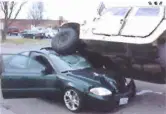
Every accident must be reported to the police where there is personal injury or when the damage exceeds:
$100
$150
$200
$1,000
When driving in heavy fog, you should use:
Parking lights.
Low beam headlights.
Parking lights and high beam headlights.
High beam headlights.
Parking lights may be used:
At any time.
For parking only.
When driving in heavy fog.
When driving on well lighted streets.
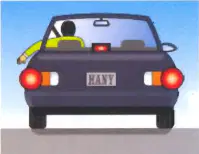
Which of the following hand and arm signal is correct for slowing or stopping:
Arm out and up
Arm straight out of the window
Arm out and down
Circle motion
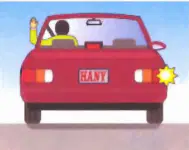
Which of the following hand and arm signal is correct for right turn:
Arm out and up.
Arm straight out the window.
Arm out and down.
Circle motion.
It is more dangerous to drive at maximum speed limit at night than during day time because:
Some drivers unlawfully drive with parking lights only.
You cannot see as far ahead at night.
The roadway is more apt to be slippery at night.
Your reaction time is slower at night

Before leaving your car parked on a downgrade, you should:
Leave your front wheels parallel to the curb.
Turn your front wheel to the left and set your parking brakes.
Set your parking brakes only.
Turn your front wheels to the right and set your parking brakes.
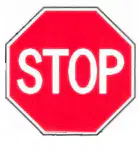
Upon approaching a stop sign, a driver must:
Slow down, sound horn and proceed.
Slow down, and if the way is clear, proceed.
Stop, sound horn, then proceed
Stop and when it's safe to do so, proceed
When does the law require lights on vehicles to be turned on:
Between sunset and sunrise.
Between dusk and dawn and at any other time you cannot see clearly for a distance of 150 m (500 ft).
Between half an hour after sunset to half and hour before sunrise and at any other time you cannot see clearly.
No specified time.
When approaching an intersection where a traffic signal light is red and a policeman motions you to go through, you should:
Wait for the light to turn green.
Obey the policeman's signal and go through at once.
Call the policeman's attention to the red light.
Stop to make sure he wants you to go through.

