
 Worksheets
History
Total questions: 60
Worksheet time: 30mins
History is the study of _________
mankind's past
future technologies
mathematical equations
chemical reactions
What does history contain?
Systematic records and explanation of what people have thought, said, and done
Only stories
Only dates
Only wars
The word 'history' comes from the Greek word 'Historia', which means ________.
knowledge acquired through investigation or inquiry
stories of the past
ancient legends
written records
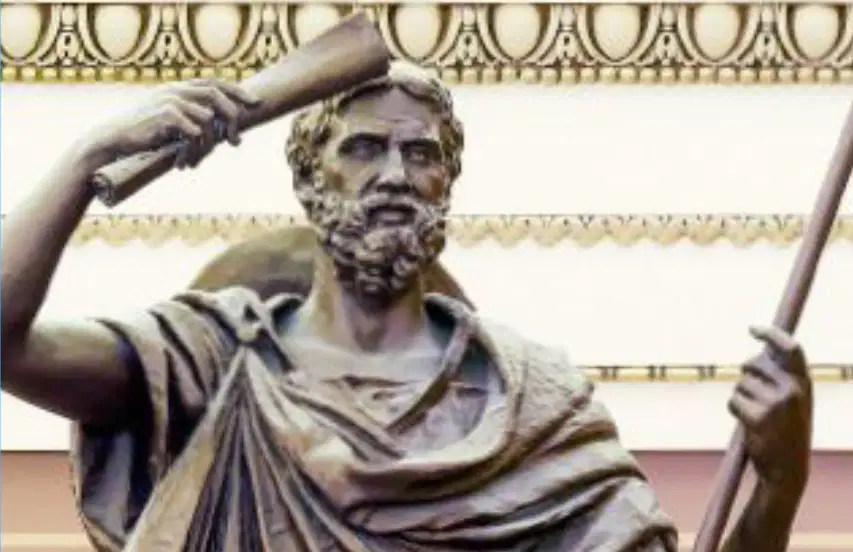
Who is known as the 'Father of History'?
Socrates
Herodotus
Aristotle
Plato
Before the emergence of the study of history, records of significant events that occurred in different locations were _________
not arranged or organized in any particular manner
carefully categorized by date and place
systematically archived in libraries
written only in poetic form
True or False: Without Herodotus, the study of history would have been easy and straightforward.
True
False
One importance of studying history is _______.
To allow you to learn lessons from the past and analyze current issues and problems.
To ignore the mistakes of the past and repeat them.
To focus only on future events and disregard history.
To memorize dates without understanding their significance.

Fill in the blank: Studying history helps you realize the value of ______ among people and nations.
interdependence
competition
isolation
ignorance
Fill in the blank: Studying history gives you a better understanding or debt of gratitude to your own people and ______.
other races
yourself
the future
the environment
Fill in the blank: Studying history helps you to realize one's own ______ and duties to fulfill.
rights
hobbies
fears
mistakes
Fill in the blank: Studying history teaches the importance of settling differences through ______ means.
peaceful
violent
expensive
secret
One of the skills you gain from studying history is:
Reading and interpreting statistical data, maps, graphs, and illustrations.
Cooking and baking.
Playing musical instruments.
Painting and drawing.
Which of the following is a benefit of studying history as mentioned in the image?
Differentiating facts from opinion, analyzing current issues and problems affecting people.
Learning to swim.
Practicing sports.
Gardening.
What is the first step in the historical method? Fill in the blank: The first step in the historical method is _________?
Searching for sources
Writing a conclusion
Analyzing data
Presenting findings
What is the second step in the historical method? Fill in the blank: The second step in the historical method is _________?
Making inferences
Collecting data
Drawing conclusions
Formulating a hypothesis
What is the third step in the historical method? Fill in the blank: The third step in the historical method is _________?
Synthesizing
Questioning
Interpreting
Recording
What is external criticism concerned with when examining historical sources?
Establishing the authenticity or genuineness of data
Analyzing the content of the document
Restoring the meaning of the text
Writing historical events
What is another name for external criticism?
Higher criticism
Lower criticism
Content criticism
Source criticism
What does internal criticism concern when examining historical sources?
The authenticity of the document
The contents of the document
The date of the document
The author’s name

Fill in the blank: External criticism comes _____ before internal criticism.
first
after
simultaneously
rarely
Which of the following is NOT a question asked during internal criticism?
What is the content all about?
Are the sources reliable, believable and credible?
What is the date of the document?
Was the author objective in writing the events?
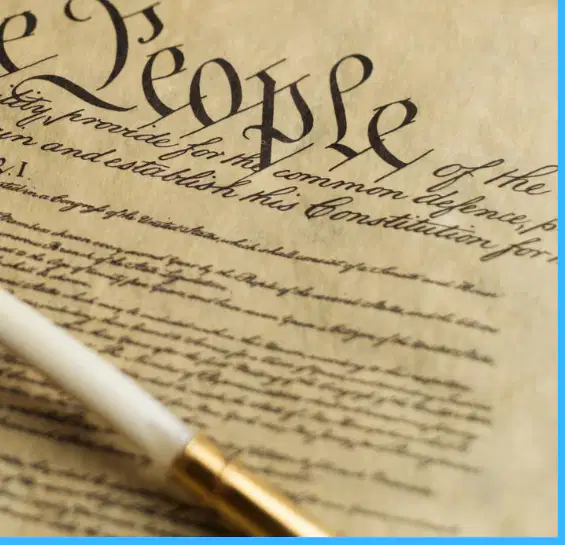
Which of the following is an example of a primary source in history?
A textbook
A diary from the past
An encyclopedia
A documentary

Which of the following is an example of a secondary source in history?
An original letter from a historical figure
A government record
A history textbook
An ancient artifact
What is a primary source?
A document or object created by witnesses or recorders who experienced the actual event being studied
A document written after the event by someone who did not experience it
A fictional story
A summary of events
Which of the following is an example of a primary source?
Original documents (diplomas, ID Cards, licenses)
A textbook summary
A movie review
An encyclopedia entry
Fill in the blank: Creative works, such as paintings or novels, are considered ________ sources.
primary
secondary
tertiary
reference

Which of the following images is an example of a relic or artifact?
The image of the pyramids is an example of a relic or artifact.
The image of a modern city skyline is an example of a relic or artifact.
The image of a digital clock is an example of a relic or artifact.
The image of a sports car is an example of a relic or artifact.
Which of the following best describes secondary sources?
They provide original data or evidence.
They provide interpretation and analysis of primary sources.
They are always fictional stories.
They are only used in science.
Secondary sources analyze, interpret, and discuss information about the ________ sources.
primary
secondary
tertiary
digital
True or False: Journals and commentaries are examples of secondary sources.
True
False
Choose two examples of secondary sources mentioned in the passage.
Textbooks and encyclopedias
Diaries and letters
Photographs and artifacts
Official records and interviews
True or False: A secondary source can exist without a primary source.
True
False
Which type of source is considered more reliable for history?
Primary source
Secondary source
True or False: An autobiography is a primary source.
True
False
True or False: A biography is a primary source.
True
False
Which of the following is a branch of Social Sciences?
Sociology
Chemistry
Algebra
Geometry
Fill in the blank: The study of human society and social behavior is called ________.
Sociology
Biology
Geology
Psychology
Which of the following is NOT a branch of Social Sciences?
Psychology
Anthropology
Fashion
Calculus
Fill in the blank: The study of the human mind and behavior is called ________.
Psychology
Biology
Sociology
Geology
Which branch of Social Sciences studies human origins and cultures?
Biology
Anthropology
Physics
Algebra
What is Political Science?
The study of human social behavior
Concerned with the study of the state, nation, government, and politics and policies of government.
The study of the origins, organization, institutions, and development of human society.
The study of natural sciences.
What is Sociology?
The study of the origins, organization, institutions, and development of human society.
Concerned with the study of the state, nation, government, and politics and policies of government.
The study of mathematics.
The study of natural sciences.
Which of the following is an example related to Political Science?
Dictatorship
Poverty
Photosynthesis
Evolution
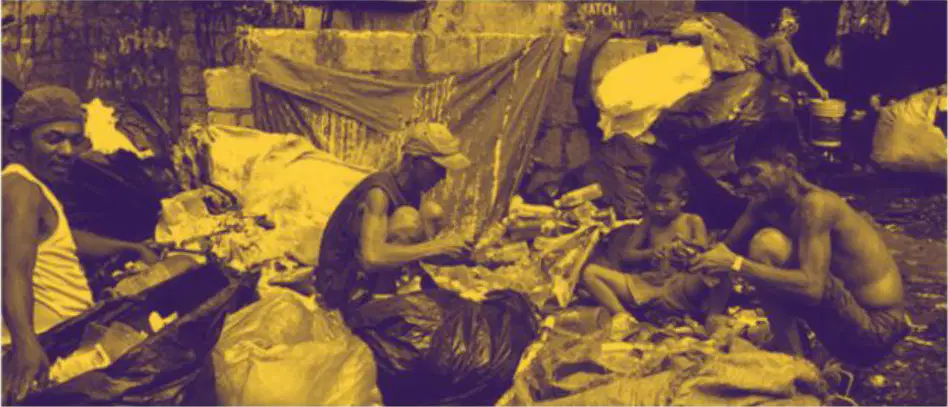
Which of the following is an example related to Sociology?
Dictatorship
Poverty
Photosynthesis
Evolution

Fill in the blank: _______ is the study of past people and cultures through finding and analyzing material remains of human cultures.
Archaeology
Biology
Geology
Astronomy

Fill in the blank: _______ is the study of the origin, behavior, and physical, social, and cultural development of humans.
Anthropology
Geology
Astronomy
Botany
What is the study concerned with the features and distribution of life on the earth and human and environment interaction called?
Geography
Biology
Astronomy
Chemistry
What is the study of the production, distribution, and consumption of goods and services called?
Economics
Biology
Geography
Psychology
What is the investigation of the nature, causes, or principles of reality, knowledge, or values called?
Biology
Philosophy
Chemistry
Sociology
What term is associated with the image showing a person holding a religious icon and smiling during a celebration?
Religiosity
Secularism
Atheism
Materialism
Which branch of social science is described as the study of nature, causes, and principles of reality, knowledge, or values based on logical reasoning rather than empirical methods?
Philosophy
Economics
Sociology
Geography
Which branch of social science studies the state, nation, politics, government, and its policies?
Political Science
Anthropology
Archaeology
Economics
Which branch of social science is connected to the study of social classes such as Kings, Free men, and Slaves?
Sociology
Geography
Philosophy
Economics
Which branch of social science deals with the barter system and the use of currency?
Economics
Political Science
Anthropology
Archaeology
Which branch of social science is concerned with how civilizations started and the study of the earth's features?
Geography
Sociology
Philosophy
Political Science
Which branch of social science involves the study of tools used to build monuments and for everyday use?
Anthropology
Economics
Sociology
Philosophy
Which branch of social science is associated with the study of important sites and artifacts such as stone tools?
Archaeology
Geography
Political Science
Economics
Why is history essential for good citizenship?
Studying history will help you realize your roles and duties in the preservation of your nation’s culture.
History is only about memorizing dates and events.
History teaches you how to predict the future with certainty.
History is not relevant to understanding current events.
What is the role of history in nation-building?
Studying history can contribute in the promotion of unity among people in order achieve common goals.
History is only about memorizing dates and events with no relevance to the present.
History serves only as a source of entertainment and stories.
History is mainly used to create divisions among people.
How does history contribute to the development of our country?
History helps people analyze the causes and effects of various phenomena. Thus, it guide us in making good decisions for our nation and for our country to achieve development.
History is only about memorizing dates and events, and does not affect our country's development.
History is mainly for entertainment and has no real impact on national progress.
History is just a collection of stories with no relevance to decision-making or development.

