
 Worksheets
Climate Crisis - causes of weather and climate
Total questions: 90
Worksheet time: 2hrs 51mins

Which weather tools allow Matthew to make this observation, "This morning, winds are blowing at 25mph toward the North."
Rain Gauge and Anemometer
Wind Vane and Thermometer
Anemometer and Wind Vane
Compass and Rain Gague
Air pressure is...
A type of weather
The sort of climate you get at high altitudes
How hard air particles push on us and everything around us
Caused by heat energy
What causes seasons?
The tilt of the earth's rotation changes how much heat energy we get
The sun gets hotter and colder at different times of the year
It's a random process, but it happens at the same time each year
The heating of the Earth's surface and atmosphere from solar radiation being absorbed and emitted by the atmosphere, mainly by water vapor and carbon dioxide
warm front
tropical zone
greenhouse effect
global warming

Where is the equator line on the world map?
Bottom
Bottom middle
Top
Middle
Top middle

Which of the following has caused repeating 100,000-year cycles of ice ages in the past?
an increase in sun spots
several major volcanic eruptions
changes in Earth's orbit and the tilt of its axis
continental drift

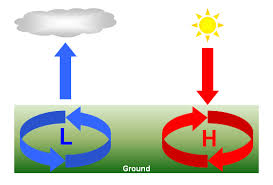


What causes changes in Air Pressure
Equal heating of the Earth's surface
Unequal heating of the Earth's surface
Coriolis Effect
Ocean Currents
What causes changes in Air Pressure
Equal heating of the Earth's surface
Unequal heating of the Earth's surface
Coriolis Effect
Ocean Currents
What is responsible for creating the different seasons in the midlatitudes?
The rotation of the Earth
The revolution of the Earth around the sun
The tilt of the Earth
The tilt of the Earth in relation to the Sun

How many mm did the sea level rise between 1880 and 1980 according to the graph?
50 mm
225 mm
100 mm
150 mm

Which statement is correct according to this graph?
As carbon dioxide increases the temperature will decrease
Increases in temperature cause land-based ice (glaciers) to melt and raise sea levels
Temperature increases when carbon dioxide increases
The industrial revolution lead to a large decrease in atmospheric carbon because of burning fossil fuels

What does this graph show us?
That the planet is getting warmer and causing glaciers to melt
The amount of carbon dioxide in our atmosphere is increasing
Climate change is causing the sea levels to rise
Increased carbon dioxide causes the temperature to increase
How much of Earth's atmosphere is made up of carbon dioxide?
0%
0.04%
4%
40%
100%
Which gas makes up the largest portion of air?
oxygen
nitrogen
carbon dioxide
methane

Which of the following are greenhouse gases?
Carbon dioxide
Methane
Water vapor
All answers are correct
Which of the following does NOT happen to solar energy when it reaches Earth?
Some solar energy reflects off the atmosphere, back to space
Some solar energy passes through Earth and comes out the other side
Some solar energy is absorbed by land and water
Some solar energy is radiated from the Earth's surface and trapped by the atmosphere
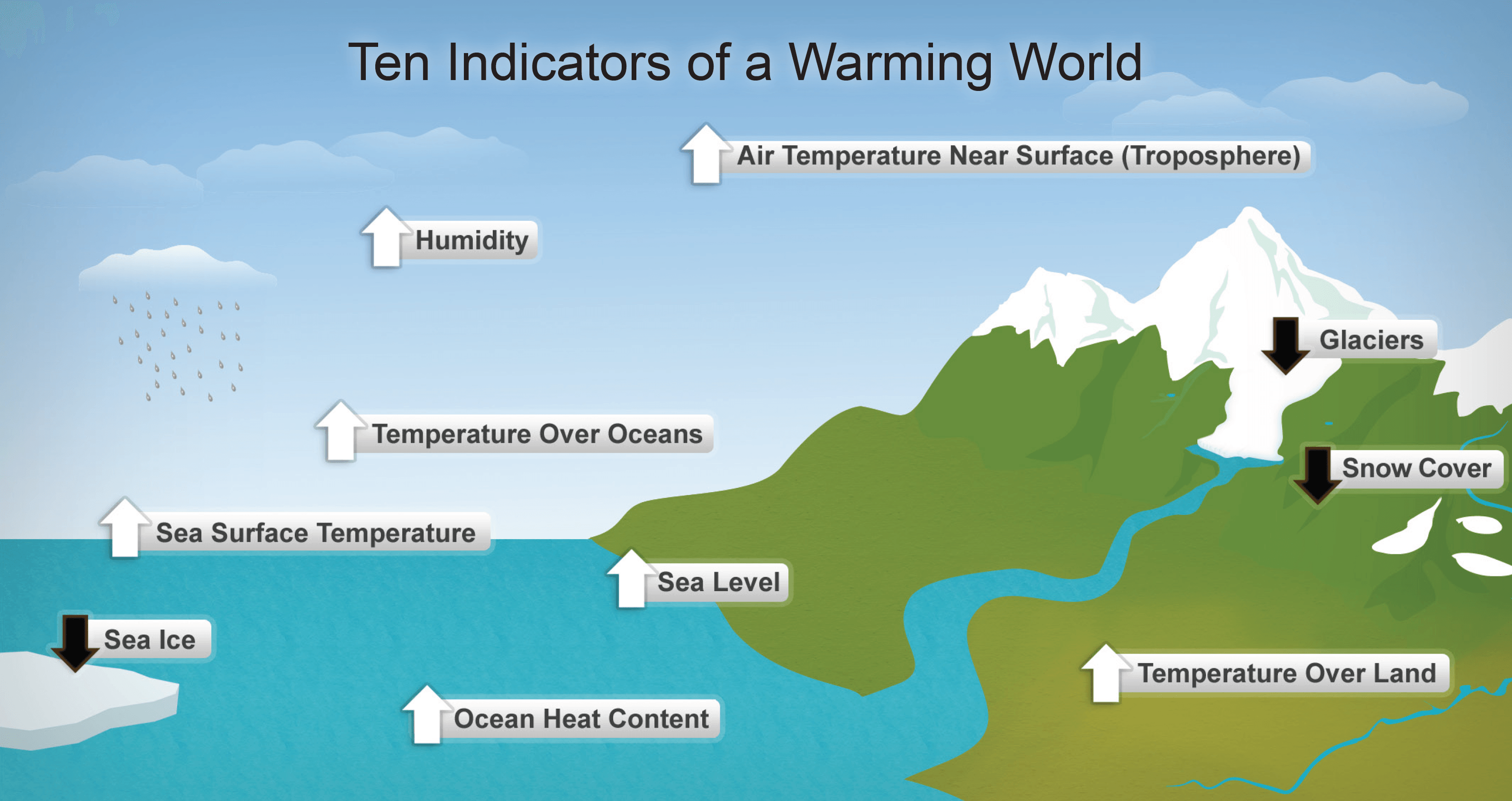
How are greenhouse gasses harming our environment?
They aren't
Less heat is able to escape causing the Earth to cool down
Less heat is able to escape causing the Earth to warm up
More heat is able to escape
Changes in the shape of Earth’s orbit around the Sun are called ___.
eccentricity
obliquity
precession
The angle of Earth’s tilt as it orbits the Sun is called ___.
eccentricity
obliquity
precession
The wobbling of Earth's axis as it orbits the Sun is called ___.
eccentricity
obliquity
precession

Which variable of the Milankovitch Cycles is animated here?
eccentricity
obliquity
precession

Which variable of the Milankovitch Cycles is animated here?
eccentricity
obliquity
precession

Which variable of the Milankovitch Cycles is animated here?
eccentricity
obliquity
precession
Which of the following accurately states the relationship between Earth’s CO2 levels and the average global temperature?
As CO2 levels increase, global temperatures decrease
As CO2 levels increase, global temperatures increase
As CO2 levels decrease, global temperatures stay put
As CO2 levels decrease, global temperatures increase
The ozone layer protects living organisms on Earth by
enhancing solar energy
blocking solar ultraviolet (UV) radiation
blocking solar infrared (IR) radiation
preventing escape of water vapor
greenhouse effect
decomposed by chlorine atoms
trade winds, westerlies, and polar easterlies
result of high UV radiation on the human body
process by which the atmosphere
reradiated infrared radiation back to Earth’s surface, keeping it warm
water is cooler than usual in the eastern Pacific Ocean
CO2
decomposed by chlorine atoms
trade winds, westerlies, and polar easterlies
a greenhouse gas added to the atmosphere when fossil fuels are burned
winds push warm water eastward in the Pacific Ocean
water is cooler than usual in the eastern Pacific Ocean
prevailing winds
decomposed by chlorine atoms
trade winds, westerlies, and polar easterlies
a greenhouse gas added to the atmosphere when fossil fuels are burned
winds push warm water eastward in the Pacific Ocean
water is cooler than usual in the eastern Pacific Ocean

Latitude strongly influences climate becasue ________ solar energy falls on areas that are closer to the equator than to the poles.
the same amount of
sometimes less
more
less

Based on this graph, what is the relationship between carbon dioxide and global temperature?
There is no relationship between carbon dioxide and temperature.
If carbon dioxide increases, temperature decreases.
If carbon dioxide increases, temperature increases.

Descending air leads to ____ pressure at ground level
High
Low
Rising air leads to ____ pressure at ground level
High
Low

The picture below is of a(n) ____ event.
Non-El Nino (Normal)
El Nino
La Nina


Which of the following is NOT a greenhouse gas?
Carbon dioxide
Methane
Oxygen
Ozone
Which of the following is the main greenhouse gas produced from the burning of fossil fuels?

The greenhouse effect is a natural process
true
false
What do greenhouse gases do?
absorb UV light
absorb visible light
absorb infrared radiation
reflect infrared radiation
Why is the Ozone important to life on Earth?
The majority of Earth's energy comes from...
the Earth's core
the Sun
hydroelectric power
burning fossil fuels

What has the highest albedo?
the oceans
Ice in the Arctic or Antarctic
the ground
roads

What heats faster, land or water?
Land
Water
If you want to keep your house cool all year, should you design the house roof to have a high or a low albedo?
High
Low
Which object below would have an albedo score of 1.
A green forest
A deep blue ocean
Fresh clean snow
A pitch black rooftop
Which object below would have an albedo score of 0.
A green forest
A deep blue ocean
Fresh clean snow
A pitch black rooftop
What does the E stand for in PQE?
Evaluate
Exception or Exceptions
Example
End
What does the Q stand for in PQE?
Queen
Quarter
Quantify
Quantity
The P in PQE stands for.....
Political
Pattern
Picture
The Q in PQE stands for Quantify. What does this mean?
Numbers! Use the data on the page as evidence for your finding.
Explain! Use your knowledge to explain the pattern.
Make sure your work is high quality.
The E in PQE stands for Exceptions. This means....
Explain your answer
Reasons you aren't answering certain questions
Identify any outliers/things that don't make sense

State the pattern.....
There are clusters found along the coastline
There is a high concentration of people found along the coastline
There are people all over Australia
No one lives in the middle of Australia

State the exception....
There is a major city (Perth) found on the opposite side of Australia to the other major cities
There are medium sized cities found in the middle of Australia (not along the coastline)
People don't always live along the coastline
There are also small and medium cities found along the coastline

What is the pattern on this graph?
The number of undernourished people worldwide is increasing.
The number of undernourished people worldwide is stable.
The number of undernourished people worldwide is decreasing.

The overall pattern of food insecurity can be described as...
clustered around Africa
even across all continents
random
dispersed around North America

If I wrote "The majority of the interior of the country has a 65% chance of exceeding the median minimum temperature.", which part of a PQE response does this represent?
P - Pattern
Q - Quantify
E - Exceptions

If I write "The anomaly to the general pattern of average to high chance of exceeding the median minimum temperature occurs in the Western region of Tasmania, where there exists only a 45% probability of this occurring.", which part of a PQE response does this represent?
P - Pattern
Q - Quantify
E - Exceptions

