
 Worksheets
Medical and Biochemistry Quiz
Total questions: 60
Worksheet time: 58mins
What is the major iron storage compound?
Hemosiderin
Ferritin
Siderotic granules
Transferrin
A 72-year-old woman has the following results: Hemoglobin: 6 g/dL MCV: 114 fL MCH: 39 pg MCHC: 34 g/dL Oval macrocytes on Wright stain Serum B12: 55 pg/mL (Normal: 200–1000 pg/mL) Serum folate: 7 ng/mL (Normal: 1–10 ng/mL) Anti-intrinsic factor antibodies: positive What is the most likely diagnosis?
Folate deficiency
Liver disease
Pernicious anemia
Reticulocytosis
Which condition results from decreased synthesis of globin chains?
Beta-thalassemia
Hemoglobin C disease
Hemoglobin M
Sickle cell disease
What is the normal myeloid-to-erythroid (M:E) ratio for an adult bone marrow?
1:1.5
3:1
5:1
9:1
The failure of granulocytes to develop past the band or two-lobed stage is characteristic of:
Bernard-Soulier syndrome
Chediak-Higashi syndrome
May-Hegglin anomaly
Pelger-Huet anomaly
A patient has markedly elevated WBC count with neutrophilia, left shift, toxic granulation, vacuoles, Döhle bodies, and increased LAP score. What is the most likely diagnosis?
Chronic lymphocytic leukemia
Chronic myelogenous leukemia
Leukemoid reaction
Pelger-Huet anomaly
Lymphocytes with cytoplasmic projections and a positive tartrate-resistant acid phosphatase stain are most likely found in:
Chronic lymphocytic leukemia
Acute lymphocytic leukemia
Sezary syndrome
Hairy cell leukemia
Plasma cells evolve from which cell line?
Lymphocytic
Monocytic
Myelocytic
Megakaryocytic
A peripheral smear stained with Prussian blue shows siderocytes. On a Wright-stained smear, these would appear as:
Basophilic stippling
Howell-Jolly bodies
Heinz bodies
Pappenheimer bodies
A “dry tap” bone marrow aspiration is most commonly associated with:
Iron deficiency anemia
Myelofibrosis
Vitamin B12 deficiency
Acute lymphoblastic leukemia
Which red cell inclusion consists of precipitated RNA and appears as fine blue granules with Wright’s stain?
Howell-Jolly bodies
Basophilic stippling
Heinz bodies
Pappenheimer bodies
After exposure to an oxidizing drug, a patient with G6PD deficiency would most likely have:
Target cells
Spherocytes
Heinz bodies
Acanthocytes
Which finding is characteristic of hereditary spherocytosis?
Macrocytosis
Increased osmotic fragility
Presence of sickle cells
Hypochromia
In the Kleihauer-Betke test, fetal hemoglobin (HbF) appears as:
Colorless cells
Pink-stained cells
Blue granules in cells
Green-stained cells
The term “shift to the left” in a WBC differential refers to:
Increased mature neutrophils
Increased immature neutrophils (bands, metas, etc.)
Decreased lymphocytes
Increased basophils
Which of the following pairs of fasting plasma glucose values demonstrates unequivocal hyperglycemia that can be used toward the diagnosis of diabetes mellitus?
160 mg/dL on two separate occasions
100 mg/L and 125 mg/dL
75 mg/dL on two separate occasions
93 mg/dL and 195 mg/dL
Which serum enzyme is elevated in all hepatobiliary disorders?
Gamma-glutamyl transferase (GGT)
AST
Creatinine kinase
Amylase
Aldosterone regulates the levels of which electrolyte?
Sodium
Magnesium
Calcium
Bicarbonate
A deficiency of which vitamin produces abnormal bone mineralization and can lead to osteomalacia?
Vitamin B12
Vitamin K
Vitamin C
Vitamin D
Absorption of vitamin B12 in the gastrointestinal tract requires the presence of:
Gastrin
Intrinsic factor
Secretin
Folic acid
Which enzyme is specific for acute pancreatitis and is not elevated in salivary gland disorders?
Lipase
Amylase
Cholinesterase
Acid phosphatase
Which protein is increased in diseases with expanded fluid volume and is a marker for congestive heart failure (CHF)?
BNP
CK
Troponin
Myoglobin
An increase in which protein is associated with primary carcinoma of the liver and is a useful tumor marker?
Alpha-1-fetoprotein
Haptoglobin
Ceruloplasmin
C-reactive protein
The very low-density lipoprotein (VLDL) fraction primarily transports:
Which protein is a marker for liver cancer?
Alpha-1-fetoprotein
Haptoglobin
Ceruloplasmin
C-reactive protein
The very low-density lipoprotein (VLDL) fraction primarily transports:
Triglycerides
Cholesterol
Phospholipids
Chylomicrons
A blood sample for a trough drug level should be drawn:
Shortly before drug administration
During the distribution phase of the drug
1.5 hours after drug administration
During phase 1 biotransformation
Which disorder is related to mucus accumulation, recurrent infection with unusual pathogens, and increased inflammation in the lungs?
Acute pancreatitis
Chronic pancreatitis
Cystic fibrosis
Pancreatic cancer
Urea/BUN is produced from:
The catabolism of proteins and amino acids
Oxidation of purines
Oxidation of pyrimidines
The breakdown of complex carbohydrates
Calcium concentration in the serum is regulated by:
Insulin
Parathyroid hormone
Thyroxine
Vitamin C
Ninety percent of the copper present in the blood is bound to:
Transferrin
Ceruloplasmin
Albumin
Cryoglobulin
Urobilinogen is formed in the:
Kidney
Spleen
Liver
Intestine
Aspartate aminotransferase (AST) is characteristically elevated in diseases of the:
Intestine
Kidney
Pancreas
Liver
The presence of which isoenzyme indicates acute myocardial damage?
CKMM
CKMB
CKBB
None
The conversion of glucose to lactate or pyruvate is called:
Gluconeogenesis
Glycolysis
Glucogenesis
Glycogenolysis
TSH is produced by the:
Hypothalamus
Pituitary gland
Adrenal cortex
Thyroid
A 45-year-old woman has fatigue, heat intolerance, and hair loss. Total and free T4 are low, and TSH is markedly elevated. This is consistent with:
Graves disease
An adenoma of the thyroid
Thyrotoxicosis
Primary hypothyroidism
Crystals found in urine that are associated with pathogenic disease include:
Calcium oxalate and uric acid
Leucine and tyrosine
Heavy amorphous phosphates
Triple phosphate and ammonium biurate
A 23-year-old female has burning on urination. Urinalysis shows large blood, positive nitrite, and positive leukocyte esterase. Microscopic exam reveals many bacteria, 20–40 WBCs, and 5–10 RBCs. What is the most likely diagnosis?
Urinary tract infection
Menstrual contamination
Normal urine in an adult female
Pyelonephritis
A 40-year-old male’s urinalysis reveals few squamous epithelial cells, rare mucus, and rare WBCs. These findings suggest:
Pyelonephritis
Glomerulonephritis
Hepatitis
Normal urine
Motility during urine sediment examination is most noticeable with:
Spermatozoa
Candida albicans
Trichomonas vaginalis
Escherichia coli
The only type of urinary cast capable of polarization is the:
Waxy cast
Hyaline cast
Fatty cast
Granular cast
The major constituent of urinary casts is:
Lipoprotein
Bence Jones protein
Uromodulin protein
Amino acids
The type of cast most closely associated with tubular damage is the:
WBC cast
Epithelial cell cast
RBC cast
Fatty cast
A negative reagent strip test for glucose with a positive Clinitest result suggests:
Juvenile diabetes
Glycosuria
Galactosuria
Peroxide contamination
A positive reagent strip test for blood but no RBCs seen microscopically is called:
Hematuria
Oliguria
Hemoglobinuria
Hemosiderinuria
Difficulty interpreting reagent strip color reactions in thick orange urine is most likely due to:
Vegetarian diet
Elevated urobilinogen
Phenazopyridine
Cloudy specimen
Bilirubin concentrated on the surface of an absorbent pad is the principle of which test?
Nitrite
Acetest
Clinitest
Ictotest
Excessive fat metabolism is indicated by urinary presence of:
Cholesterol
Glucose
Ketones
Protein
Reagent strip reaction for ketones primarily detects:
Acetone
Acetoacetic acid
Beta-hydroxybutyric acid
Phenylacetone
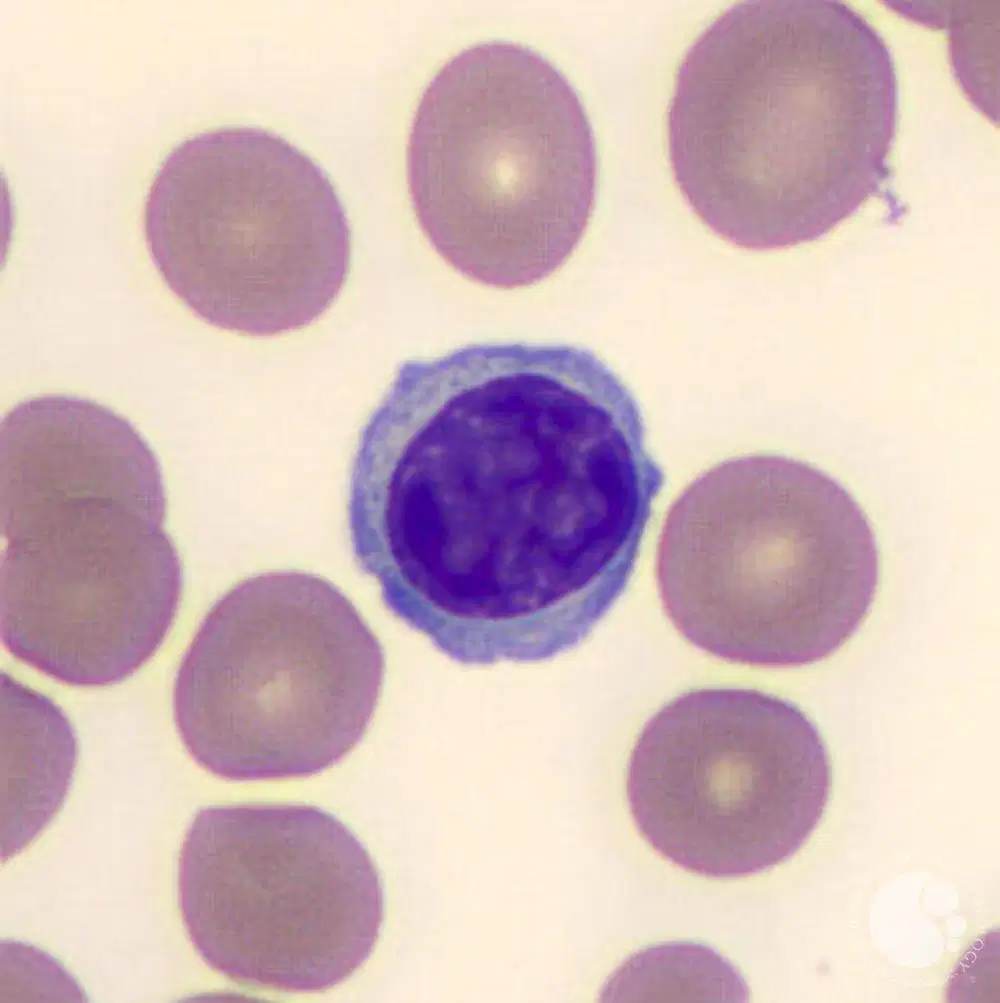
Identify the following cell:
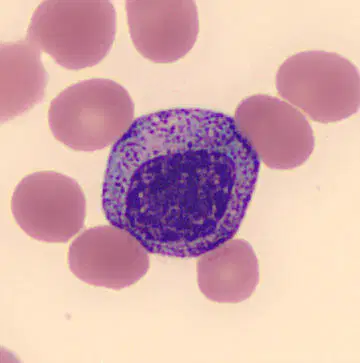
Identify the following cell:

Identify the following cell
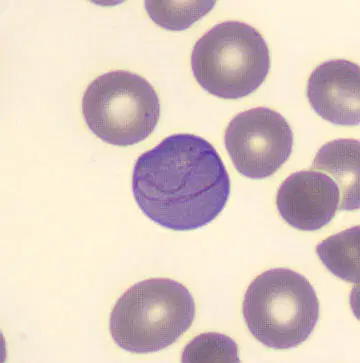
Identify the following RBC inclusion
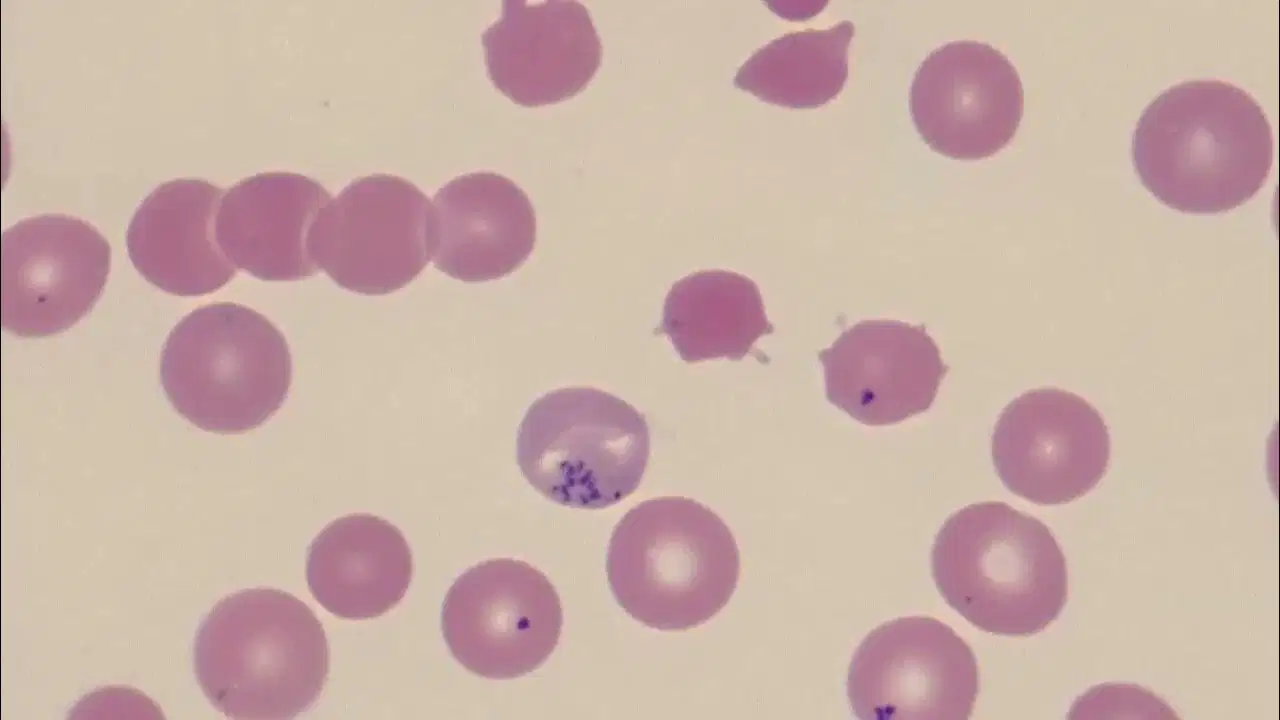
Identify the following RBC inclusion
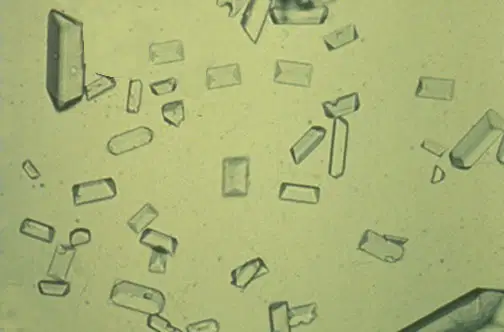
Identify the following crystals:
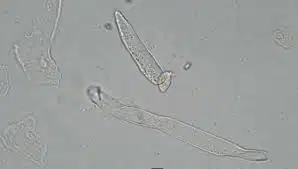
Identify the following cast:

Identify the following casts:
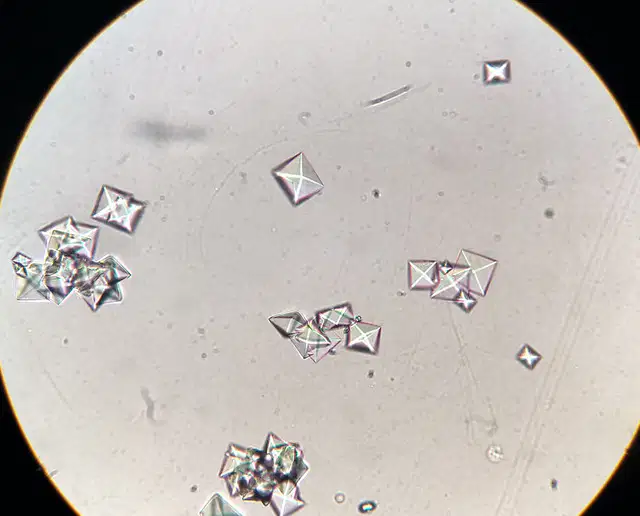
Identify the following crystals:
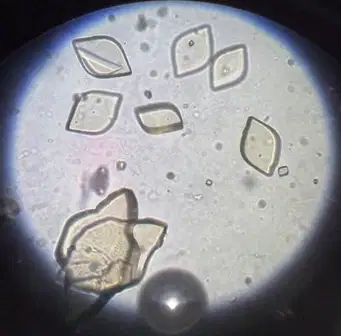
Identify the following crystals:

