
 Worksheets
System
Total questions: 100
Worksheet time: 52mins
Which class of fire involves energized electrical equipment?
Class B
Class E
Class G
Class C
What is the biggest disadvantage to dry-chemical systems?
Requires extensive clean up
Extremely expensive
They are difficult to find
Requires inspections of new installations
Which dry-chemical system component may contain both the agent and the pressurized expellant gas?
Storage container
Transfer unit
Combustion chamber
Foam system
Which type of dry-chemical fixed application method introduces a concentration of an agent into a closed area?
total flooding
local application
handheld hoseline
Which dry chemical extinguishing agent is known as "ordinary" and used for Class B and C fires?
sodium bicarbonate
potassium bicarbonate
monoammonium phosphate
sulfur dioxide
Which dry chemical agent is known as "Purple K" and used for Class B and C fires?
potassium bicarbonate
monoammonium phosphate
sodium bicarbonate
sulfur dioxide
What is the name of the dry chemical agent that is known as "multipurpose", has a pale yellow color, and it effective on Class A, B, and C fires?
sodium bicarbonate
potassium bicarbonate
monoammonium phosphate
sulfur dioxide
Which dry chemical agent has a corrosive effect on unprotected metals?
sodium bicarbonate
potassium bicarbonate
monoammonium phosphate
sulfur dioxide
Detailed maintenance of dry chemical extinguishing systems is the responsibility of the:
owner/occupant
fire marshal
fire protection system companies
inspector
Which type of special-agent fire extinguishing system is used for combustible metal fires?
Dry powder systems
Carbon dioxide systems
Foam agent systems
Wet-chemical systems
The special-agent fire extinguishing system most effective on fires in commercial cooking equipment that produces grease-laden vapors is an-
wet-chemical system
dry-chemical system
foam system
carbon dioxide system
Which special-agent fire extinguishing system is extremely cold and can freeze exposed skin?
Carbon dioxide systems
Dry-chemical systems
Foam agent systems
Dry powder systems
What is critical to total flooding applications of carbon dioxide (CO2) systems in order for them to be effective?
Room integrity
Temperature of the environment
Cost of maintenance
Predischarge alarms
Special agent fire extinguishing systems are classified by the:
size of the area they protect
type of fire they will extinguish
color of the extinguishing agent
method of system activation
What is required for a special-agent extinguishing system to be considered successful?
It must completely extinguish the fire
It must reduce the fire to embers only
It must contain the fire within a small area
It must suppress the fire temporarily
Which dry-chemical system component releases agent into the piping system?
Stored pressure extinguisher
Contacts
Actuating mechanism
Optical sensor
Who is responsible for verifying to the inspectors that dry-chemical systems are maintained and serviced?
Qualified individual
Fire marshal
Building enforcement
General contractor
Which type of dry powder agent is sodium chloride (salt) based and it extinguishes fires by forming a crust on the burning metal?
MET-L-X
CA-X
LITH-X
NA-X
Which Class D agent is graphite-based and it applies a layer of powder?
Hint: It can be used on several metals.
NA-X
CA-X
LITH-X
MET-L-X
Which Class D agent is sodium carbonate based and forms and encasing crust or cake on the burning material?
NA-X
MET-L-X
LITH-X
TYPE X
Which of the following tasks regarding dry-chemical systems is the Inspector I MOST likely to be required to perform?
Inspect new installations
Supply special agents
Install new systems
Pay for new installations
Who is allowed to perform maintenance and testing on carbon dioxide systems?
qualified safety inspectors
licensed representatives of the system manufacturer
certified local fire marshals
trained maintenance engineers
Which general category of fire extinguishing agents effectively leaves no residue?
Dry powder systems
Wet-chemical systems
Carbon dioxide systems
Clean agent systems
Which halon replacement agent is halocarbon and becomes a rapidly evaporating liquid when discharged?
Halotron
FM-200
Inergen
ECARO-25
Which halon replacement agent leaves no residue and requires significantly more agent to achieve extinguishment?
Halotron
FM-200
FE-36
ECARO-25
Which halon replacement agents is a blend of 3 naturally occurring gases (nitrogen, argon, and carbon dioxide) and is environmentally safe?
Inergen
ECARO-25
FE-36
Halotron
Which halon replacement agent is hydrofluorocarbon based and has zero ozone-depletion potential?
ECARO-25
Inergen
FE-36
FM-200
Which halon replacement agent is developed by DuPont and used in local application systems?
FE-36
Halotron
Inergen
ECARO-25
What percentage of finished foam is water?
80%-85%
60%-65%
94%-99 1/2%
70%-75%
The system used when water alone may not be an effective fire extinguishing agent is a:
apparatus engine
carbon dioxide (CO2) system
water spray
foam system
Which type of foam system method extinguishes fire by intervening between the fuel and the fire?
Separating
Smothering
Cooling
Suppressing
Which foam proportioner is the most common type of built-in proportioner installed in mobile fire apparatus?
Bypass-type balanced pressure proportioner
Variable-flow variable-rate direct injection proportioner
Around-the-pump proportioner
Coupled water motor-pump proportioner
Which foam proportioner allows for automatic proportioning over a wide range of flows and pressures and do not depend on external power source?
Around-the-pump proportioner
Coupled water-motor pump proportioner
Balanced-pressure proportioner
Pressure proportioning tank system
Which foam proportioner consists of two positive displacement rotary-gear pumps mounted on a common shaft?
Pressure-proportioning tank system
Coupled water motor-pump proportioner
Balanced pressure proportioner
Around-the-pump propportioner
Which foam proportioner is one of the most reliable methods of foam proportioning?
Balanced pressure proportioner
Around-the-pump proportioner
Pressure proportioning tank system
Coupled water motor-pump proportioner
The stage of foam formation that mixes water with foam liquid concentrate is:
proportioning
floating
aerating
dividing
Which foam expansion rate is used primarily to extinguish fires involving liquid fuels?
low
infinite
moderate
high
What foam expansion rate is between 20:1 and 200:1?
Low
Medium
High
Which foam expansion rate is greater than 200:1and is usually in aircraft hangars and hard to reach spaces?
Low
Medium
High
The four elements necessary to produce high-quality fire fighting foam include foam concentrate, water, mechanical agitation, and:
air
powder
petroleum
carbon dioxide
_______ agents are principally effective on Class B and Class C fires.
Halogenated
Special
Dry
Wet
Which type of fire extinguishers stores expellant gas and extinguishing agent in a single chamber?
Stored-pressure
Pump-operated
Cartridge-operated
Pump-tank
Which extinguisher stores expellant gas in a separate cartridge attached to the side of the agent cylinder or tank?
Stored-pressure
Cartridge-operated
Pump-operator
Around-the-pump
Which fire extinguisher discharges its agent by the manual operation of the by using only water?
Pump-operated
Stored-pressure
Cartridge-operated
Around-the-pump
What determines the size of the fire extinguisher needed for an incident?
Color of the fire extinguisher casing
Weight of the fire extinguisher
Quantity of burning fuel an extinguisher can extinguish
Type of extinguishing agent in the extinguisher
Which foam method intervenes between the fuel and the fire?
Separating
Smothering
Cooling
Suppressing
Which foam extinguishing method lowers the temperature of the fuel and adjacent surfaces?
Cooling
Suppressing
Separating
Smothering
Which aspect of fire protection with portable fire extinguishers is essential, but often overlooked?
Extinguisher placement
Extinguisher size
Extinguisher color
Extinguisher agent
The main factors that influence proper selection and distribution of fire extinguishers are:
extinguisher size
travel distance
nature of the hazard to be protected
color of the extinguisher
What is the most important factor in determining the distribution of Class B extinguishers?
Type of extinguishing agent
Travel distance to the hazard
Number of occupants in the building
Size of the protected area
The value of a fire extinguisher lies in:
the size of the fire extinguisher
the weight of the fire extinguisher
the color of the fire extinguisher
the speed with which it can be used
Which fire extinguisher agent is subject to freezing if not kept in a heated area or an antifreeze agent added?
Water
Oil
Air
Alcohol
Which fire extinguisher agent extinguishes by a smothering action by establishing a gaseous blanket between fuel and surrounding air?
Water
Carbon dioxide
Foam
Dry Chemical
Which fire extinguisher agent does not dissipate into the atmosphere as rapidly as gases, which makes it suitable for controlling fires outside?
Dry chemical
Foam
Water
Carbon dioxide
Which fire extinguisher agent has a solution composed of potassium and intended for use in commercial kitchens?
Wet-chemical
Dry-chemical
Clean agent
Foam
Portable extinguishers using clean agents may use halon replacements such as:
argon
DuPont FE-36
Sodium Bicarbonate
Monoammonium phosphate
In areas where Class K fires are likely, the maximum travel distance from the hazard to the extinguisher is:
30 feet
50 feet
100 feet
60 feet
The general method for locating and distributing extinguishers consists of:
classifying occupancies based on hazard levels
reviewing plans with owners/occupants
classifying occupancies based on space
reviewing fuel loads and risks
Portable fire extinguishers are rated by intended use and:
fire hazard
location
extinguishing capability
fire distance
NFPA10 recommends portable fire extinguishers to be inspected:
yearly
annually
monthly
semiannually
Which fire extinguisher agent is especially suitable for controlling fires outdoors?
Dry chemical
Wet chemical
Air
Mobile
What is the greatest concern for extinguisher reliability?
Temperature of the environment
Location of the environment
Fuel load of the environment
Presence of automatic sprinkler system
What determines the size of the fire extinguisher needed for an incident?
quantity of burning fuel
location of burning fuel
size of the burning fuel
cause of the burning fuel
Clearance between the bottom of the extinguisher and the floor should never be less than:
8 inches
2 inches
4 inches
3 inches
In all occupancies, the maximum travel distance to an extinguisher for Class A hazards is:
75 feet
30 feet
60 feet
100 feet
Which type of occupancy hazard classification is one in which the amount of ordinary combustible materials and flammable liquids present are high and a rapidly spreading fire may develop?
Moderate-hazard occupancy
Extra-hazard occupancy
Light-hazard occupancy
Reduced-hazard occupancy
Which type of occupancy hazard classification is one in which the amount of ordinary combustible material or flammable liquid present is such that an incipient fire of small size may be expected?
Light-hazard occupancy
Ordinary-hazard occupancy
Extra-hazard occupancy
The inspection and maintenance procedures for wet-chemical extinguishing systems are basically the same as those used for:
dry-chemical systems
foam systems
special application systems
carbon dioxide systems
How often do all components of clean-agent systems need to be inspected by qualified personnel?
Semiannually
Annually
Daily
Biannually
Who is responsible for verifying to the inspector that dry-chemical systems are maintained and serviced?
Qualified individual
Owner/occupant
Manufacturer
General contractor
How often should a qualified individual inspect a dry-chemical fire extinguishing systems?
Monthly
Annually
Biannually
Weekly
In a clean-agent system, the quantity and pressure of the clean agent must be checked:
semiannually
quarterly
biannually
weekly
How often should carbon dioxide agent cylinders be checked, and if necessary, changed?
Annually
Semiannually
Monthly
Weekly
How often should valves and alarms attached to foam systems be checked?
Annually
Semiannually
Monthly
Weekly
Foam concentrates, foam equipment, and foam proportioning systems should be checked:
monthly
annually
semiannually
biannually
What kind of test is required every five years for clean-agent storage containers?
Hydrostatic
Agent cylinders
Pressure
Enclosure
How often are dry-chemical storage containers less than 150 pounds required to be hydrostatically tested?
Every 12 years
Every year
Every 5 years
Every 10 years
Who is responsible for keeping accurate records of fire extinguisher inspections?
Owner/occupant
Fire inspector
Local AHJ
Manufacturer
When it comes to fire extinguishers, inspectors are responsible for:
providing information and recommendations for training
regularly painting
routine testing
installation of new extinguishers
In addition to the clean-agent system inspections and tests, what else must be inspected annually?
Protected enclosure
Agent cyclinder
Hydrostatic tests
Fire extinguishers
What is the standard for low, medium, and high foam expansion?
NFPA2001
NFPA11
NFPA10
NFPA12
What is the standard for portable fire extinguishers?
NFPA11
NFPA10
NFPA2001
NFPA12
What is the standard for clean agent fire extinguishing systems?
NFPA2001
NFPA10
NFPA11
NFPA12
What is the standard for carbon dioxide extinguishing systems?
NFPA12
NFPA11
NFPA10
NFPA2001
What is the standard for fire alarms?
NFPA70
NFPA72
NFPA10
NFPA13
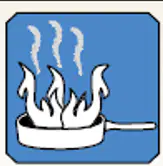
What does this image represent?
Class K
Class B
Class A
Class C
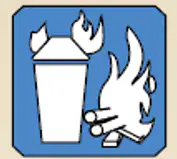
What does this image represent?
Class A
Class B
Class C
Class D

What does this image represent?
Class A
Class B
Class C
Class K

What does this image represent?
Class A
Class C
Class B
Class D
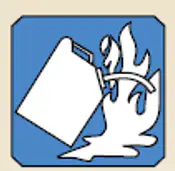
What does this image represent?
Class A
Class B
Class C
Class D
What class does this image represent?
Class A, Ordinary Combustibles
Class B, Flammable Liquids
Class C, Electrical Equipment
Class D, Combustible Metals

What does this image represent?
Class A, Ordinary Combustibles
Class B, Flammable Liquids
Class C, Electrical Equipment
Class D, Combustible Metals

What does this image represent?
Class A, Ordinary Combustibles
Class B, Flammable Liquids
Class C, Electrical Equipment
Class D, Combustible Metals

What does this image represent?
Class K, Cooking Oils
Class D, Combustible Metals
Class C, Electrical Equipment
Class A, Ordinary Combustibles

What does this image represent?
Class A, Ordinary Combustibles
Class B, Flammable Liquids
Class C, Electrical Equipment
Class K, Cooking Oils
Which component needs to be tested every 12 years?
Wet/dry chemical storage containers less than 150 pounds
Wet/dry chemical storage containers more than 150 pounds
Clean agent quantity and pressure
Foam concentrates, equipment, and proportioning
Select all the components that are semiannually:
clean agent quantity and pressure
carbon dioxide agent cylinders
check valves and alarms on foam systems
clean agent system components
What requires hydrostatic testing every 5 years?
Clean agent storage containers
Carbon dioxide storage containers
Protected enclosures
Check valves and alarms on foam systems
Carbon dioxide agent cylinders
What requires monthly inspections?
Dry chemical systems
Wet chemical systems
Fire extinguishers
Protected enclosures
Carbon dioxide agent cylinders
What requires annual inspections?
Foam concentrates, foam equipment, foam proportioning
Protected enclosures for clean agent systems
Clean agent system components
Clean agent host pressure testing
Carbon dioxide agent cylinders

