
NEW
Font size
 Worksheets
Pivot Point 106E.1-6
Total questions: 30
Worksheet time: 58mins

What is desquamation?
The absorption of moisture by the epidermis
The process of cell division in the stratum basale
The natural shedding, peeling, or coming off of dead skin cells from the stratum corneum
The formation of new skin cells in the dermis
What are melanocytes?
Cells that produce collagen for skin elasticity
Cells that produce melanin, the pigment responsible for skin color
Cells that fight infections in the skin
Cells that store fat in the skin
What is microcirculation?
The process of exfoliating dead skin cells
The production of skin oil
The flow of blood through tiny vessels that nourish the skin
The removal of toxins from the skin

Another term for oil (on skin) is:
Sweat
Collagen
Melanin
Sebum
True or False: A greater amount of sebum leads to a faster rate of penetration of skincare ingredients.
True
False
What is milia?

skin condition where it becomes red and inflamed, often on the cheeks and nose

clogged hair follicles with oil, dirt, and dead skin cells causing pimples

white, enclosed, keratin-filled cysts that feel like hard balls under the skin

An esthetician can use an electric mask to increase __________ in the skin.
Hydration
Microcirculation
Oil production
Exfoliation
What is the acid mantle on the skin?
A layer of cells that provides moisture to the skin
A protective film of oils and sweat that helps maintain the skin’s pH and barrier
The part of the skin that produces sebum
The structure that regulates body temperature through sweat
Which of the following is an example of chemical exfoliation?
Dermaplaning
Microdermabrasion
Scrubs with granules
Enzymes
Dry skin types typically have __________.
minimal oil production on the nose or chin
excess oil production around the forehead
oily T-zone with dry cheeks
no oil production at all
Sunlight helps the body produce which vitamin?
Vitamin A
Vitamin B12
Vitamin C
Vitamin D

Which skin type is commonly associated with larger pores in the T-zone area of the face?
dry
combination
normal
mature/aging

What are lipid-soluble products?
Products that dissolve in water and can be absorbed by the skin
Products that dissolve in fats or oils and can penetrate the skin easily
Products that are designed to be absorbed by hair follicles
Products that contain no oils and are water-based
How long should you wait after a chemical exfoliation or microdermabrasion before doing a follow-up?
1 to 2 days
2 to 3 days
3 to 4 days
4 to 5 days
Knowing a client's skin history helps the esthetician to:
Identify where the client should live
Identify primary and secondary skin lesions
Diagnose how long the client will live
Identify contra-actions or potential complications
Which type of skin cancer usually looks translucent, has uneven edges, and tiny blood vessels in it?

premalignant growth

basal cell carcinoma

malignant melanoma

squamous cell carcinoma

A client with rosacea should avoid:
Niacinamide
broad-spectrum sunscreen
gentle skincare products
Excessive heat, spicy foods, and caffeine

What is the main difference between a closed comedone and an open comedone?
An open comedone is smaller than a closed comedone.
A closed comedone has a visible blackhead, while an open comedone is always under the skin.
An open comedone has a visible blackhead due to oxidation, while a closed comedone is a whitehead beneath the skin.
What is melasma (also called chloasma)?
A skin condition that causes lighter spots or patches on the face
A condition that causes dry, flaky patches on the skin
A pigmentation disorder that causes dark patches on the skin, often triggered by hormones
A type of skin infection that leads to red, swollen areas
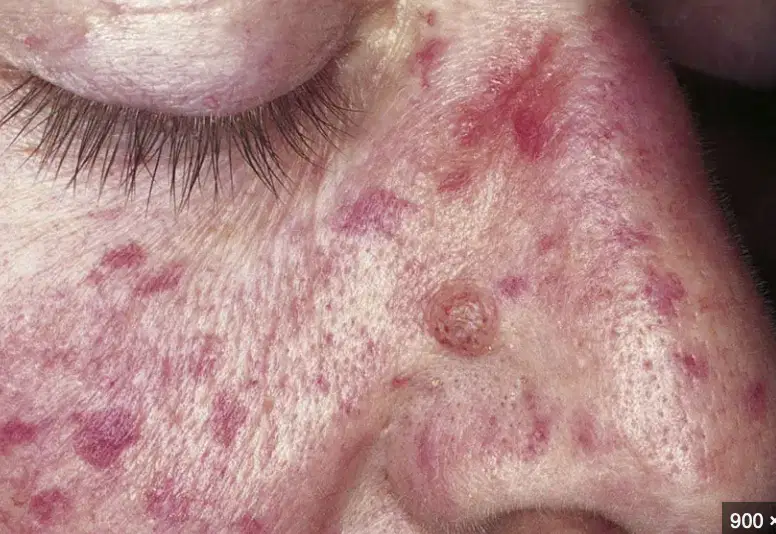
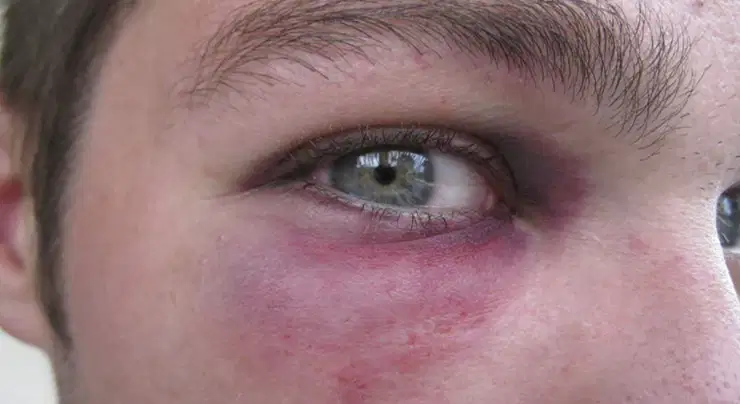
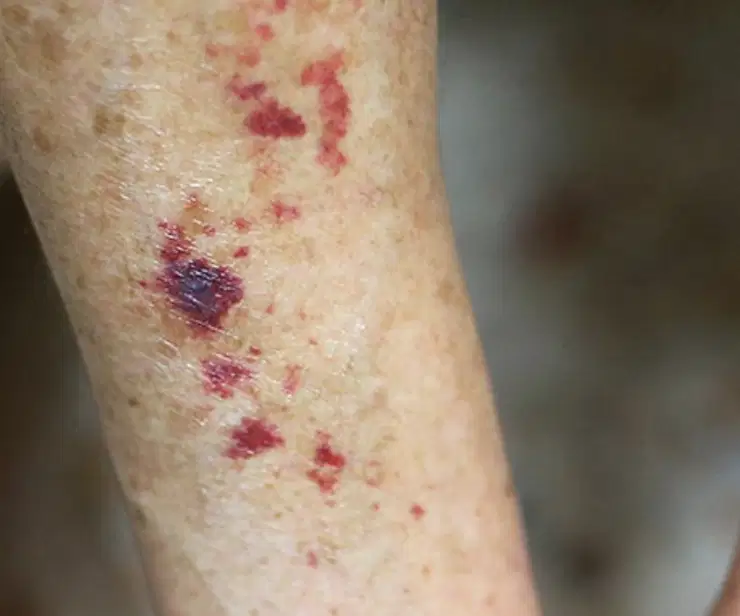
Which image shows telangiectasia?

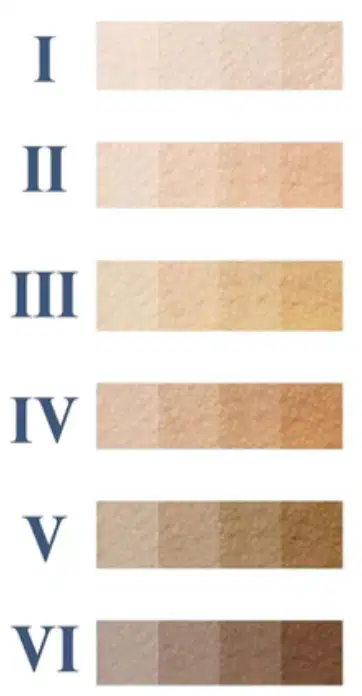
On the Fitzpatrick scale, which skin category shows a moderate chance of burning and an average ability to tan?
Type I
Type II
Type III
Type IV
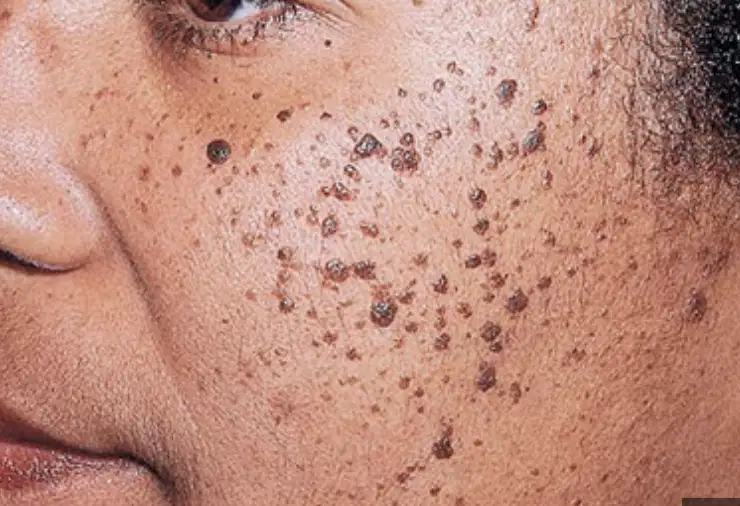
What are the small dark bumps, often seen on the face and neck, that typically affect people with Fitzpatrick skin type IV-VI (4-6)?
dermatosis papulosa nigra (DPN)
seborrheic keratosis
actinic keratosis
xanthoma
What’s the difference between intrinsic and extrinsic aging?
Intrinsic aging is caused by environmental factors like the sun, while extrinsic aging is due to natural processes within the body.
Intrinsic aging happens naturally as we get older, while extrinsic aging is caused by external factors like sun exposure and pollution.
Intrinsic aging is reversible, while extrinsic aging cannot be prevented.
Extrinsic aging is the result of genetics, while intrinsic aging is influenced by lifestyle.
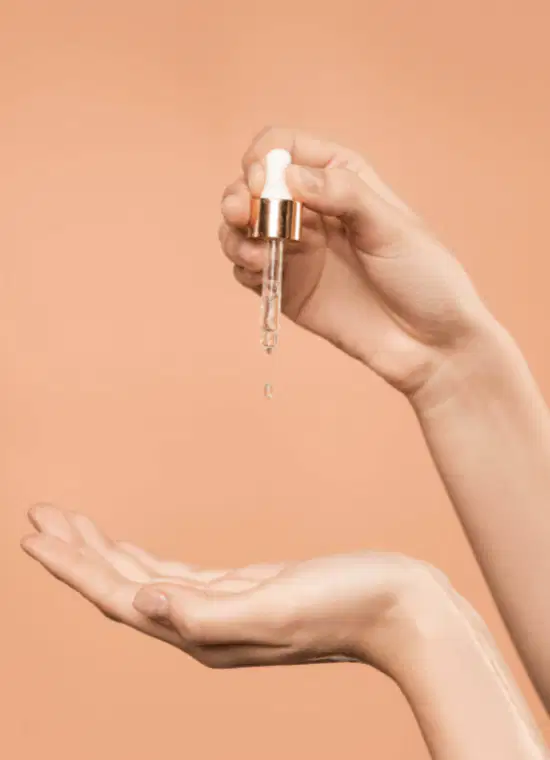
True or False: A serum has a higher concentration of active ingredients than a moisturizer and is used to target concerns like lines, wrinkles, and skin texture.
True
False
Detoxification is the process of…
Excretion where the body eliminates waste through sweat or urine.
Removing impurities, toxins, pollutants, and dead skin cells.
Keratin formation on the skin cells helping create a protective outer layer.
New skin cells multiplying on the epidermis, contributing to skin renewal.
Diabetes is...
a disease affecting metabolism and hormone levels but not typically causing fragile skin.
a neurological disorder that affects brain activity but does not directly weaken the skin.
a medical condition that results in skin that is thinner and more fragile with impaired healing.
a disorder that influences circulation but does not usually cause thin, fragile skin.
Which effect on the skin is commonly linked to higher levels of testosterone?
Growth of facial and body hair
Redness and irritation (increased erythema)
Heightened sensitivity or irritation
Lower oil (lipid) production
Stress is a lifestyle factor that…
Causes skin damage primarily due to climate conditions
Only affects the quality of your sleep without other bodily changes
Triggers a chemical response in the body involving the hypothalamus, pituitary, and adrenal glands
Directly changes your diet and nutrient intake
The stratum corneum is the outermost layer of the skin that…
Helps form keratin but is not the main barrier for moisture
Provides structural support to skin cells but doesn’t control water loss
Is found only on palms and soles and provides extra thickness
Regulates water loss and is most affected by changes in humidity
True or False:
A client who is currently taking Accutane can safely receive a facial treatment.
True
False

