
 Worksheets
Question Daily Quiz
Total questions: 11
Worksheet time: 55mins
Iqra Anjum
A 43 year old man is evaluated in the ED in early September fora 1 day history of L facial weakness following 10 days of headache, stiff neck, and photophobia. He reports no sick contacts. He is a park ranger in Pennsylvania. His only medication is ibuprofen for headaches.
On Physical examination, temp is 101.5F. Mental status is normal. A left facial cranial nerve (VII) palsy is noted.
CSF studies show a leukocyte count of 95 with 90% lymphocytes, glucose level of 56, and protein level of 76.
Which of the following is the most likely diagnosis?
Enterovirus meningitis
Borrelia burgdoferi meningitis
Mycobacterium tuberculosis meningitis
West Nile Virus meningitis
Ann George
A 32 year old woman is seen for follow up evaluation of chronic anemia that has been stable for at least the past 5 years. She has no history of transfusions. She had one pregnancy at age 29 years, ending in intrauterine fetal demise in the early third trimester. Her father has anemia. the patient is Chinese.
On physical examination, vital signs and the remainder of the physical examination are normal.
Hgb: 10.8
MCV: 62
Reticulocyte count: 2% of erythrocytes
Ferritin: 200ng/mL
Iron 200 ug/dL
TIBC: 280 ug/dL
Hemoglobin electrophoresis reveals a normal migration pattern of hemoglobin A and normal hemoglobin A2 and hemoglobin F levels.
What is the most likely diagnosis?
alpha-Thalassemia carrier
Alpha-Thalassemia Trait
Beta Thalassemia Minor
Hemoglobin E Trait
Dale Howard
A 19 year old woman is evaluated in the ED for a 3 day history of progressively severe sore throat. She cannot swallow liquids due to pain and has drooling.
On physical examination, temperature is 101.3F, BP is 110/70, pulse is 110, and respiration rate is 25/min. There is no stridor. She is drooling. The oropharynx is hyperemic, and the patient has difficulty opening her mouth fully. The uvula is engorged. Antibiotics are initiated.
Which of the following is the most appropriate next step in management?
ICU Admission
Neck CT with contrast
IV Methylprednisolone
Rapid Antigen Detection Test
Rebecca Lainez
A 36yo woman is evaluated for a 10 year history of fluctuating, migratory burning pain and parasthesia involving multiple parts of her body. Her symptoms are stable but disruptive. She has previously undergone extensive evaluation, with normal results. She has tried nortriptyline, gabapentin, pregabalin, and topical lidocaine without benefit. Medical history is significant for migraine, temporomandibular joint dysfunction, and irritable bowel syndrome. Results of recent screening for depression and generalized anxiety disorder were negative. Current medications are duloxetine, propanolol, and sumatriptan.
Vital signs and findings on general and neurologic examinations are normal.
Review of electronic health record documents normal CBC, electrolytes, liver enzymes, vitamin B12, TSH, fasting glucose, serum protein electrophoresis.
Results of EMG and skin biopsy for small nerve fiber neuropathy are normal.
Which of the following is the most appropriate management?
Cognitive behavioral therapy
Oxycodone
MRI of the spine
Urine and plasma protein porphyrin measurement
Armando Perez
A 36 year old woman was hospitalized 3 days ago with fever of 4 days' duration. Medical history is significant for injection drug use. She takes no medication.
On initial physical examination, temperature was 102.1F, blood pressure was 106/70, pulse rate was 100/min, and respiration rate was 20/min.
Empiric vancomycin and ceftazidime treatment was initiated.
Today, the patient is improved. Temperature is 100.5F, all other vital signs are normal. Blood cultures are positive for methicillin-resistant Staphylococcus aureus (Vancomycin minimum inhibitory concentration 1 ug/mL). Vancomycin trough level is 18 ug/mL. Ceftazidime is discontinued.
Transthoracic echocardiogram shows a vegetation on the tricuspid valve.
Which of the following is the most appropriate management?
Add gentamicin and rifampin
Switch to daptomycin
Area under the curve vancomycin-guided dosing
Switch to telavancin
Ashok Shah
A 57 year old man is evaluated during routine follow-up of hypoparathyroidism. He underwent resection of locally advanced squamous cell carcinoma of the tongue base with laryngectomy, thyroidectomy, tracheostomy, and percutaneous gastrostomy tube placement 2 years ago.. He also received adjuvant radiation therapy. Hypoparathyroidism developed after treatment. He has no evidence of cancer recurrence and has maintained a normal weight and hydration. Medications are levothyroxine, calcium citrate, calcitriol, hydrochlorothiazide, and potassium chloride.
Serum calcium, magnesium, and urine calcium excretion are measured today.
Which of the following measurements should also be obtained for management of this patient's hypoparathyroidism?
25-hydroxyvitamin D
Parathyroid Hormone
Ionized Calcium
Serum phosphorus
Rishab Tandon
A 57 year old woman is evaluated during her first physician visit in many years. She feels well and has no symptoms. She has a sedentary office job and exercises rarely. She doesn't smoke cigarettes. her medical history is unremarkable. her father had a heart attack at age 54 years. She takes no medications.
On physical examination, blood pressure is 122/82, pulse rate is 66, and respiration rate is 16/min. BMI is 27.5. All other findings are normal.
Coronary artery calcium scoring
Lipid profile and high-sensitivity C-Reactive Protein measurement
Lipid profile and lipoprotein(a) measurement
Lipid profile measurement
Alfred Quaicoe
A 75 year old man is evaluated in the ED for several episodes of maroon blood per rectum and cramping abdominal pain of 18 hours' duration. He is admitted to the hospital and colonoscopy preparation is initiated. He has HTN, atrial fibrillation, and coronary artery disease. At a colonoscopy performed 1 week ago, a 1-cm pedunculate polyp was removed from the transverse colon. Medications are apixaban, low dose aspirin, metoprolol, and atorvastatin.
On initial physical examination, blood pressure was 95/40 and pulse rate was 105/min and irregular. The abdomen was soft, with lower abdominal tenderness.
After admission and administration of 2L of IV fluid, blood pressure is 110/60 and pulse rate is 80/min.
Which of the following is the most appropriate management of this patient's anti platelet and anticoagulant therapy?
Hold Apixaban
Hold apixaban and administer andexanet
Hold apixaban and aspirin
Hold aspirin and apixaban and administer andexanet
Nicholas Teague
A 49 year old woman is evaluated in the ICU with septic shock due to suspected pyelonephritis. She was treated with piperacillin-tazobactam upon arrival and received 30mL/kg bolus of LR followed by several more fluid boluses. She remained hypotensive and began receiving norepinephrine and vasopressin 4 hours ago. She has no other medical problems.
On Physical Examination, temperature is 37.1C, blood pressure is 86/48, mean arterial pressure is 61, pulse rate is 106/min, and respiration rate is 22/min. A passive leg raise test shows a lack of fluid responsiveness.
Laboratory studies:
Leukocyte count: 15.000
Creatinine: 2.6
Glucose: 160
Lactate: 4,1
Which of the follow is the most appropriate next step in treatment?
Additional bolus of LR solution
IV hydrocortisone
IV insulin
Pulmonary Artery Catheter Placement
Vineeth
A 46 year old woman is evaluated for a 5 day history of nonproductive cough, headache, fever, and chills accompanied by 3 days of diarrhea. She reports no dyspnea. She has 2 parakeets as pets at home.
On physical examination, temperature is 38.2C (100.8F), blood pressure is 132/78, pulse is 92/min, and respiration rate is 16/min. Oxygen saturation is 96% breathing ambient air. Crackles are heard at the left lung base. The remainder of the examination is unremarkable.
Laboratory Studies:
Leukocyte Count: 9200
The remainder of her complete blood count and a comprehensive metabolic panel are normal. Rapid nucleic amplification tests for influenza and SARS-CoV-2 are negative.
A chest radiograph shows consolidation in the left lower lobe.
Which of the following is the most likely cause of this patient's symptoms?
Brucella melitensis
Chlamydia psittaci
Coxiella burnetii
Legionella pneumophila
Robert
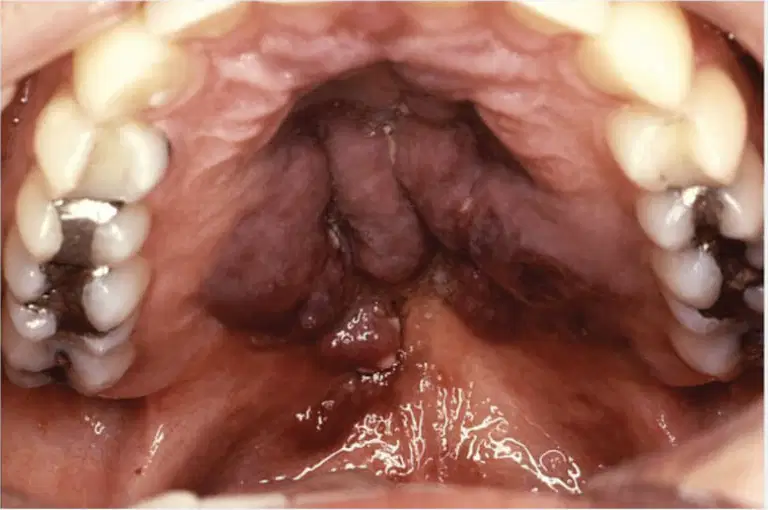
A 32 year old man is evaluated for 2 month history of painless, violaceous skin nodules on the chest, back, and lower extremities. He reports that he has sex with men. Medical history is significant for AIDs, with a CD4 count of 54. he is not taking antiretroviral therapy.
On physical examination, vital signs are normal. Several nodules are seen in the mouth during oral examination
Which of the following is the most likely cause of these findings?
Cytamegalovirus
Epistein-barr virus
Human Herpes Virus type 6
Human Herpes Virus type 8

