
 Worksheets
Science stage 7 unit 2
Total questions: 51
Worksheet time: 2hrs 17mins
Anything that takes up space and has mass is
Matter
Volume
Liquid
Atom
In a _______ the molecules are close together.
solid
liquid
gas
All _______ can move and flow.
liquids
solids
gases
A ________ has no shape and no size.
gas
liquid
solid
Draw the Particles in a solid

Draw the Particles in a gas
Draw the Particles in a Liquid
Which state of matter has both definite shape and definite volume?
Solid
Liquid
Gas
Plasma
In which state of matter are the particles only vibrating?
Solid
Liquid
Gas
Plasma
Which state of matter has no definite shape and no definite volume?
(a)
As matter changes state from liquid to solid, the atoms move___?
Closer together
Stay the same
Farther apart
Molecules are always moving no matter what phase they are in: solid, liquid, gas.
True
False
What happens to molecules when the temperature drops or lowers?
The molecules get closer together
The molecules start moving faster.
The molecules stop moving.
The molecules become smaller.
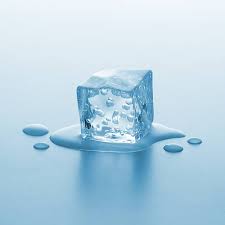
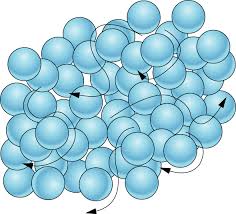
Which is not true about the liquid state of matter?
The liquid state has a definite volume and a definite shape.
The liquid state takes on the shape of its container.
The liquid state has a definite volume and an indefinite shape.
The particles in a liquid can easily move past each other.
Which process could cause a material to change state from gas to liquid?
Adding heat
Adding energy
Removing particles
Removing energy
If I add heat to a solid, how will the motion of the particles be affected?
They will move slower
They will stop moving
They will move faster
They will move to a different container
The change from gas to liquid is called
Condensation
Sublimation
Evaporation
In which state of matter are particles moving slowest?
solid
gas
liquid
gummy bears
The state of matter depends on its
volume
temperature
weight
mass
How do we call the change of matter form liquid to solid?
Vaporization
Condensation
Freezing
Melting
What properties do liquids have?
definite shape and volume
no definite shape a no definite volume
no definite shape and a definite volume
State of matter can be changed by _________________
cooking
pressing
heating
both, heating and cooling


What is the change in the state of matter called?
Evaporation
Freezing
Melting

What is the change in the state of matter called?
Evaporation
Condensation
The process of water changing from liquid to gas is called what?
Condensation
Evaporation
Rain
Osmosis
The process of water falling back to Earth in the form of rain, snow, or hail is called what?
Evaporation
Condensation
Precipitation
Infiltration
What is the name of the process by which water vapor turns back into liquid water?
Evaporation
Condensation
Precipitation
Infiltration
The main energy source that drives the water cycle is what?
Wind
Sun
Moon
Earth's Core
What is the process by which excess water flows over the surface of the ground?
Osmosis
Runoff
Condensation
Evaporation
The process of water vapor turning into liquid water droplets in the atmosphere is called what?
Evaporation
Condensation
Precipitation
Infiltration
What is the correct order of the water cycle?
Evaporation, Condensation, Precipitation, Runoff
Runoff, Precipitation, Condensation, Evaporation
Evaporation, Precipitation, Runoff, Condensation
Condensation, Evaporation, Runoff, Precipitation
True or False: Clouds form during condensation.
True
False

What step of the water cycle does this picture show?
Condensation
Runoff
Precipitation
Evaporation

What is it called when water droplets form on the outside of a cool glass?
Condensation
Transpiration
Precipitation
Evaporation
What is evaporation?
Water loses heat and changes into ice.
Water gains heat and changes into water vapour.
Water vapour loses heat and changes into water droplets.
Which of the following is an example of condensation?
Clothes drying under the hot sun
Snow on the road quickly changes into water
Water on the road quickly disappears after a heavy rain
Mist forming above the boiling water
As time goes by and water goes through the water cycle again and again, the amount of water on Earth__________.
decreases
increases
remains the same
Water boils at _______________.
10°C
0°C
100°C
50°C
Water freezes at ______________.
0°C
100°C
50°C
20°C
Which of the following processes involves gaining heat?
melting
freezing
condensation

