
 Worksheets
The Pelvic Bone (Hip Bone)
Total questions: 35
Worksheet time: 19mins
Each side of the pelvis is formed by an innominate bone, which comprises three fused bones. Name these three fused bones.
ilium, ischium, pubis
scapula, clavicle, humerus
femur, tibia, fibula
radius, ulna, carpals
What is the name of the socket that houses the femoral head to create the hip joint?
acetabulum
glenoid cavity
olecranon fossa
trochlear notch
Which of the following is NOT one of the three fused bones that form each side of the pelvis?
Ilium
Ischium
Femur
Pubis
The acetabulum is the socket that houses the femoral head to create the hip joint.
True
False
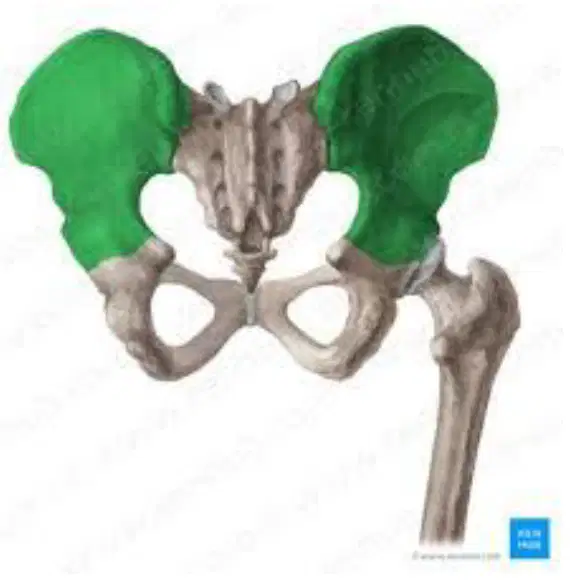
What is the largest and most superior part of the hip bone?
Ilium
Ischium
Pubis
Acetabulum
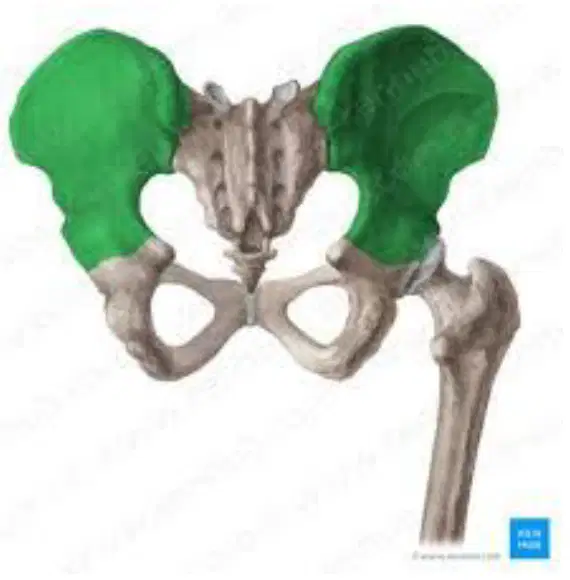
Which anatomical feature is described as the palpable ridge at the waist?
Iliac crest
Acromion process
Ischial tuberosity
Greater trochanter
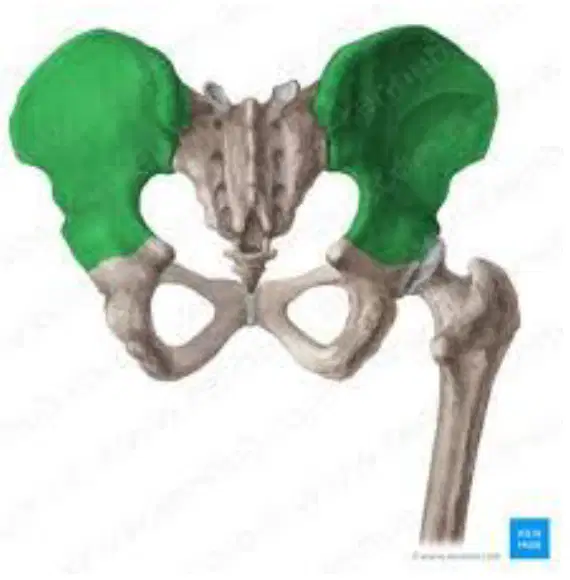
The ilium forms the roof of which structure?
Acetabulum
Obturator foramen
Ischial spine
Pubic symphysis
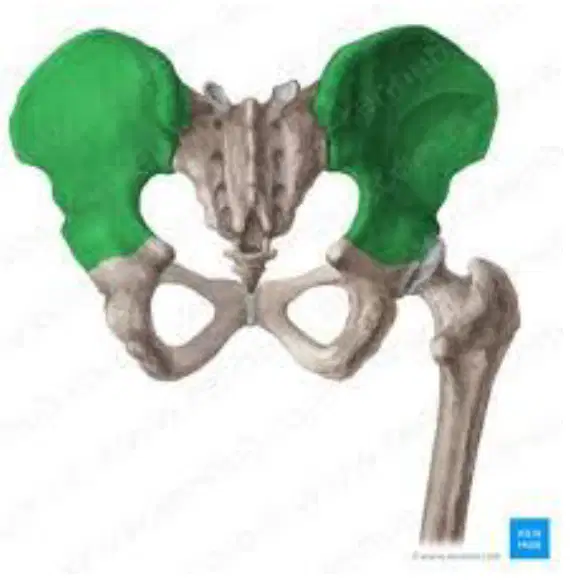
The ilium features anterior superior and posterior superior iliac spines (ASIS and PSIS) as muscle and ligament attachment points.
True
False
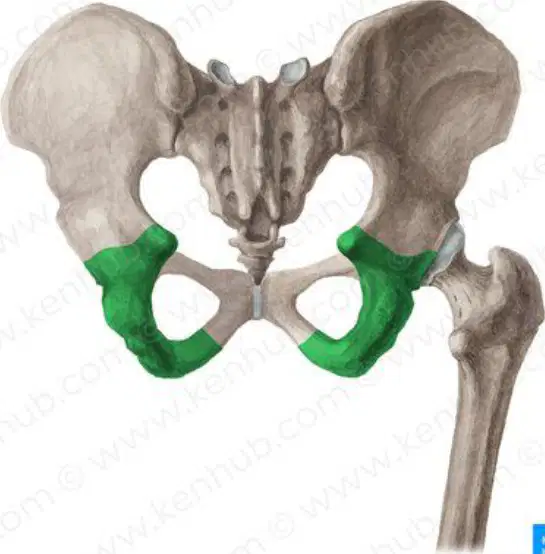
Where is the ischium located in relation to the hip bone?
A) Anteriorly and superiorly
B) Posteriorly and inferiorly, contributing to the back and bottom of the hip bone
C) Laterally and superiorly
D) Medially and inferiorly
What is the notable feature of the ischium that supports body weight when seated?
Ischial tuberosity
Acetabulum
Iliac crest
Pubic symphysis
The ischium serves as an attachment for ligaments like the _______ and _______ ligaments.
sacrotuberous; sacrospinous
iliolumbar; inguinal
pubofemoral; ischiofemoral
anterior cruciate; posterior cruciate
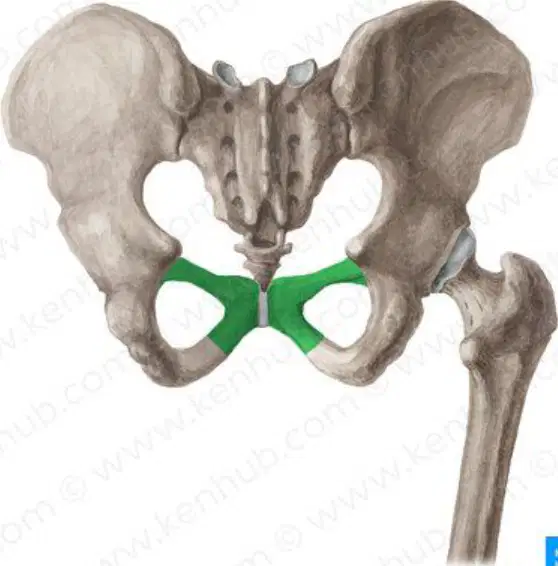
Situated _______ and ________, forming the front portion of the pelvis.
anteriorly and inferiorly
posteriorly and superiorly
laterally and medially
superiorly and dorsally
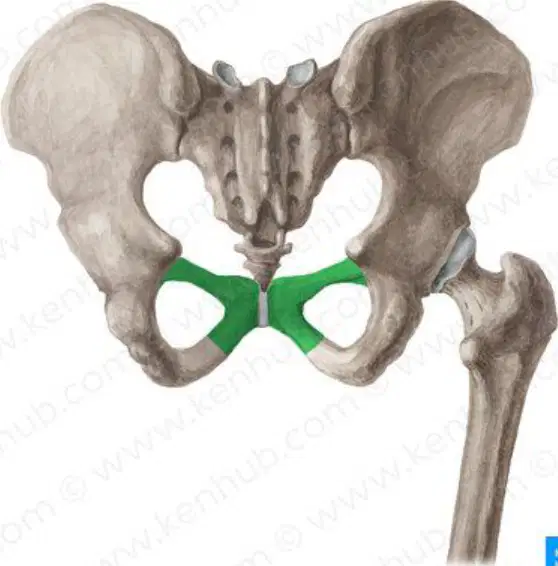
Which of the following is NOT a component of the pubis?
Pubic body
Superior ramus
Inferior ramus
Femoral head
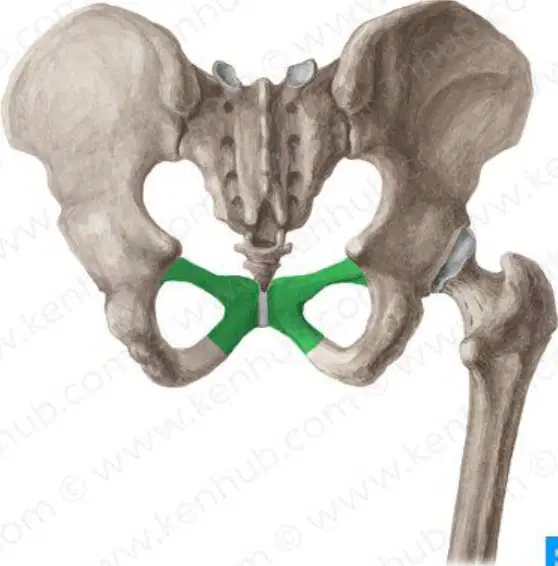
The bodies of the left and right pubis join at the ________, a cartilaginous joint. (Fill in the blank)
pubic symphysis
acetabulum
iliac crest
obturator foramen
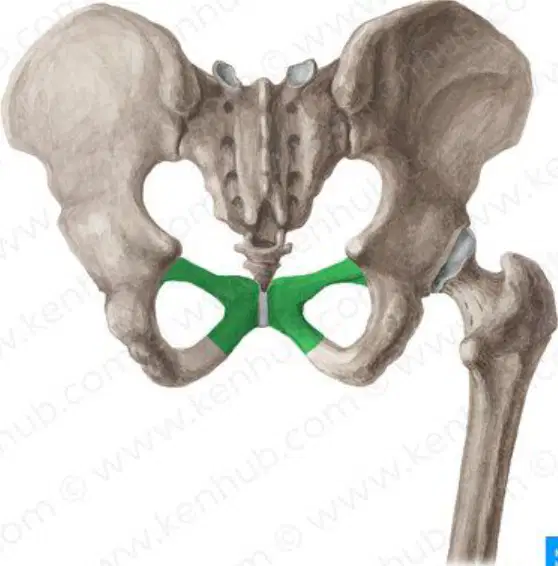
The obturator foramen is a large opening formed by the pubis and ischium that allows passage of neurovascular structures.
True
False
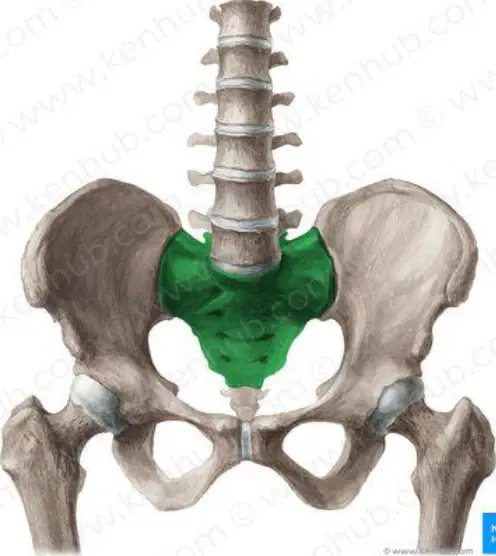
Though not part of the hip joint itself, the ______ articulates with the ilium at the sacroiliac joints, forming the posterior pelvic ring.
sacrum
femur
pubis
ischium
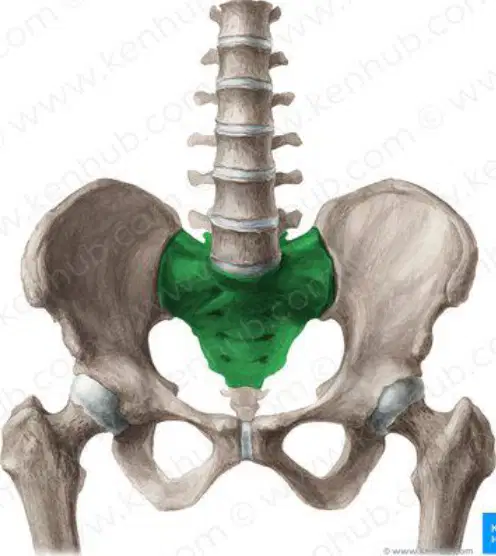
What lies beneath the sacrum and is part of the pelvic ring's rear support structure?
The coccyx
The ilium
The pubis
The ischium
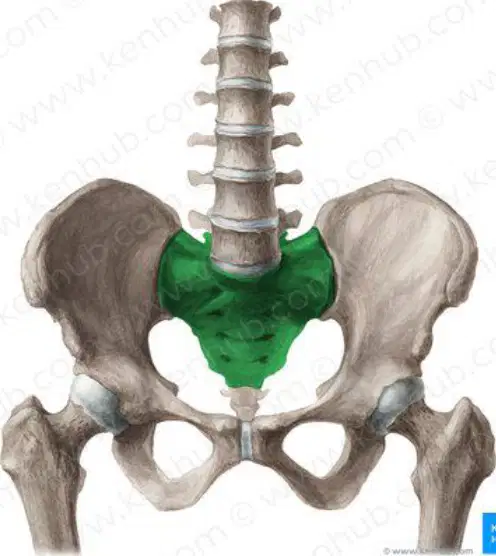
The sacrum articulates with the ilium at which joints?
Hip joints
Sacroiliac joints
Knee joints
Elbow joints
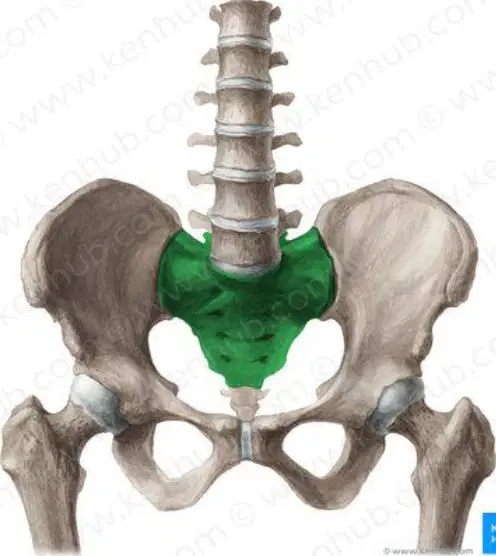
True or False: The coccyx is located above the sacrum.
True
False
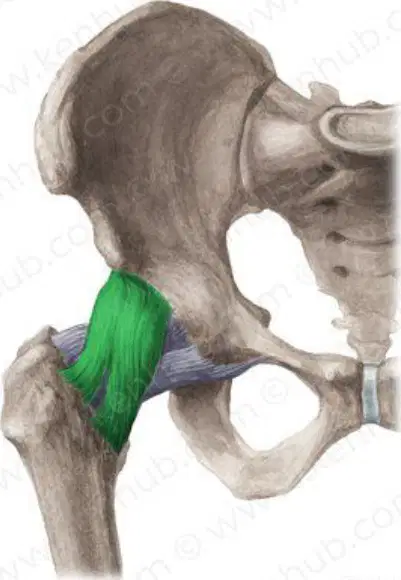
Where does the iliofemoral ligament originate from?
The iliofemoral ligament originates from the anterior inferior iliac spine (AIIS).
The iliofemoral ligament originates from the ischial tuberosity.
The iliofemoral ligament originates from the greater trochanter.
The iliofemoral ligament originates from the pubic symphysis.
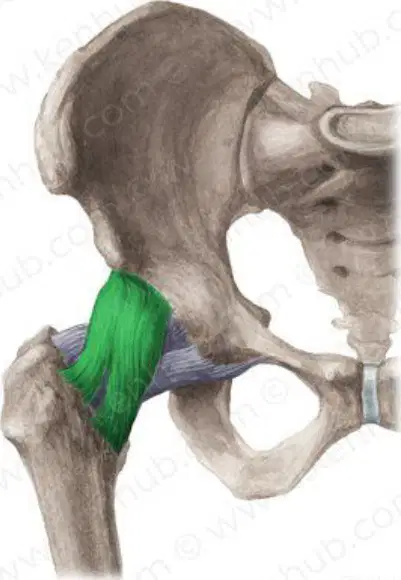
The iliofemoral ligament is the strongest ligament in the human body.
True
False
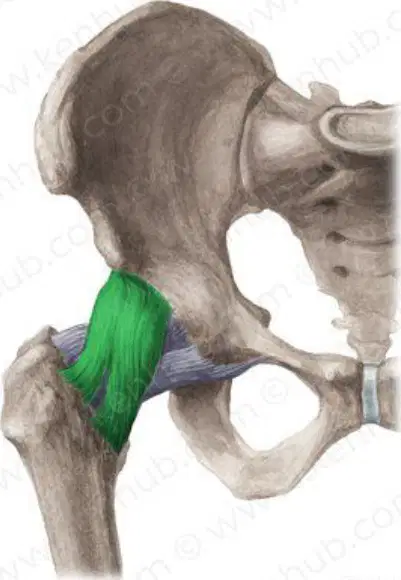
What is the main function of the iliofemoral ligament?
The iliofemoral ligament restricts hyperextension and external rotation, thereby stabilizing the hip especially when upright.
It allows for increased flexibility of the hip joint during running.
It primarily supports the knee joint during walking.
It assists in the abduction of the thigh.
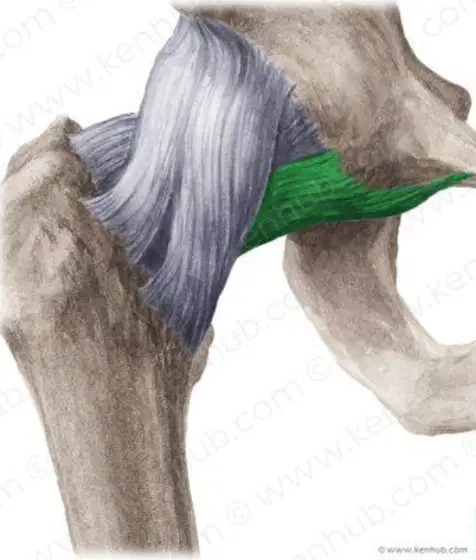
Where does the pubofemoral ligament stretch from to merge with the fibrous joint capsule?
Inferior pubic ramus
Superior pubic ramus
Ischial tuberosity
Acetabulum
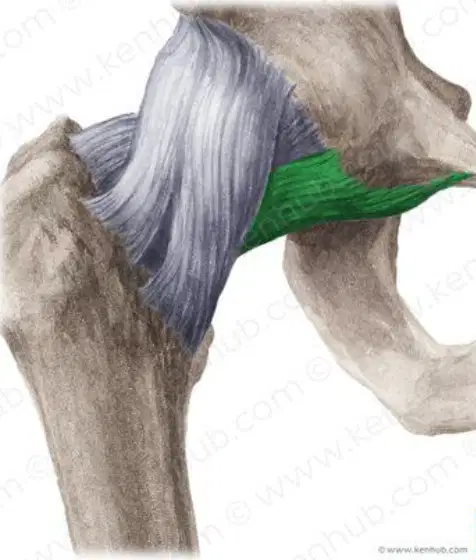
What shape does the pubofemoral ligament have?
Triangular
Circular
Rectangular
Oval
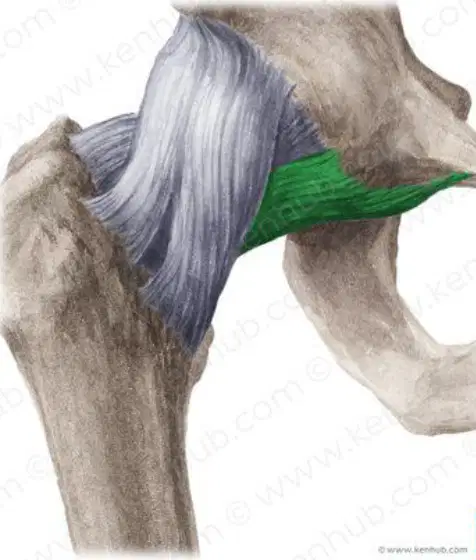
The pubofemoral ligament limits which of the following movements?
Flexion, abduction, and external rotation
Abduction, extension, and may assist in restraining internal rotation
Adduction and flexion
Extension and external rotation
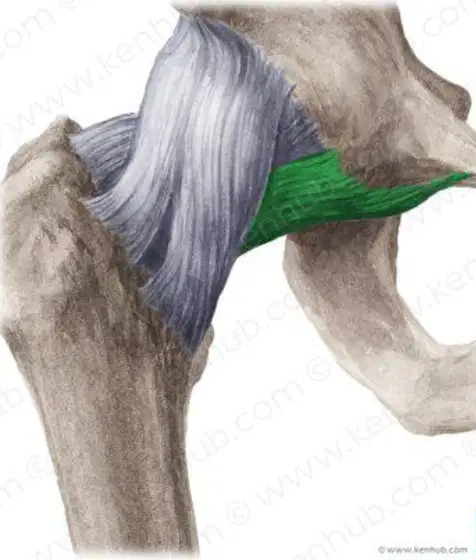
The pubofemoral ligament may assist in restraining ________ rotation.
internal
external
lateral
medial
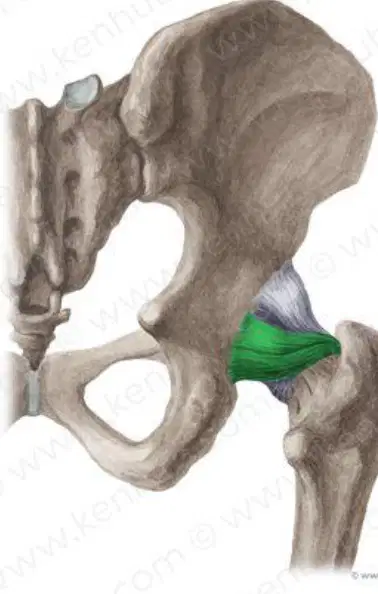
Where does the ischiofemoral ligament extend from and to?
From the ischial rim of the acetabulum to the base of the greater trochanter or trochanteric fossa
From the iliac crest to the femoral head
From the pubic symphysis to the acetabulum
From the sacrum to the greater trochanter
The ischiofemoral ligament is arranged in a ______ fashion.
spiral
linear
circular
transverse
What is the function of the ischiofemoral ligament?
Prevents hyperextension and helps maintain the femoral head within the acetabulum
Allows for increased flexibility of the hip joint
Connects the femur to the tibia
Supports the lumbar spine
Which ligament is primarily responsible for limiting internal rotation of the hip joint?
Ischiofemoral ligament
Ligamentum teres
Pubofemoral ligament
Iliofemoral ligament
Which part of the pelvis forms the posterior-inferior portion and supports sitting weight?
Ilium
Ischium
Pubis
Acetabulum
Which structure forms the anterior joint between the two pubic bones?
Obturator foramen
Acetabulum
Sacroiliac joint
Pubic symphysis
Which bone forms the uppermost part of the hip and provides attachment for the gluteal muscles?
Pubis
Ilium
Coccyx
Ischium


Which bone is highlighted
ilium
ischium
pubic
sacrum

