
 Worksheets
ELS Earth's Subsystem
Total questions: 40
Worksheet time: 27mins
Which statement BEST explains the focus of Earth Systems?
It studies the Earth’s spheres separately to understand each one in detail.
It looks only at human influence through the anthroposphere.
It combines the study of different spheres to understand Earth as a whole.
It focuses only on the atmosphere and hydrosphere.
Why does studying the Earth’s systems demonstrate an interdisciplinary approach?
Because it examines Earth through a single scientific field in isolation
Because it integrates knowledge from many disciplines such as biology, geology, physics, and chemistry
Because it limits the study of Earth to only the land system or geosphere
Because it treats natural systems and human systems as completely separate from one another
Florida faces major environmental challenges that affect its atmosphere, biosphere, geosphere, and hydrosphere. Based on the mission of the Thompson Earth Systems Institute (TESI), which of the following actions BEST reflects an interdisciplinary and positive human impact on Earth’s systems?
Building seawalls to protect coastal property without considering effects on marine life
Expanding highways to reduce traffic congestion, even if it increases fossil fuel use
Creating community education programs that connect climate science, water management, and public health to guide sustainable choices
Limiting studies only to soil erosion without addressing its impact on rivers and ecosystems

The Earth’s atmosphere is a thin layer of gases that surrounds our planet, held in place by gravity. Though it may seem invisible and endless, the atmosphere is essential for life on Earth. It provides the oxygen we breathe, protects us from harmful radiation, regulates temperature, and plays a key role in weather and climate. The atmosphere is divided into different layers, each with unique characteristics and functions—from the troposphere, where we live and experience weather, to the exosphere, which gradually merges with outer space. Without the atmosphere, Earth would be lifeless, exposed to intense solar radiation, and unable to sustain water in liquid form.
TRUE OR FALSE: If the troposphere’s temperature increased with altitude instead of decreasing, high mountain regions would experience climates similar to those at sea level.
TRUE
FALSE
TRUE OR FALSE: The air in the stratosphere has strong, steady horizontal winds which is advantageous to long distance flights Lacks the weather-producing air turbulence.
TRUE
FALSE
TRUE OR FALSE: The thermosphere is cool and dense, making it suitable for humans to breathe and survive without protective equipment.
TRUE
FALSE
TRUE OR FALSE: Most meteoroids that enter the atmosphere burn up due to the intense friction that builds up between the air and the meteoroid.
TRUE
FALSE
TRUE OR FALSE: The thinning of the ozone layer in the stratosphere has no significant effect on living organisms since UV radiation cannot reach Earth’s surface.
TRUE
FALSE
TRUE OR FALSE: Satellites in the thermosphere experience minimal atmospheric drag, which allows them to maintain their orbits for long periods.
TRUE
FALSE
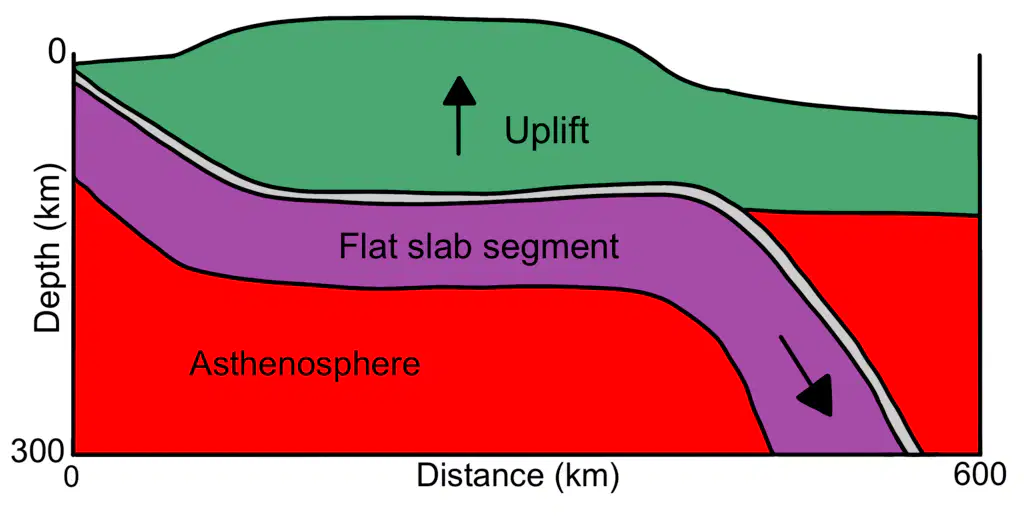
The asthenosphere plays a crucial role in Earth’s geosphere.
Which of the following best describes its characteristics and importance?
It is the rigid outer layer of Earth where tectonic plates are found.
It is the innermost part of Earth, made mostly of solid iron and nickel.
It is the thin, outermost layer of Earth where all living organisms exist.
It is a semi-molten, ductile layer beneath the lithosphere that allows tectonic plates to move.
Which of the following statements correctly compares continental crust and oceanic crust?
Continental crust is thinner and denser, while oceanic crust is thicker and lighter.
Continental crust is mainly made of basalt, while oceanic crust is mainly made of granite.
Continental crust is older, thicker, and less dense, while oceanic crust is younger, thinner, and denser.
Continental crust forms the ocean floors, while oceanic crust forms the continents.
The mantle is made of semi-solid rock that slowly circulates in convection currents.
How do these currents MOST directly affect Earth’s surface?
They provide oxygen for the biosphere.
They generate Earth’s magnetic field by producing electric currents.
They trap all heat inside Earth, preventing volcanic activity.
They cause the recycling of oceanic crust at subduction zones and the movement of tectonic plates.
The outer core is liquid iron and nickel.
What would most likely happen if the outer core were solid instead of liquid?
Plate tectonics would stop completely because the lithosphere would no longer move.
Earth’s atmosphere would instantly collapse due to lack of gravity.
Earth’s magnetic field would weaken or disappear, leaving the planet more exposed to harmful solar radiation.
The oceans would evaporate because no water cycle could exist.
The inner core remains solid despite extreme heat.
Why is this the case?
Because it is made mostly of granite, which does not melt easily.
Because the intense pressure at Earth’s center keeps iron and nickel in solid form.
Because it is cooled directly by the surrounding oceans.
Because convection currents prevent the core from melting.
This continuous process moves water through evaporation, condensation, precipitation, and runoff.
WRITE YOUR ANSWER IS ALL CAPS.
(a)
Glaciers, ice caps, and permafrost together make up this frozen portion of the hydrosphere.
WRITE YOUR ANSWER IS ALL CAPS.
(a)
This type of water makes up about 97% of the hydrosphere and is found mainly in oceans and seas.
WRITE YOUR ANSWER IS ALL CAPS.
(a)
A coastal city experiences severe flooding after a typhoon. The floodwaters damage homes, spread diseases, and contaminate freshwater supplies. Which explanation best shows how the hydrosphere’s interaction with other Earth systems worsens the disaster?
The hydrosphere interacts only with the atmosphere, since the typhoon is a weather event.
The hydrosphere functions independently, and flooding happens without connections to other systems.
The hydrosphere interacts with the biosphere and geosphere, since humans, animals, land, and infrastructure are affected by the floodwaters.
The hydrosphere interacts only with the geosphere, since the land absorbs or blocks the water.
True or False: The Panspermia Theory suggests that the first forms of life originated on Earth’s oceans and not from outer space.
TRUE
FALSE
True or False: The Deep-Sea Vent Theory highlights how energy and chemicals from hydrothermal vents could have fueled the formation of early life.
TRUE
FALSE
True or False: The Primordial Soup Theory claims that life began in outer space before reaching Earth’s atmosphere.
TRUE
FALSE
The Earth in its early stages was very different from the planet we know today. Its atmosphere was harsh and unsuitable for life, marked by constant asteroid and meteorite impacts as well as intense volcanic activity.
Considering these conditions, which statement BEST explains why life as we know it could not exist at that time?
The presence of hydrogen and helium supported only plant life
High temperatures favored the immediate formation of modern ecosystems
Volcanic eruptions constantly replenished oxygen in the atmosphere
The lack of oxygen and extreme conditions made it impossible for complex organisms to survive
A newly discovered volcanic island shows rapid soil formation and colonization by pioneer species. Which subsystem interaction is primarily at play?
Geosphere–Atmosphere
Biosphere–Hydrosphere
Geosphere–Biosphere
Atmosphere–Hydrosphere
Which combination of planetary features most strongly supports long-term climate stability?
Thick atmosphere, slow rotation, high albedo
Active plate tectonics, liquid water, magnetic field
Large moon, elliptical orbit, dense core
High CO₂ levels, rapid rotation, thin crust
A mining operation in Benguet leads to increased sedimentation in nearby rivers. What long-term effect might this have on the hydrosphere-biosphere interaction?
Enhanced aquatic biodiversity
Reduced oxygen levels and fish mortality
Increased groundwater recharge
Stabilized riverbanks due to sediment buildup
Which atmospheric layer is most directly responsible for absorbing harmful ultraviolet radiation?
Troposphere
Mesosphere
Stratosphere
Thermosphere
Which of the following best illustrates a feedback loop between the cryosphere and climate change?
Melting glaciers reduce albedo, increasing warming
Ice formation increases salinity, lowering sea levels
Snowfall increases surface reflectivity, cooling the planet
Icebergs trap pollutants, improving water quality
The hydrosphere includes all water on Earth, regardless of its physical state.
TRUE
FALSE
Coral bleaching is a sign of increased photosynthetic activity in marine ecosystems.
TRUE
FALSE
The lithosphere includes both the crust and the uppermost part of the mantle.
TRUE
FALSE
The biosphere is unaffected by changes in atmospheric composition.
TRUE
FALSE
Human-induced changes in one subsystem can trigger cascading effects in others.
TRUE
FALSE
A barangay in Albay reports increased landslide activity following weeks of deforestation and heavy rainfall. Which subsystem interaction best explains this phenomenon?
Geosphere–Atmosphere: erosion due to wind
Biosphere–Geosphere: root loss destabilizing soil
Hydrosphere–Cryosphere: melting permafrost
Atmosphere–Biosphere: reduced transpiration
A marine sanctuary off the coast of Batangas shows declining fish populations despite stable water quality. Researchers note increased boat traffic and coral damage. What subsystem interaction is most likely disrupted?
Biosphere–Geosphere: sedimentation from anchor drag
Hydrosphere–Atmosphere: reduced oxygen exchange
Biosphere–Hydrosphere: habitat degradation
Geosphere–Cryosphere: temperature anomalies
Replacing native forests with monoculture plantations increases biodiversity due to uniform conditions.
TRUE
FALSE
After prolonged El Niño conditions, fish cages in Laguna de Bay experience massive die-offs. Which hydrosphere–biosphere feedback is driving this event?
Elevated water temperature inhibiting photosynthesis
Nutrient overloading triggering algal blooms
Decreased salinity promoting invasive species
Increased evaporation reducing dissolved oxygen
Encompasses all solid Earth materials—rocks, soil, and tectonic plates.
(TYPE YOUR ANSWER IN CAPITAL LETTERS)
(a)
The semi-fluid layer of the upper mantle beneath the lithosphere that allows plate movement.
(TYPE YOUR ANSWER IN CAPITAL LETTERS)
(a)
A system that does not exchange matter with its surroundings but allows energy flow (e.g., sealed terrarium).
(TYPE YOUR ANSWER IN CAPITAL LETTERS)
(a)
The most abundant gas by volume in Earth’s troposphere.
(TYPE YOUR ANSWER IN CAPITAL LETTERS)
(a)
The ecological unit consisting of interacting species and their physical environment within a defined area.
(TYPE YOUR ANSWER IN CAPITAL LETTERS)
(a)
A researcher places a perfectly insulated, sealed container in a vacuum chamber. No heat or particles can enter or leave. Which system type is this?
Open system
Closed system
Isolated system
A biologist studies a pond ecosystem where fish are added from upstream and water evaporates into the air. What type of system is the pond?
Open system
Closed system
Isolated system
What would be the most significant consequence if the Earth's magnetic field were to completely disappear?
Plants would no longer be able to photosynthesize effectively.
Earth would experience a dramatic drop in temperature, leading to a new ice age.
All electronic devices would stop functioning immediately.
Increased solar radiation would lead to higher rates of skin cancer among humans.
Which of the following best describes the role of the ozone layer in Earth's atmosphere?
It regulates the temperature of the Earth by trapping heat.
It absorbs most of the Sun's harmful ultraviolet radiation, protecting living organisms.
It acts as a barrier to prevent all forms of radiation from reaching the surface.
It is responsible for the formation of weather patterns and climate.

