
 Worksheets
7U4 Properties of Matter Test
Total questions: 33
Worksheet time: 37mins
In your own words, what is matter? What are 2 examples of matter? What are 2 examples of things that are NOT matter? Make sure that your answer is clear and easy to understand, and that you have clearly labeled your examples of what is matter and what is not matter.
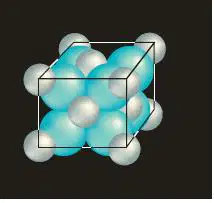
If each type of sphere/circle represents a different atom, which statement best describes this model?
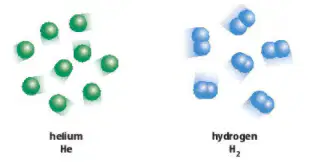
Both models below are of elements. What is true about about hydrogen in this model?
Hydrogen is a moving particle, and helium is more dense.
Hydrogen and helium are a common compound.
What can methods like cutting, filtering and evaporating be used for?
To break the chemical and molecular bonds in compounds
To create a physical change such as separate particles in mixtures.
To reverse physical changes
A mixture of different elements
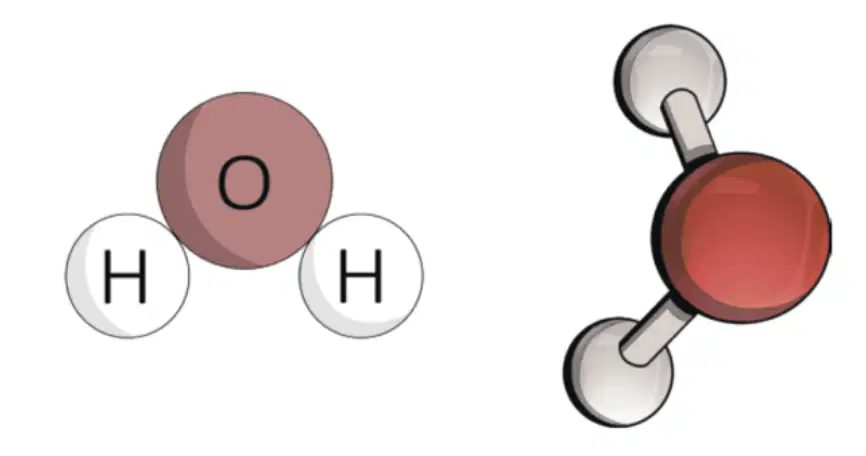
This image shows the same molecule from different angles. What does this model represent?

What does the following image represent?
Mixture of elements
When carbon releases all oxygen atoms
The ability to change shape
The original compounds do not change
Which of the following is NOT a sign that a chemical change has occurred?
One particle of table salt (NaCl) is best described as a (a) .
Match the following
a substance that consists of just one type of atom
element
a small particle that is a building block of matter
atom
a combination of two or more substances physically blended together
mixture
anything that has mass and takes up space
matter
Select whether each of the following are describing a physical or chemical property of matter.
gold is malleable
salt dissolves in water
wood is a poor conductor of heat
milk sours when left out
silver tarnishes when exposed to air
gasoline ignites when exposed to a spark
Select whether each of the following are describing a physical or chemical property of matter.
oil floats in water
a marshmallow is roasted on an open fire and catches fire!
water boils at 100 degrees Celsius
ice is less dense than water
vinegar reacts with baking soda to produce carbon dioxide
iron reacts with oxygen to form rust
Match the example to the category
gold (Au)
dirty pond water (dirt, pond water, algae)
table salt (NaCl)
carbon (C)
oxygen (O)
water (H2O)
salad (lettuce, tomatoes, cucumbers)
air in a balloon (nitrogen, oxygen, and other circulating gases)
Match the example to the category
iron (Fe)
helium (He)
carbon dioxide (CO2)
glucose (C6H12O6)
concrete (cement, water, gravel)
oil and water (oil floating on water)
Lemonade

Match the following terms to their proper defintions
Matter
Anything that has mass and volume
Mass
The amount of matter in an object
Volume
The amount of space an object takes up
Atoms
The smallest particle of an element that still has the properties of that element
Elements
A substance that is made up of only one kind of atom.
Match the description to the property
The ability of a substance to dissolve
Solubility
A liquid's resistance to flow
Viscosity
The temperature at which an addition or removal of heat turns solid to liquid or liquid to solid
Melting/Freezing Point
Reaction with Sulfur
A dullness of color or loss of brightness
Stars are mostly made of which elements?
Hydrogen and helium
Nitrogen and neon
Carbon and iron
Oxygen and hydrogen
How were most elements formed?
On Earth throughout long periods of geological change
From the violent deaths of stars
From orbiting comets pulled in by planetary gravity
From chemical reactions recombining substances
True or false?
Elements each have unique properties
Elements can be broken down into different substances
There are 347 known elements
There are 118 known elements
Elements are pure substances
Match the following
Positive Charge
Equal to atomic number
Neutral/no Charge
Add weight but not charge
Negative Charge
Found outside the nucleus
Isotopes are atoms with the..
Same number of protons, different mass because of the number of neutrons
Same amount of protons and neutrons, same mass across different isotopes
Different number of protons, same mass
Where can each subatomic particle be found?
Proton
Neutron
Electron
The subatomic particle that determines the "ID" or atomic number of an atom is the..
electron
neutron
protron
Photosynthesis is considered a chemical change. Why?
Because it involves the transport of water from root to leaf
Because it is a complicated processed involving plant organelles
Because the elements in H20 and C02 break their bonds and rearrange to form glucose and oxygen
Because oxygen and carbon dioxide enter and exit the plant but remain unchanged during the cycle

