
NEW
Font size
 Worksheets
PRC Healthccare Models
Total questions: 14
Worksheet time: 7mins
The differences between managed care, capitation, and the various types of health insurance plans include:
Managed care focuses on controlling costs and quality, capitation is a payment method, and health insurance plans vary in coverage and provider choice.
Managed care and capitation are the same, while health insurance plans are unrelated.
Capitation is a type of health insurance plan, and managed care is a payment method.
All health insurance plans use capitation and managed care models.
Which term is defined as: 'Patients are assigned a per-member, per-month payment based on age, race, sex, lifestyle, medical history, and benefit design. Payment rates are tied to expected usage regardless of how often the patient visits. Like bundled payment models, providers are incentivized to help patients avoid high-cost procedures and tests to maximize their compensation. Under partial- or blended-capitation models, only specific types or categories of services are paid based on capitation.'?
Capitation
Fee-for-service
Pay-for-performance
Diagnosis-related group
Which term is defined as: 'This plan contracts with a medical center or group of providers to provide preventive and acute care for the insured person. HMOs generally require referrals to specialists, as well as precertification and preauthorization for hospital admissions, outpatient procedures, and treatments.'?
Health maintenance organization (HMO)
Preferred provider organization (PPO)
Exclusive provider organization (EPO)
Point of service plan (POS)
Which term is defined as: 'These plans have more flexibility than HMO plans. An insured person does not need a PCP and can go directly to a specialist without referrals. Although patients can see providers in or out of their network, an in-network provider usually costs less.'?
Preferred provider organization (PPO)
Health maintenance organization (HMO)
Exclusive provider organization (EPO)
Point of service (POS)
Which term is defined as: 'POS plans allow a great deal of flexibility for patients. They can self-refer to specialists and do not need an assigned PCP. Like PPO, the cost depends on whether the providers they see are within the plan's panel.'?
Point-of-service (POS) plan
Health Maintenance Organization (HMO)
Exclusive Provider Organization (EPO)
Preferred Provider Organization (PPO)
What is a risk of the 'Fee-for-Service' model?
It can lead to unnecessary visits, tests, and procedures for the profit of those providing care.
It encourages providers to focus on preventive care only.
It limits patient access to specialists.
It reduces the overall cost of healthcare.
What is one benefit of the Fee-for-Service Model? Patients only pay for the ______ they use.
services
doctors
insurance
medicines
What is another risk of the Fee-for-Service Model? Can lead to higher overall ______ costs.
healthcare
transportation
education
housing
Potential benefits of the Value-based model include:
Improved patient outcomes and cost efficiency
Increased administrative burden
Reduced focus on patient care
Higher costs with less accountability
How do value-based plans work? Providers focus on overall patient health rather than _________?
individual services
patient satisfaction scores
insurance premiums
hospital locations
How do value-based plans work? Fill in the blank: Financial rewards are based on patient outcomes, satisfaction, and effective ________ of health.
management
promotion
advertising
neglect
How do value-based plans work? Fill in the blank: Value-based plans emphasize ________ and early intervention to avoid costly treatments.
prevention
medication
surgery
diagnosis
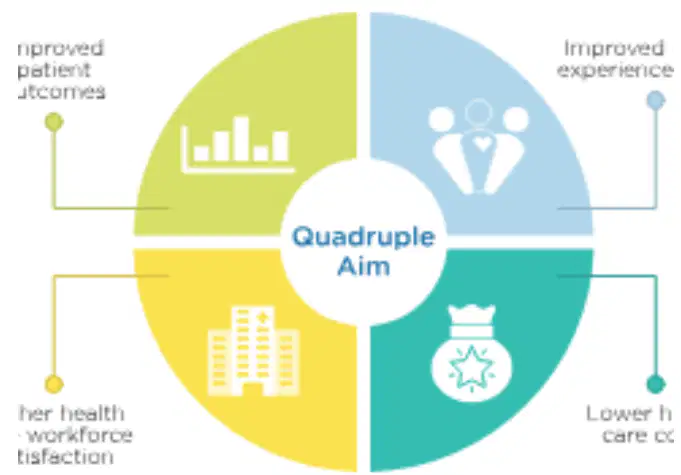
What does 'Improved Patient Satisfaction' aim to ensure in Value-Based Plans?
Ensuring patients are content with their care.
Reducing the number of healthcare providers.
Increasing administrative paperwork for patients.
Focusing only on cost reduction.
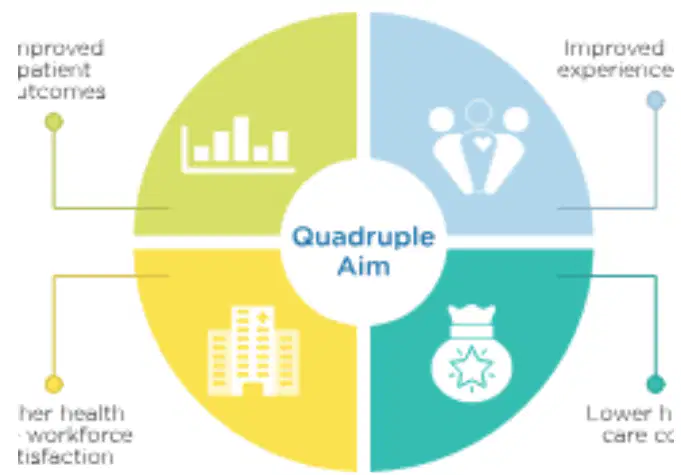
What is the purpose of 'Lower Costs' in Value-Based Plans?
Reducing overall healthcare expenses.
Increasing administrative workload.
Limiting patient access to care.
Encouraging unnecessary treatments.

