
 Worksheets
Electrical Hazards and Safety Devices - Missed Questions
Total questions: 15
Worksheet time: 8mins
To protect yourself from an electrical shock, you should always _______ before working on it.
measure voltage
check the manual
tighten all screws
replace the fuse
The best method to verify a piece of equipment is properly grounded is:
Use a multimeter to measure the resistance between the equipment's ground terminal and a known-good ground source.
Visually inspecting the equipment for a ground wire.
Touching the equipment to see if you feel a shock.
Assuming it is grounded if it is plugged in.
To protect yourself from an electrical shock, you should not fix electrical devices unless the _______ is off.
power
light
fan
switch
What are some common causes of electrical fires?
Short circuits, overloaded circuits, and faulty wiring
Water leakage, poor lighting, and dust
Loud noises, open windows, and old paint
None of the above
What is the most immediate danger of unsecured electrical cords?
Fire hazard
Tripping with them
Electric shock
Water damage
Which of the following statements is true?
Fuses can be reset after they blow
Circuit breakers need to be replaced after they trip
Circuit breakers can be reset, while fuses need to be replaced once they blow
Both fuses and circuit breakers need to be replaced after use
A thermal circuit breaker trips almost instantaneously to protect against severe short circuits.
True
False
One of the three main electrical hazards is _________.
Electrical shock
Water leakage
Broken glass
Chemical burns
A ________ occurs when electricity finds an unintended path, often with lower resistance, which in turn, dangerously increased current, producing significant heat.
short circuit
open circuit
resistor
fuse
Overloaded circuits occur when too much ________ flows through the circuit, usually because of too many components connected in parallel, exceeding its capacity.
electrical current
resistance
voltage
power
According to the passage, name four of the most common electrical safety devices.
Circuit breakers, fuses, GFCI, and grounding
fuses, GFCI, light bulbs and switches
Circuit breakers, fuses, extension cords and plugs
Circuit breakers, fuses, CIFG, and grounding
What is the main function of circuit breakers and fuses?
To increase the flow of electricity
To interrupt the flow of electricity when the current exceeds a safe level
To store electricity
To generate electricity
Fill in the blank: A magnetic trip in a circuit breaker occurs when an ________ trips the breaker instantly during a high-current short circuit.
electromagnet
insulator
resistor
capacitor
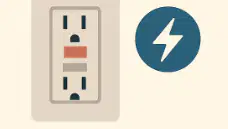
A GFCI shuts off power instantly if it senses electricity going where it shouldn't, like through water or a person.
True
False
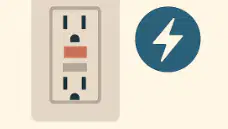
Where are you most likely to see GFCI outlets?
Bedrooms
Bathrooms, kitchens, or outdoor outlets where water is nearby
Living rooms
Garages

