
NEW
Font size
 Worksheets
Statistical Process Control (SPC) Concepts Quiz
Total questions: 27
Worksheet time: 14mins
What is one of the fundamental concepts of Statistical Process Control (SPC)?
Quality Assurance
Control Charts
Data Mining
Process Mapping
How can SPC principles be applied in real-world scenarios?
By creating marketing strategies
By ensuring quality assurance
By developing new products
By increasing sales
What is the purpose of analyzing data patterns in SPC?
To improve marketing strategies
To enhance process improvement
To develop new software
To increase employee satisfaction
What is the primary purpose of Statistical Process Control (SPC)?
To increase production speed
To monitor and control a process using statistical techniques
To reduce employee workload
To enhance marketing strategies
How does SPC contribute to customer satisfaction?
By reducing product prices
By identifying variations in processes to maintain quality and efficiency
By increasing advertising efforts
By expanding product lines
In which century did the concept of SPC emerge, and what was its primary influence?
19th century, influenced by agricultural processes
20th century, influenced by manufacturing processes
18th century, influenced by technological advancements
21st century, influenced by digital transformation
Who were the notable figures in the evolution of SPC, and what were their contributions?
Walter A. Shewart introduced control charts; W. Edwards Deming popularized statistical methodologies in Japan
Albert Einstein developed the theory of relativity; Isaac Newton formulated the laws of motion
Marie Curie discovered radioactivity; Thomas Edison invented the light bulb
Charles Darwin proposed the theory of evolution; Gregor Mendel discovered genetics
How has SPC evolved alongside industrial practices?
From manual labor to automated systems
From mere inspection to systemic process control
From local markets to global trade
From traditional methods to digital solutions
What is the primary purpose of control charts in process management?
To display financial data over time
To determine if a process is stable or requires action
To track employee performance
To manage inventory levels
Which type of control chart is used for tracking the mean value of a process?
P-chart
R-chart
X-bar chart
S-chart
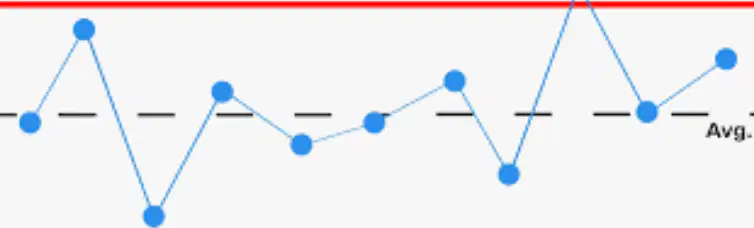
How do control charts assist stakeholders in process improvement?
By providing financial forecasts
By visualizing trends and variations for data-driven decisions
By increasing production speed
By reducing employee turnover
What role does data play in SPC (Statistical Process Control)?
It is used to create marketing strategies.
It drives analysis to identify process variation and inform quality improvement strategies.
It is primarily used for financial forecasting.
It serves as a backup for data storage.
Which techniques are mentioned as methods for comprehensive data collection?
Interviews and focus groups
Surveys, automated sensors, and production logs
Social media analysis and web scraping
Financial audits and tax reports

What statistical tools are used to interpret data and draw actionable insights?
Descriptive statistics, hypothesis testing, and regression analysis
Data encryption and decryption
Machine learning algorithms and neural networks
Financial ratios and balance sheets
What are the critical steps involved in implementing SPC in quality assurance?
Defining objectives, selecting tools, and establishing thresholds
Hiring new staff, increasing production, and reducing costs
Eliminating all existing processes, starting from scratch, and ignoring feedback
Focusing solely on customer feedback, ignoring internal processes, and reducing training
Why is seamless integration with existing quality management systems important when implementing SPC?
It ensures SPC enhances rather than disrupts workflows
It allows for complete replacement of all systems
It focuses only on reducing costs
It eliminates the need for any training
What is essential for staff to effectively utilize SPC?
Comprehensive training on tools and methodologies
Reducing the number of staff members
Ignoring existing resources and support
Focusing only on external consultants
Which of the following is a key consideration in data collection for Statistical Process Control (SPC)?
Sampling methods
Data visualization techniques
Hypothesis testing
Regression analysis
What is the purpose of determining sample size in data collection for SPC?
To ensure data integrity
To reduce data redundancy
To achieve accurate representation
To simplify data analysis
Why is measurement system analysis important in SPC data collection?
It helps in identifying data trends.
It ensures the accuracy and precision of data.
It simplifies the data collection process.
It reduces the need for documentation.
Which aspect of data collection for SPC focuses on maintaining the reliability of data over time?
Frequency of data collection
Data visualization
Data integrity considerations
Sample size determination
What is the first step in implementing SPC according to the provided steps for success?
Choose appropriate control charts
Select critical process characteristics
Collect and analyse data
Monitor process
Which step involves determining the boundaries within which a process should operate?
Establish control limits
Monitor process
Take action when needed
Collect and analyse data
Why is it important to monitor the process in SPC?
To ensure the process is within control limits
To select critical process characteristics
To choose appropriate control charts
To establish control limits
Which of the following is a tool used in Statistical Process Control (SPC) to identify the most significant factors in a dataset?
Run Charts
Pareto Charts
Scatter Plots
Histograms
Which SPC tool is primarily used to display the distribution of data over a continuous interval?
Histograms
Pareto Charts
Run Charts
Cause-and-Effect Diagrams
What is the purpose of a Cause-and-Effect Diagram in SPC?
To display data distribution
To identify potential causes of a problem
To show process capability
To track data over time

