
 Worksheets
IAC Quiz Bowl Practice: Science
Total questions: 224
Worksheet time: 2hrs 11mins
What is the jellylike fluid inside the cell in which the organelles are suspended?
Cytoplasm
Nucleus
Mitochondria
Cell wall
Which organelle is known as the powerhouse of the cell and breaks down food into energy we can use?
Mitochondria
Nucleus
Chloroplast
Ribosome
What is the site of photosynthesis found in plant cells?
Chloroplast
Mitochondria
Nucleus
Vacuole
What is a sac inside a cell that acts as a storage area called?
Vacuole
Mitochondria
Ribosome
Nucleus
What is a tiny part of a cell that carries out specific jobs called?
Organelle
Tissue
Nucleus
Membrane
What do we call a living thing?
Organism
Mineral
Robot
Rock
What is a group of similar cells that perform the same function called?
Tissue
Organ
Organism
System
What is a body structure that is composed of different kinds of tissues that work together called?
Organ
Cell
Atom
Molecule
What do we call a collection of organs that cooperate to carry out a specific life process, such as the respiratory system?
Organ system
Organ tissue
Cell group
Body part
Which part of the cell controls what enters and leaves the cell?
Vacuole
Cell membrane
Chloroplast
Ribosome
What is the basic unit of structure and function in living things?
Organ
Tissue
Cell
System
What structure provides support and protection to plant cells but is not found in animal cells?
Cell membrane
Cell wall
Cytoplasm
Ribosome
What is the thin, flexible barrier that surrounds all cells called?
Cell membrane
Cell wall
Cytoplasm
Ribosome
Which structure is found in plant cells but not in animal cells?
Cell membrane
Ribosome
Mitochondria
Cell wall
What is the name of the process by which plants make their own food using sunlight?
Photosynthesis
Respiration
Fermentation
Digestion
Which part of a plant cell is responsible for storing water, nutrients, and waste products?
Ribosome
Nucleus
Cell membrane
Vacuole

The basic unit of structure and function in living thing
Cells
Structure
Fossil
Tissue

The shape , the physical characteristics, or appearance of an object or thing.
function
structure
cells
animal cell
Job, purpose or responsibility that a person or thing performs.
structure
function
scientific method
observation

A group of similar cells that work together to perform a specific function
structure
cells
tissues
function

A collection of tissues that perform a common function
tissues
organs
cells

A group of organs working together to perform a certain task.
Cells
Tissues
Ogan
Organ Systems
Anything outside the body of an organism that can cause a response
Optical Nerve
External Stimulus
Homeostasis
Internal Stimulus
A change from within an organism such as hunger or thirst that cause an organism to respond.
Optic Nerve
Internal Stimulus
Homeostasis
External Stimulus

A group of parts that work together as a whole
System
Organ
Tissue
Cell

Any living thing
sand
sun
abiotic
Organism
How much skin does an adult on average have?
10 sq.ft
20 sq.ft
30 sq.ft
40 sq.ft

How much food can your stomach hold at one time?
1 pound
2 pound
3 pound
4 pound

How many neurons are in a human brain?
10 million
100 million
1 billion
100 billion
1 trillion

Nervous system signals are transmitted at what speed?
1 meter per second
10 meters per second
100 meters per second
1000 meters per second

How much DNA do humans share with a banana?
20%
40%
60%
80%
100%

How many times per day can a woodpecker peck?
4,000
8,000
12,000
16,000

How many different color variations can our eyes detect?
10,0000
1 million
10 million
100 million
1 billion
Biology is best defined as the study of;
The human body
Living organisms
The environment
Botany
The human body is made up of approx.;
100 thousand cells
100 million cells
100 billion cells
100 trillion cells
Which of the following organisms produces the largest egg in the world ?
Python
Cockatoo
Ostrich
Port Jackson shark
Every nucleus in the body has DNA at least
6mm long
6cm long
6 feet long
6 meters long
70% of the oxygen in the atmosphere is produced by
Trees
Marine plants and algae
The largest eyeballs in the world belong to;
An Elephant
Giant Squid
Giraffe
Owl
What percentage of plant life is found in the ocean?
25%
45%
65%
85%
The neuron can be found where?
Heart
Large intestine
Brain
Liver
What is the largest organ in the human body?
The heart
The kidneys
The brain
The skin
How old is the oldest living tree? over...
1000 years
2000 years
3000 years
5000 years
What is the largest animal ever?
t-rex
giant sloth
blue whale
megaladon
How many bones are in an adult human body
185
200
206
303
How much saliva does one person produce in a lifetime
enough to fill a bathtub
enough to cover an entire wedding cake
enough to fill a swimming pool
it depends
Plants:
are multi-cellular organisms
make their own food through photosynthesis
cannot move
are a member of kingdom Plantae
All of the above
Stamens are:
the female reproductive organ of a flower that produces pollen
the male reproductive organ of a flower that produces nectar
the male reproductive organ of a flower that produces pollen
none of the above
The Stigma is:
the part of a flower that receives pollen during pollination and on which the pollen grain germinates
the part of the flower that pollen sticks to
located on top of the pistil
all of the above
The Pistil is:
the male reproductive organ of a flower that can be fertilized by pollen
the female reproductive organ of a flower that can be fertilized by pollen
the male reproductive organ of a flower that can be fertilized by nectar
none of the above
Fruit is
a plant structure that contains seeds and grows from a flowering plant
a nutritious part of the plant that can be consumed
seeds are usually dispersed by animals
all of the above
A Stem is:
a plant structure that contains a young plant, food supply, and protective coating
a plant organ that takes in water and nutrients from the soil
the part of a plant that grows away from the roots; supports leaves and flowers
none of the above
Roots are:
a plant structure that contains a young plant, food supply, and protective coating
the part of a plant that grows away from the roots; supports leaves and flowers
a plant organ that takes in water and nutrients from the soil
none of the above
Seeds are
a plant structure that contains a young plant, food supply, and protective coating
a plant organ that takes in water and nutrients from the soil
the part of a plant that grows away from the roots; supports leaves and flowers
none of the above
a Cotyledon is:
The first leaf or one of a pair of leaves developed by the embryo within a seed.
The first leaf or one of a pair of leaves developed by the stigma within a grain of pollen.
The first leaf or one of a pair of leaves developed by the stamen within a seed.
none of the above
Flowering Plants
uses flowers to reproduce
Attract bees, birds, bats
are also called angiosperms
all of the above
Asexual Reproduction involves
reproduction not requiring fertilization; only involves one parent
Budding is an example
offspring are an exact copy of the parent
all the above
Budding
a form of sexual reproduction in which a new individual organisms develop from two parents organism
a form of asexual reproduction in which a new individual organisms develop from one parent organism
a form of asexual reproduction in which a new individual organisms develop from two parents organism
Selective Breeding is
is a process used by humans to develop new organisms with desirable characteristics.
also known as artificial selection,
an example is Wisconsin Fast Plants
all of the above
A mountain-size chink of ice and dust that orbits the sun is called?
Asteroid
Comet
Meteorite
Meteor
A large space rock that orbits the sun is called?
Asteroid
Comet
Meteor
Meteorite
A Polish astronomer, first proposed that Earth and the other planets move around the sun is named?
Einstein
Galileo
Ptolemy
Copernicus
This Ancient Greek philosopher, believed that the Earth was the center of the solar system.
Copernicus
Aristotle
Ptolemy
Galileo
This Philosopher was best known for his model of how planets move.
Aristotle
Galileo
Copernicus
Ptolemy
Which of the following is NOT a gas giant?
Jupiter
Saturn
Venus
Neptune
Which of the following is NOT a terrestrial planet?
Mercury
Venus
Uranus
Mars
Earth is different from the other planets in the solar system because...
It collided with Asteroids.
Makes up the most mass in our solar system.
Orbits a star.
Has oceans and lakes.
Although similar in size, what is one trait that makes Venus different from the Earth?
Venus doesn't rotate.
Venus has no atmosphere.
Venus has very little water to cool off the planet.
Venus has a thicker atmosphere that holds more heat.
Where would you find the Asteroid Belt?
Between Earth and Mars
Between Mars and Jupiter
Between Jupiter and Saturn
Past Neptune
What characteristic does Pluto fail in to become a planet?
Pluto does not orbit the sun.
Pluto is not round.
Pluto does not have sufficient mass.
Pluto does not clear the neighborhood of its orbit.
The force that holds the planets in orbit around the sun is called?
Rotation
Gravity
Friction
Pressure
Which of the choices lists solar system objects from largest to smallest?
Sun, Jupiter, Earth, Moon
Moon, Earth, Jupiter, Sun
Sun, Earth, Jupiter, Moon
Jupiter, Sun, Earth, Moon
The time it takes the Moon to revolve around the Earth is approximately one
Hour
Day
Week
Month
What causes the most influence on our ocean tides?
Gravity from the Sun
Magnetic field on Earth
Gravity between the Earth and its moon.
Earth's atmosphere
Although the United States was the first to land a man on the moon, what did the former Soviet Union be the first country to do?
Go to Mars
Land a space craft on Venus
Build and launch a rocket
Have an astronaut orbit the Earth
What makes Uranus different from all the other planets?
It rotates backwards
It rotates on its side.
Its made up of gas.
It has more than one moon.
A __________ is the movement of Earth when it travels around the sun.
revolution
rotation
A __________ is the spinning of Earth on its axis. It takes 24 hours.
Rotation
Revolution
What makes the moon look bright in the sky?
The moon reflects light from Earth.
The moon reflects light from the Sun.
The moon generates its own light.
The moon absorbs light from the stars.
This planet is the third planet from the Sun
Mars
Jupiter
Venus
Earth
Our place in the universe is known as
Our Soul Palace
Our Cosmic Address
Our Location
Our School
What is the closest star to the Earth?
The Sun
Alpha Centauri
Promixa Centauri
Polaris
How many planets are in our Solar System?
25
9 because Pluto got a new planetary contract
8
More than we can count


This picture would be an example of...
as the crow flys
really scary perspective
an opinion
a bird's eye view

Terrestrial planets are
only in other Solar Systems, not the Milky Way
planets that are solid, rocky and closest to the Sun
planets that are gases
planets that have aliens living on them
A system is...
a set of interacting parts, that work together, forming a larger, more complex group
a complex group of beings that do not work together well
working parts
parts that are broken
Streams, rivers, rain and the ocean are all parts of the...
Atmosphere
Geosphere
Biosphere
Hydrosphere


This would be an example of a
New Moon
First Quarter Moon
Full Moon
First Semester Moon
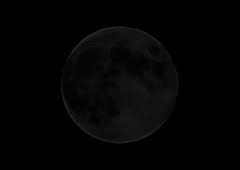

From Earth we always see the same side of the moon?
True
False
Umm no that would be lame
Only on Fridays
The reason the Earth experiences day and night is because
The moon revolves around the Earth
There is a magic switch that goes on and off
The Earth rotates on an axis
The Earth revolves around the Sun
One rotation of the Earth on it's axis takes...
365 Days
24 hours
One month
a leap year

Which star is the Earth's axis tilted towards that help us to have our seasons?
The Equator
Will Smith
Alpha Centauri
The North Star
Everyday on Earth is exactly the same length?
That depends on which clock you are using
True
False
Only in the winter season
How many Hydrogen atoms are in 4H2O?
6
8
2
4
How many Oxygen atoms are in H2O?
1
2
0
4
How many Magnesium atoms are in 10MgCl2?
10
5
20
How many atoms are there TOTAL in H2SO4 ?
6
5
7
3
How many Nitrogen atoms are in (NH₄)₂CrO₄?
1
2
8
16
How many Oxygen atoms are in Al₂(SO₄)₃?
4
12
7
24
How many elements are present in this compound? (Careful!)
Mg2As3COHNi2
2
4
6
10
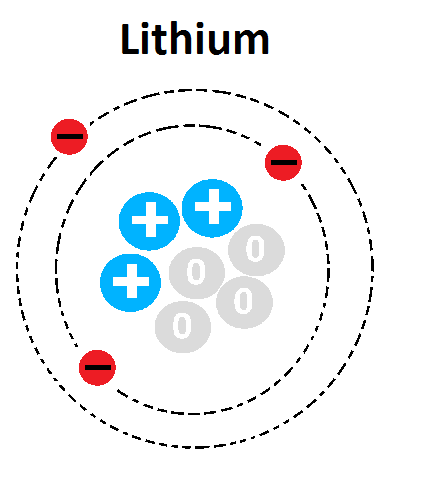
Subatomic particles with a negative charge
Electrons
Neutrons
Protons
Quarks


What is the atomic mass of Neon?
10
20.18
10.18
What is an Computer Functions ?
gathers data, allows users to input data.
Input, Output, Process, Storage.
What is a computer Output ?
displays data and information for user.
Input, Output, Process, Storage.
representation of fact, figure, or idea.
What is a Input ?
gathers data, allows users to input data.
displays data and information for user.
Examples of Input Devices
CPU, ROM, RAM and cache, Slots for expansion cards
monitors, printers, speakers and earphones
keyboard, mouse, microphone, stylus, scanner, camera
Algorithm
Pulling out specific differences to make one solution work for multiple problems.
A list of steps to finish a task. A set of instructions that can be performed with or without a computer. For example, the collection of steps to make a peanut butter and jelly sandwich is an algorithm.
Mental processes and strategies that include: decomposition, pattern matching, abstraction, algorithms (decomposing problems into smaller, more manageable problems, finding repeating patterns, abstracting specific differences to make one solution work for multiple problems, and creating step-by-step algorithms).
DEFINE: Command
An instruction for the computer. Many commands put together makeup algorithms and computer programs.
A way of representing information using only two options.
DEFINE: Computational Thinking
Mental processes and strategies that include: decomposition, pattern matching, abstraction, algorithms (decomposing problems into smaller, more manageable problems, finding repeating patterns, abstracting specific differences to make one solution work for multiple problems, and creating step-by-step algorithms).
A list of steps to finish a task. A set of instructions that can be performed with or without a computer. For example, the collection of steps to make a peanut butter and jelly sandwich is an algorithm.
DEFINE: Computer Science
Computer science is the study of processes that interact with data and that can be represented as data in the form of programs. It enables the use of algorithms to manipulate, store, and communicate digital information.
A way of representing information using only two options.
The visual programming language used in Code.org's online learning system for K-5 students.
the study of the principles and use of computers.
The smallest unit of information is ?
a byte (Pronounced: bite)
a bit
a nibble
a block
Fortran
Which programming language is most commonly used for complex scientific programming?
BASIC
Cobol
Fortran
R-P-G
Some programs allow the computer's video display to be divided into separate areas in order to look at more than one item or portions of an item simultaneously. These are called?
disks
windows
fonts
directories
The smallest visual element on a video monitor is called what?
Character
Pixel
Byte
Kwerk
DEFINE: Central Processing Unit (CPU)
Software used to control the computer and its peripheral equipment.
Brain of the computer that performs instructions defined by software
Groupings of 1's and 0's that makes information that a computer can understand.
Something anyone can operate
DEFINE: Binary Code
Any type of computer network that is not connected by cables of any kind.
Read Only Memory- Permanent instructions that cannot be changed. It makes the BIOS function. Checks your OS.
Groupings of 1's and 0's that makes information that a computer can understand.
DEFINE: Wireless Network
Any type of computer network that is not connected by cables of any kind.
The Network allows computers to connect and communicate with different computers via any medium. LAN, MAN and WAN are the three major types of the network designed to ... A Communication medium used for LAN has twisted pair cables and coaxial
Software used to control the computer and its peripheral equipment.
device used to insert data into a computer or other device (ex: keyboard, mouse, microphone, scanner, voice recognition)

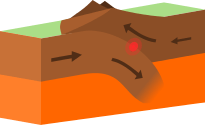
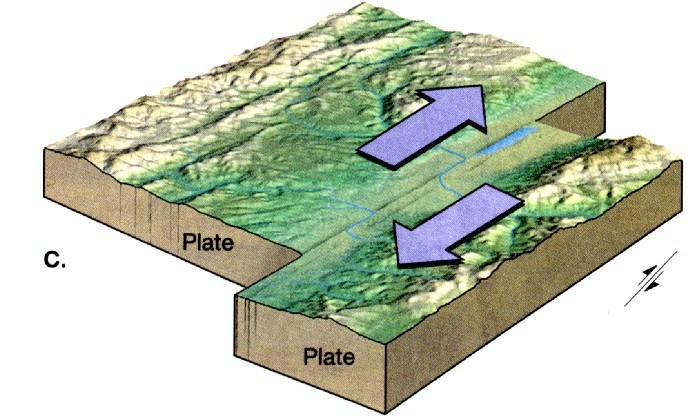


What happens when two forces act in the same direction?
They cancel each other out.
The stronger one prevails.
Their strengths are added.
Their sum divided by two is the total force.
The greater the mass of an object,
the easier the object starts moving.
the greater its inertia.
the more balanced it is.
the more space it takes up.
The force of gravity on a person or object on the surface of a planet is called
mass.
weight.
terminal velocity
free fall.
The force that one surface exerts on another when the two rub against each other is called
a. c.
b.. d. .
friction.
inertia.
acceleration
gravity
The law of universal gravitation states that any two objects in the uni-verse that have mass, without exception,
attract each other.
repel each other.
combine to provide a balanced force.
create friction
Forces can be added together only if they are
acting on the same object
unaffected by gravity
balanced forces
substantial
According to the law of conservation of momentum, when two objects collide in the absence of outside forces,
velocity decreases
velocity increases
the objects have the same momentum before and after they collide.
the objects have more momentum after they collide than they did before.
Any force that causes an object to move in a circle is called a(n)
balanced force
gravitational force.
unbalanced force
centripetal force
The momentum of an object is in the same direction as its
force.
velocity.
acceleration.
inertia.
According to Newton’s third law of motion, when a hammer strikes and exerts force on a nail, the nail
creates a friction with the hammer.
disappears into the wood.
exerts an equal and opposite force on the hammer.
moves at a constant speed.
The overall force on an object after all the forces are added together is called the
balanced force
unbalanced force
net force
centripetal force
The force of gravity between you and Earth is greater than the force of gravity between you and a car because Earth has more ____________________ than the car.
mass
density
force
friciton
According to Newton’s third law of motion, the strength of a reaction force is ____________________ the strength of the action force.
equal to
negative to
positive to
greater than
The force of gravity is responsible for continuously changing the ____________________ in which a satellite moves.
direction
orbit
centripetal force
gravitation

A skydiver with a mass of 70 kg accelerates to Earth at a rate of 9.8 m/s2 due to gravity. What is the force on the skydiver?
79.8 Newtons
7.14 Newtons
0.14 Newtons
68.60 Newtons

Compare the acceleration of the 1-kg object with that of the 2-kg object.
1kg object has more acceleration because it has less mass
1kg object has less acceleration because it has less mass
2kg object has more acceleration because it has more mass
2kg object has less inertia because it has more mass
Define the term inertia.
the amount of matter in an object
the amount of space an object takes up
the tendency of an object to resist a change in motion, determined by mass
The force that one surface exerts on another when the two rub against each other
Defintion of Energy Transfer
Energy Moving Between 3 objects
Energy Moving Between Two Objects Or systems
Energy Moving Between One object or systems
Energy Moving between systems
Defintion Of Momentum
The motion of a moving object measured as a project of the mass and velocity
The motion of a balanced object measured as a project of mass and velocity
The motion of a unbalanced object measured as a project of the mass
The motion of a moving object
Defintion Of Collison
A moving object hitting another
A moving object
A balanced object hitting another
A moving object next to another object
What is the Law of Conservation Of Energy
Energy that cannot be created or destroyed
Energy that can be created or destroyed
Energy that can be destroyed
Energy that can be created
What is Gravitatinol Potential Energy
Energy with an object due to its position below the ground
Energy with an object due to it's position above the ground
(Gpe)=WxH
Gpe
WxL
Newtons 1st Law
Newtons 2nd law
F=Am
An object in motion stays in motion, an object at rest stays at rest until acted by an unbalanced force
For every action there is an equal and opposite reaction
F=Ma
An objects force is equal to its mass times it's accleration
Newtons 3rd law
F=Ma
An object in motion stays in mtion until acted by an unbalanced force
For every action there is an equal and opposite reaction
An objects force is equal to its mass times its acceration
Defintion of Model
Things used to not provide information
Things used by scients to represnt ideas and provide information
Things used by scientists to test things
Defition Of work
When a force act on an object to change its position or speed
When a force acts on an object
When an object changes its postion or speed
Defintion of energy
To be able to do something
The ability to change speed
The abilty to change dircetion
The ability to do work
Potential Energy
Thermal Energy
Thermal Energy- Cold energy
Kinetic Energy- Moving energy
Potential Energy- Stored Energy
Thermal Energy- Heat energy
Kinetic Energy
Energy in Motion
Energy stored in motion
Energy of height
Gravitatinol Energy
Energy in motion
Stored Energy
Heat energy
Energy of height
Energy Transformation
Energy of height
Energy moving
Is energy changing from withitn one object or system
Energy changing
What is the difference between force pairs and balanced forces?
Force pairs act on diffrent objects and balanced forces act on the same object
force pairs act on the same object and unbalanced force act on different objects
Examples of newtons 3 laws
Moving a box with a ball in it the ball will keep moving
Jumping
Ridind my bike

