
 Worksheets
Science Atoms and Elements , Diffusion
Total questions: 223
Worksheet time: 2hrs 26mins
A positively charged particle found in the nucleus of an atom is
a quark.
an electron.
a proton.
a neutron.
A negatively charged particle located outside the atom's nucleus is
a neutron.
a proton.
an electron.
a quark.
A subatomic particle that has no charge and that is found in the nucleus of an atom is
a quark.
a proton.
a neutron.
an electron.
The center of an atom is
a neutron.
a nucleus.
a quark.
a bohr.
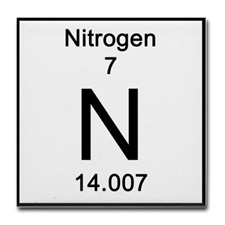

Each chemical element is made up of only one kind of
atom
molecule
electron
neutron
Chemist use letters of the alphabet as _________ for the elements.
pictures
colors
symbols

What is the atomic number of this element?
O
8
16
How many protons does this element have?
16
8
0

What is the atomic mass of this element?
13
26.982
Al

How many electrons does this element have?
13
27
Al

This forms when two or more different elements chemically combine.
monoatomic elements
elemental element
compound
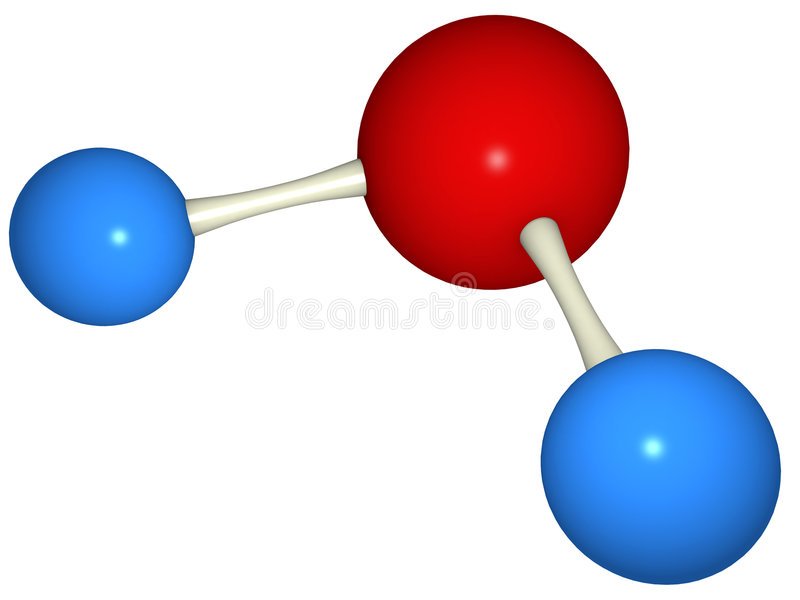
How many hydrogen atoms are there in a water molecule? H2O
0
1
2
3
What is the heavy center of an atom called?
proton
nucleus
electron
neutron
Anything with mass and takes up space is called __.
stuff
matter
element
Atoms are the building blocks of all __.
matter
nothing
atoms
buildings
The smallest piece of an element:
quark
electron
shell
atom
The cloud-like space that electrons travel around:
nucleus
shell
neutrons
Oort cloud
Protons and neutrons are found in the center of the atom called the:
nucleus
neutron
shell
cell
Classification system for elements is called:
Elements
Periods
The Periodic Table of Elements
Families
The subatomic particles are called:
protons, nucleus and electrons
protons, electrons and neutrons
protons, positives and negatives
cloud, shell and quarks
Substances that have only one kind of atom are called:
elements
nitrogen
electrons
nucleus
Electrons have a _____ charge.
neutral
negative
positive
both positive and negative
What is the study of matter?
Chemistry
Biology
Earth Science
Physics
_____ is what scientists think atoms are like.
Chemistry
The box
The atomic structure
The atomic theory
The abbreviation for an element:
element name
atomic number
chemical symbol
atomic symbol
Who invented the simplified version of the atom?
Dmitri Mendeleev
Niels Bohr
Sir Isaac Newton
Albert Einstein
The scientist who invented the classification system for the elements:
Dimitri Mendeleev
Niels Bohr
Sir Isaac Newton
Albert Einstein
What is the sum of an atom's protons and neutrons called?
atom
atomic theory
atomic mass
atomic number
The columns on the periodic table that are color coded and describe the number of electrons in the outer shell of the atomic structure of the element:
families
groups
periods
The rows or periods on the periodic table describe:
the same number of outer electrons
the same number of shells
the same number of protons
the same mass
The _____ is based on the number of protons in the nucleus of the atom.
atomic structure
periodic table of the elements
atomic number
atomic mass
What subatomic particle is represented by this symbol (+):
neutron
proton
electron
What subatomic particle is represented by this charge (-):
neutron
proton
electron
Why do the electrons surround the nucleus?
the negative electrons are attracted to the neutral neutrons
the negative electrons are repelled by the neutral neutrons
the negative electrons are attracted to the positive protons
the negative electrons are repelled by the positive protons
All matter is made of _____.
light
energy
cells
atoms

What is "C" labeling?
electrons
neutrons
nucleus


All matter is made up of tiny particles called?
atoms
elements
protons
neutrons
Atoms are made up of which of the following?
protons
neutrons
electrons
all the above
True or False: Atoms are big.
True
False
An element is determined by the number of _______ in its nucleus (also known as the atomic number).
neutrons
electrons
protons
glutons
Chemists use letters of the alphabet as __________ for the elements.
numbers
symbols
pictures
none of the above
The number of protons determines the ______ of an atom.
state
element
time
weight
Electrons are ______ charged.
postive
neutral
negative
none of the above
Neutral particles have a NO charge: True or False?
True
False
Protons are positively charged: True or False?
False
True
A _________ is a particle with no charge.
postive
proton
neutron
electron

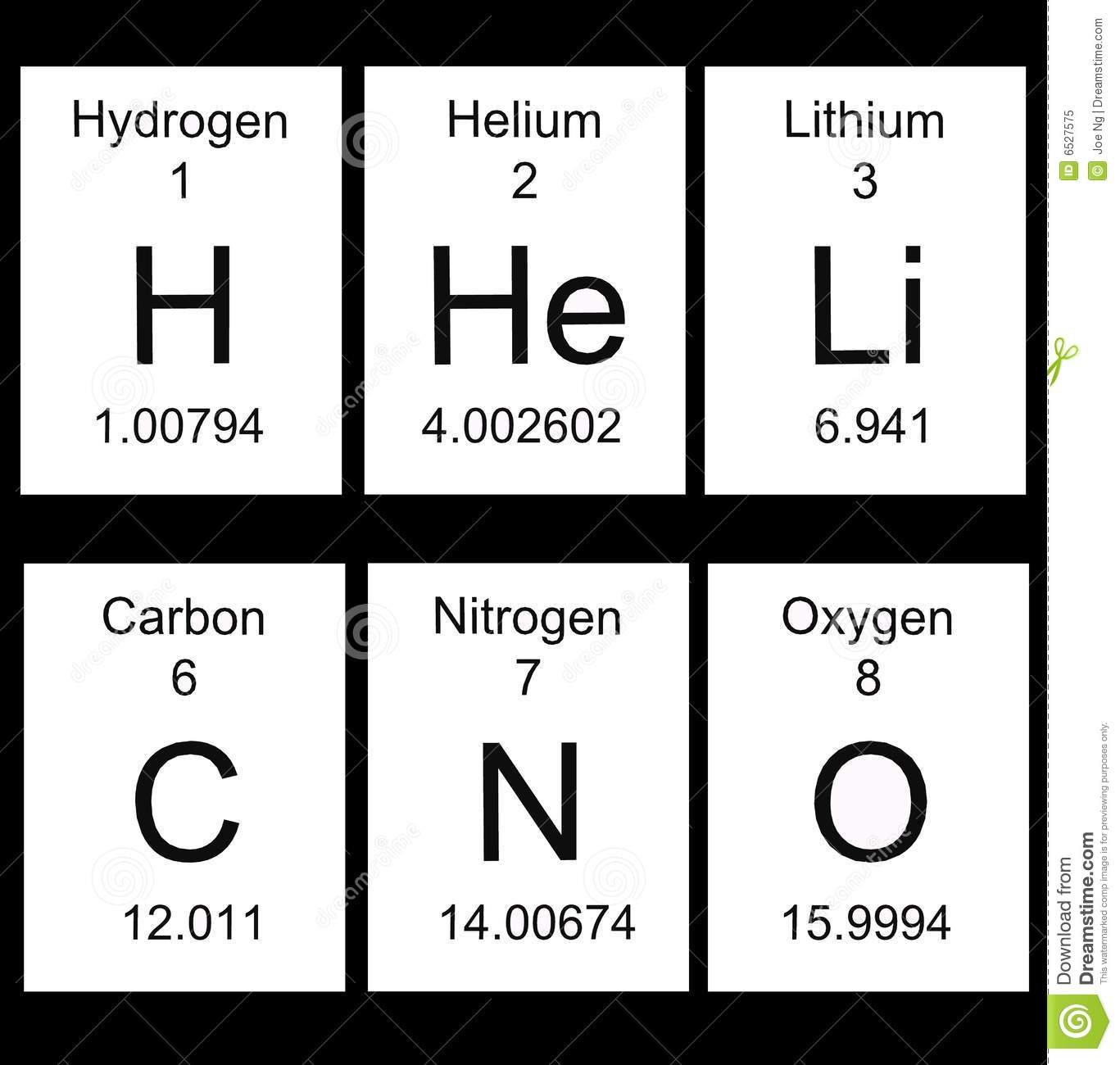
Jordon and Kara are working on a chemistry project about elements. They find the number 1.00794 in their research. What does this number represent in their chemistry project?
Hydrogen
atomic number
atomic mass
atomic explosion

Chelsey and Sam were baking a cake and came across a recipe that required an ingredient with a specific number of protons. Can you help them determine the number of protons that this element contains?
14
7
21
None of the above
Robin and Dave are studying for their upcoming science test. They come across a question about atoms. Where would they find most of the mass in an atom?
In the protons and electrons
In the protons and neutrons
In the neutrons and electrons
In the electrons and quarks
Joan and Scott are young scientists exploring their backyard. They discover that everything they see, touch, and feel, such as the grass, the soil, and the insects, is made of _____
energy.
atoms.
electrons.
compounds.
Danny and Joe are working on a science project about the structure of atoms. They are discussing the particles that make up an atom and wonder which of the following particles are even smaller than an atom itself?
proton
neutron
electron
all of the above
What is the chemical symbol for the element hydrogen
H
He
h
he
What is the chemical symbol for the element Carbon
ca
co2
C
Cd
What is the chemical symbol for the element Nitrogen
Ni
N
No
Nb
The atomic number tells you what?
number of electrons
number of protons
number of neutrons
protons in an atom
What is the atomic mass of this element?
13
26.982
Al
How many electrons does this element have?
13
27
Al

What part of the atom is the arrow pointing to?
Proton
Neutron
Electron

What part of the atom is the arrow pointing to?
Proton
Neutron
Electron

What part of the atom is the arrow pointing to?
Proton
Neutron
Electron
An element is determined by the number of ________ in its nucleus (also known as its atomic number).
neutrons
electrons
protons
Each chemical element is made up of only one kind of
atom
molecule
electron
neutron
Chemist use letters of the alphabet as _________ for the elements.
pictures
colors
symbols
What is the atomic number of this element?
O
8
16
A ________ is a particle with no charge.
proton
neutron
electron
How many protons does this element have?
16
8
0

are the basic building blocks of matter because they are the smallest particles that can have the same properties as the stuff they make up.
cells
periodic table
atom
electrom
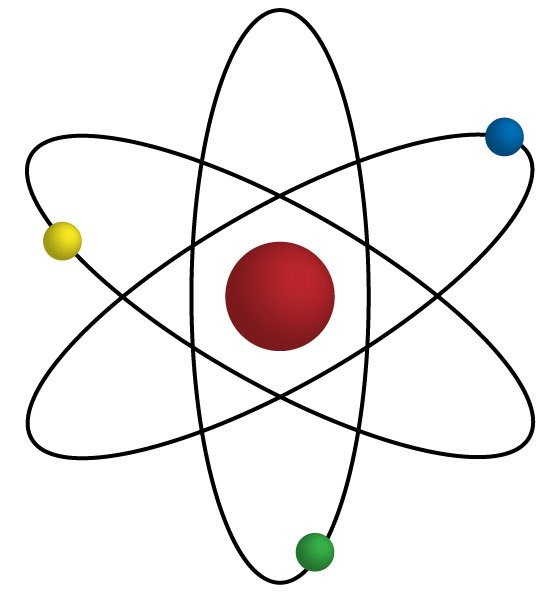
How many electrons does Fluorine have?
How many protons does Fluorine have?
How many neutrons does Fluorine have?
10

How many electrons are in an atom of carbon?
How many neutrons are in an atom of carbon?
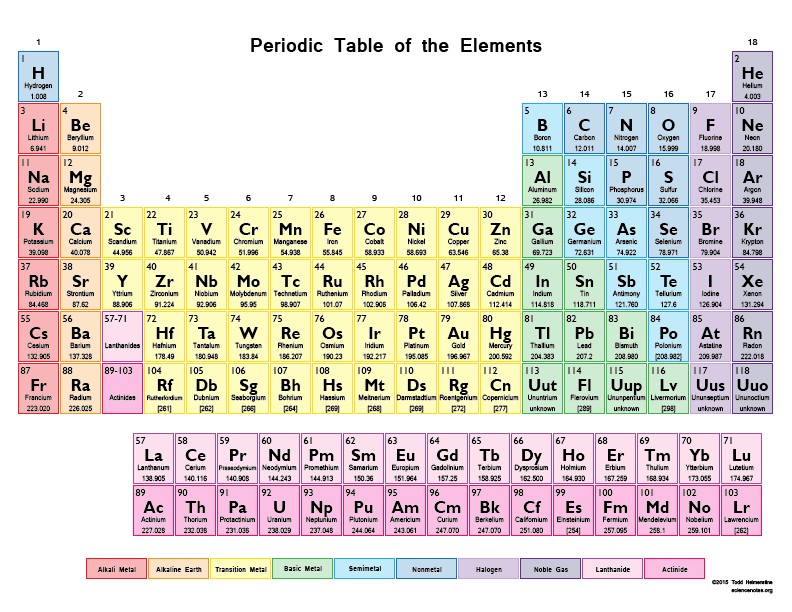
How many protons are in a sodium atom, Na? (tap to enlarge the periodic table)
Sodium has 1 proton.
Sodium has 3 protons.
Sodium has 11 protons
How many neutrons are in a sodium atom, Na? (tap to enlarge the periodic table)
11 neutrons
12 neutrons
23 neutrons
How many neutrons are in an Argon atom, Na? (tap to enlarge the periodic table)
18 neutrons
22 neutrons
40 neutrons
What is the overall charge of an atom?
Positive
negative
neutral
The number of protons is always equal to the number of...
Neutrons
Electrons
Neither
To find the number of neutrons, you should subtract the Atomic Mass from the...
Neutrons
Electrons
Atomic Number
Either
Which of the subatomic particles determine which atom an element is? Think the "boss."
Neutrons
Electrons
Protons
All
None

If the solute cannot permeate the membrane, what will happen here when diffusion occurs?
The water will move the left side to the right side.
The water will move from the right side to the left side.
The red particles will move from the left side to the right side.
The red particles will move from the right side to the left side.

Assuming that water is the solvent in each of these beakers, which of these beakers has the highest concentration of pure water outside the salt block?
left
middle
right
they are all equal

Assuming that water is the solvent in each of these beakers, which of these beakers has the lowest concentration of pure water outside the salt block?
left
middle
right

Assuming those are each cells with 10% salt, which one is least likely to have diffusion occur across the cell membrane?
left
middle
right

Assuming each of these beakers has a cell inside it that is 10% salt, which one is most likely to swell the most from osmosis?
left
middle
right

Assuming each of these beakers has a cell inside it that is 10% salt and the solvent in all cases is water, which one is most likely to shrink the most from osmosis?
left
middle
right

In which of these is the solute (green particle) most likely to diffuse out of the cell?
A
B
C

Which of these is the solute (green particle) most likely to diffuse into the cell?
A
B
C

Where is the higher concentration of CO2?
Inside the cell
Outside the cell

Assuming the membrane is permeable to both pure substances modeled here, which of the following will happen in this scenario?
The CO2 and O2 will diffuse out of the cell.
The CO2 will diffuse out of the cell and O2 will diffuse into the cell.
The CO2 will diffuse into the cell and O2 will diffuse out of the cell.
The CO2 and O2 will diffuse into the cell.

Is the solute able to permeate this membrane according to this diagram?
yes
no

Interpret what happened in the beakers.
The light blue solute diffused from an area of high concentration to an area of low concentration.
The pink solvent diffused from an area of high concentration to an area of low concentration.
Diffusion didn't occur.
Osmosis is the diffusion of what pure substance?
Water
Carbon dioxide
Glucose
Oxygen
How do particles move during diffusion and passive transport?
from high to low concentrations
from low to high concentrations

This bag isn't permeable to the starch molecule but is permeable to the starch indicator molecule. Due to this, what can we predict the scientist will observe?
The starch molecule will move out of the bag and the indicator will not diffuse.
The starch indicator will diffuse into the bag and the starch molecule will not diffuse.
The molecules will exchange places.
Diffusion is the natural movement of molecules from:
Areas of low concentration to areas of high concentration
Areas of high concentration to areas of low concentration
Cold to hot environments
Gaseous to liquid environments
Which of the following describes molecules moving down a concentration gradient?
Sugar settling at the bottom of a water glass
A cell with lots of water in it absorbing even more water
A bottle of soda in which bubbles of carbon dioxide are evenly distributed
Warm air moving from a radiator to fill up a room
When do molecules stop moving or vibrating?
When equilibrium is reached
Never
When the temperature is below 0 degrees Celsius
When the substance they are part of becomes a solid
From fastest to slowest rate of diffusion, which of the following is in the correct sequence?
Solids, liquids, gases
Liquids, gases, solids
Gases, liquids, solids
Gases, solids, liquids
Why is diffusion so important in biology?
It's the basic power source for most types of cells
It allows substances to move across cell membranes
It prevents toxins from entering our bodies
Without diffusion, cell division could not take place
What happens to the coffee particles when coffee is added to hot water?
They sink to the bottom of the cup
They spread out
They clump together
They freeze
What does a 'region with high concentration' mean?
An area with a SMALL number of particles
An area with a LARGE number of particles
An area with an UNEVEN number of particles
An area with no particles
An increase in temperature does what to diffusion?
Speeds it up
Slows it down
Nothing
Stops it all together
An increase in temperature does what to diffusion?
Speeds it up
Slows it down
Nothing
Stops it all together
Which gases move into and out of the blood at the lungs by diffusion
Nitrogen and Oxygen
Oxygen and Carbon Dioxide
Nitrogen and Carbon Dioxide
Argon and Nitrogen
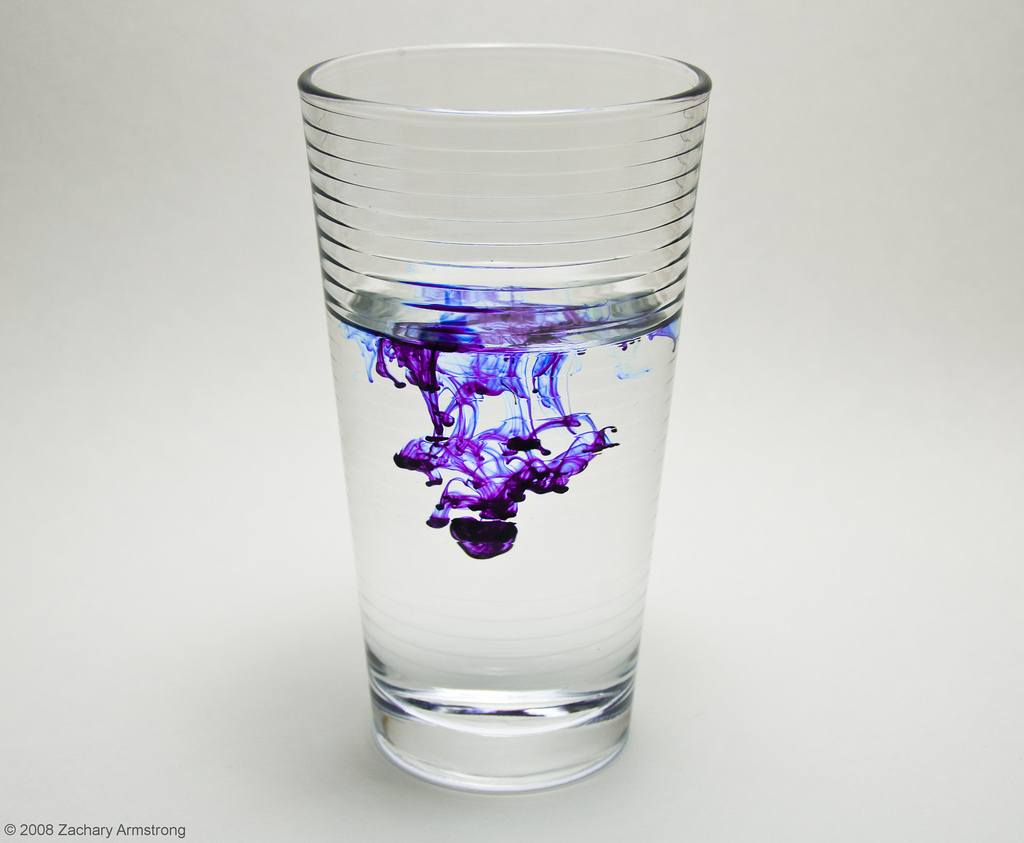
Where is there a low concentration of dye?
at the bottom of cup
in the color
at the top of cup
no concenteraion gradient
Diffusion occurs only in solids
True
False
How long does diffusion last?
Until the concentration of particles in the system is equal
Until a region in the system has a smaller concentration of particles than the other
Until a region in the system has a greater concentration of particles than the other
Until the particles disappear from the system
What causes diffusion?
The constant, random motion of molecules
Magnetic attraction between atoms
The nuclear forces that hold atoms together
The tendency of atoms to form chemical bonds with one another
From fastest to slowest rate of diffusion, which of the following is in the correct sequence?
Solids, liquids, gases
Liquids, gases, solids
Gases, liquids, solids
Gases, solids, liquids
Which of the following will diffuse the fastest?
A tablespoon of sugar in a glass of water
Heat through a solid piece of steel
A pinch of salt in a glass of water
The smell of bacon cooking throughout a room
What happens to the coffee particles when coffee is added to hot water?
They sink to the bottom of the cup
They spread out
They clump together
They freeze
Diffusion is the movement of particles from an area of _____ concentration to an area of ______ concentration
High, Low
Low, High
Low, Low
High, High
An increase in temperature does what to diffusion?
Speeds it up
Slows it down
Nothing
Stops it all together
Diffusion occurs only in solids
True
False
How do the particles move in diffusion?
From a region of low concentration to a region of high concentration
From a region of high concentration to a region of low concentration
From a region of low concentration to a region of low concentration
From a region of high concentration to a region of high concentration

Which diagram best shows the end result of diffusion?
F
G
H
J
When does diffusion stop?
After a day and a night
When the particles are evenly spread out
When there are no particles left
When all the particles leave the system
Diffusion is the natural movement of molecules from:
Areas of low concentration to areas of high concentration
Areas of high concentration to areas of low concentration
Cold to hot environments
Gaseous to liquid environments
Which of the following describes molecules moving down a concentration gradient?
Sugar settling at the bottom of a water glass
A cell with lots of water in it absorbing even more water
A bottle of soda in which bubbles of carbon dioxide are evenly distributed
Warm air moving from a radiator to fill up a room
Which of the following describes a state of equilibrium?
A group of molecules that have stopped moving completely
A room whose temperature is consistent throughout
Carbon dioxide bubbles escaping from a soda bottle when it's opened
A tree's roots absorbing nutrients from the soil
When do molecules stop moving or vibrating?
When equilibrium is reached
Never
When the temperature is below 0 degrees Celsius
When the substance they are part of becomes a solid
What causes diffusion?
The constant, random motion of molecules
Magnetic attraction between atoms
The nuclear forces that hold atoms together
The tendency of atoms to form chemical bonds with one another
From fastest to slowest rate of diffusion, which of the following is in the correct sequence?
Solids, liquids, gases
Liquids, gases, solids
Gases, liquids, solids
Gases, solids, liquids
Which of the following will diffuse the fastest?
A tablespoon of sugar in a glass of water
Heat through a solid piece of steel
Heat through a solid piece of steel
The smell of bacon cooking throughout a room
Why is diffusion so important in biology?
It's the basic power source for most types of cells
It allows substances to move across cell membranes
It prevents toxins from entering our bodies
Without diffusion, cell division could not take place

What do the sun and a lightbulb have in common?
They both generate electricity
They both emit thermal radiation
Their molecules are both in a state of equilibrium
They both absorb thermal energy
What causes an electric current to move through a wire?
Electrons diffusing from the charged part of the wire to the uncharged part
Positrons diffusing from the hot part of the wire to the cooler part
Protons diffusing from the power source to the load
Neutrons diffusing up a concentration gradie

How confident are you about your knowledge of diffusion after the lesson?
I can explain it with examples AND say what impacts the rate of it!
I can explain it with examples!
I can define it and describe examples!
I can define it!
What is the definition of diffusion?
The movement of particles from an area of low concentration to an area of high concentration.
The movement of particles from an area of high concentration to an area of low concentration.
In which direction does diffusion occur, from high to low concentrations or from low to high concentrations?
from low to high concentrations
from high to low concentrations
in both directions simultaneously
it does not occur
What impact does temperature have on the rate of diffusion?
Temperature has no impact on the rate of diffusion.
Temperature decreases the rate of diffusion.
Temperature increases the rate of diffusion.
George, Isabelle, and Matilda are making a cup of tea. They noticed that the tea flavor they added in one corner of the cup quickly spread throughout the cup. Is this an example of diffusion, the movement of particles from low to high concentrations?
True
False
Imagine you are in a room where someone has just sprayed a perfume. How does the concentration gradient play a role in the spreading of the perfume's scent?
It drives the movement of perfume molecules from the area of high concentration (near the spray) to areas of low concentration (other parts of the room)
It causes the perfume molecules to move from areas of low concentration (other parts of the room) to the area of high concentration (near the spray)
It has no role in the spreading of the perfume's scent
It only affects the movement of water molecules in the air
What are the factors that can affect the rate of diffusion in a liquid?
Pressure of the surrounding environment
Time of day
Temperature, concentration gradient, molecular size, and medium viscosity
Color of the liquid
Explain how diffusion is essential for the survival of living organisms.
Diffusion is not essential for the survival of living organisms
Diffusion is essential for the survival of living organisms because it allows for the exchange of gases and nutrients at the cellular level.
What happens to the rate of diffusion when the concentration gradient increases?
The rate of diffusion decreases.
The rate of diffusion increases.
The rate of diffusion remains the same.
How confident were you about your knowledge of diffusion before the lesson?
I could give examples, explain it scientifically AND explain what impacts it!
I could explain it with examples!
I could define it and give examples!
Never heard of it!
When organisms digest food they release?
Energy
Oxygen
Vomit
Organisms they they digest food they release energy from ________ molecules
water
food
air
(a) is the process of releasing food molecules.
One kind of food molecule is called?
Gluten
Protein
Glucose
____ is the movement of molecules from higher concentration to lower concentration.
Diffusion
Respiration
Excrete
Animals that can live on land and water are called (a) .
For diffusion to work animals must have ____ skin.
Dry
Dirty
Moist
Amphibians live on land when they are young.
True
False
Humans breathe from their ____ and ___.
ears , tongue
mouth , nose
leg, head

Is the animal Vertebrate or invertebrate?
Vertebrate
Invertebrate

Is the snake a vertebrate or invertebrate?
Vertebrate
Invertebrate

