wayground logo

Free Printable Worksheets

Font size

S
M
L
XL
Worksheets

7th Grade Wrap-up 23-24

Total questions: 219

Worksheet time: 3hrs 57mins

Name
Class
Date
1.
Dilcia wants to know how drinking milk affects how tall a Monica grows. Which is the independent variable?
a)
Monica's growth
b)
drinking milk
2.
Ramone wants to know: does the distance a person kicks a soccer ball effect how well they will do on their math test.  What is the dependent variable?
a)
How far they kick the soccer ball
b)
who the person is
c)
how well they do on the math test
d)
Type of soccer ball.
3.
What would the INDEPENDENT variable be in an experiment testing which types of paper airplane goes furthest?
a)
the paper used
b)
the type of paper airplane
c)
the distance of each plane's flight
d)
how hard the plane is thrown
4.
Marcos wants to know: Does the type of gasoline put in a car effect how fast the car can drive? What is the independent variable?
a)
Type of gasoline
b)
which car the gas is put into
c)
how fast the car can drive
d)
how much gas is put into the car
5.
An experiment is performed on plants to see how different liquids affect plant growth. Each plant in the experiment is given a different liquid; water, apple juice, or milk. Each plant has the same amount of soil, sunlight, and listens to the same music. In this investigation, the independent variable is ...
a)
The type of plant
b)
The amount of sunlight
c)
The type of music
d)
The type of liquid
6.
Angelina set up an experiment to see how the mass of a ball affects the distance it rolls off a ramp. Identify the independent variable.
a)
Distance traveled by the ball
b)
Height of the ramp
c)
Mass of the ball
d)
Who set up the experiment (Ms. S, etc)
7.
Kreedence wants to know if birds prefer to eat in one place over another. She makes three feeders out of 2-liter bottles and paints all of them red. She fills each of the feeders with the same amount of mixed birdseed, and plans to keep the feeders out for 10 days before measuring how much seed is eaten from each feeder. She puts each of the feeders in her back yard: one feeder in a large dead tree, another feeder she sits on the dog house, and the last she sits in a small bushy tree.
What is the dependent variable?
a)
Length of the birdfeeders
b)
Amount of time feeders are outside
c)
Amount of seed eaten
d)
Location the feeders are put in.
8.
Does the flavor of ice cream effect how fast the ice cream melts?
a)
independent
b)
dependent
9.
Does the type of shoe worn during a 30 meter dash affect the speed of the runner?
a)
independent
b)
dependent
10.
How does increasing the slope of a ramp affect how far a marble travels?
a)
independent
b)
dependent
11.
What effect does decreasing the temperature of a room have on a lifespan of a battery?
a)
independent
b)
dependent
12.
How does watching TV during studying affect a student’s test grades?
a)
independent
b)
dependent
13.
Does changing the scent of a brand of dog food affect how much the dog eats?
a)
independent
b)
dependent
14.
What is the effect on increasing the amount of sunlight given to tulips?
a)
independent
b)
dependent
15.
Which brand of bubblegum allows for you to blow the largest bubble?
a)
independent
b)
dependent
16.
How does adding cardio to one’s daily schedule affect their heart rate?
a)
independent
b)
dependent
17.
A person’s teeth will be whitened quicker if they use baking soda with their toothpaste.
a)
independent
b)
dependent
18.
An apple’s freshness will last longer if they are refrigerated.
a)
independent
b)
dependent
19.
Does deflating a ball affect a its ability to bounce?
a)
independent
b)
dependent
20.
What chart should you reference to lookup information about elements?
a)
Elemental map
b)
Periodic Table of Elements
c)
Table of atoms
d)
None of the above
21.
Protons and neutrons clump together to form the __________ of an atom.
a)
nucleus
b)
centrosome
c)
outer shell
d)
orbital
22.
This subatomic particle of an atom has a POSITIVE charge.
a)
Electron
b)
Neutron
c)
Proton
d)
Betatron
23.
This subatomic particle of an atom has NO charge.
a)
Electron
b)
Proton
c)
Atom
d)
Neutron
24.
This subatomic particle of an atom has a NEGATIVE charge.
a)
Electron
b)
Proton
c)
Atom
d)
Neutron
25.
Which of these is the simplest atom?
a)
Uranium
b)
Chlorine
c)
Oxygen
d)
Hydrogen
26.
______ is an ELEMENT since it is only made up of one type of atom.
a)
Water
b)
Air
c)
Gold
d)
Salt
27.
Atoms are more than ________ times smaller than the width of a hair.
a)
10
b)
100
c)
1,000
d)
10,000
28.
A molecule is made up of ____ or more atoms.
a)
1
b)
2
c)
3
d)
4
29.
The number of atoms it would take to make a molecule of water.
a)
1
b)
2
c)
3
d)
4
30.

Cells make up all _________ things.

a)

Decomposed

b)

Physical

c)

Living

31.

Cells are the basic unit of ___________.

a)

Chemistry

b)

Astrology

c)

Life

32.

All cells come from ____________________________ cells.

a)

Cytoplasm

b)

Pre-existing

c)

Nucleus

33.

All cells take in __________.

a)

Gas

b)

Solid

c)

Nutrients

34.

All cells transfer ___. (breathe)

a)

Gas

b)

Cells

c)

Liquid

35.

All cells grow and __________.

a)

Divide

b)

Multiply

c)

Add

d)

Subtract

36.

Unicellular organisms are composed of ______________ cell(s).

a)

One

b)

More than one

37.

Multicellular organisms are composed of ___________________ cell(s).

a)

One

b)

More than one

38.

The ability of cells to divide and form new cells is the foundation of reproduction. Which word matches this definition?

a)

Photosynthesis

b)

Mitosis

c)

Meiosis

39.

How many steps are in Mitosis?

a)

1

b)

10

c)

5

40.

Which is NOT something that cells require?

a)

Food

b)

Suitable Environment

c)

Friends

d)

Water

41.

Bacteria are __________ cells. (No nucleus)

a)

Eukaryotic

b)

Prokaryotic

42.

Protists are ____________ cells. (Have a nucleus)

a)

Eukaryotic

b)

Prokaryotic

43.

Which is NOT a type of bacteria?

a)

Coccus

b)

Bacillus

c)

Euglena

d)

Spirillum

44.

______________ Bacteria decompose dead organisms and put nutrients back into the soil.

a)

Helpful

b)

Harmful

45.

Which is NOT a type of protist?

a)

Paramecium

b)

Spirrilum

c)

Amoeba

d)

Euglena

46.

An amoeba moves with  __________.

a)

Flagella

b)

Cilia

c)

Pseudopod

47.

Euglena moves using __________.

a)

Pseudopod

b)

Cilia

c)

Flagella

48.

Paramecium moves using _______.

a)

Cilia

b)

Pseudopod

c)

Flagella

49.

Which protist does not eat using an oral groove?

a)

Flagella

b)

Paramecium

c)

Euglena

d)

Amoeba

50.

Which type of cell has a cell membrane?

a)

Plant

b)

Animal

c)

Both

51.

Which type of cell has cytoplasm?

a)

Plant

b)

Animal

c)

Both

52.

Which type of cell has a nucleus?

a)

Plant

b)

Animal

c)

Both

53.

Which type of cell has a nucleolus?

a)

Plant

b)

Animal

c)

Both

54.

Which type of cell has vacuoles?

a)

Plant

b)

Animal

c)

Both

55.

Which type of cell has lysosomes?

a)

Plant

b)

Animal

c)

Both

56.

Which type of cell has Endoplasmic Reticulum?

a)

Plant

b)

Animal

c)

Both

57.

Which type of cell has ribosomes?

a)

Plant

b)

Animal

c)

Both

58.

Which type of cell has mitochondria?

a)

Plant

b)

Annimal

c)

Both

59.

Which type of cell has Golgi Apparatus or Golgi Body?

a)

Plant

b)

Animal

c)

Both

60.

Which type of cell has centrioles?

a)

Plant

b)

Animal

c)

Both

61.

Which type of cell has a cell wall?

a)

Plant

b)

Animal

c)

Both

62.

Which type of cell has a chloroplast?

a)

Plant

b)

Animal

c)

Both

63.

Food producers of the cell. Contain chlorophyll, which gives plants their green color.  

a)

Chloroplast

b)

Golgi Body

c)

Ribosomes

d)

Centriole

64.

Controls what enters and exits the cell. Thick and ridged, helps give plant cells their stability.

a)

Mitochondria

b)

Golgi Body

c)

Cell Membrane

d)

Cell Wall

65.

Occur in pairs and aid in mitosis/cell division.

a)

Centrioles

b)

ER

c)

Lysosomes

66.

This is like Amazon or the Post Office of the cell. Manufactures, stores and shipping center of the cell.

a)

Ribosomes

b)

Centrioles

c)

Golgi Body

67.

Powerhouse of the cell. Energy is produced here during cellular respiration.

a)

ER

b)

Vacuole

c)

Nucleus

d)

Mitochondria

68.

Protein builders of the cell. Proteins support other cell functions.

a)

Ribosomes

b)

Lysosomes

c)

Centrioles

69.

Transports proteins made by the ribosomes to other parts of the cell. Smooth ER responsible for fat production and hormone production. Rough ER has millions of ribosomes on its surface and responsible for protein production.

a)

Centriole

b)

Vacuole

c)

Endoplasmic Reticulum

70.

The garbage trucks of the cell. Responsible for digestion of worn out organelles, waste and other products no longer needed by the cell.

a)

Mitochondria

b)

Lysosomes

c)

Nucleus

71.

Storage containers in the cell. Stores water, food and waste for diffusion across the cell membrane. Vacuoles in plant cells are VERY LARGE and more abundant.

a)

Vacuole

b)

Ribosomes

c)

Lysosomes

72.

Where ribosomes are made.

a)

Nucleus

b)

Cell Membrane

c)

Cytoplasm

d)

Nucleolus

73.

Control center of the cell. Contains the cell’s DNA. Mitosis, cell division, occurs here.

a)

Nucleolus

b)

Cell Wall

c)

Nucleus

d)

Cell Membrane

74.

Gel-like substance made mostly of water that holds the other organelles in place

a)

Cytoplasm

b)

Endoplasmic Reticulum

c)

Vacuole

75.

Thin, flexible membrane that controls what enters and exits the cell. Acts as a fence or boarder. Diffusion across the cell membrane from HIGHER to LOWER concentration.

a)

Cell Wall

b)

Cell Membrane

c)

Vacuole

76.

A tectonic plate is a giant piece of the Earth's

a)

lithosphere that moves

b)

lithosphere that stays in place

c)

lower mantle

d)

outer core

77.

The lithosphere is the

a)

outer and inner core

b)

crust and outer core

c)

outer mantle and the crust

d)

outer mantle and the inner core

78.

The theory that giant pieces of the Earth move over time is called

a)

plate tectonics

b)

tectonic plates

c)

seismology

d)

cryptozoology

79.

The theory of plate tectonics originated from people observing that some of Earth's continents

a)

could fit together like puzzle pieces

b)

had lava on them

c)

had mountains on them

d)

had earthquakes

80.

The area where two plates move toward each other is called a ______________ plate boundary.

a)

divergent

b)

convergent

c)

transform

d)

plate tectonics

81.

The area where two plates move away from each other is called a ______________ plate boundary.

a)

transform

b)

convergent

c)

divergent

d)

plate tectonics

82.

The area where two plates slide past each other is called a ______________ plate boundary.

a)

transform

b)

convergent

c)

divergent

d)

plate tectonics

83.

It is most common for a ________________ to form at divergent plate boundaries.

a)

mid-ocean ridge and new ocean basin

b)

giant hole

c)

earthquake

d)

tornado

84.

It is most common for a _____________ or ____________ to form at convergent plate boundaries. (select two)

a)

volcano

b)

mountain

c)

mid-ocean ridge

d)

rift valley

85.

A famous _________________ plate boundary is found in California and is called the San Andreas Fault.

a)

transform

b)

convergent

c)

divergent

d)

flatulent

86.

A famous _________________ plate boundary is found in the Himalayan mountains.

a)

transform

b)

convergent

c)

divergent

d)

diuretic

87.

A famous _________________ plate boundary is found in the Atlantic Ocean.

a)

transform

b)

convergent

c)

divergent

d)

incontinent

88.

The divergent plate boundary found in the Atlantic Ocean is creating

a)

an underwater mountain chain

b)

islands

c)

massive earthquakes

d)

hurricanes

89.

Before the theory of plate tectonics,most people believed that the Earth's continents ________________________

a)

stayed in place

b)

moved

c)

formed a hollow tube like Takis

d)

sank like Atlantis

90.

Tectonic plates move as fast as

a)

you can run

b)

a slug moves

c)

you can walk

d)

your fingernails grow

91.

It is most common for a ________________ to occur at transform plate boundaries.

a)

mountain

b)

earthquake

c)

mid-ocean ridge

d)

volcano

92.

_________________ is the slow movement of the mantle that causes the plates to move.

a)

Convection

b)

Constipation

c)

Radiation

d)

Conduction

93.

Earthquakes are caused by plates moving at ____________ boundaries.

a)

convergent

b)

divergent

c)

transform

94.

Volcanoes usually form at ___________ boundaries.

a)

transform

b)

convergent

c)

divergent

95.

Mountains on land are/were usually formed at __________ plate boundaries.

a)

transform

b)

divergent

c)

convergent

96.

Which type of plate boundary is associated with the creation of deep ocean trenches?

a)

transform

b)

convergent

c)

divergent

97.

What geological feature is commonly formed at convergent boundaries where two continental plates collide?

a)

volcanoes

b)

mid-ocean ridges

c)

mountain ranges

98.

What is the primary force driving the movement of tectonic plates?

a)

gravitational pull from the moon

b)

solar radiation

c)

mantle convection

99.

Subduction zones are most commonly associated with which type of plate boundary?

a)

transform

b)

convergent

c)

divergent

100.

What type of geological feature is formed when two continental plates collide?

a)

volcanic islands

b)

mid-ocean ridges

c)

mountain ranges

101.
What chart should you reference to lookup information about elements?
a)
Elemental map
b)
Periodic Table of Elements
c)
Table of atoms
d)
None of the above
102.
Protons and neutrons clump together to form the __________ of an atom.
a)
nucleus
b)
centrosome
c)
outer shell
d)
orbital
103.
This subatomic particle of an atom has a POSITIVE charge.
a)
Electron
b)
Neutron
c)
Proton
d)
Betatron
104.
This subatomic particle of an atom has NO charge.
a)
Electron
b)
Proton
c)
Atom
d)
Neutron
105.
This subatomic particle of an atom has a NEGATIVE charge.
a)
Electron
b)
Proton
c)
Atom
d)
Neutron
106.
Which of these is the simplest atom?
a)
Uranium
b)
Chlorine
c)
Oxygen
d)
Hydrogen
107.
______ is an ELEMENT since it is only made up of one type of atom.
a)
Water
b)
Air
c)
Gold
d)
Salt
108.
Atoms are more than ________ times smaller than the width of a hair.
a)
10
b)
100
c)
1,000
d)
10,000
109.
A molecule is made up of ____ or more atoms.
a)
1
b)
2
c)
3
d)
4
110.
The number of atoms it would take to make a molecule of water.
a)
1
b)
2
c)
3
d)
4
111.
Dilcia wants to know how drinking milk affects how tall a Monica grows. Which is the independent variable?
a)
Monica's growth
b)
drinking milk
112.
Ramone wants to know: does the distance a person kicks a soccer ball effect how well they will do on their math test.  What is the dependent variable?
a)
How far they kick the soccer ball
b)
who the person is
c)
how well they do on the math test
d)
Type of soccer ball.
113.
What would the INDEPENDENT variable be in an experiment testing which types of paper airplane goes furthest?
a)
the paper used
b)
the type of paper airplane
c)
the distance of each plane's flight
d)
how hard the plane is thrown
114.
Marcos wants to know: Does the type of gasoline put in a car effect how fast the car can drive? What is the independent variable?
a)
Type of gasoline
b)
which car the gas is put into
c)
how fast the car can drive
d)
how much gas is put into the car
115.
How many Hydrogen are in 4H2O?
a)
6
b)
8
c)
2
d)
4
116.
How many elements are in C6H12O6?
a)
1
b)
2
c)
3
d)
4
117.
How many atoms are there TOTAL in:
H2SO4
a)
6
b)
5
c)
7
d)
3
118.
Which is the correct formula for:
 three hydrogen (H)
one sulfur (S)
four oxygen (O)
a)
H3SO4
b)
HSO4
c)
H4S3O
d)
H2O
119.
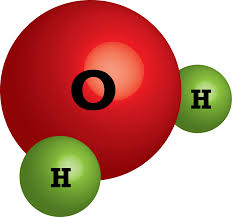
How many atoms of Hydrogen are in this compound
a)
1
b)
2
c)
3
d)
4
120.
Is this equation balanced?
a)
yes
b)
no
c)
Not enough information
121.
The law of conservation of matter states that
a)
chemical reactions change matter.
b)
in chemical reactions, the identity of reactants and products is conserved.
c)
atoms are neither created nor destroyed in chemical reactions.
d)
a chemical equation must be balanced.
122.
Matter can not be created nor destroyed: it can only be
a)
Destroyed a little bit
b)
Invisible
c)
Transformed, changed
d)
None of the above
123.
The number to the lower side of an element is a 
a)
Subscript
b)
Superscript
c)
Coefficient
d)
Charge
124.
The number in front of a compound or element is a 
a)
Subscript
b)
Coefficient
c)
Superscript
d)
Charge
125.
A chemical reaction is balanced when
a)
both sides have the same elements
b)
Both sides have the same  number of atoms
c)
Same subscripts
d)
Same coefficients
126.
Which of these is not a chemical reaction?
a)
Burning of wood
b)
Milk going bad
c)
Mixing vinegar and baking soda
d)
Melting of ice
127.
The coefficient in  3H2O is
a)
6
b)
2
c)
3
d)
5
128.
If reaction starts with 20g of reactants it should produce 
a)
a total of 40g of products
b)
a total of 10g of products
c)
a total of 80 g of products
d)
a total of 20g of products
129.
In a reaction A + B ----> C,  reactant A has 5g and product  C has 9g. How many grams does reactant B should have? 
a)
4g
b)
5g
c)
9g
d)
14g
130.
What will weigh more when a chemical change is complete?  The reactants before the chemical reaction, or the product after the reaction is complete?
a)
They both will weigh the same
b)
The product always weighs more than the reactant
c)
The reactant will weigh more than the product
d)
They both will loose mass after the reaction
131.
Measure of the amount of matter 
a)
mass
b)
volume
c)
weight
d)
density
132.
What is the Law of Conservation of mass?
a)
Mass is created in a chemical reaction
b)
Mass is created in a physical change
c)
New chemicals formed from a chemical reaction have a larger overall mass than the original reactants
d)
Mass is never created or destroyed
133.
Since gasses weigh nothing, when they are produced in a reaction they do not have to be accounted for.  
a)
True
b)
False
134.
Which are the reactants in the following reaction?
2Mg + O2 ---> 2MgO 
a)
Mg and O
b)
MgO
c)
Mg and MgO
d)
O and MgO
135.
How many oxygen atoms are in this chemical formula?
a)
6 oxygen atoms
b)
2 oxygen atoms
c)
3 oxygen atoms
d)
4 oxygen atoms
136.
Bob puts 200 grams of ice into a pitcher with 900 grams of water. He gets distracted and comes back later to find that the ice has melted in the water. How many grams of water does Bob now have in the pitcher?
a)
200 g
b)
700 g
c)
1,100 g
137.
24 g of magnesium reacts with 38 g of fluorine to produce _____ g magnesium fluoride
a)
62 
b)
38
c)
24
d)
14
138.
Students react baking soda & vinegar.
Which of the following would provide the evidence that the number of atoms present before a chemical reaction is equal to the number of atoms present after the chemical reaction?
a)
The mass of the plastic bag, baking soda, and vinegar before the reaction was equal to the mass after the reaction.
b)
Bubbles were produced during the reaction, which meant that a gas was being produced.
c)
The plastic bag did not change in any way, indicating that it was not involved in the reaction.
d)
The mass of the baking soda was exactly equal to the mass of the vinegar used to create the chemical reaction.
139.
When CaCO3 is heated, it forms CaO and CO2. Which of these statements best describes the mass of the products if 100 g of CaCO3 is heated?
a)
The difference in the products’ masses is equal to the mass of the CaCO3
b)
The sum of the products’ masses is less than the mass of the CaCO3
c)
The mass of each product is equal to the mass of the CaCO3
d)
The sum of the products’ masses equals the mass of the CaCO3
140.
Molecule
a)
A group of atoms bonded together
b)
Basic unit of a chemical element
c)
Coefficient
d)
Subscript
141.
Balance this equation-
__P+ __O--> __P2O3
a)
it is already balanced
b)
2, 1, 3
c)
1, 2, 3
d)
1, 3, 2
142.

What is the process in which plants capture the energy in sunlight and use it to make food?

a)

cellular respiration

b)

carbon dioxide

c)

glucose

d)

photosynthesis

143.

Where does the energy for plants to perform photosynthesis come from?

a)

Breaking down ATP

b)

sunlight

c)

glucose metabolism

d)

None of the Above

144.

Where do the reactions of photosynthesis take place in autotrophs?

a)

Chloroplast

b)

Mitochondria

c)

Cell Walls

d)

Cytoplasm

145.

What is the chemical equation for photosynthesis? Choose the BEST answer

a)

C6H12O6 + O2 -> CO2 + H2O

b)

CO2 + H2O --> C6H12O6 + O2

c)

6 CO2 + 6 H2O --> C6H12O6 + 6 O2

d)

C6H12O6 + 6 O2 -> 6 CO2 + 6 H2O

146.

What are the products of photosynthesis?

a)

water and carbon dioxide

b)

oxygen and glucose

c)

oxygen and carbon dioxide

d)

oxygen and water

147.

What are the reactants of photosynthesis?

a)

carbon dioxide and oxygen

b)

water and oxygen

c)

carbon dioxide and water

d)

oxygen and glucose

148.


This is the chemical formula for a molecule of...

a)

oxygen

b)

carbon dioxide

c)

Glucose

d)

Water

149.

Pigment in green plants that captures the energy in sunlight is called __________.

a)

pigment

b)

chlorophyll

c)

stomata

d)

green thing

150.

The main source of energy for all life comes from ________

a)

the Earth

b)

the Moon

c)

the Sun

d)

the food we eat/make

151.


What part of the plant soaks up water for photosynthesis?

a)

roots

b)

petals

c)

leaf

d)

stem

152.

The organic molecule that is the cell's primary form of energy?

a)

Glucose

b)

ATP

c)

ADP

d)

GMP

153.

What is the formula for cellular respiration?

a)

6CO2+6H2O+Light Energy-->C6H12O6+6O2

b)

6CO2+6H2O+ATP-->C6H12O6+6O2

c)

C6H12O6+6O2-->6CO2+6H2O+Light Energy

d)

C6H12O6+6O2-->6CO2+6H2O+ATP

154.

Which organelle does cellular respiration happen in?

a)

Nucleus

b)

Mitochondria

c)

Chlorophyll

d)

Chloroplast

155.
Cellular respiration is...
a)
the process by which cells break down glucose into energy. 
b)
the process by which cells break light down into energy. 
c)
the process by which cells communicate with other cells. 
156.

Every time you exhale (breathe out), your body is getting rid of __________________

a)

glucose

b)

protein

c)

carbon dioxide

d)

oxygen

157.

True or False: Cellular Respiration is a chemical reaction.

a)

True

b)

False

158.

What are the products of cellular respiration?

a)

water and carbon dioxide

b)

oxygen and glucose

c)

oxygen and carbon dioxide

d)

oxygen and water

159.

What are the reactants of cellular respiration?

a)

carbon dioxide and oxygen

b)

water and oxygen

c)

carbon dioxide and water

d)

oxygen and glucose

160.

True or False?: Cellular respiration ONLY occurs in animal cells.

a)

True

b)

False

161.

True or False?: The products of photosynthesis are the reactants for cellular respiration.

a)

True

b)

False

162.
Which one is NOT an example of a decomposer?
a)
mushroom
b)
leaves
c)
mold
d)
worm
163.
Examples of a producer
a)
frog
b)
algae
c)
worm
d)
mouse
164.
Example of a decomposer
a)
fungus
b)
mouse
c)
plants
d)
frogs
165.
What is a producer?
a)
an organism that gets energy from eating other organisms
b)
an organisms that uses sunlight to make its own food
c)
an organism that gets energy from eating dead organisms, non-living material or waste
d)
an organism that uses chemical energy to make its own food
166.
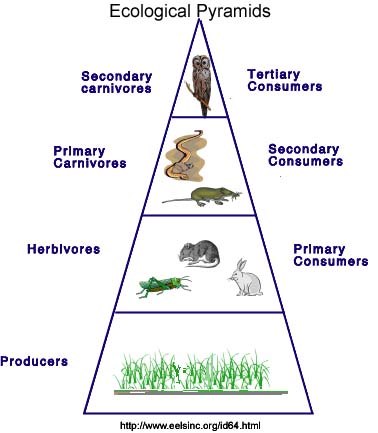
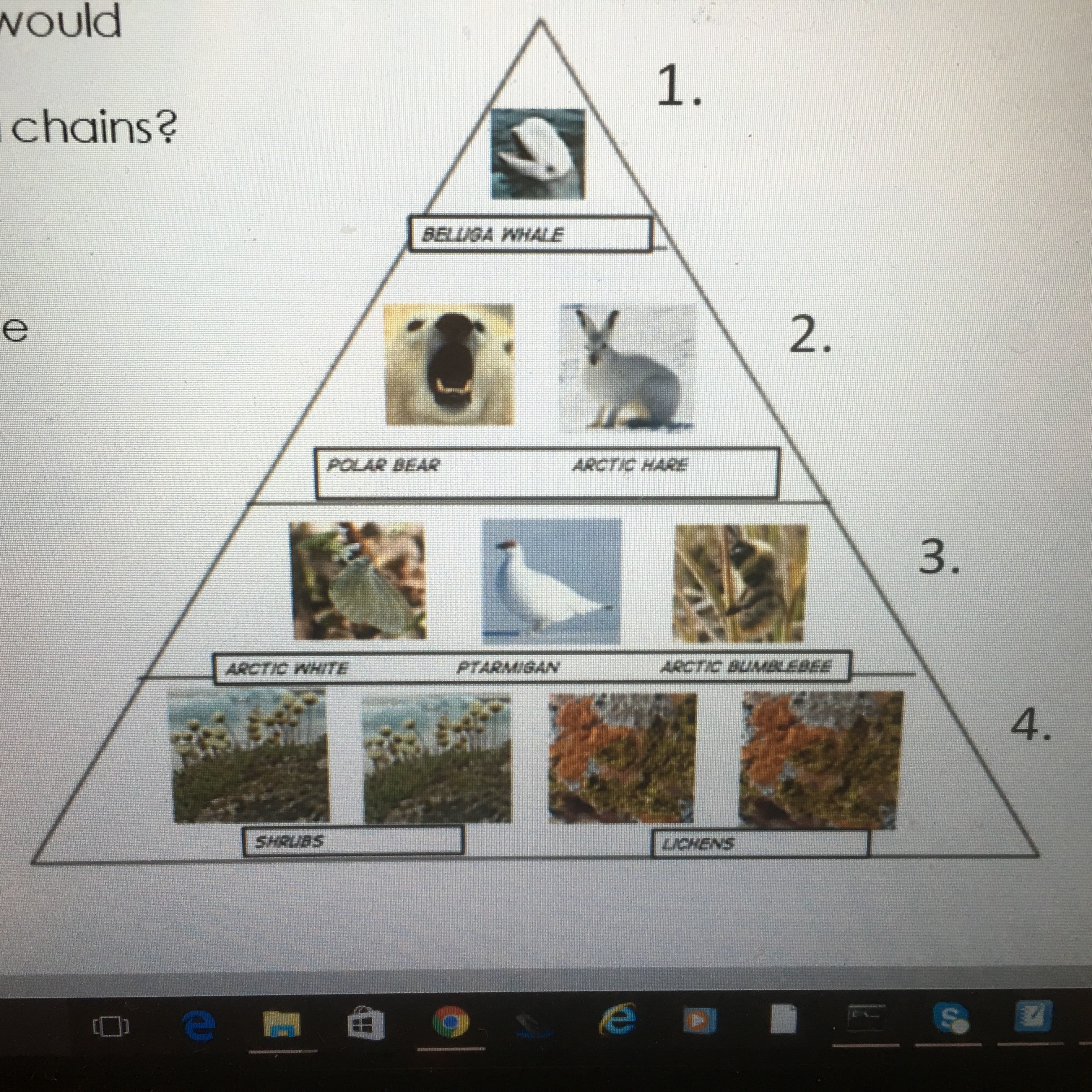
In the energy pyramid here, which organisms have the most energy available?
a)
Producers
b)
Carnivores
c)
Herbivores
d)
Top Predator
167.
In the energy pyramid below, which organism has the least amount of energy available?
a)
Producers
b)
Herbivores
c)
Carnivores
d)
Top Predator
168.
If there is 1000 Kcal available in the producers in trophic level 1, how much energy is available in the herbivores in trophic level 2?
a)
10 Kcal
b)
1 Kcal
c)
100 Kcal
d)
1000 Kcal
169.
If these organisms were arranged in a food pyramid, which organism would have the least amount of total energy available?
a)
coyote
b)
insect
c)
lizard
d)
shrub
170.
Which organism recieves the least amount of energy from the producer?
a)
Owl
b)
Grasshopper
c)
Lilypad
d)
Mouse
171.
The largest group of organisms found in a food web would be:
a)
Primary Consumers
b)
Producers
c)
Decomposers
d)
Tertiary Consumers
172.
A food pyramid represent the relative amount of energy in trophic levels. Which of the following correctly shows a food pyramid?
a)
A
b)
B
c)
C
d)
D
173.
A third-level consumer has to be which type?
a)
Carnivore.
b)
Decomposer.
c)
Producer.
d)
Herbivore.
174.
A secondary consumer 
a)
eats primary consumers
b)
eats producers
c)
eats plants
175.
Level 1 is called the _____________ trophic level. 
a)
Tertiary consumer
b)
Tertiary producer
c)
Primary consumer
d)
Primary producer
176.

What amount of percentage does the energy decrease as it goes up the pyramid?

a)

100%

b)

1000%

c)

10%

d)

1%

177.

How does the energy flow in an energy pyramids?

a)

up the pyramid

b)

down the pyramid

178.
Which is the smallest level of an ecosystem?
a)
organsism
b)
population
c)
community
d)
ecosystem
179.
a system of food chains that shows the transfer of energy  is termed
a)
food web
b)
food chain
c)
prey
d)
predator
180.
Biodiversity is 
a)
the variety of species within an ecosystem
b)
a large number of the same species in an ecosystem
c)
an abundant amount of the same primary consumers 
d)
the ability to have an abundant source from the same species
181.

Photosynthesis is important because...

a)

it makes carbon dioxide

b)

it makes food for the food webs

c)

it makes water

d)

it's not important

182.

What is the process in which plants capture the energy in sunlight and use it to make food?

a)

cellular respiration

b)

carbon dioxide

c)

glucose

d)

photosynthesis

183.

Where does the energy for plants to perform photosynthesis come from?

a)

Breaking down ATP

b)

sunlight

c)

glucose metabolism

d)

None of the Above

184.

Where do the reactions of photosynthesis take place in autotrophs?

a)

Chloroplast

b)

Mitochondria

c)

Cell Walls

d)

Cytoplasm

185.

What is the chemical equation for photosynthesis? Choose the BEST answer

a)

C6H12O6 + O2 -> CO2 + H2O

b)

CO2 + H2O --> C6H12O6 + O2

c)

6 CO2 + 6 H2O --> C6H12O6 + 6 O2

d)

C6H12O6 + 6 O2 -> 6 CO2 + 6 H2O

186.

What are the products of photosynthesis?

a)

water and carbon dioxide

b)

oxygen and glucose

c)

oxygen and carbon dioxide

d)

oxygen and water

187.

What are the reactants of photosynthesis?

a)

carbon dioxide and oxygen

b)

water and oxygen

c)

carbon dioxide and water

d)

oxygen and glucose

188.


This is the chemical formula for a molecule of...

a)

oxygen

b)

carbon dioxide

c)

Glucose

d)

Water

189.

Pigment in green plants that captures the energy in sunlight is called __________.

a)

pigment

b)

chlorophyll

c)

stomata

d)

green thing

190.

The main source of energy for all life comes from ________

a)

the Earth

b)

the Moon

c)

the Sun

d)

the food we eat/make

191.


What part of the plant soaks up water for photosynthesis?

a)

roots

b)

petals

c)

leaf

d)

stem

192.

The organic molecule that is the cell's primary form of energy?

a)

Glucose

b)

ATP

c)

ADP

d)

GMP

193.

What is the formula for cellular respiration?

a)

6CO2+6H2O+Light Energy-->C6H12O6+6O2

b)

6CO2+6H2O+ATP-->C6H12O6+6O2

c)

C6H12O6+6O2-->6CO2+6H2O+Light Energy

d)

C6H12O6+6O2-->6CO2+6H2O+ATP

194.

Which organelle does cellular respiration happen in?

a)

Nucleus

b)

Mitochondria

c)

Chlorophyll

d)

Chloroplast

195.
Cellular respiration is...
a)
the process by which cells break down glucose into energy. 
b)
the process by which cells break light down into energy. 
c)
the process by which cells communicate with other cells. 
196.

Every time you exhale (breathe out), your body is getting rid of __________________

a)

glucose

b)

protein

c)

carbon dioxide

d)

oxygen

197.

True or False: Cellular Respiration is a chemical reaction.

a)

True

b)

False

198.

What are the products of cellular respiration?

a)

water and carbon dioxide

b)

oxygen and glucose

c)

oxygen and carbon dioxide

d)

oxygen and water

199.

What are the reactants of cellular respiration?

a)

carbon dioxide and oxygen

b)

water and oxygen

c)

carbon dioxide and water

d)

oxygen and glucose

200.

True or False?: Cellular respiration ONLY occurs in animal cells.

a)

True

b)

False

201.

True or False?: The products of photosynthesis are the reactants for cellular respiration.

a)

True

b)

False

202.

Which sphere contains rocks and minerals?

a)

geosphere

b)

biosphere

c)

hydrosphere

d)

atmosphere

203.

The word "bio" means what?

a)

little

b)

book

c)

life

d)

non-living

204.

A fish swimming in the ocean is an example of which spheres interacting?

a)

geospohere-hydrosphere

b)

biosphere-hydrosphere

c)

atmosphere-geosphere

d)

biosphere-atmosphere

205.

Which sphere is mainly pictured here.

a)

geosphere

b)

biosphere

c)

hydrosphere

d)

atmosphere

206.

This picture is an example of which sphere?

a)

geosphere

b)

hydrosphere

c)

biosphere

d)

atmosphere

207.

A hawk soaring in the sky is an example of which two spheres interacting?

a)

geosphere-atmosphere

b)

biosphere hydrosphere

c)

biosphere-atmosphere

d)

geosphere-hydrosphere

208.

Rain puddles on the ground is an example of which spheres interacting?

a)

atmosphere-geosphere

b)

hydrosphere-biosphere

c)

atmosphere-hydrosphere

d)

hydrosphere-geosphere

209.

Moss growing on rocks is an example of which interaction?

a)

biosphere-geosphere

b)

atmosphere-geosphere

c)

hydrosphere-geosphere

d)

biosphere-atmosphere

210.

"Hydro" means what?

a)

higher

b)

water

c)

history

d)

plants

211.

Who studies the geosphere?

a)

biologists

b)

geodes

c)

geologists

d)

scientist

212.

Snow covering a mountain is an example of which spheres interacting?

a)

hydrosphere-biosphere

b)

hydrosphere-geosphere

c)

atmosphere-hydrosphere

d)

geosphere-biosphere

213.

Wind blowing through the grass shows which spheres interacting?

a)

atmosphere-biosphere

b)

biosphere-geosphere

c)

geosphere-hydrosphere

d)

hydrosphere-atmosphere

214.

"Geo" means what?

a)

sky

b)

earth

c)

land

d)

ground

215.

Rain falling from clouds is an example of which interaction?

a)

hydrosphere-geosphere

b)

atmosphere-hydrosphere

c)

geosphere-atmosphere

d)

biosphere-atmosphere

216.

Snow is part of which sphere?

a)

geosphere

b)

hydrosphere

c)

biosphere

d)

atmosphere

217.

True or False: ALL of Earth's systems are connected?

a)

True

b)

False

218.

Humans are a part of which sphere?

a)

geosphere

b)

biosphere

c)

atmosphere

d)

hydrosphere

219.

The sphere that contains all of the gases

a)

biosphere

b)

geosphere

c)

atmosphere

d)

hydrosphere