wayground logo

Free Printable Worksheets

Font size

S
M
L
XL
Worksheets

Circulatory and Digestive Systems

Total questions: 220

Worksheet time: 2hrs 11mins
Name
Class
Date
1.

What is the main organ of the circulatory system?

a)

small intestine

b)

bone

c)

lungs

d)

heart

2.

The job of the heart is to . . .

a)

pump blood around the body.

b)

send food to the small intestines.

c)

break down food.

d)

give energy to the body.

3.

How does the heart work?

a)

It pumps blood first to the lungs, back to the heart and then around the rest of the body.

b)

It pumps blood first to the rest of the body, back to the lungs and then to the heart.

c)

It pumps blood around the rest of the body, back to the heart and then to the lungs,

4.

The circulatory system works with the ___________ system to provide our body with oxygen.

a)

respiratory

b)

digestive

c)

muscular

d)

skeletal

5.
The circulatory system works with the __________ system to obtain energy from nutrients that we eat. 
a)
respiratory 
b)
digestive
c)
skeletal
d)
nervous
6.
Which is responsible for providing oxygen to cells?
a)
respiratory system
b)
circulatory system
c)
muscular system
d)
nervous system
7.
Which best describes the relationship between the muscular system and the circulatory system? 
a)
The circulatory system captures carbon dioxide from the air for muscle energy.
b)
The circulatory system produces red blood cells to bring oxygen to the muscles
c)
The circulatory system provides a framework for muscle movement
d)
The circulatory system delivers oxygen for muscle energy
8.

Deoxygenated blood means that the blood is low in...

a)

Oxygen

b)

Carbon Dioxide

9.

About how big is the human heart?

a)

the size of your nose

b)

the size of your foot

c)

the size of your fist

d)

the size of your ear

10.

Which of the following is not part of the circulatory system?

a)

veins

b)

heart

c)

stomach

d)

arteries

11.

As the blood reaches the lungs, what is removed from the blood?

a)

oxygen

b)

carbon dioxide

c)

red blood cells

d)

white blood cells

12.

The part of the blood that carries oxygen is called ___________. (Remember we can't live without our blood-line)

a)

red blood cells

b)

white blood cells

13.

What do we call the movement of blood through the heart and around the body?

a)

circulation

b)

digestion

14.
The main function of the circulatory system is 
a)
To give the body structure and support
b)
Excrete waste
c)
transport blood, nutrients, and gases throughout the body
d)
to transport messages from the body to the brain
15.
True or false:  The circulatory system includes all of your bones.
a)
True
b)
False
16.
Which best describes the relationship between the muscular system and the circulatory system? 
a)
The circulatory system captures carbon dioxide from the air for muscle energy.
b)
The circulatory system produces red blood cells to bring oxygen to the muscles
c)
The circulatory system provides a framework for muscle movement
d)
The circulatory system delivers oxygen for muscle energy
17.
Your heart is an example of which type of muscle?
a)
a big one
b)
voluntary
c)
involuntary
d)
bicep
18.

In which of the following scenarios does blood have the highest oxygen level?

a)

Blood enters the left atrium to left ventricle to aorta

b)

Blood flows through the body by arteries and then to capillaries

c)

Food, nutrients, and oxygen are delivered by diffusion

d)

Blood returns to the heart through the inferior vena cava and into the right atrium

19.

In which of the following scenarios does blood have the lowest oxygen level?

a)

Blood enters the left atrium to left ventricle to aorta

b)

Blood flows through the body by arteries and then to capillaries

c)

Food, nutrients, and oxygen are delivered by diffusion

d)

Blood returns to the heart through the inferior vena cava and into the right atrium

20.

Arteries

a)

Carry blood low in oxygen

b)

Carry blood rich in oxygen

c)

only place diffusion can occur

21.

Veins

a)

only place diffusion can occur

b)

carry oxygen rich blood

c)

carry deoxygenated blood

22.

Capillaries

a)

only blood vessel where diffusion can occur

b)

carry oxygenated blood

c)

carry blood low in oxygen

23.

Select all of the following that are TRUE about red blood cells

a)

having too few red blood cells can cause anemia

b)

donut shaped

c)

contain hemoglobin

d)

fight infection

e)

live approximately 120 days

24.

Select all of the following that are TRUE about white blood cells

a)

fight infection

b)

donut shaped

c)

referred to as macrophage

d)

ingest dead cells

e)

when too many are produced it can cause leukemia

25.

Select all of the blood that a person with type O can safely receive

a)

A

b)

B

c)

AB

d)

O

26.

Select all of the blood that a person with type AB can safely receive

a)

A

b)

B

c)

AB

d)

O

27.

Select all of the blood that a person with type O can safely donate to

a)

A

b)

B

c)

AB

d)

O

28.

Select all of the blood that a person with type AB can safely donate to

a)

A

b)

B

c)

AB

d)

O

29.

Which of the following is NOT part of the circulatory system?

a)

heart

b)

blood

c)

bones

d)

arteries

30.

Which of the following is a connection between the circulatory system and the muscular system?

a)

the heart is composed of cardiac muscle

b)

the heart makes calcium to give to muscles

c)

muscles create blood cells that get circulated through body

d)

the two systems are not connected

31.

Which of the following is NOT a function of the circulatory system?

a)

circulate blood

b)

regulate calcium production

c)

carry nutrients and hormones through blood stream

d)

deliver oxygen to tissues

32.

What structure doesn't belong in the circulatory system?

a)

Blood

b)

Blood vessels

c)

Heart

d)

Voluntary muscle

33.

How does exercise help your circulatory system?

a)

makes bones strong

b)

lifting weights makes skeletal muscles strong

c)

it wont help because it will keep you up at night

d)

heart muscle will be strong and better pump blood

34.

The heart is made up of what kind of muscle?

a)

smooth

b)

cardiac

c)

skeletal

d)

voluntary

35.
The main function of the circulatory system is 
a)
To give the body structure and support
b)
Excrete waste
c)
transport blood, nutrients, and gases throughout the body
d)
to transport messages from the body to the brain
36.
The human heart is an organ that pumps blood throughout the body supplying oxygen, nutrients, blood, and hormones to and from the tissues removing _________ ___________ and other wastes.
a)
hydrogen dioxide
b)
carbon moxoide
c)
water molecules
d)
carbon dioxide
37.
Blood vessels are 
a)
veins
b)
capillaries
c)
arteries
d)
all of them
38.
What part of blood is responsible for carrying oxygen and carbon dioxide to body cells?
a)
Red Blood Cells
b)
White Blood Cells
c)
Platelets
d)
Plasma
39.
What is the heart ? 
a)
meaty organ 
b)
a small metal spike with a broadened flat head,
c)
organ of soft nervous tissue 
d)
muscular organ
40.
What is the function of the heart?
a)
To pump blood around the body
b)
To remove oxygen from the blood
c)
To allow blood to flow through it 
d)
To breath
41.

The circulatory system consists of what three parts?

a)

Heart

b)

Brain

c)

Blood

d)

Blood vessels

e)

Liver

42.

Blood vessels that carry blood away from the heart.

a)

Veins

b)

Capillaries

c)

Arteries

43.

These blood vessels help fight infection and other diseases.

a)

Red Blood Cells

b)

White Blood Cells

c)

Platelets

d)

Plasma

44.

(a)   is the liquid part of blood.

45.

(a)   help form clots to stop bleeding.

46.

Blood vessels that carry blood to the heart.

a)

Veins

b)

Arteries

c)

Capillaries

47.

The upper part of the heart is made up of two chambers called what?

a)

Ventricles

b)

Atria

48.

(a)   are the tiniest blood vessels.

49.

The bottom part of the heart is divided into two chambers called what?

a)

Ventricles

b)

Atria

50.

These blood cells carry oxygen from the lungs to all parts of the body.

a)

White Blood Cells

b)

Red Blood Cells

c)

Platelets

d)

Plasma

51.

The smallest blood vessels that ensure oxygen and nutrients are delivered to the body's cells.

a)

Capillaries

b)

Arteries

c)

Veins

52.
Identify the structure the arrow is pointing to
a)
right atrium
b)
right ventricle
c)
left atrium
d)
left ventricle
53.
Identify the structure the arrow is pointing to
a)
right atrium
b)
right ventricle
c)
left atrium
d)
left ventricle
54.
Identify the structure the arrow is pointing to
a)
right atrium
b)
right ventricle
c)
left atrium
d)
left ventricle
55.
Identify the structure the arrow is pointing to
a)
right atrium
b)
right ventricle
c)
left atrium
d)
left ventricle
56.
Identify the structure the arrow is pointing to
a)
Pulmonary Vein
b)
Pulmonary Artery
c)
Vena Cava
d)
Aorta
57.
Identify the structure the arrow is pointing to
a)
Pulmonary Vein
b)
Pulmonary Artery
c)
Vena Cava
d)
Aorta
58.
Identify the structure the arrow is pointing to
a)
Pulmonary Vein
b)
Pulmonary Artery
c)
Vena Cava
d)
Aorta
59.

How many chambers of the heart are there?

a)

25

b)

4

c)

2

d)

3

60.

Receives blood from the body that is low in oxygen and high in carbon dioxide

a)

Right Atrium

b)

Right Ventricle

c)

Left Atrium

d)

Left Ventricle

61.

Receives oxygen-rich blood from the lungs

a)

Right Ventricle

b)

Left Ventricle

c)

Right Atrium

d)

Left Atrium

62.

Pumps the oxygen-rich blood to all parts of the body

a)

Right Ventricle

b)

Left Ventricle

c)

Right Atrium

d)

Left Atrium

63.

Arteries

a)

carry oxygenated blood to the heart

b)

carry oxygenated blood away from the heart

c)

carry deoxygenated blood to the heart

d)

carry deoxygenated blood away from the heart

64.

Veins

a)

carry deoxygenated blood to the heart

b)

carry deoxygenated blood away from the heart

c)

carry oxygenated blood to the heart

d)

carry oxygenated blood away from the heart

65.

Blood is made up of

a)

Plasma

b)

Blood cells - red and white

c)

Platelets

d)

All of the above

66.
The chewing and grinding of food into smaller pieces is an example of...
a)
Mechanical Digestion
b)
Chemical Digestion
67.
Bile is made by which digestive organ?
a)
Gallbladder
b)
Stomach
c)
Rectum
d)
Liver
68.
Nutrients from digested food are absorbed in which digestive organ?
a)
Small Intestine
b)
Stomach
c)
Large Intestine
d)
Gallbladder
69.
Which organ pushes food down to the stomach?
a)
Mouth
b)
Esophagus
c)
Rectum
d)
Large intestine
70.
As waste moves through the digestive system, the ______ absorbs water before storing waste in the rectum.
a)
Small intestine
b)
Stomach
c)
Esophagus
d)
Large intestine
71.
Bile is stored in which secondary digestive organ?
a)
Stomach
b)
Liver
c)
Gallbladder
d)
Pancreas
72.
What is the substance found in the stomach that allows for chemical digestion to take place?
a)
Gastric Juices
b)
Saliva
c)
Bile
73.
The opening at the end of the digestive system where solid waste comes out is the...
a)
rectum
b)
anus
c)
mouth
d)
large intestine
74.
What is the correct sequence that food follows through the digestive system?
a)
H, I, F, B
b)
F, G, I, J
c)
F, G, D, I
d)
A, I, D, F
75.

What comes first?

a)

Mouth

b)

stomach

c)

large intestine

d)

small intestine

76.
Which digestive organ makes digestive juices to help the small intestine absorb nutrients?
a)
Liver
b)
Gallbladder
c)
Pancreas
d)
Esophagus
77.

Number 5 is pointing to the...

a)

Liver

b)

mouth

c)

Pancreas

d)

Stomach

78.
Number 3 is pointing to the...
a)
Small intestine
b)
Rectum
c)
Large intestine
d)
Stomach
79.
Number 2 is pointing to the...
a)
Esophagus
b)
Stomach
c)
Small intestine
d)
Anus
80.
Which is NOT a function of the Digestive System?
a)
To rid the body of solid waste
b)
Absorb nutrients for energy & growth
c)
Break down nutrients from food
d)
Pump blood around the body
81.
Gastric juices in the stomach digest food into a thick liquid.  This is...
a)
Mechanical digestion
b)
Chemical digestion
82.
Enzymes (chemicals) in your saliva help break down food while chewing.  This is...
a)
Mechanical digestion
b)
Chemical digestion
83.
Which of the following are secondary organs of the digestive system? 
a)
liver, stomach, & esophagus
b)
pancreas, liver, and gall bladder
c)
liver, stomach, & intestines
d)
intestines, anus, and stomach
84.
Food does not pass through which of the following? 
a)
stomach
b)
liver
c)
esophagus
d)
mouth
85.
Where does chemical and mechanical digestion take place?
a)
liver and gall bladder
b)
stomach and mouth
c)
mouth and esophagus
d)
intestines and rectum
86.
Which part carries food into your stomach?
a)
esophagus
b)
mouth
c)
trachea
d)
vessels
87.
Where does most of the chemical digestion of food takes place?  Nutrients from food are also absorbed into the bloodstream here. 
a)
Large Intestines
b)
Small Intestines
c)
Gall Bladder
d)
Liver
88.
This part stores bile produced by the liver. 
a)
Gall Bladder
b)
Pancreas
c)
Stomach
d)
Rectum
89.

This produces digestive juices that help to further break down the food in the small Intestine. It also produces insulin.

a)

Stomach

b)

Liver

c)

Gall Bladder

d)

Pancreas

90.

What is a chemical produced by the liver used by the body to break up fat?

a)

Saliva

b)

Bile

c)

Stomach Acid

d)

Mucus

91.

Where does digestion begin?

a)

The mouth

b)

The stomach

c)

The liver

d)

The small intestine

92.

Why do we need food to break apart the food we eat?

a)

So it can fit into our stomachs

b)

So our bodies can use the nutrients from the food

c)

So liquids can be separated from solids

d)

So that our bodies' enzymes have something to do.

93.

Where does digestion begin?

a)

Our teeth

b)

Our stomach

c)

The esophogus

d)

Small intestines

94.

Chewing is an example of what type of digestion?

a)

Dental

b)

Fragmentary

c)

Chemical

d)

Mechanical

95.

If you wanted to find the glands that produce salivary amylase, where would you look?

a)

In your mouth

b)

In your throat

c)

In your intestines

d)

In your stomach

96.

Place the following events in sequence: A) Food enters your large intestines

B) Food enters your small intestines

C) Food enters your esophagus

a)

A, B, C

b)

C, B, A

c)

C, A, B

d)

B, A, C

97.

What is chyme?

a)

A particular type of digestive enzymes

b)

What food is called after it has been digested by the stomach

c)

A chemically active part of the small intestine

d)

The passage that leads from the small intestine to the large intestine

98.

What might happen if you had your pancreas removed?

a)

Your intestines might have trouble breaking down food

b)

Your stomach might have trouble producing hydrochloric acid

c)

You would not be able to chew properly

d)

You would have trouble producing saliva

99.

What is the main function of villi?

a)

They move food from the stomach to the small intestine

b)

They absorb nutrients into the bloodstream

c)

They absorb water from chyme

d)

They move food from the small intestine to the large intestine

100.

What might happen if your large intestine did not absorb water from chyme?

a)

You couldn't digest food.

b)

You wouldn't be able to go to the bathroom.

c)

You would become dehydrated.

d)

Solid waste would not be able to move throughout the digestive system

101.
WHAT IS AFTER THE SMALL INTESTINE?
a)
Large intestine
b)
nothing
c)
liver
d)
pancreas
102.
Type of digestion in the stomach:
a)
Mechanical
b)
Chemical
c)
Both
103.
Nutrients from digested food are absorbed in which digestive organ?
a)
Small Intestine
b)
Stomach
c)
Large Intestine
d)
Gallbladder
104.
What is the substance found in the stomach that allows for chemical digestion to take place?
a)
Gastric Juices
b)
Saliva
c)
Bile
105.
Enzymes (chemicals) in your saliva help break down food while chewing.  This is...
a)
Mechanical digestion
b)
Chemical digestion
106.

THE MOVEMENT OF FOOD THROUGH THE BODY:

a)

INGESTION

b)

PERISTALYSIS

c)

DIGESTION

d)

ABSORPTION

107.

The passage of nutrients from the digestive tract into the blood stream:

a)

INGESTION

b)

DIGESTION

c)

ABSORPTION

d)

DEFECATION

108.
The chewing and grinding of food into smaller pieces is an example of...
a)
Mechanical Digestion
b)
Chemical Digestion
109.
Which of the following helps digest starch in the mouth...
a)
salivary amylase
b)
lysozymes
c)
mucin
d)
bolus
110.
What is the definition for ingestion?
a)
Breaking down food into smaller nutrients
b)
Getting rid of waste products
c)
Getting food into our bodies
d)
Getting nutrients into our bloodstream, so that our cells can use them
111.
What is the definition for digestion?
a)
Breaking down food into smaller nutrients
b)
Getting rid of waste products
c)
Getting food into our bodies
d)
Getting nutrients into our bloodstream, so that our cells can use them
112.
What is the definition for absorption?
a)
Breaking down food into smaller nutrients
b)
Getting rid of waste products
c)
Getting food into our bodies
d)
Getting nutrients into our bloodstream, so that our cells can use them
113.
What is the definition for elimination?
a)
Breaking down food into smaller nutrients
b)
Getting rid of waste products
c)
Getting food into our bodies
d)
Getting nutrients into our bloodstream, so that our cells can use them
114.
Where are nutrients absorbed into the blood?
a)
esophagus
b)
small intestine
c)
stomach
d)
mouth
115.
The organ where food doesn't pass through but it does break down fats and detoxify poisons?
a)
liver
b)
small intestine
c)
stomach
d)
large intestine
116.
Where extra water and minerals are absorbed through the cells of this organ ...
a)
liver
b)
small intestine
c)
stomach
d)
large intestine
117.
Food broken down by chemicals is called
a)
mechanical digestion
b)
chemical digestion
118.
Food broken down by physical processes is called
a)
mechanical digestion
b)
chemical digestion
119.
Enzymes and acids are examples of 
a)
mechanical digestion
b)
chemical digestion
120.
Chewing, grinding, and churning are examples of...
a)
mechanical digestion
b)
chemical digestion
121.
What is the correct order in which food passes through the digestive system?
a)
mouth>stomach>large intestine>small intestine
b)
esophagus>sm intestine>stomach>lg intestine
c)
stomach>sm intestine>esophagus>mouth
d)
mouth>esophagus>stomach>sm intestine>lg intestine
122.
What is not a function of the digestive system?
a)
Create new foods
b)
Absorb water
c)
Process waste
123.
What is an example of chemical breakdown?
a)
Chewing
b)
Saliva
c)
Peristalsis
124.
What begins the process of mechanical breakdown?
a)
the mouth
b)
the esophagus
c)
the pancreas
125.
What begins the process of chemical breakdown?
a)
Liver
b)
Salivary glands
c)
Colon
126.
What starts the process of chemical breakdown?
a)
Saliva
b)
Oxygen
c)
Hydrogen
127.
What pushes food from the mouth to the stomach?
a)
Stomach
b)
Gall bladder
c)
Esophagus
128.
What churns food and breaks it down further using strong acids?
a)
Stomach
b)
Salivary glands
c)
Liver
129.
Where does most digestion occur?
a)
Stomach
b)
Salivary gland
c)
Small intestine
130.
What produces chemicals that break down fats, starches and proteins?
a)
Pulmonary artery
b)
Pancreas
c)
Pituitary gland 
131.
Which organ system includes the esophagus, pancreas, and large intestine?
a)
digestive
b)
excretory
c)
integumentary
d)
lymphatic
132.
When you eat a cheeseburger, your digestive _______ digests the cheeseburger.
a)
glands
b)
organ
c)
system
d)
tissue
133.
The bacteria species E-coli is actually beneficial to humans.  It plays an important role in which body function?
a)
digestion
b)
excretion
c)
metabolism
d)
reproduction
134.
During the production of yogurt, specific _______ are used to ferment the milk.  In turn the same  ______ are beneficial to our digestive system when we eat the yogurt.
a)
algae
b)
bacteria
c)
fungi
d)
protozoan
135.
Bacteria are very small single-celled organisms that lack a nucleus.  Although bacterial cells are less complex than the cells that make up the human body, bacteria are very important to human health.  Which statement best summarizes how bacteria affect human health.
a)
Bacteria cause disease in humans.
b)
Bacteria are beneficial to humans.
c)
Bacteria rarely affect human cells because they are so much smaller.
d)
Some bacteria are beneficial to humans and some are harmful.
136.
Humans cannot digest food without the aid of small single-celled organisms that live in our digestive tract. Which common name is associated with these single-celled organisms that help humans digest food?
a)
algae
b)
bacteria
c)
protozoa
d)
virus
137.
Mouth to stomach to intestines.  What system helps the digestive system move food until it becomes waste?
a)
circulatory
b)
immune
c)
muscular
d)
skeletal
138.
Digestion in animals begins in the ______.
a)
intestines
b)
mouth
c)
stomach
d)
throat
139.
Predict the next digestive system organ in the following sequence: mouth, pharynx, esophagus, stomach, ______
a)
liver
b)
kidneys
c)
small intestines
d)
large intestines
140.
We think of our muscular system as the system that helps us move around.  It also functions on an internal level by helping food movement in the _____ and _____, both parts of the digestive system.
a)
stomach; liver
b)
stomach; pancreas
c)
stomach: gallbladder
d)
stomach; small intestines
141.
Which secondary organ produces insulin and other digestive juices to further break down the food in the small intestines?
a)
liver
b)
gallbladder
c)
mouth
d)
pancreas
142.
Which type of digestion produces physical change to the food by breaking food into smaller pieces?
a)
chemical
b)
peristalsis
c)
mechanical
d)
saliva
143.

What chemically breaks down food into smaller molecules?

a)

teeth

b)

muscles of the stomach

c)

enzymes

d)

peristalsis

144.

What are the rhythmic muscular contractions of your esophagus called to help food move along?

a)

swallowing

b)

peristalsis

c)

inertia contractions

d)

paralysis

145.

What carries food from the pharynx to the stomach?

a)

larynx

b)

trachea

c)

esophagus

d)

bronchioles

146.
What are the main parts of the digestive system 
a)
stomach, small and large intestine
b)
mouth,stomach,esophagus,large and small intestine, and rectum
c)
stomach, lungs, trachea, rectum
d)
large and small intestine, trachea, stomach, mouth
147.
A long folded tube inside the body attached to the stomach where nutrients in the food are absorbed.
a)
large intestine
b)
small intestine
c)
esophagus
d)
rectum
148.

Provides additional enzymes (pancreatic juice) to help nutrients get absorbed by the small intestine.

a)

liver

b)

kidneys

c)

gall bladder

d)

pancreas

149.

A large organ of the digestive system that makes chemicals (bile) to help the body break down fats and rid itself of harmful substances.

a)

esophagus

b)

mouth

c)

liver

d)

stomach

150.

What is the main function of the (hilly) villi?

a)

They move food from the stomach to the small intestine

b)

They absorb nutrients into the bloodstream

c)

They absorb water from chyme

d)

They move food from the small intestine to the large intestine

151.

Place the following events in sequence:

A) Food enters your large intestines

B) Food enters your small intestines

C) Food enters your esophagus

a)

A, B, C

b)

C, B, A

c)

C, A, B

d)

B, A, C

152.

Chewing is an example of what type of digestion?

a)

Dental

b)

Fragmentary

c)

Chemical

d)

Mechanical

153.
Where does the digestion of starch begin?
a)
esophagus
b)
small intestine
c)
stomach
d)
mouth
154.

The partly-digested food in the stomach leaves to enter

a)

The gullet

b)

The appendix

c)

The small intestine

d)

The large intestine

155.
The process by which the body breaks down food so that it can be used for energy.
a)
composition
b)
digestion
c)
deposition
d)
absorption
156.
A long folded tube inside the body attached to the stomach where nutrients in the food are absorbed.
a)
large intestine
b)
small intestine
c)
esophagus
d)
rectum
157.
A series of wave-like muscle contractions that moves food to different processing stations in the digestive tract.
a)
adduction
b)
primary wave
c)
peristalsis
d)
inversion
158.
The place where waste is stored before it leaves the body.
a)
rectum
b)
anus
c)
small intestine
d)
large intestine
159.
a)
purging
b)
peristalsis
c)
platinum
d)
paralysis
160.
What does the mouth do?
a)
Break down the food to make it easier to swallow
b)
Slows down jaws
c)
Nothing
d)
Neither
161.
A short tube at the end of the large intestine that stores solid waste is the...
a)
Anus
b)
Rectum
162.
What is the substance found in the stomach that allows for chemical digestion to take place?
a)
Gastric Juices
b)
Saliva
c)
Bile
163.

Respiration ____ and cellular respiration ____.

a)

produces ATP, is gas exchange

b)

is gas exchange, produces ATP

c)

produces glucose, produces glucose

d)

uses glucose, produces glucose

164.

Humans use calories they obtain from ____ as their energy source.

a)

food

b)

water

c)

sunlight

d)

minerals

165.
This process releases chemical energy from sugars and other carbon-based molecules to make ATP when oxygen is present.
a)
photosynthesis
b)
light-independent reaction
c)
cellular respiration
d)
light-dependent reaction
166.
Cellular respiration takes place in the
a)
nucleus
b)
cytoplasm
c)
ribosomes
d)
mitochondria
167.

Does cellular respiration store or release energy?

a)

Store

b)

Release

168.

Which organelle does cellular respiration happen in?

a)

Nucleus

b)

Mitochondria

c)

Chlorophyll

d)

Chloroplast

169.

What is the process that combines glucose and oxygen to release energy?

a)

Cellular Respiration

b)

Photosynthesis

c)

Chemical Reaction

d)

Natural Selection

170.
Cellular respiration is...
a)
the process by which cells break down glucose into energy. 
b)
the process by which cells break light down into energy. 
c)
the process by which cells communicate with other cells. 
171.

The release in energy from the sugar that are in plant and animal cells is called...

a)

photosynthesis

b)

transpiration

c)

cellular respiration

d)

transition

172.

Which of the following equation explains cellular respiration?

a)

sugar+water -> salt+sunlight

b)

sugar+oxygen -> water+carbon dioxide+energy

c)

water+carbon dioxide+sunlight -> sugar+oxygen

d)

Sugar+energy -> water+carbon dioxide+oxygen

173.

How can energy from the sun be transferred to animals?

a)

The sun's energy is transformed into food by plants, animals eat plants as food so that they can transform that food into energy.

b)

Plants produced energy through photosynthesis, animals that eat that energy can produce food.

c)

Plants transformed energy of the sun into gases that animals can breath in to use as energy through respiration.

d)

Animals are able to use energy from the sun by eating the plants that provides energy for the animals.

174.

O2 is the chemical formula for

a)

Oxygen

b)

Carbon Dioxide

c)

Glucose

d)

Water

175.

Organs are made up of different

a)

tissues

b)

cells

176.

Skeleton gives shape to our

a)

body

b)

tissues

177.

Diffusion is the movement of molecules from an area of _____ concentration to an ______ concentration

a)

High, low

b)

Low, high

c)

Low, low

d)

High, high

178.
If there is more oxygen in the blood than in an organ, which direction would the oxygen move?
a)
Out of the blood
b)
Into the blood
179.

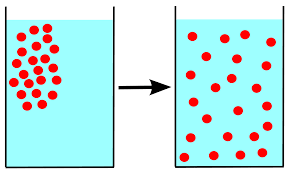
The picture below is an example of _________________.

a)

osmosis

b)

isotonic

c)

diffusion

d)

active transport

180.
What is diffusion?
a)
when molecules move 
b)
when molecules move from a high concentration to a low concentration.
c)
no movement 
d)
molecules move everywhere
181.

When does diffusion stop?

a)

After a day and a night

b)

When the particles are evenly spread out

c)

When there are no particles left

d)

When all the particles leave the system

182.
Where is there a low concentration of perfume?
a)
in the bottle
b)
on the hand
c)
in the room
d)
in the top
183.

What is DIFFUSION?

a)
b)
c)
d)
184.

Diffusion is the free movement of particles from an area of __________ concentration to an area of ________ concentration.

a)

High to high

b)

High to low

c)

Low to low

d)

Low to high

185.

When does diffusion stop?

a)

After a day and a night

b)

When the particles are evenly spread out

c)

When there are no particles left

d)

When all the particles leave the system

186.
What does “high concentration area” mean?
a)
Spread out
b)
Tightly packed together
c)
Uncrowded
d)
Spacious
187.
Diffusion is the movement of molecules from an area of _____ concentration to an ______ concentration
a)
High, low
b)
Low, high
c)
Low, low,
d)
High, high
188.
Permeable means
a)
things can pass through
b)
the concentration levels are different
c)
it is permanent
d)
things are stuck
189.

What happens to the concentration of carbon dioxide in you cells when you exercise

a)

Increase

b)

Decrease

c)

Remain constant

190.

What hapens to the concentration of oxygen in the body cells when you exercise?

a)

Increase

b)

Decrease

c)

Remain constant

191.

How does the body remove carbon dioxide from the cells?

a)

The body cells converts carbon dioxide into carbon monoxide

b)

The body cells don't expel the waste, they store them for future use

c)

The body cells expel the carbon dioxide through the use of the nucleus

d)

The carbon dioide diffuses out of the body cells and into the bloodstream due to differences in the concentration gradient

192.

The movement of particles is __________, resulting in the particles being spread throughout the container

a)

Structured

b)

In a straight line

c)

Random

d)

In curved, way motions

193.
An increase in temperature does what to diffusion?
a)
Speeds it up
b)
Slows it down
c)
Has no effect
d)
I wish i knew. Really I do.
194.

What does a 'region with high concentration' mean?

a)

An area with a SMALL number of particles

b)

An area with a LARGE number of particles

c)

An area with an UNEVEN number of particles

d)

An area with no particles

195.

What type of muscle is found in the digestive system?

a)

Skeletal muscle

b)

Smooth muscle

c)

Cardiac muscle

d)

Digestive muscle

196.

What are skeletal muscles attached to?

a)

Ligaments which attach to other muscles

b)

Tendons which attach to bones

c)

Ligaments which attach to bones

d)

Tendons which attach to other muscles

197.

The pancreas releases pancreatic enzymes which help break down food in the small intestine. This is an example of

a)

Absorption

b)

Elimination

c)

Chemical digestion

d)

Mechanical digestion

198.

What is digestion?

a)

Squishing food into tiny pieces

b)

Absorbing nutrients from food into the body?

c)

Eating

d)

Breaking down food into small molecules so the body can absorb them

199.

What type of muscle would you use to lift your arms to shoot a basketball?

a)

Athletic muscle

b)

Skeletal muscle

c)

Cardiac muscle

d)

Smooth muscle

200.

Combining oxygen and glucose to release ATP energy is called

a)

Cellular respiration

b)

Photosynthesis

c)

Absorption

d)

Diffusion

201.

What increases the surface area of the small intestine?

a)

duodenum

b)

villi

c)

ileum

d)

pancreas

202.

What is the purpose of the villi? (select all that apply)

a)

increase the surface area

b)

chemically break down food

c)

absorb nutrients into the bloodstream

d)

mechanically break down food

203.

The beginning section of the small intestine that attaches to the stomach.

a)

Ileum

b)

Duodenum

c)

Jejunum

d)

Appendix

204.

Which structures increase the surface of the gut?

a)

Lacteal and villi

b)

Villi and microvilli

c)

Intestinal glands and microvilli

d)

Capillaries and membrane proteins

205.
Digestive organ where most chemical digestion and absorption of food takes place through villi
a)
esophagus 
b)
rectume
c)
large intestine
d)
small intestine
206.

As compared to a smooth surfaced cylinder, the surface area of the small intestine is ______________ by the

villi and microvilli structure.

a)

Decreased greatly

b)

Increased greatly

c)

Increased slightly

d)

Unchanged

207.

Which of the following structures increase the surface area for absorption of digested food in the small intestine?

a)

Villi

b)

protein pumps

c)

Microvilli

d)

Villi and Microvilli

208.

How many villi are shown in the diagram? (input number only)

(a)  

209.

Which structure(s) carry/carries blood to/away the villi?

a)

A

b)

B

c)

C

d)

D

210.

The process of breaking down food into nutrient rich molecules.

a)

absorption

b)

digestion

c)

peristalsis

d)

villi

211.

finger-like projections in the small intestine that absorb nutrients

a)

digestion

b)

absorption

c)

peristalsis

d)

villi

212.

Amylase in saliva changes starch into...

a)

sugar

b)

waste

c)

stomach acid

d)

chyme

213.

Why do we eat?

a)

To get the nutrients we need to survive.

b)

So we can gain weight.

c)

Because we enjoy it.

d)

To get carbon dioxide and oxygen.

214.

Amylase in saliva changes starch into...

a)

sugar

b)

waste

c)

stomach acid

d)

chyme

215.

What is the function of the villi?

a)

To increase the absorption surface

b)

To digest the last nutrients

c)

To form feces

d)

To comb the small intestine

216.

Physically breaking the food into smaller pieces using the teeth and tongue.

a)

chemical digestion

b)

mechanical digestion

c)

enzymes

d)

peristalsis

217.

A protein that speeds up chemical reactions in the body.

a)

Villi

b)

enzymes

c)

ureters

d)

nephrons

218.

The part of the digestive system where most of the nutrients are absorbed through villi.

a)

small intestine

b)

large intestine

c)

peristalsis

d)

nephrons

219.

Tiny finger-shaped structure that cover the inner surface of the small intestine.

a)

nephrons

b)

enzymes

c)

epiglottis

d)

villi

220.

Muscle contraction that keep food moving alone in one direction through the digestive system.

a)

epiglottis

b)

nephrons

c)

peristalsis

d)

enzymes