
 Worksheets
Rates of Change and Evidence of Evolution
Total questions: 50
Worksheet time: 1hrs 14mins

The hypothesis that the evolution of a species occurs in periods of rapid change separated by periods of little or no change is called:
(a)

Proposes that species are stable most of the time, but every now and then there is a disruptive event that prompt rapid change. (a)
Pattern of periods of slow change interrupted by periods of rapid change with few, if any transitional fossils best describes the theory of (a)
Scientists determined that a simple form of this species of trilobite appeared to be well suited for its environment. Then, a large, sudden change occurred in the environment, after which a trilobite with more segments and longer spines was better adapted to its new environment.
How would a sketch of the fossil record for this species of trilobite look?


gradualism
The idea that evolution happens with the accumulation of gradual changes in the population over time.
gradualism

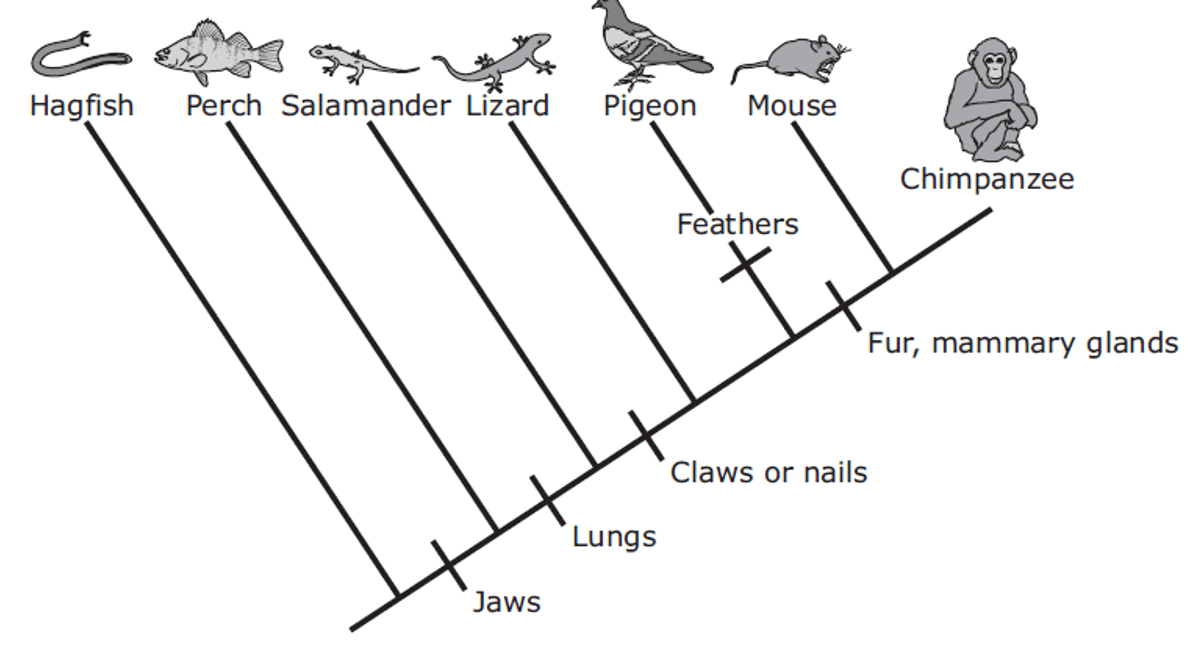
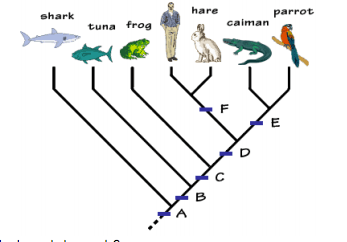
Analyze the following Phylogenetic Tree: What characteristic is shared by Mammals, Reptiles, Birds, and Amphibians?
(a)

The diagram shows data on the evolution of horses.
The date in the diagram is evidence that -
a new species of horse suddenly appeared
horses slowly developed over time
Horses have similar stages of rapid embryological development
horses have a common ancestry with other hovved animals

Is this image and description Gradualism or Punctuated Equilibrium?
Gradualism
Punctuated Equilibrium
The diagram shows data on the evolution of horses.
The date in the diagram is evidence that -
a new species of horse suddenly appeared
horses slowly developed over time
Horses have similar stages of rapid embryological development
horses have a common ancestry with other hovved animals
Analogous Structure
Same function different structure
Homologous Structure
Same structure different function
Comparative Embryology
Comparing embryological development of different species
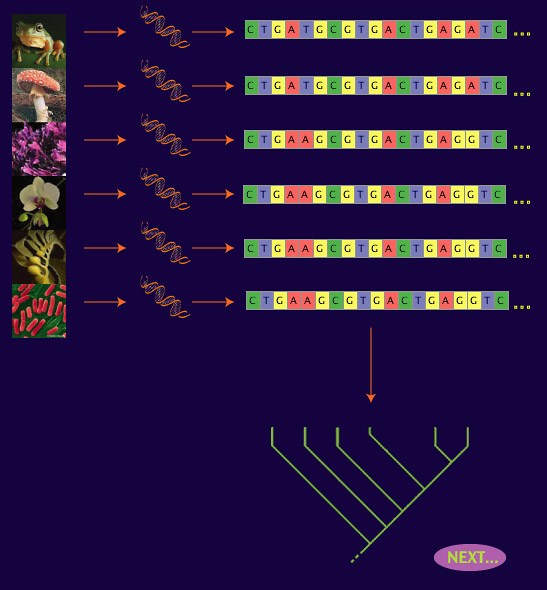
Biochemical Evidence
Comparing DNA and amino acid sequences of different species
Vestigial Structures
Structures in the body of an organism that no longer work.
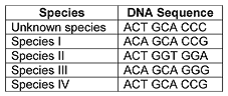
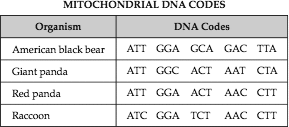
What conclusions can be made based on this table shown?
the American black bear and the giant panda are most closely related
the giant panda and the red panda are most closely related
the red panda and the racoon are the most closely related
the giant panda and the racoon are most closely related
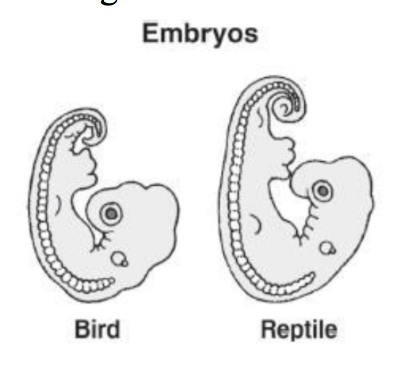
The diagram illustrates an embryonic stage of two organisms. Which of the following can be determined by observing the embryos shown in the diagram?
The organisms belong to the same genus.
The organisms are native to the same geographic areas.
The organisms share a common ancestry.
The organisms will grow into anatomically similar adults.
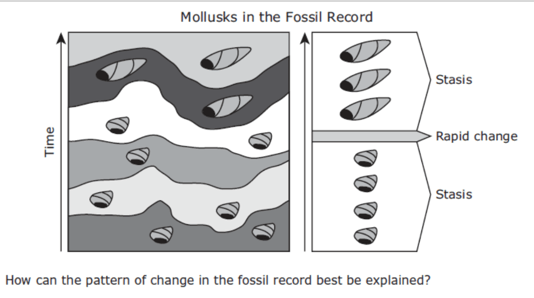
How can the pattern of change in the fossil record best be explained?
The mollusks were well adapted to their stable environment. A large, sudden change occurred in their environment. After the change the mollusks with the bigger shells were better adapted for the new environment.
The mollusks were well adapted to their stable environment. The mollusks hybridized with a smaller species of mollusk. A new species of mollusk with a bigger shell resulted.
The mollusks were not well adapted to their environment. The length of the mollusks' shells changed gradually over time. The mollusks in the original population that had small shells died over a period of many years.
Match the following Evidence of Evolution

Molecular Homology

Anatomical Homology

Biogeography

Fossil Evidence

Embryological
Evidence

Based on this map, why are the organisms in area 3 and 4 more different than organisms in areas 2 and 3?

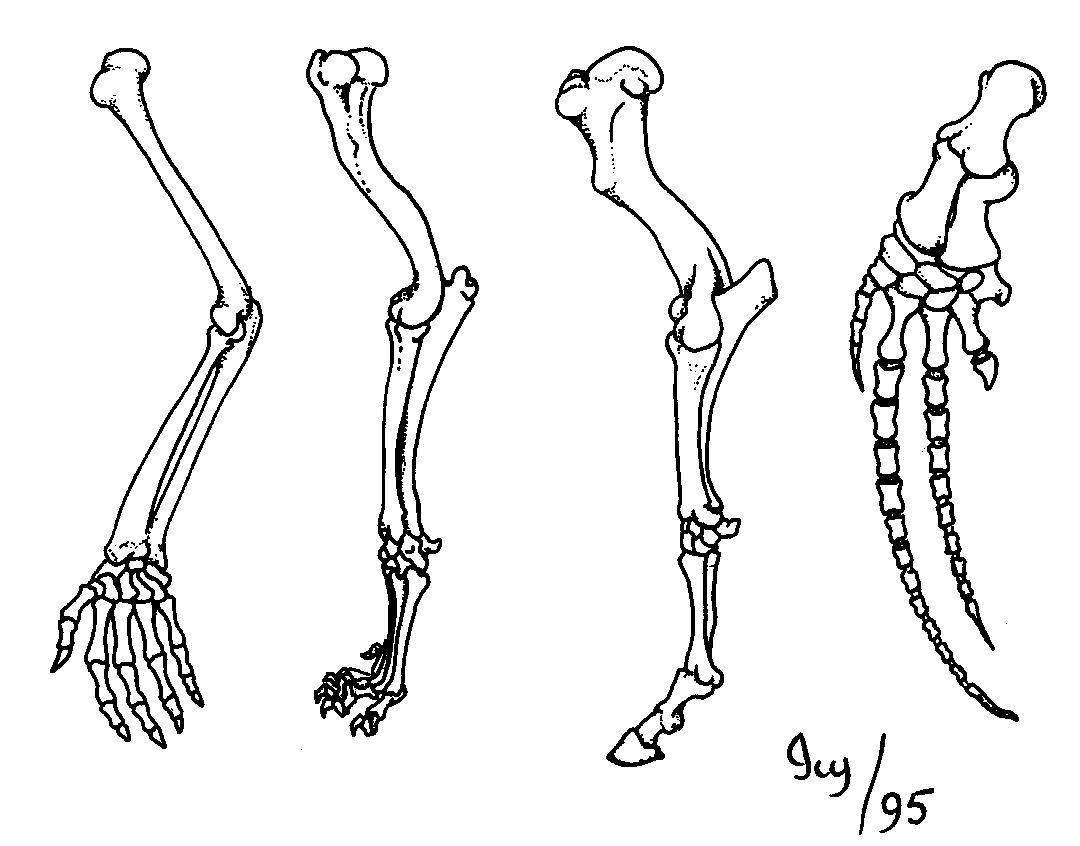



The moth wing and the bat wing are example of structures.
(a)

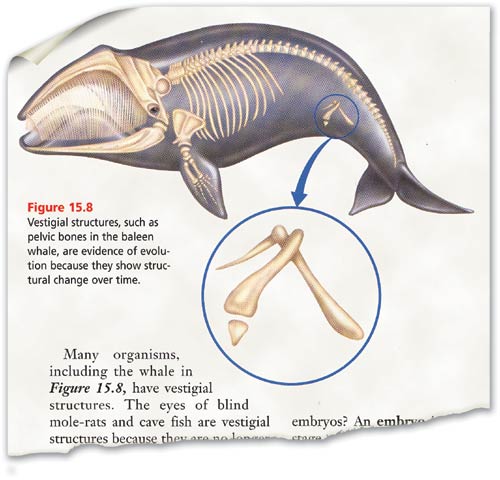
Vestigial structures
structures that perform a similar function but are not similar in origin
remnants of once-important structures that have slowly lost all or most of their function
features found in different organisms that share structural similarities but may have very different functions
preserved remains of an organism
Match the following groups to the picture that describes they type of evidence that leads to common ancestry.
A trace of an ancient organism that has been preserved in rock.
Fossil
Study of the distribution of organisms around the world.
Biogeography
Structures in different species that have the same bone structure / different function.
Homologous Structures
A structure that is present that no longer serves its original purpose.
Vestigial Structures
Study of embryos. The early development the organisms look similar.
Embryology
Periods of stasis, during which organisms do not change in the fossil record, can be accounted for in modern evolutionary theory by understanding that –
the adaptation of plants and animals have not changed very much in the fossil record.
the fossil record has gaps caused by slower than usual rates of sedimentation.
a constant climate gives an advantage to species that stay in one place.
some organisms live for long periods in a habitat with no selective pressure.

The evolution pattern favored by Darwin. He believed evolution occurred in small changes over a long period of time. This is called ____
punctuated equilibrium
divergent evolution
convergent evolution
gradualism

What is biogeography?
The study of the interaction between living organisms and their environment.
The study of the structure and function of cells and their components.
The study of the distribution of species and ecosystems on Earth
Match the following

Fossil Evidence

Homologous Structures

Analogous Structure

Embryology

Biogeochemical Evidence
How do fossils help provide evidence for the Theory of Evolution?
fossils show how all organisms have the exact same DNA
fossils show that organisms had similar physical structures and how they have changed over time
Shows how the different structures of organisms come from different origins
fossils show how organisms may be related through DNA not structures


Mutations are important because they bring about
death of the organism in which they develop
genetic variation needed for a population to evolve
benefits for the individual, not for the population
Hardey-Weinberg equilibrium within a population
Correctly categorize the characteristics.
remanent organs
wisdom teeth
pendactyl limb
similar in form
similar in function
different in function
different in form
convergent evolution
divergent evolution
Correctly match the term with its examples or explanation.
Homologous Structures
similar form, different function
Vestigial Structures
remanent organs, no major function today
Analogous Structures
different form, similar function
Embryology
early developmental stages
Molecular Homologies
DNA & Protein comparison
Select the oldest layer.

Using the diagram - order the relatedness of the most to least following organisms to the mouse.

Donkey

Horse

Chimpanzee

Lamprey
Select the layer that most likely shows the organism that became extinct first.
Identify the species most closely related to dogs.

Carnegie stages are a standardized system of 23 stages used to provide a unified developmental chronology of the vertebrate embryo. The stages are delineated through the development of structures, not by size or the number of days of development, and so the chronology can vary between species.
What type of evidence of evolution uses Carnegie stages?
(a)Select the Transitional Fossil.
Which species’ DNA is most similar to the DNA of the toothed whale?

Which species has an Analogous structure and does not show common ancestry? (a)

Which trait is shared by salamanders, turtles and leopards but not tuna?

