
 Worksheets
UTSN01A - Lesson 1 Refresher Activity
Total questions: 18
Worksheet time: 9mins
ORIGIN OF PHILOSOPHY:
What is the word in Chinese for “study of wisdom?”
哲学 (zhéxué)
科学 (kēxué)
文学 (wénxué)
艺术 (yìshù)
Which of the following doctrines of Socrates emphasizes "knowing what is right means doing what is right?"
Socratic irony
The art of good living
Moral Compass
Values
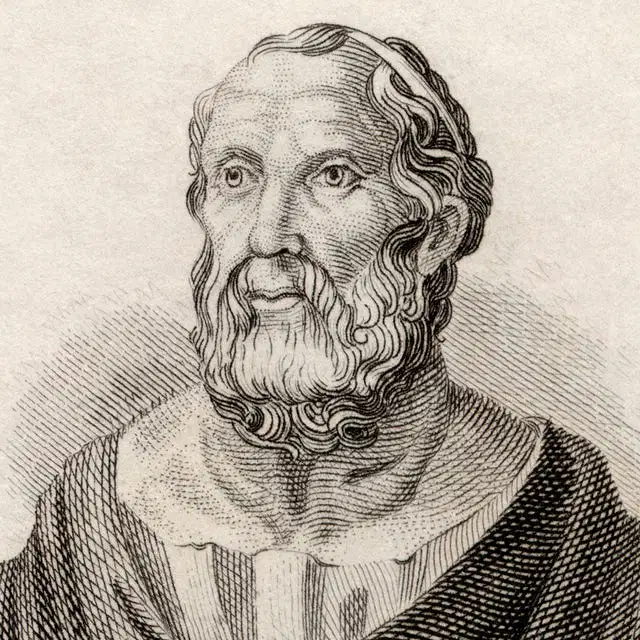
Plato a.k.a "Aristotle" was an Athenian Philosopher who was mentored by Socrates. He was the founder of the first institution for higher learning in the West.
TRUE
FALSE
According to Plato's philosophy, there are 3 parts of the Human. Which of the following part pertains to the driving force of the body that loves honor and victory?
The Body
The Soul
The Spirit
The Mind
THE SELF ACCORDING TO ST. AUGUSTINE:
Which of the following statement is incorrect?
According to St. Augustine, the self is known only through knowing God.
St. Augustine believes that humans have body and soul.
He stated that our body possessed senses such as: imagination, memory, reason, and mind.
All of these are correct.
A French Philosopher, Mathematician and Scientists and known to be the father of modern philosophy. Also famous for his saying "Corgito ergo sum" meaning "I think, therefore I am."
St. Augustine
Rene Descartes
Heraclitus
Cherry Pie Piecache
What did John Locke believe about the human mind and birth?
He believed that our mind at birth contained innate ideas where knowledge is derived from the past life (tabula rasa)
John Locke argued that man must use his own mind and thinking abilities to experiment and develop himself
He contended that ideas are not innate but rather the mind at birth is a blank state
(tabula rasa)
ORIGIN OF PHILOSOPHY:
According to the philosophy of Greeks, there must be three objects of philosophical inquiry:
God, Man, and the World.
TRUE
FALSE

John Locke is best known for his philosophical views in personal identity. According to him, our personal identity or "self" can be found on?
(a)
A Scottish Philosopher who stated that "man has no clear and intelligible idea of self" then concluded that "self" is just a bundle or collection of different perceptions.
Immanuel Kant
St. Augustine
Rene Descartes
David Hume
Immanuel Kant described two basic types of knowledge: a priori and a posteriori. Which of the following best explains the difference between them?
A priori knowledge is what we learn from our personal experiences, like seeing the sky is blue.
A posteriori knowledge is what we know without needing any experience, like 2 + 2 = 4
A posteriori knowledge comes from what we experience through our senses, like knowing fire is hot.
A priori knowledge is what we can know just by thinking or reasoning, like understanding that a straight line is the shortest distance between two points.
A priori knowledge is based on repeated experiments and scientific testing, while a posteriori knowledge is based on feelings and emotions.
posteriori knowledge is something we are born with, and a priori knowledge is something we gain from education and reading books.

It is a practice devised to treat those who are mentally ill through dialogue, developed by one of the most influential thinker of the 20th century.
(Type your answer in ALL CAPS)
(a)
According to Sigmund Freud, which of the following correctly describes the three levels of consciousness?
The three levels are sensory, motor, and reflexive, describing how the brain controls the body.
The three levels are conscious (thoughts we are aware of), subconscious (memories we can easily bring to mind), and unconscious (thoughts and desires hidden from awareness).
The three levels are morality, ego, and id, which refer to parts of personality rather than levels of consciousness.
The three levels are awake, dreaming, and deep sleep, which describe states of sleep rather than consciousness.
It is the the "pleasure principle" of Freud's Psychoanalytic Theory which is the idea that every wishful impulse should be satisfied immediately (regardless of the consequences.)
Ego
Superego
ID
Ego Ideals
Which of the following origins of Philosophy searches for the deepest self of man, where it is being impartial, objective, and critical.
Chinese
Greek
Hindus
TRUE OR FALSE:
According to David Hume, our personality and recognition is like a light bulb that can be switch on and off
TRUE
FALSE
He is a German Philosopher that contributed to mesaphysics - study of existence, "what is out there?"
Immanuel Kant
Heraclitus
Rene Descartes
According to St. Augustine, what are the two opposing forces that every man struggles with?
Love and Hate
Knowledge and Ignorance
Power and Weakness
Good and Evil

