
 Worksheets
Learning Objectives: Lymphatic System
Total questions: 33
Worksheet time: 17mins
The functions of the lymphatic system include:
Maintaining fluid balance, absorbing fats, and defending against pathogens.
Producing red blood cells, storing calcium, and regulating hormones.
Digesting carbohydrates, producing bile, and filtering toxins.
Regulating body temperature, producing insulin, and storing vitamins.
The lymphatic system helps maintain fluid homeostasis by:
Returning excess tissue fluid to the bloodstream
Producing red blood cells
Regulating blood sugar levels
Digesting dietary fats
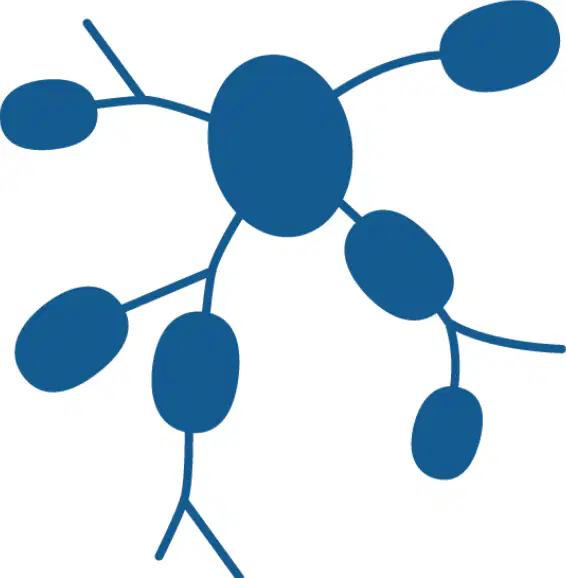
The main structures of the lymphatic system involved in the collection and movement of lymph are:
lymphatic vessels, lymph nodes, and lymphatic ducts
arteries, veins, and capillaries
alveoli, bronchi, and trachea
kidneys, ureters, and bladder
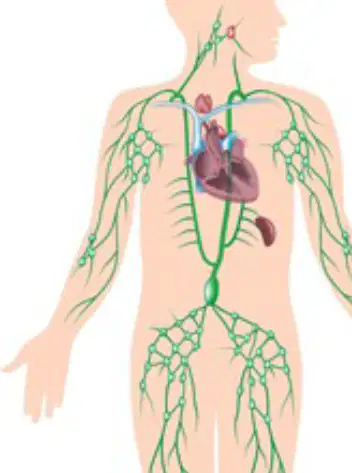
What is the lymphatic system? Fill in the blank: The lymphatic system is a complex network of _______, _______, and _______ that collects fluid from body tissue and returns it to the cardiovascular system.
vessels, tissues, and organs
cells, bones, and muscles
arteries, veins, and capillaries
enzymes, hormones, and nerves

Which of the following is a primary function of the lymphatic system?
Produces red blood cells
Maintains fluid homeostasis by returning escaped fluid back into the bloodstream
Regulates body temperature
Produces digestive enzymes

The lymphatic system creates part of the body’s immune system that helps defend against pathogens.
True
False
Fill in the blank: The lymphatic system transports dietary fats from the _______ system to the body.
digestive
respiratory
nervous
urinary
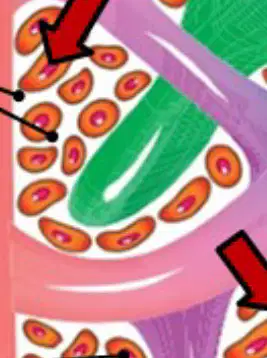
According to the passage and diagram, what is the fluid called that diffuses from the bloodstream into the body's tissue?
Plasma
Interstitial fluid
Lymph
Cytoplasm
Fill in the blank: The lymphatic system collects the remaining fluid in the tissue and returns it to the ________, thus maintaining fluid homeostasis.
bloodstream
lymph nodes
lungs
intestines
Most of the fluid that diffuses from the bloodstream into the tissue returns to the bloodstream.
True
False
What is the main function of interstitial fluid as described in the passage?
To deliver oxygen and nutrients and collect waste
To produce red blood cells
To digest food
To regulate body temperature
If the lymphatic system did not collect the remaining fluid in the tissue, what could happen?
The tissue could swell due to fluid buildup.
The tissue would become dehydrated.
The blood would stop circulating.
The tissue would become infected immediately.
Fill in the blank: ______ is the interstitial fluid that enters the lymphatic system.
Lymph
Plasma
Serum
Chyme
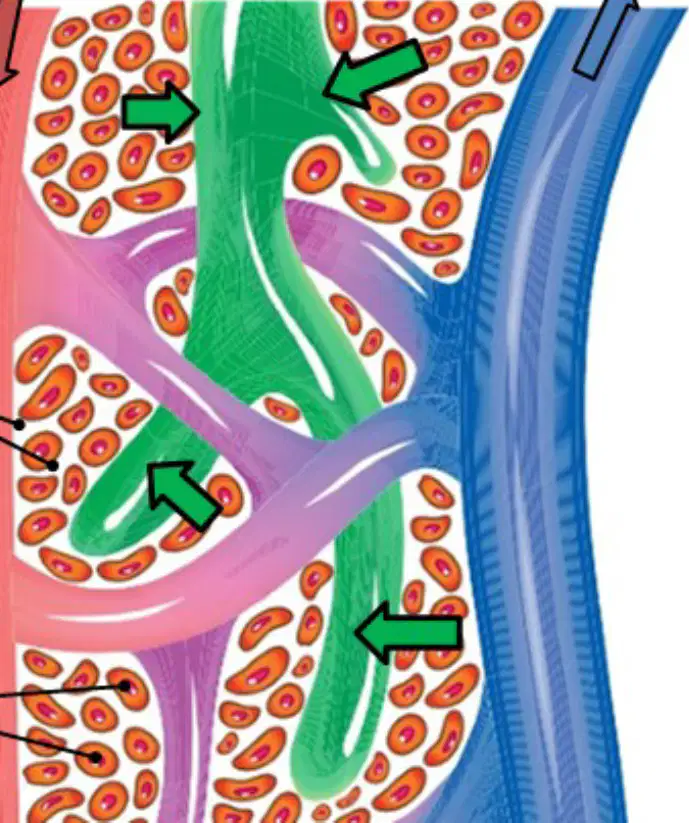
What does the diagram illustrate about the lymphatic system?
The flow of blood in arteries
The process of interstitial fluid entering the lymphatic system
The structure of tissue cells only
The movement of oxygen in the body
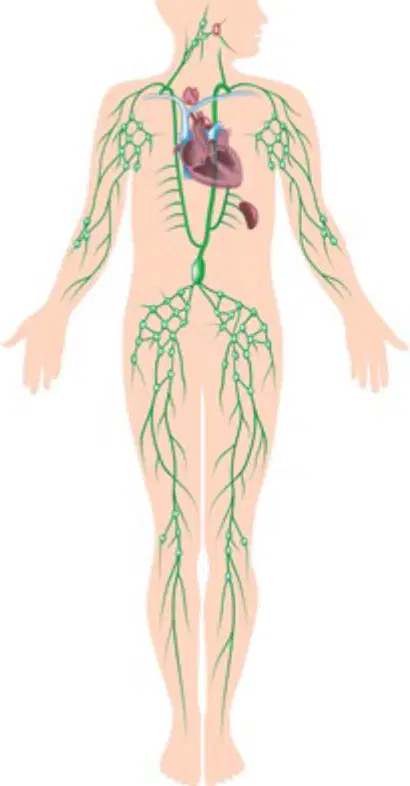
Fill in the blank: The first step in the pathway of lymph back to the bloodstream is _________?
Lymphatic capillaries
Lymph nodes
Thoracic duct
Subclavian vein
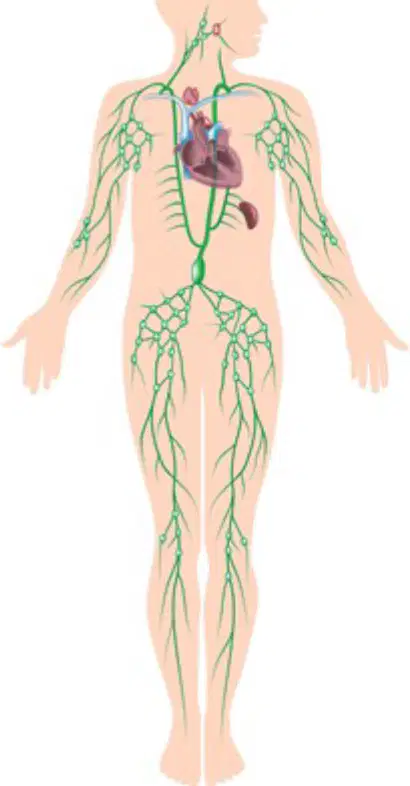
Fill in the blank: After lymphatic capillaries, lymph flows into the _________
Lymphatic vessels
Veins
Arteries
Alveoli
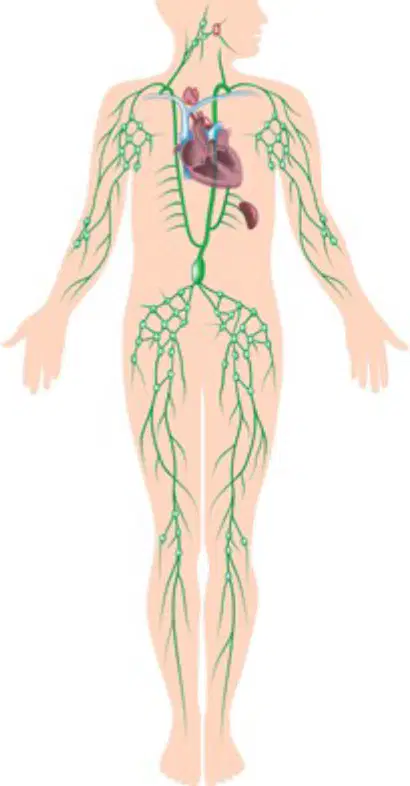
Fill in the blank: After lymphatic vessels, lymph flows into the _________
Lymphatic trunks
Lymph nodes
Blood capillaries
Veins
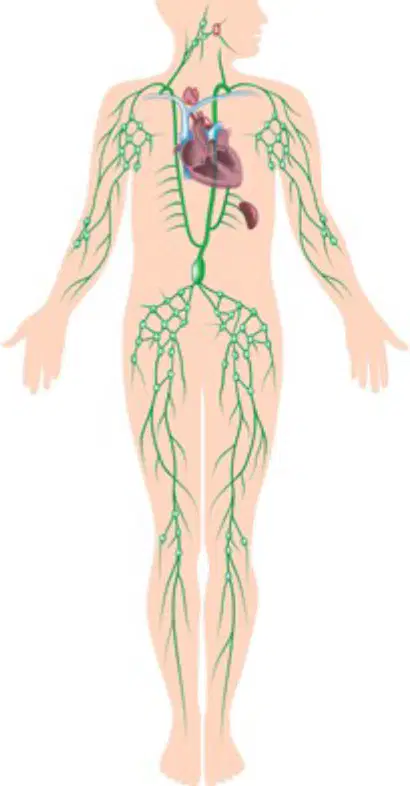
Fill in the blank: After lymphatic trunks, lymph passes through the _________?
Lymph nodes
Arteries
Veins
Capillaries
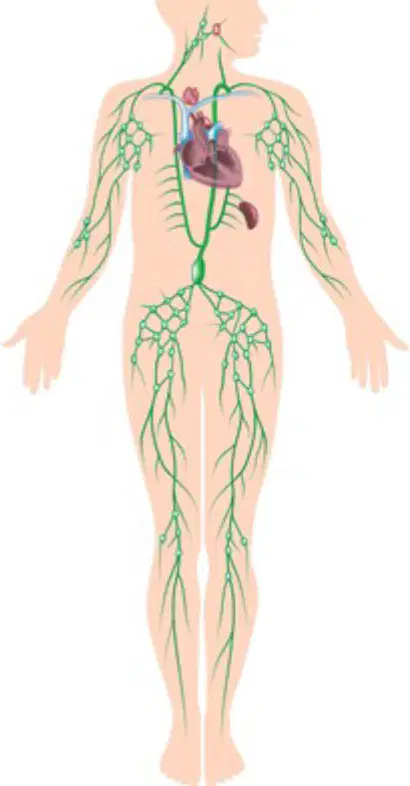
Fill in the blank: The final step in the pathway of lymph back to the bloodstream is the _________?
Lymphatic ducts
Lymph nodes
Spleen
Thymus

What are lymphatic capillaries?
Tubular-like structures that carry lymph
Tiny, thin-walled membranes that allow interstitial fluid to flow into the lymphatic system
Where the largest lymphatic vessels converge to drain sizable areas of the body
Blood vessels that carry oxygen

Fill in the blank: Lymphatic vessels are ________ that carry lymph, similar to blood vessels.
tubular-like structures
solid masses
gaseous chambers
flat membranes
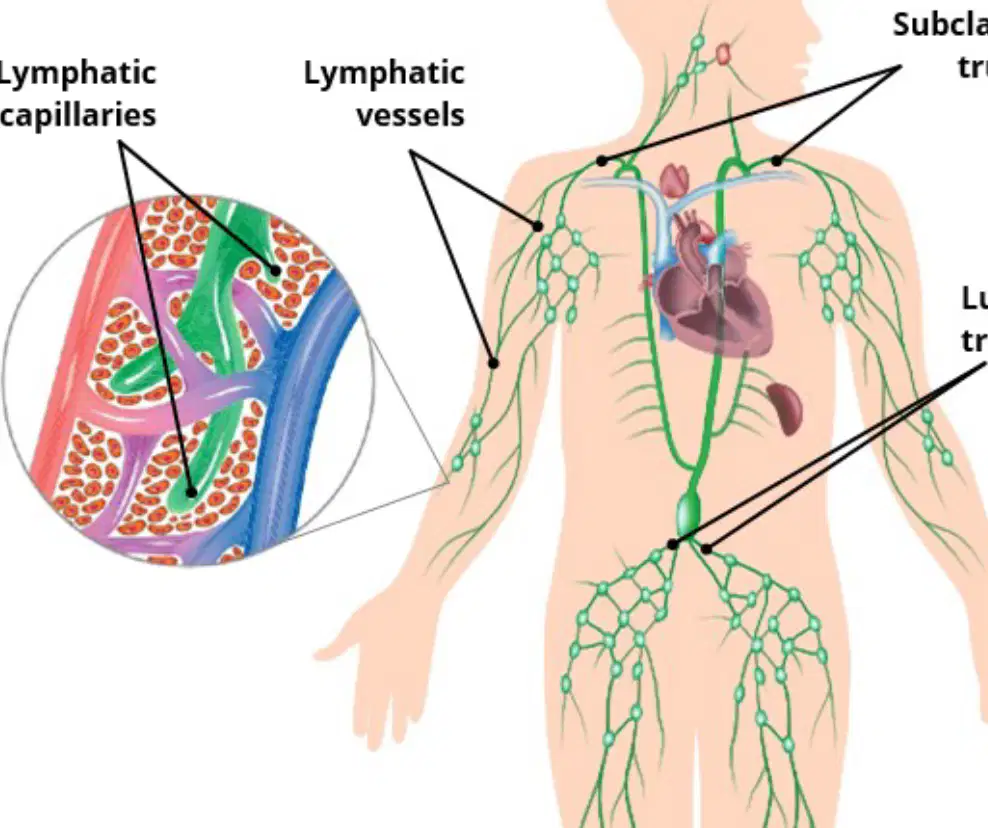
Lymphatic trunks are where the largest lymphatic vessels converge to drain ________ areas of the body.
sizable
minor
isolated
superficial
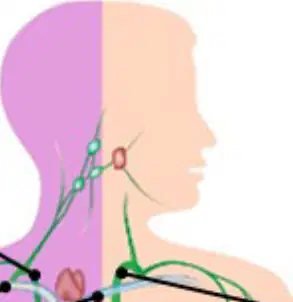
What does the right lymphatic duct collect lymph from?
The right upper quadrant of the body
The left upper quadrant of the body
The lower quadrants of the body
The entire body

The thoracic duct collects lymph from which parts of the body?
The rest of the body, the left upper, left lower, and right lower quadrants.
Only the right upper quadrant of the body.
Only the lower limbs and abdomen.
Only the left lower quadrant of the body.
The lymphatic system has no ______ to move the lymph.
pump
valve
filter
muscle
Which of the following aids in pushing lymph through the lymphatic system?
Blood pressure
Muscle contractions
Gravity
Nerve impulses
What is the function of one-way valves in the lymphatic vessels?
To increase blood pressure
To prevent the backflow of lymph
To absorb nutrients
To filter blood
Lymph flows in one direction; ______. Fill in the blank.
toward the heart
away from the heart
toward the lungs
toward the liver
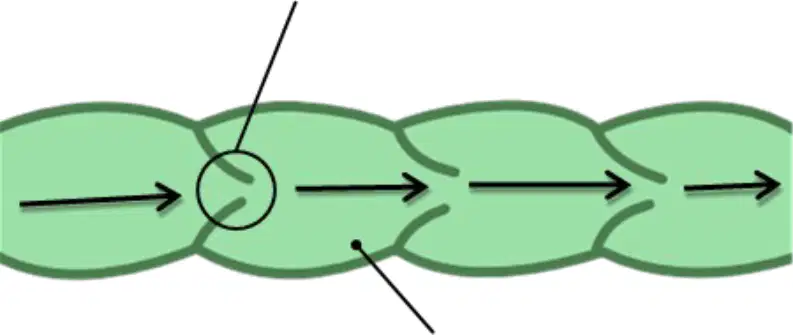
What is the direction of lymph flow in the lymphatic vessel?
Away from the heart
Toward the heart

What is a lymph node? Fill in the blank: A lymph node is a small bean-shaped cluster of _______ tissue located along the lymphatic pathway throughout the body.
lymphatic
muscular
epithelial
nervous
Which of the following is a function of lymph nodes?
Produce red blood cells
Filter impurities such as dead and damaged white blood cells, bacteria, and cancer cells
Store fat
Regulate body temperature
Lymph nodes act as a home to which type of special white blood cells that originate in bone marrow?
Erythrocytes
Lymphocytes
Platelets
Neutrophils
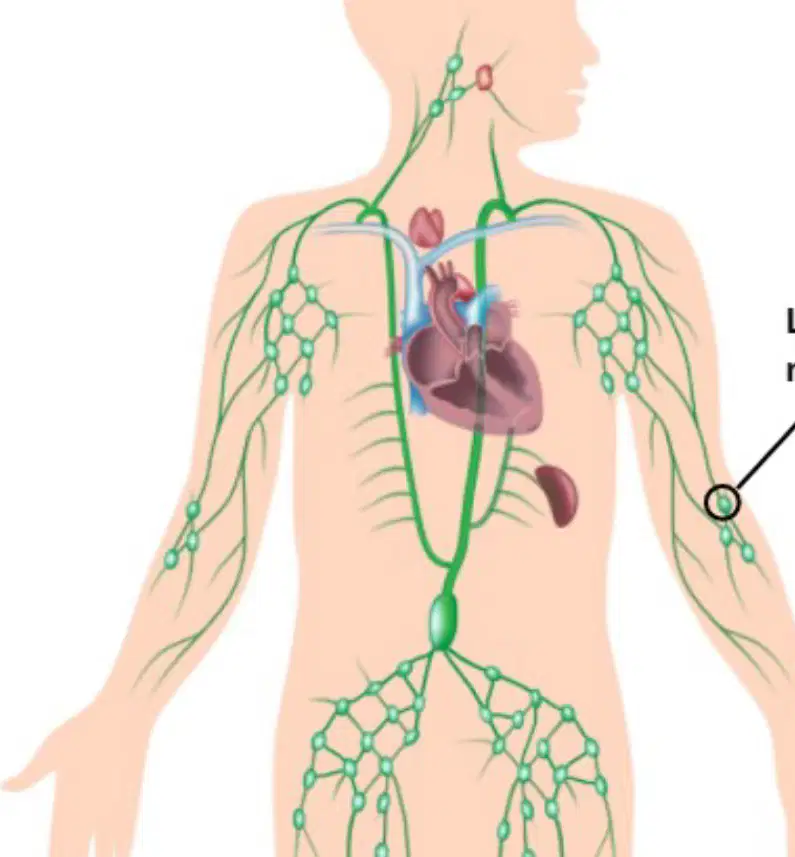
What structure is labeled as 'Lymph node'?
A small bean-shaped cluster of lymphatic tissue located along the lymphatic pathway.
A tubular structure that carries blood away from the heart.
A flat, muscular organ involved in respiration.
A gland that produces insulin and digestive enzymes.

