
 Worksheets
QUIZ ON CLINICAL LAB SAFETY AND BASIC FIRST AID
Total questions: 20
Worksheet time: 12mins
In the laboratory, you see a blue circular sign showing a person wearing safety goggles. What does this sign indicate?
Use goggle when handling corrosive liquids
Eye wash station location
Mandatory use of protective eyewear
Recommended use of face mask
Which GHS pictogram depicts a corrosive hazard?


A colleague spills a strong acid on her hand. What should you do first?
Rinse under running water for at least 15 minutes
Neutralize acid with a base chemical
Cover the hand with gause and apply ointment
Call emergency services immediately
What is the first step you should take before working with a reagent in the laboratory?
Read the Safety Data Sheet
Put on gloves
Check the expiry date
Ask a coworker
Which GHS pictogram indicates a substance that can cause skin irritation?
Exclamation mark
Skull and crossbones
Flame
Corrosion
Where should you dispose of used needles in a clinical laboratory?
Sharps bin
Regular trash bin
Recycling bin
Chemical waste container
What does the hierarchy of controls suggest you use first to manage a hazard?
Elimination
Personal protective equipment
Administrative controls
Substitution
What is the main purpose of a lab coat?
To protect your clothes and skin
To show rank
To look professional
To keep you warm
In the GHS system, which pictogram shows a gas under pressure?
Gas cylinder
Oxidizer
Environment
Health hazard
Which class on a fire extinguisher label indicates it is suitable for electrical fires?
1
II
C
5
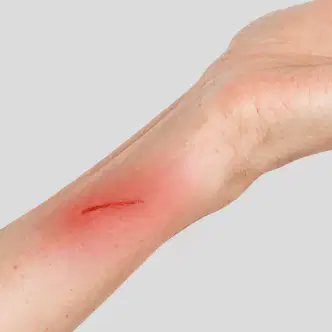
What basic first aid action should you perform for minor bleeding?
Apply direct pressure
Leave it to air dry
Use ice pack only
Elevate the leg
Which symptom indicates someone may be going to shock?
Pale, clammy skin
Warm, dry skin
Slow heart rate
Clear breathing
Where do you find detailed hazard and precautionary information about chemicals?
Safety data sheet
Product catalog
Manufacturer's website
Lab notebook
What does the GHS pictogram with a tree and fish represent?
Environmental hazard
Flammable liquids
Acute toxicity
Corrosive damage
A lab worker notices a small acid spill on the bench. Which step from the hierarchy of controls is most appropriate to remove this hazard permanently?
Substitute the acid with a less hazard one
Use a face shield
Notify the supervisor
Wear acid-resistant gloves
You find a colleague choking on a piece of plastic. What is the immediate first aid action?
Perform the Heimilich maneuver
Call emergency services only
Give them water to drink
Slap their back lightly
After a large blood spill, what is the best sequence of actions to decontaminate the area?
Put on PPE, clean with disinfectant, discard waste materials
Wipe with bleach, put on gloves, dispose waste
Discard materials, put on PPE, mop with water
Call maintenance, leave the area, resume work later
A new chemical has no pictogram for long-term health effects, but labels show “suspected carcinogen.” How should you protect yourself according to the hierarchy of controls if it is a necessary component of a lab procedure?
Use PPE and work in a fume hood
Eliminate the chemical
Rely on administrative controls
Substitute it with water
Your lab has repeated instances of contamination during PCR setup. Which administrative control could best reduce errors?
Train staff on contamination prevention and enforce protocols
Replace primers
Install UV decontamination light with timer
Provide new pipettes
A coworker suffers a chemical burn on the hand. Which first aid step should you take?
Rinse with running water for at least 10-15 minutes
Cover the burned hand with dry gauze
Apply cold compress directly on the hand with ice
Let it air dry

