
 Worksheets
Intro to Emergency Services Review
Total questions: 23
Worksheet time: 12mins
Name
Class
Date
1.
The Emergency Medical Services is a coordinated network of professionals whose function is to provide a variety of medical services to people in need of _____________ care.
a)
special
b)
unique
c)
emergency
d)
personal
2.
Who is the father of EMS?
a)
Dr. Joseph "Deke" Farrington
b)
Dr. William Demento
c)
Dr. Tucker Leigh
d)
Dr. Dre
3.
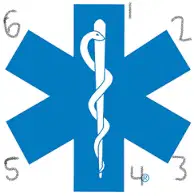
What does #1 of the six points represent?
a)
Detection
b)
Care in Transit
c)
Response
d)
Reporting
e)
On-scene Care
4.

What does #2 of the six points represent?
a)
Response
b)
Transfer to Definitive Care
c)
Care in Transit
d)
Reporting
e)
Detection
5.
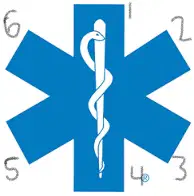
What does #3 of the six points represent?
a)
Reporting
b)
Care in Transit
c)
Response
d)
Detection
e)
On-scene Care
6.
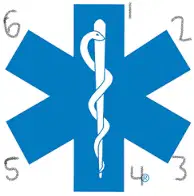
What does #4 of the six points represent?
a)
On-scene Care
b)
Care in Transit
c)
Response
d)
Reporting
e)
Detection
7.
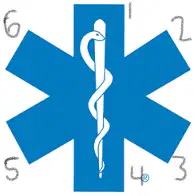
What does #5 of the six points represent?
a)
Care in Transit
b)
Response
c)
Reporting
d)
Detection
e)
On-scene Care
8.
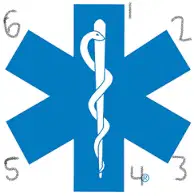
What does #6 of the six points represent?
a)
Transfer to Definitive Care
b)
Care in Transit
c)
Response
d)
Reporting
e)
Detection
9.
What does the Central Staff with the Serpent represent?
a)
medicine and healing
b)
first aid and emergencies
c)
a snake and stick
d)
Firemen and EMT's
10.
The order of the chain of survival included Early Advanced Care, Early CPR, Early Defibrillation, and Early Access.
a)
True
b)
False
11.
The American Red Cross was the first agency to take aid to the public
a)
True
b)
False
12.
The American Red Cross taught CPR and first aid to lay persons in the late 1950's and 60's
a)
True
b)
False
13.
The National Highway Safety Act encouraged states to begin organized EMS programs.
a)
True
b)
False
14.
Two voices for EMS Providers are the National Association of Emergency Medical Technicians (NAEMT) and The National Registry of EMT's
a)
True
b)
False
15.
Which is not a component of an EMS System
a)
Personnel
b)
Training
c)
Communication
d)
None of the above
16.
What is the universal way to have access to EMS
a)
Dial 311
b)
yell for help
c)
Dial 911
d)
All of the above
17.
The order of Levels of Training for EMS are as follows: Paramedic, Basic, First Responder, Intermediate
a)
True
b)
False
18.
An Emergency Medical Technician-- Basic (EMT-B) is the most common EMS position.
a)
True
b)
False
19.
An Emergency Medical Technician-- Paramedic (EMT-P) is allowed to perform all of the duties of a EMT-B, EMT-I, as well as a comprehensive patient assessment, advanced airway management, intravenous access, and expanded medication administration.
a)
True
b)
False
20.
An Emergency Medical Technician-- Intermediate (EMT-I) can start IV's but cannot administer drugs.
a)
True
b)
False
21.
Which of the following is a primary goal of Emergency Medical Services (EMS)?
a)
To conduct medical research
b)
To prescribe long-term medications
c)
To perform surgeries
d)
To provide emergency care and transport
22.
Which organization is responsible for certifying EMTs at the national level?
a)
National Registry of EMTs
b)
World Health Organization
c)
American Heart Association
d)
Red Cross
23.
Which of the following is NOT a typical responsibility of an EMT-Basic?
a)
Performing CPR
b)
Administering advanced cardiac medications
c)
Providing basic airway management
d)
Transporting patients to the hospital
100 %

