
 Worksheets
Veterinary surgical tools
Total questions: 35
Worksheet time: 18mins
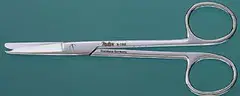
-Used to remove stitches following routine surgery, wound repair etc. -Note hooked portion of scissors for ease of removal of sutures -Length = 4 ½ inches long
Littauer Suture Removal Scissors
Wire Cutting Scissors
Spencer Suture Removal Scissors
Lister Bandage Scissors
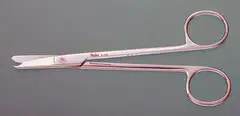
-suture removal -Typically about 3 ½ inches long
Spencer Suture Removal Scissors
Littauer Suture Removal Scissors
Lister Bandage Scissors
Metzenbaum Scissors
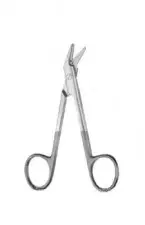
-Have short, thick jaws with serrated edges
Operating Scissors
Wire Cutting Scissors
Mayo Dissecting Scissors
Lister Bandage Scissors

-Used for cutting bandage material -Blunt tipped end slides under bandaging
Operating Scissors
Wire Cutting Scissors
Metzenbaum Scissors
Lister Bandage Scissors
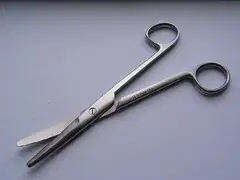
-Heavy scissors -Blades may be straight or curved -Used for cutting tough tissue such as heavy connective tissue
Mayo Dissecting Scissors
Operating Scissors
Wire Cutting Scissors
Metzenbaum Scissors

-Blade is straight or curved -Used for cutting delicate tissues such as fat or thin muscle
Operating Scissors
Wire Cutting Scissors
Metzenbaum Scissors
Lister Bandage Scissors

1. Sharp-Blunt 2. Blunt-Blunt 3. Sharp-Sharp
Operating Scissors
Wire Cutting Scissors
Metzenbaum Scissors
Lister Bandage Scissors

Used to hold curved suture needles
Mayo Dissecting Scissors
Rochester Pean Forceps
Mayo-Hegar Needle Drivers
Olsen-Hegar Needle Drivers
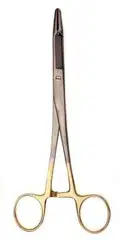
-Used to hold curved suture needles -Scissors built in
Rochester Pean Forceps
Lister Bandage Scissors
Olsen-Hegar Needle Drivers
Mayo-Hegar Needle Drivers

-Transverse serrations -Serrations only cover half of the jaws (important distinguishing feature from other hemostatic forceps) -Jaws can be straight or curved
Senn Retractors
Kelly Hemostats
Gelpi Retractors
Crile Hemostats
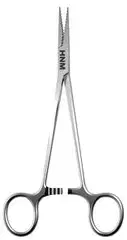
-Transverse serrations -Serrations cover entire jaw -Jaws can be straight or curved -Length = 5 ½ inches
Kelly Hemostats
Hartman Mosquito Hemostats
Crile Hemostats
Halsted Mosquito Hemostats
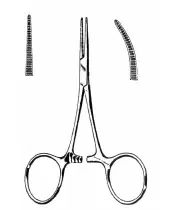
-Length = 3 ½ inches
Halsted Mosquito Hemostats
Hartman Mosquito Hemostats
Kelly Hemostats
Crile Hemostats

-Transverse serrations cover entire jaw -Jaws can be straight or curved -Used on larger blood vessels than mosquito hemostats
Crile Hemostats
Senn Retractors
Gelpi Retractors
Kelly Hemostats
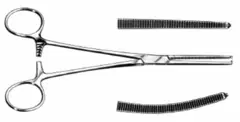
have teeth at the end -Used to clamp blood vessels or to grasp tissue -Most commonly used in orthopedic or large animal surgery -May be used to grasp the claw during an onychectomy
Transfer Forceps
Rochester-Ochsner Forceps
Rochester Pean Forceps
Rochester-Carmalt Forceps

-Longitudinal serrations -Used for clamping tissue containing blood vessels (e.g. body of uterus during an ovariohysterectomy) -Curved or straight -Considered "a-traumatic"
Rochester-Ochsner Forceps
Rochester-Carmalt Forceps
Rochester Pean Forceps
Transfer Forceps
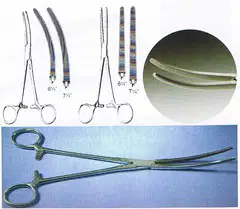
-large -Used for clamping tissue bundles and large blood vessels
Transfer Forceps
Rochester-Ochsner Forceps
Rochester-Carmalt Forceps
Rochester Pean Forceps
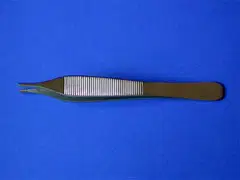
-Designed to hold and easily release tissue (similar to tweezers) -Multiple intermeshing teeth on jaws -Often used to grasp delicate tissue
Allis Tissue Forceps
Brown-Adson Tissue Forceps
Adson Tissue Forceps
Rat Tooth Tissue Forceps

Have a single "rat tooth" Don't confuse with rat tooth forceps Commonly used to hold skin when suturing
Adson Tissue Forceps
Rat Tooth Tissue Forceps
Allis Tissue Forceps
Brown-Adson Tissue Forceps

Different series of teeth Used for grasping skin and fascia
Rat Tooth Tissue Forceps
Brown-Adson Tissue Forceps
Adson Tissue Forceps
Allis Tissue Forceps

Long, narrow jaws with multiple small teeth Atraumatic forceps used for handling blood vessels Used for vascular surgery
DeBakey Vascular Tissue Forceps
Allis Tissue Forceps
Brown-Adson Tissue Forceps
Rat Tooth Tissue Forceps
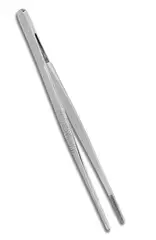
Used for handling dressings (e.g. sterile gauze for a wound) Jaws have no teeth; just transverse serrations
Dressing Forceps
Allis Tissue Forceps
Adson Tissue Forceps
Transfer Forceps
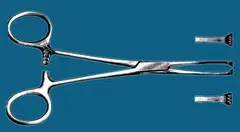
Multiple teeth in the jaws Used to grasp intestine, fascia and skin Also used for retraction (can clamp to skin on both sides of the abdominal incision for better access to abdomen)
Rat Tooth Tissue Forceps
Allis Tissue Forceps
Brown-Adson Tissue Forceps
Adson Tissue Forceps
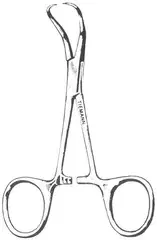
Secure drapes or towels to a patient's skin Sharp pointed jaws Autoclave in closed position
Rochester-Carmalt Forceps
Backhaus Towel Clamp/Forceps
Rochester Pean Forceps
Jones Towel Clamp/Forceps
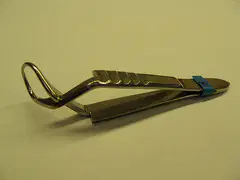
No ratchets - spring motion allows instrument to be opened and closed Instrument always in closed position
Jones Towel Clamp/Forceps
Backhaus Towel Clamp/Forceps
Rochester Pean Forceps
Rochester-Carmalt Forceps
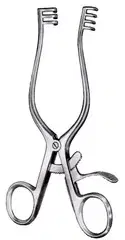
Self-retaining Used most commonly for muscle retraction in orthopedic surgeries Pronunciation
Weitlaner Retractors
Senn Retractors
Gelpi Retractors
Balfour Retractors
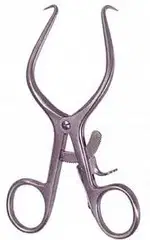
Self-retaining Used most commonly for muscle retraction in orthopedic surgeries
Senn Retractors
Weitlaner Retractors
Gelpi Retractors
Balfour Retractors
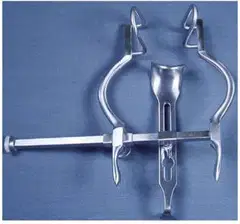
Self-retaining Hold abdominal wall open for surgical procedures
Gelpi Retractors
Balfour Retractors
Senn Retractors
Weitlaner Retractors
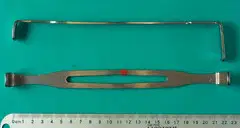
Hand-held (i.e. not self retaining) Need a surgical assistant to maintain position of these retractors Used to retract skin, fat or muscle
Gelpi Retractors
Senn Retractors
Army-Navy Retractors
Weitlaner Retractors
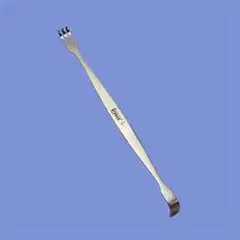
Hand-held (i.e. not self retaining) Need a surgical assistant to maintain position of these retractors Used to retract skin, fat or muscle
Balfour Retractors
Senn Retractors
Gelpi Retractors
Weitlaner Retractors
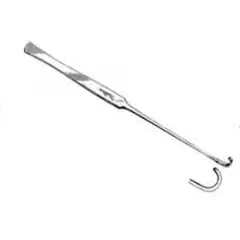
Used to retrieve each uterine horn during an ovariohysterectomy Note - different name in instrument book Snook's Ovariectomy
Rochester-Ochsner Forceps
Balfour Retractors
Senn Retractors
Snook Ovariohysterectomy Hook
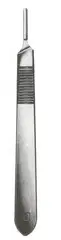
Used primarily for small animals
Gelpi Retractors
Scalpel Handle (#4)
Crile Hemostats
Scalpel Handle (#3)
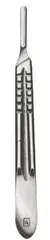
Used primarily for large animals
Scalpel Handle (#3)
Kelly Hemostats
Scalpel Handle (#4)
Crile Hemostats
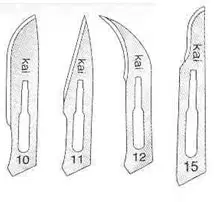
Most commonly used are sized 10, 11, 12, and 15 Fit on a #3 scalpel handle Some examples of use: 10 - routine surgeries & skin scrapings, castrations, spays 11 - Stab incisions (opening abscesses, creating opening for drains) 12 - onychectomies 15 - routine surgeries; smaller animals, (cat rats etc)
Scalpel Blades - Small Animal
Scalpel Blades - Large Animal
Scalpel Handle (#3)
Scalpel Handle (#4)
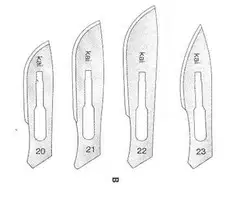
Most commonly used are sizes 20, 21, 22 and 23 Fit on a #4 scalpel handle
Scalpel Handle (#3)
Scalpel Blades - Large Animal
Scalpel Blades - Small Animal
Scalpel Handle (#4)
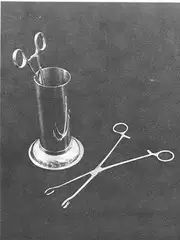
-sponge forceps or hemostatic forceps in a weighted cylinder -Used to transfer items from cold sterilization trays to the sterile field -Forceps sit in "cold sterile solution"
Allis Tissue Forceps
Transfer Forceps
Dressing Forceps
Adson Tissue Forceps

