
Font size
 Worksheets
American Revolution Review
Total questions: 45
Worksheet time: 34mins
The French and Indian War was a war between _______ and _______.
Great Britain and France
Great Britain and Spain
Great Britain and the colonists
Spain and France
The French and Indian War was over the ____________.
Boston Harbor
Control of the 13 colonies
Ohio River Valley
Who won the French and Indian War?
As a result of the French and Indian War, Great Britain was in a lot of (a) .
To earn money King George III makes the colonists pay ____ _____.
(a)
Colonists were not allowed to _______ west of the Appalachian Mountains.
move
Colonists had to let British soldiers stay in their _______.
Colonists had to let British soldiers (a) their food.
A law that made colonists pay a tax for a (a) that was on certain paper goods.
The colonists used this slogan, “____________________”, because they had no voice in the British Parliament.
What was one way the Sons of Liberty showed they disagreed with (didn't like) the new taxes from Great Britain?
They organized protests.
They talked to Parliament.
They started a newspaper.
They made products for colonists.
What was the most important way the Daughters of Liberty helped the Revolution?
They fought in battles.
They traveled to find cheaper supplies.
They held meetings with British officials.
They organized boycotts of British goods.
The Boston Massacre was when British soldiers fired their weapons into a crowd of (a) , killing five people.
The Boston Massacre caused more colonists to _____ ___ against British rule.
speak out

Who created this engraving of the Boston Massacre?

What did the Sons of Liberty do during the Boston Tea Party?
They made "Liberty Tea" and sold it to colonists.
They secretly met with British officials to discuss the tea tax.
They signed a petition asking the King to remove the tea tax.
They dressed up and dumped British tea into the Boston Harbor.
Which group is mostly responsible for the protests against Great Britain and taxes?
Sons of Liberty

Who wrote the Declaration of Independence?
The Declaration of Independence listed all of the ___________ (complaints) colonists had against King George III.
The Declaration of Independence was a "break-up" letter to _____ _______ from the colonists.
(a)
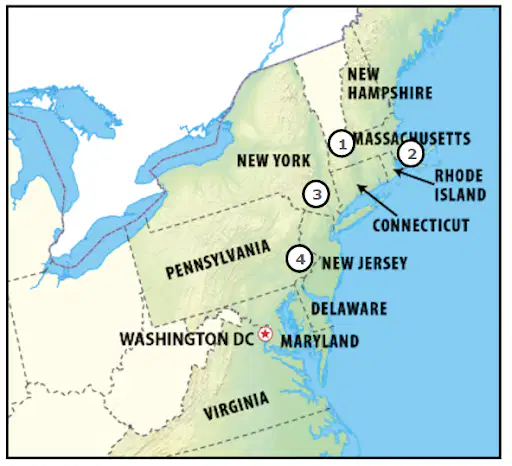
Use the map to answer the questions.
Which number shows the location of Boston?
Use the map to answer the questions.
Which number shows the location of Philadelphia?
What was the goal of the Declaration of Independence?
To thank King George III
To break away from England
To ask King George III to give them more taxes
To pick a representative for British Parliament
Which event was the first to cause Great Britain to increase taxes on colonists?
Boston Massacre
Boston Tea Party
French and Indian War
Sons of Liberty protests
Who created a famous engraving (drawing) of the Boston Massacre?

Who attacked tax collectors to protest high taxes?
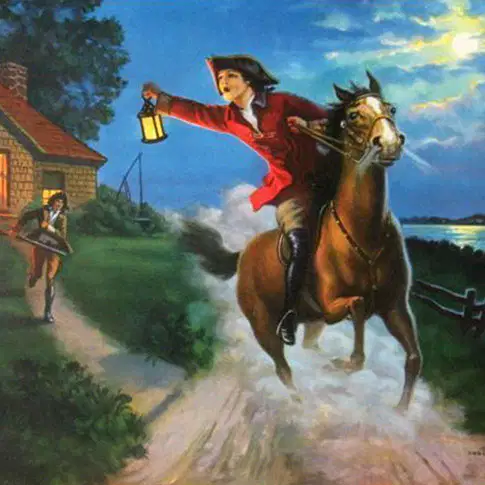
What was Paul Revere’s Ride?
An event in which Revere and others warned the colonists that the British were coming.

Lexington and Concord were the (a) battles of the American Revolution.

What role did the Black Regiments play during the American Revolution?
They served as soldiers in the Continental Army during the American Revolution.

This battle helped convince France to support the Continental army. It was a turning point in the war.

This is the last battle of the American Revolution where the French and Continental (American) armies defeated the British.
Battle of Yorktown

Who was Benedict Arnold?
Benedict Arnold was an Continental (American) general who became a traitor by giving information to the British.
During this battle Americans hid behind trees and attacked the British.
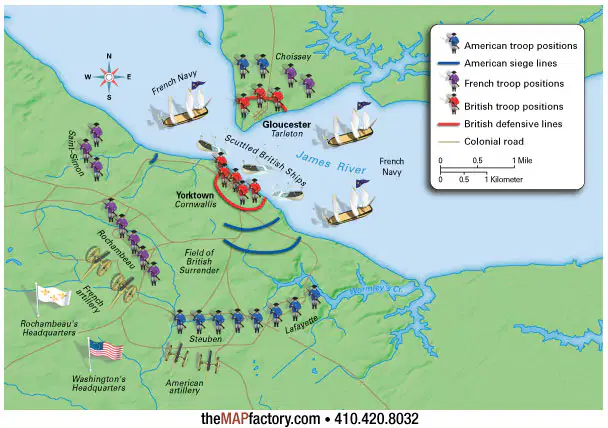
During this battle the Continental Army (Americans) and French surrounded the British on land and water.
Battle of Yorktown

When countries exchange goods and services for money or for other goods and services.
Price Incentive
Voluntary Exchange
Opportunity Cost
Trade
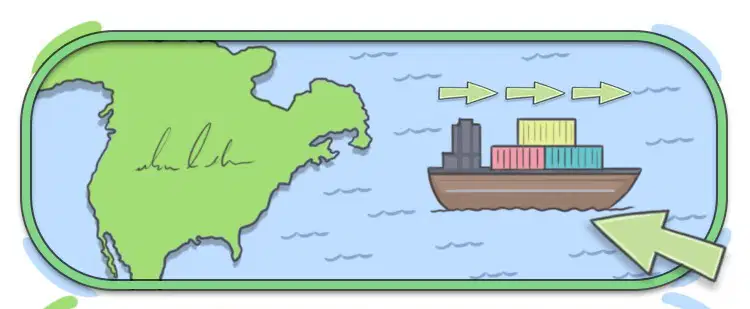
A good sold and sent to another country.
Specialization
Opportunity Costs
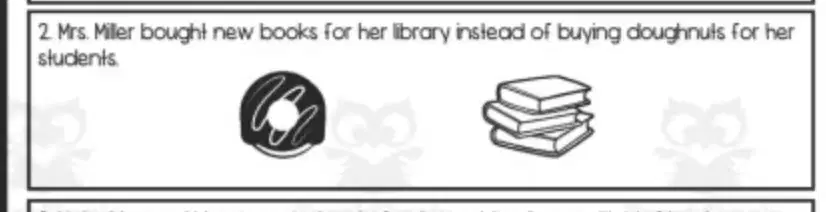
What is given up when making a choice.
Specialization
Trade
Import

When producers focus on making specific goods or performing certain services well.
Export
Import
Price Incentive

What happened during the Winter at Valley Forge?
The Continental Army faced harsh winter, had little to no food, and received training to become better soldiers
The army received lots of supplies and warm weather during the winter.
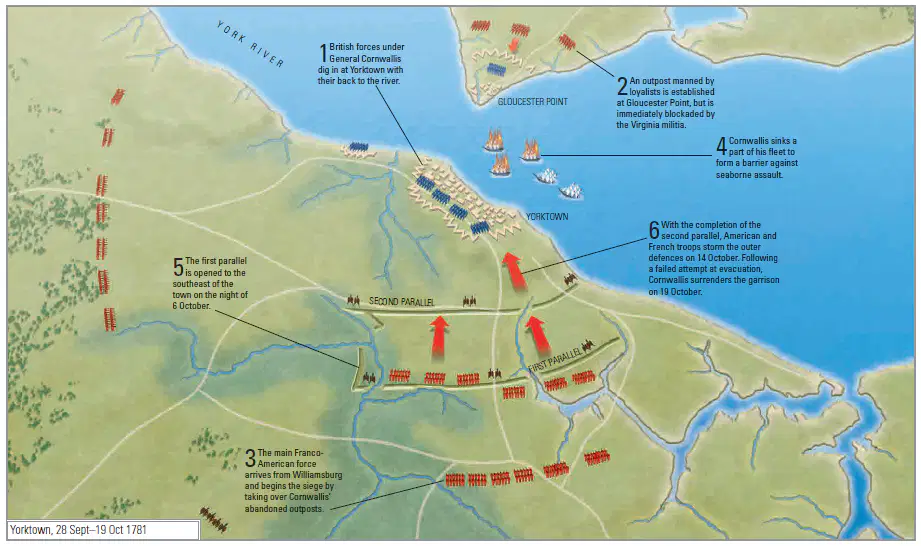
How did the geography and location of the Battle of Yorktown benefit the Continental army?
Colonists were better swimmers than the British soldiers.
Colonists had much better weapons than the British soldiers.
Colonists were more familiar with (knew) the area than the British soldiers.
Colonists were more experienced with traveling through ice and snow than the British soldiers.
A blacksmith in the colonies decided to focus only on making horseshoes because many people needed them for their horses. This is an example of ___.
price incentive
opportunity costs
specialization
trade
A colonist decided to spend his time making clothes for his family instead of finding weapons for his family. Not finding the weapons are an example of ___.
specialization
opportunity cost
trade
voluntary exchange
Before the war, British merchants sold tea at a lower price, and more colonists bought it. The lower (cheaper) price was a ___ for the colonists.
opportunity cost
price incentive
specialization
import

During these battles colonists hid in different places and surprised the British when attacking.
Battles of Lexington and Concord

During this battle colonists hid behind trees while British got stuck in mud. They also would chop down trees to block British soliders.

