Font size
 Worksheets
Physical Science: Ch 7: Heat Transfer and Thermodynamics
Total questions: 51
Worksheet time: 1hrs 17mins
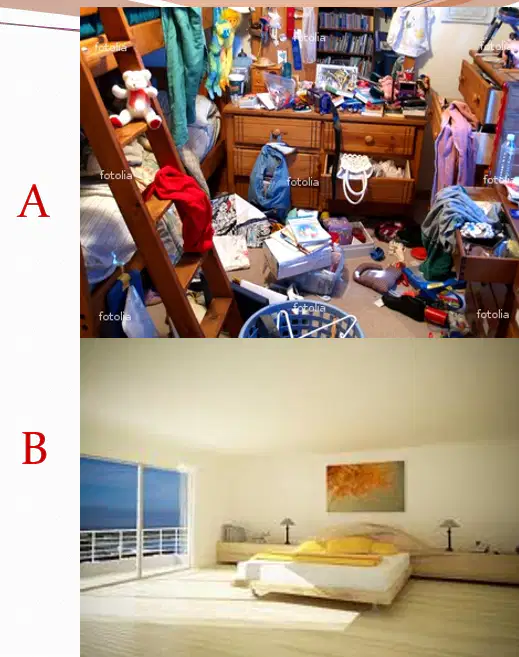
Which room has more entropy?
(In a very general idea of entropy, but we are building up to a more physics-specific definition of entropy).
A
B
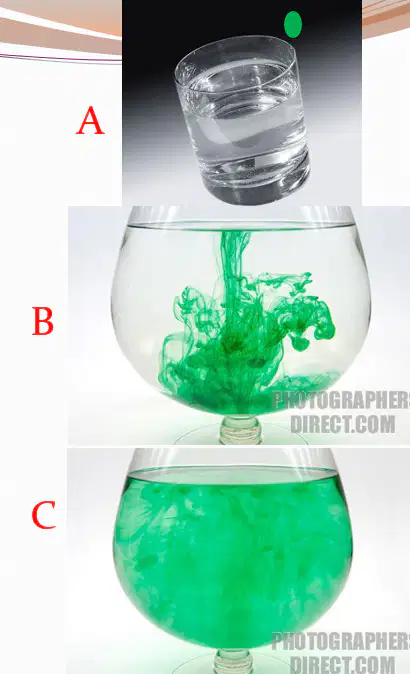
1) Which has the most entropy?
2) The least?
3) Has the amount of green dye increased? Y or N
4) Has the amount of green dye decreased? Y or N
1: C
2: A
3: N
4: N
1: A
2: C
3: N
4: N
1: C
2: A
3: Y
4: Y
1: C
2: A
3: Y
4: N
1: B
2: A
3: N
4: N
1) Which represents the end of the universe?
2) The beginning?
3) The middle or present time of the universe?
4) Has the amount of energy in the universe increased? Y or N
5) Has the amount of energy decreased? Y or N
1: C
2: A
3: B
4: N
5: N
1: A
2: C
3: B
4: Y
5: Y
1: C
2: B
3: A
4: Y
5: N
1: A
2: C
3: B
4: N
5: N
1: C
2: A
3: B
4: N
5: Y
1) The Big Bang
2) The universe grows cold, dark, and distant
3) The universe is alight with stars fusing hydrogen into helium
1: A
2: C
3: B
1: C
2: A
3: B
1: B
2: A
3: C
1: A
2: B
3: C
1: C
2: B
3: A
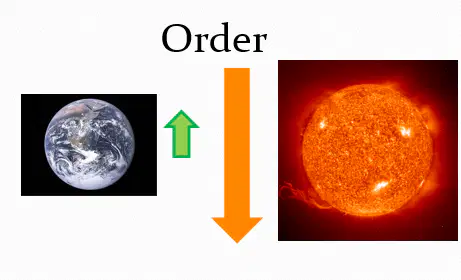
1) As the Sun fuses hydrogen into ___, releasing energy that eventually travels to Earth, disorder ___.
2) As Earth absorbs the light energy, ___ things organize molecules and the order of Earth increases.
3) Overall, does entropy increase or decrease?
1: helium, increases
2: living
3: increase
1: iron, increases
2: living
3: increase
1: helium, decreases
2: living
3: decrease
1: helium, increases
2: inorganic
3: decrease
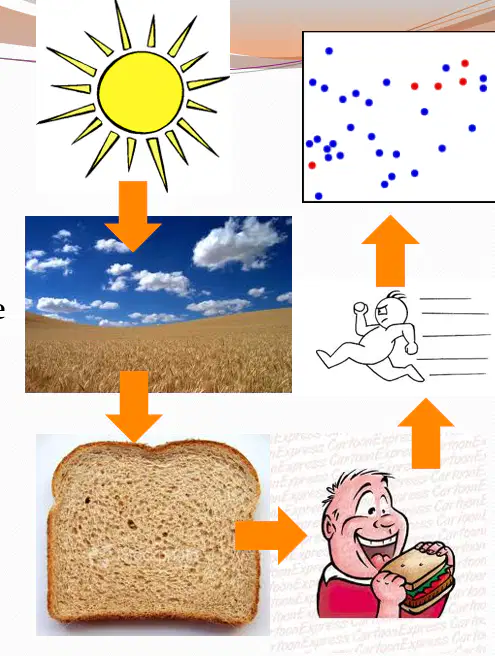
The Big Bang formed hydrogen.
1) ___ pulls the hydrogen gas together into a sphere and forms a star like our Sun.
2) The Sun fuses H into He and releases ___.
3) ___ on Earth surface capture the sun light energy.
4) Eventually what form does this energy end up as?
1: Gravity
2: energy
3: Plants
4: Heat
1: Light
2: energy
3: Plants
4: Heat
1: Gravity
2: energy
3: Rocks
4: Heat
1: Gravity
2: energy
3: Plants
4: Electricity
Energy flowing through the system:
Eventually what form does this energy end up as?
Heat
The random motion of atoms and molecules
Diffuse gas and some small parts of solid matter with its temperature approaching absolute zero
All of the answers are correct
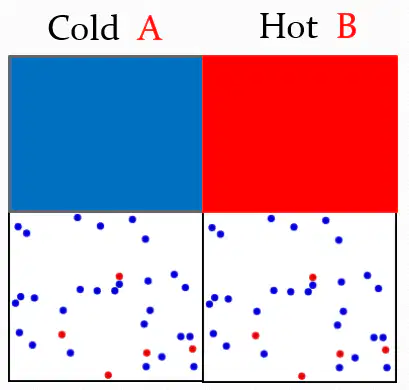
The Flow of Thermal Energy
Both blocks are made of iron metal.
1) Which block’s atoms will speed up?
2) Which will slow down?
3) Will the opposite ever occur? Y or N
1: A
2: B
3: N
1: B
2: A
3: N
1: A
2: B
3: Y
1: B
2: A
3: Y
Laws of Thermodynamics:
1) You cannot create energy, nor can you destroy energy.
2) Heat flows from hot to cold.
3) Energy may change form, but the total amount remains constant.
4) No machine or engine is perfectly efficient; some energy is lost as heat because of friction.
A) 1st Law of Thermodynamics B) 2nd Law of Thermodynamics
1: A
2: B
3: A
4: B
1: A
2: B
3: B
4: A
1: B
2: A
3: A
4: B
1: B
2: A
3: B
4: A
1: B
2: B
3: A
4: A
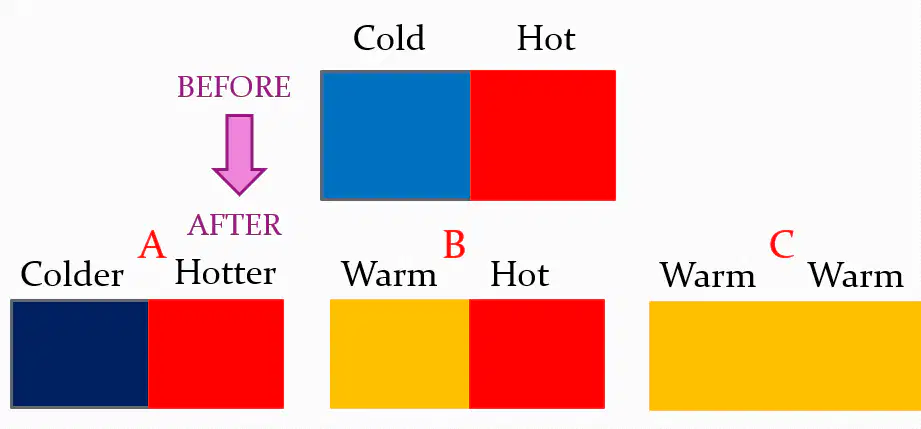
1) Which will occur?
2) Which would be creating energy (violating the 1st law)?
3) Which would have heat flowing in the opposite direction (violating the 2nd law)?
1: C
2: B
3: A
1: C
2: A
3: B
1: B
2: C
3: A
1: A
2: B
3: C
1: B
2: A
3: C
1) No machine is perfectly efficient
2) Energy is conserved: the parts may change but the total amount is the same
3) Heat is always lost to the surroundings
4) 25 x 4 = 10 x 10
5) Overall, disorder always grows in a system
A) 1st Law of Thermodynamics B) 2nd Law of Thermodynamics
1: B
2: A
3: B
4: A
5: B
1: A
2: B
3: B
4: A
5: B
1: B
2: A
3: A
4: B
5: B
1: B
2: A
3: B
4: B
5: A
1: B
2: B
3: A
4: A
5: A
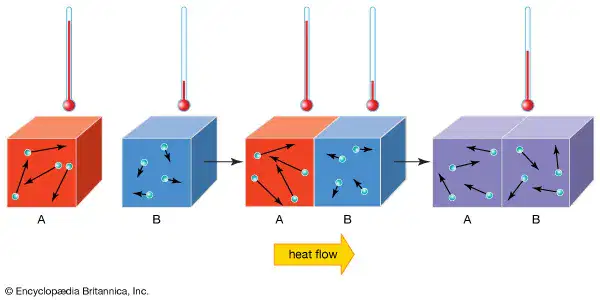
1) The movement of molecules.
2) The measure of the average movement of molecules in a substance.
3) The total amount of kinetic energy but on the molecular level of a substance.
4) The measure of disorder.
1: Heat
2: Temperature
3: Thermal energy
4: Entropy
1: Temperature
2: Heat
3: Thermal energy
4: Entropy
1: Heat
2: Temperature
3: Entropy
4: Thermal energy
1: Entropy
2: Temperature
3: Thermal energy
4: Heat
1: Heat
2: Entropy
3: Thermal energy
4: Temperature
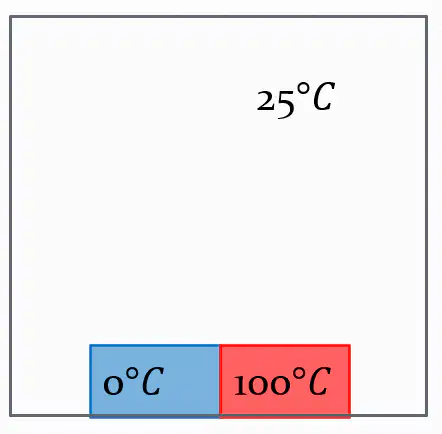
Two iron blocks sit in a perfectly insulated room.
1) What is their temperature after 30 minutes?
2) What is their temperature after 2 days?
1: 50 C
2: 28 C
1: 0 C
2: 60 C
1: 50 C
2: 60 C
1: 25 C
2: 15 C
Entropy measures:
order
disorder
the spreading out of energy
how energy continues to concentrate into denser volumes
Entropy: While often described as a measure of "___," it's more accurately understood as a measure of energy ___ and the inherent probability that a system will adopt a more diffused, ___concentrated state, such as heat flowing from a hot object to a ___ one.
1: disorder
2: spreading out
3: less
4: cold
1: order
2: spreading out
3: less
4: cold
1: order
2: spreading out
3: more
4: cold
1: disorder
2: spreading out
3: less
4: hotter
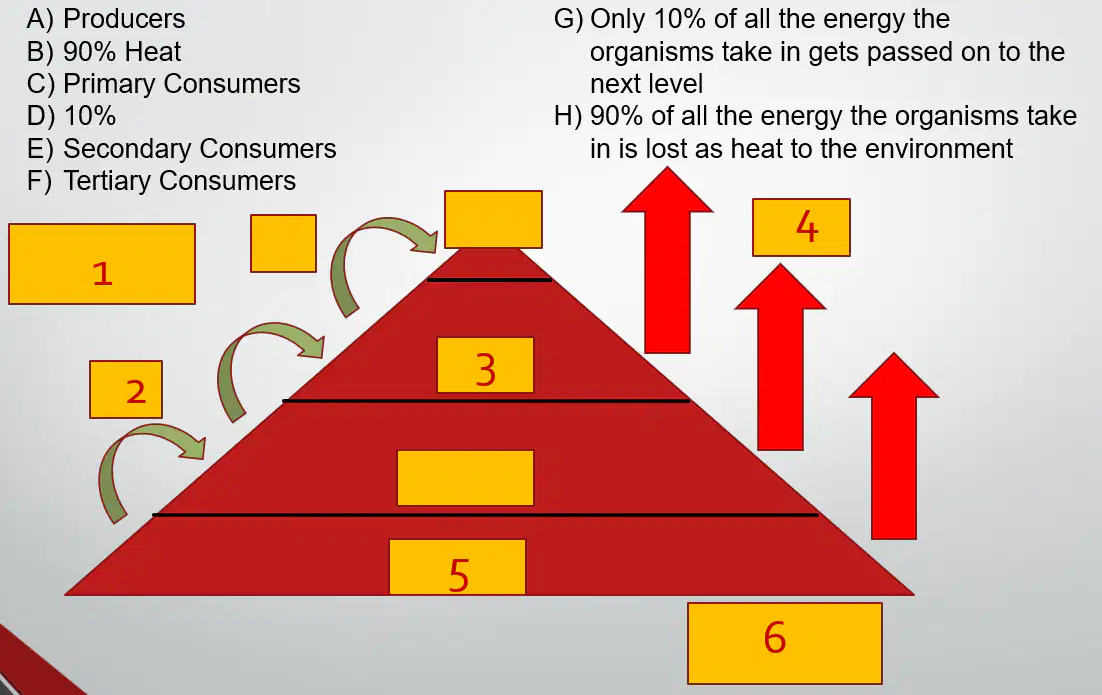
1: G
2: D
3: E
4: B
5: A
6: H
1: H
2: D
3: E
4: B
5: A
6: G
1: G
2: B
3: E
4: D
5: A
6: H
1: G
2: D
3: E
4: B
5: F
6: H
1: H
2: B
3: E
4: D
5: A
6: G
1) What is more expensive? Bread or a steak?
2) Why?
1: Steak
2: It requires 10x as much energy to produce
1: Bread
2: Because there is 10x as much, it is more expensive to transport
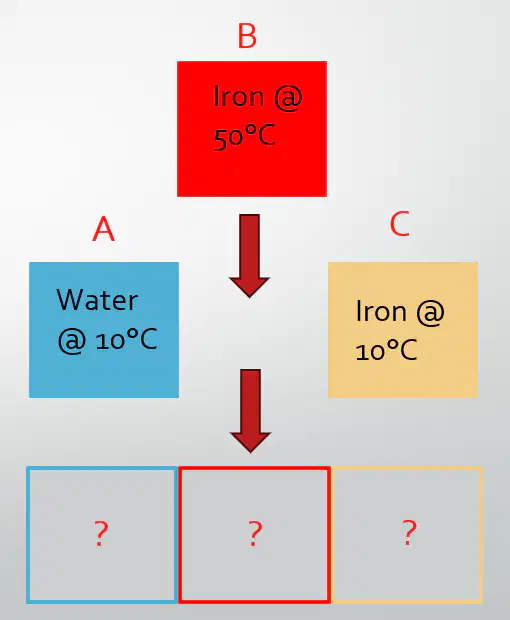
All blocks and containers have the same volume.
1) Which has a higher specific heat capacity: iron or water?
2) If we place B in between A and C, after 10 minutes, which will have a higher temperature? A or C?
3) Before B descends, which had more thermal energy: A or C?
1: water
2: C
3: A
1: water
2: A
3: A
1: water
2: C
3: C
1: iron
2: C
3: A
1: iron
2: A
3: C
All blocks and containers have the same volume.
After 10 minutes of B descending, what would be a likely set of three temperatures?
A 29°C, B 47°C, C 46°C
A 4°C, B 31°C, C 6°C
A 16°C, B 29°C, C 26°C
A 14°C, B 75°C, C 28°C
A 20°C, B 20°C, C 20°C
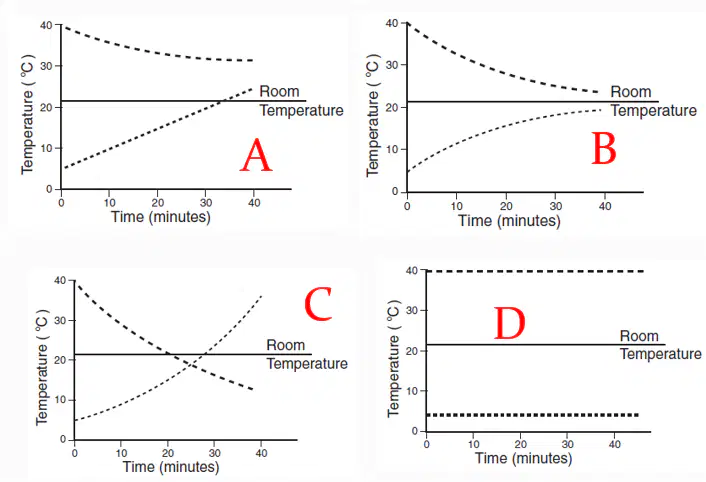
Two cups of water, one at 40°C the other at 5°C: Which graph represents their change in temperature?
A
B
C
D
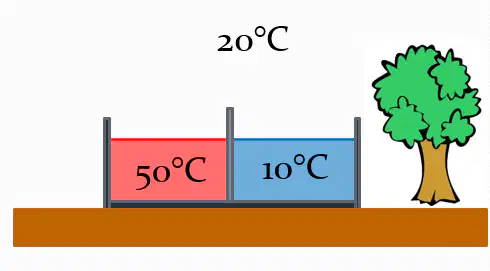
Two equal volumes of water are separated by a divider.
1) 30 minutes after the divider has been removed, what is the temperature?
2) 2 days later, what is the temperature of the water?
1: 30 C
2: 20 C
1: 20 C
2: 20 C
1: 40 C
2: 20 C
1: 15 C
2: 15 C
1: 15 C
2: 20 C
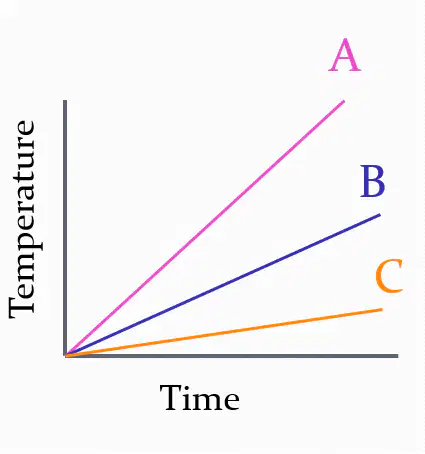
Three different substances are being heated by a fire:
1) Which line represents water? (hydrogen and oxygen)
2) Which for iron? (metals)
3) Which for dirt? (silicates: silicon and oxygen atoms)
1: C
2: A
3: B
1: B
2: A
3: C
1: A
2: B
3: C
1: C
2: B
3: A
1: A
2: C
3: B
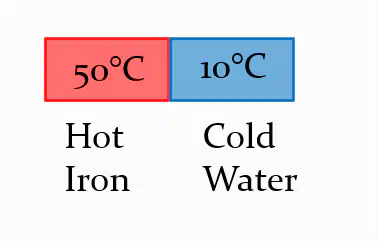
After 30 minutes, what would approximately be the temperature of the iron?
50 C
40 C
10 C
20 C
5 C
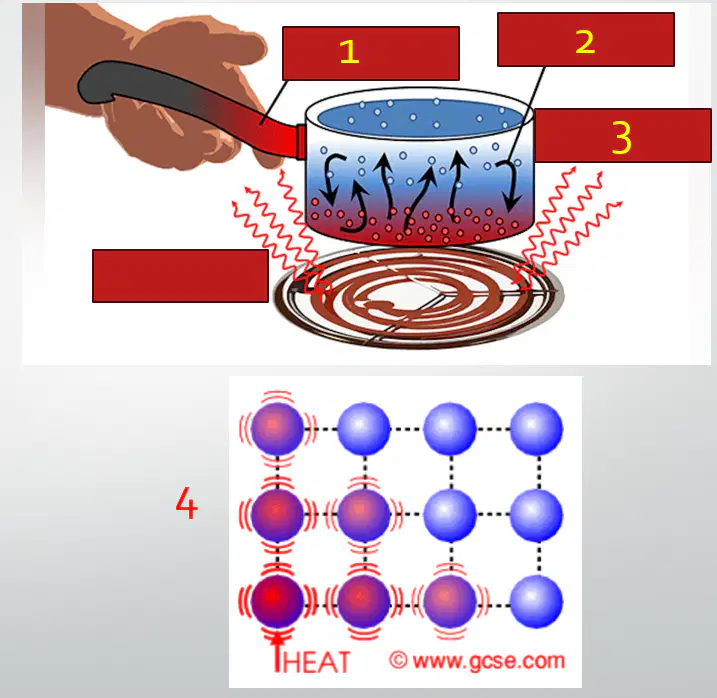
A: Radiation
B: Convection
C: Conduction
1: C
2: B
3: A
4: C
1: A
2: B
3: C
4: C
1: B
2: C
3: A
4: A
1: C
2: A
3: B
4: C
1: C
2: B
3: A
4: A
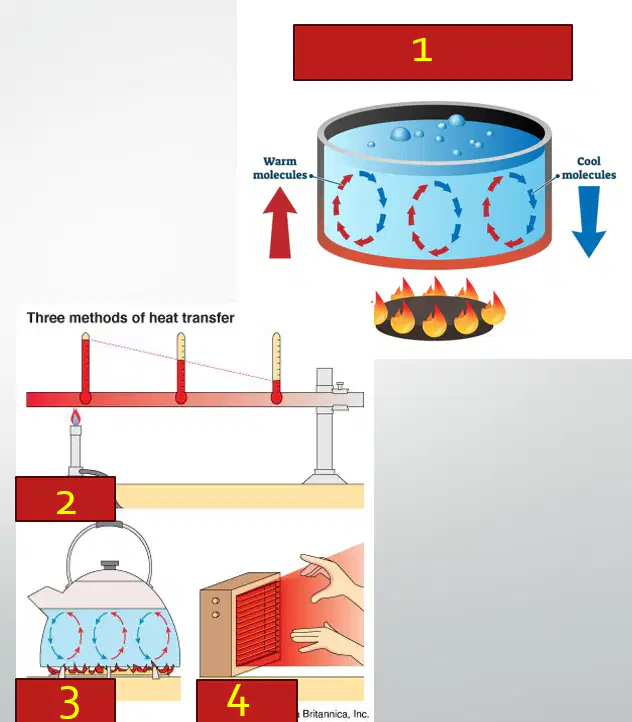
A) Radiation
B) Convection
C) Conduction
1: B
2: C
3: B
4: A
1: A
2: C
3: B
4: A
1: B
2: A
3: C
4: A
1: B
2: C
3: A
4: B
1: A
2: B
3: C
4: A
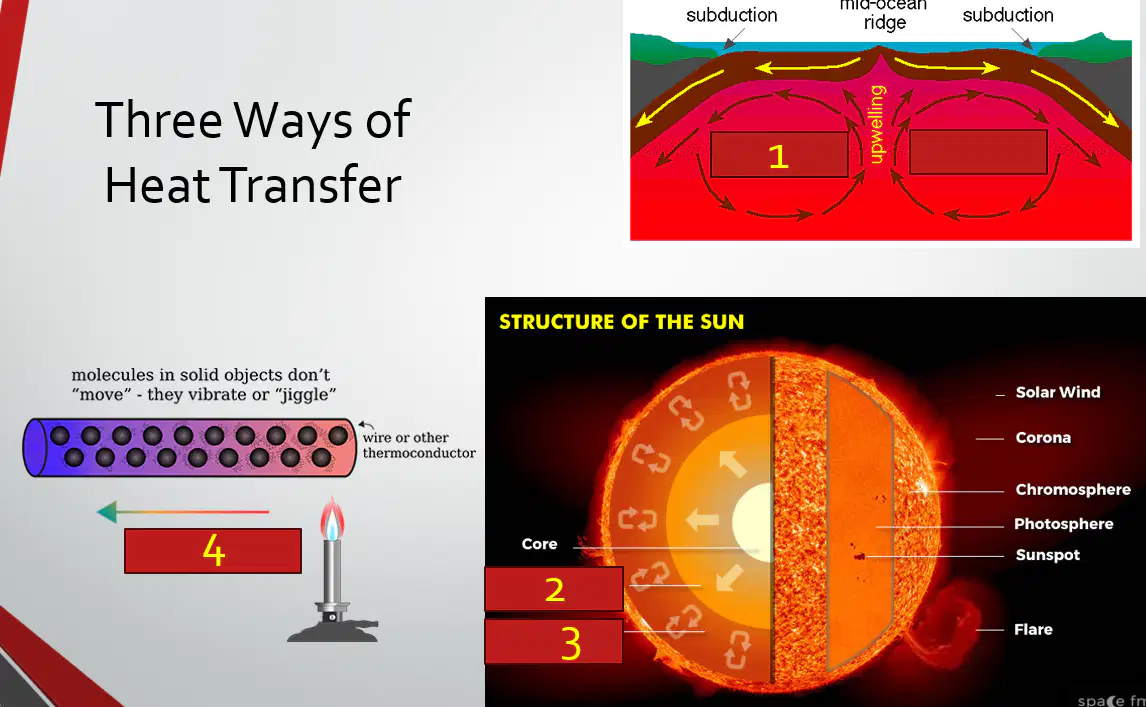
A) Radiation
B) Convection
C) Conduction
1: B
2: A
3: B
4: C
1: A
2: B
3: A
4: C
1: C
2: A
3: C
4: B
1: C
2: A
3: B
4: A
1: B
2: C
3: B
4: C
Identify this type of heat transfer:
conduction
convection
radiation
1) From one atom to the next
2) Energy spreading out into less concentrated forms
3) Cold sinks, hot rises, a cycle is formed
4) Energy is always conserved
5) Atoms emit photons of light
6) Heat never flows from cold to hot, or all things grow in disorder
1: Conduction
2: Entropy
3: Convection
1: Conduction
2: 1st Law of Thermodynamics
3: Radiation
1: Convection
2: Radiation
3: Conduction
1: Radiation
2: 2nd Law of Thermodynamics
3: Convection
1: Convection
2: Entropy
3: Conduction
1) From one atom to the next
2) Energy spreading out into less concentrated forms
3) Cold sinks, hot rises, a cycle is formed
4) Energy is always conserved
5) Atoms emit photons of light
6) Heat never flows from cold to hot, or all things grow in disorder
4: 1st Law of Thermodynamics
5: Radiation
6: 2nd Law of Thermodynamics
4: Entropy
5: Radiation
6: 1st Law of Thermodynamics
4: Convection
5: Radiation
6: Conduction
4: 1st Law of Thermodynamics
5: Conduction
6: Convection
4: 2nd Law of Thermodynamics
5: Convection
6: 1st Law of Thermodynamics
If convection stopped, many other natural processes would also stop.
Which is NOT one of them?
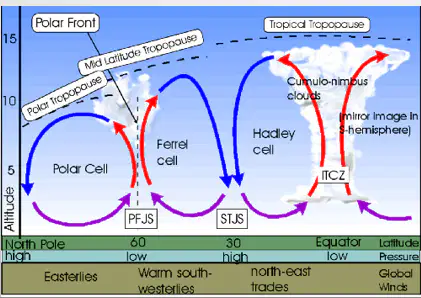
Atmosphere: Three cells of air from the equator to the pole
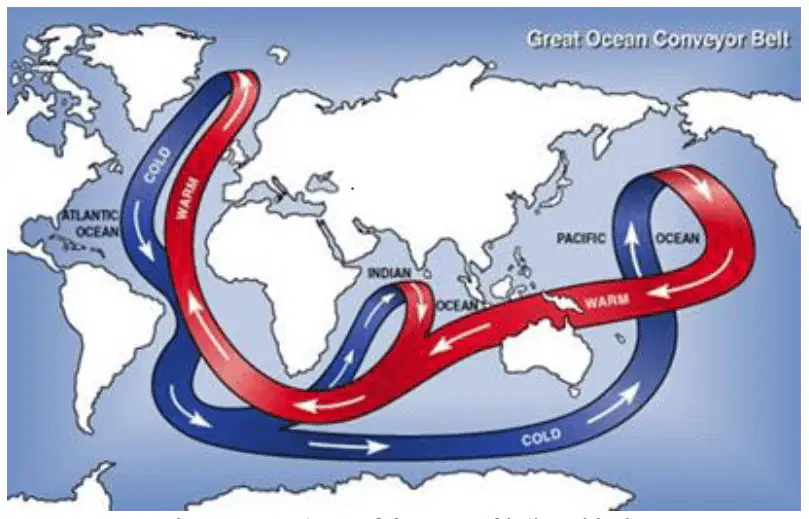
Ocean: Global ocean current
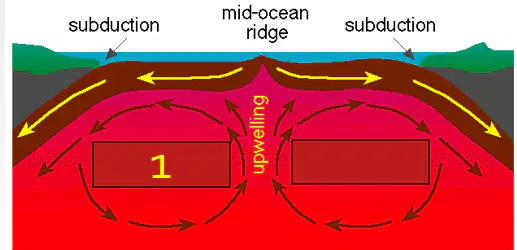
Earth: Rising hot magma and sinking, oceanic plates
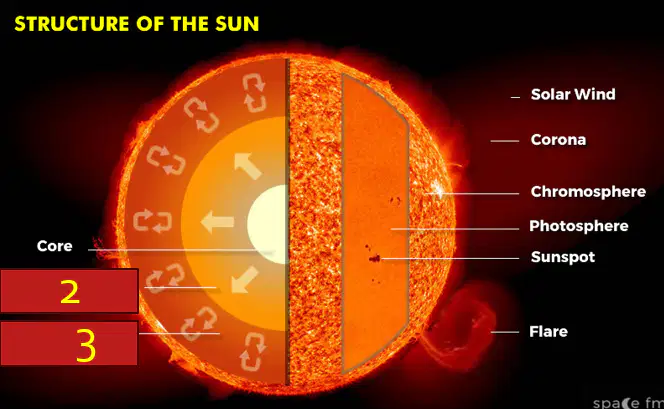
Stars: A cycling layer between the surface of the Sun and the radiation zone surrounding the core of the Sun
Earth: The heating of the solid, metal core of Earth from radioactive decay of metal isotopes
If convection stopped, many other natural processes would also stop.
Which is NOT one of them?
Earth: The heating of the solid, metal core of Earth from radioactive decay of metal isotopes
Stars: A cycling layer between the surface of the Sun and the radiation zone surrounding the core of the Sun
Earth: Rising hot magma and sinking, oceanic plates
Ocean: Global ocean currents that travel along the surface, descend to the ocean floor and rise up elsewhere
Atmosphere: Three cells of air from the equator to the pole
If convection stopped, many other natural processes would also stop.
Which is NOT one of them?
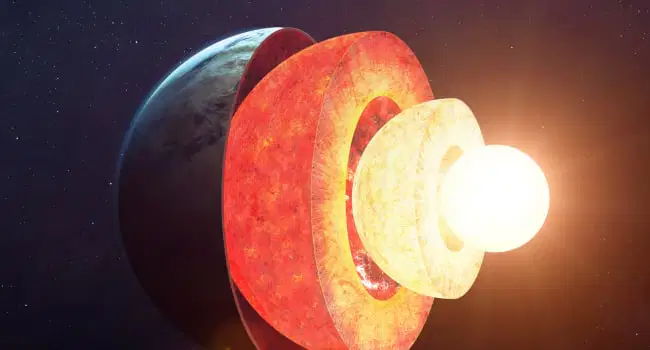
Which natural process does NOT depend on convection?
Red stars long lifespan (no room for a sixth choice below)
Cloud formation
Oceans distributing heat
Continents moving
Sunlight traveling 93 million miles to Earth
Earthquakes & Volcanoes
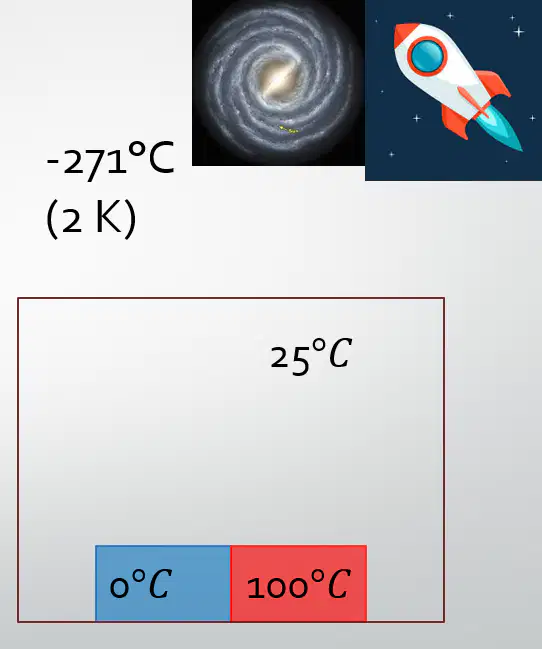
Two iron blocks sit in a room in a spaceship in intergalactic space.
1) What is their temperature after 30 minutes?
2) What is their temperature after 2 days?
3) What is the temperature of the room and blocks after 2 years?
1: 50 C
2: 27 C
3: -271 C
1: 25 C
2: 25 C
3: 2 C
1: 90 C
2: 70 C
3: 50 C
1: 100 C
2: 50 C
3: -100 C
1: -25 C
2: -200 C
3: -273 C
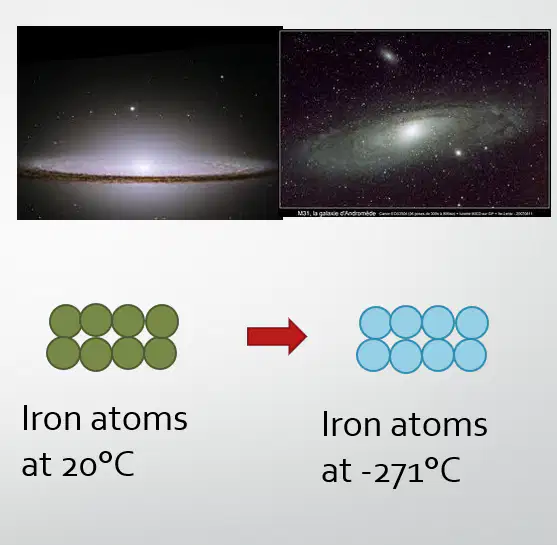
By which heat transfer mechanism do the iron atoms lose their heat to the vacuum of space?
Convection
Conduction
Radiation
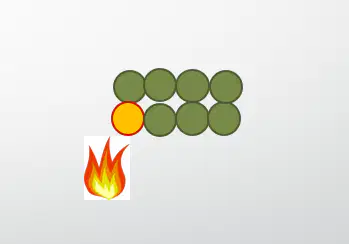
How will this solid piece of iron atoms transfer most of its thermal energy?
Conduction
Convection
Radiation
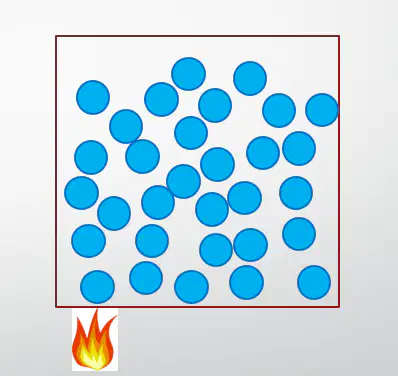
Which heat transfer mechanism does the most to distribute the thermal energy evenly throughout the liquid water?
Conduction
Convection
Radiation
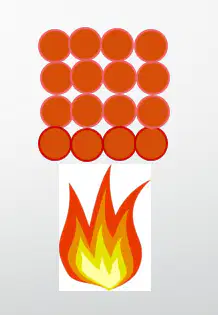
What will happen to the volume of the iron atoms as they are heated?
Expand
Contract
Remain the same
1) A thermodynamic quantity representing the amount of energy in a system that is no longer available for doing mechanical work
2) The total kinetic energy due to disordered motions and vibrations of a system of molecules and atoms.
3) The amount of heat that must be added (or removed) from a unit mass of a substance to change its temperature by one degree Kelvin
A) Specific Heat Capacity B) Entropy C) Thermal Energy
1: B
2: C
3: A
1: A
2: C
3: B
1: C
2: B
3: A
1: B
2: A
3: C
1: A
2: B
3: C
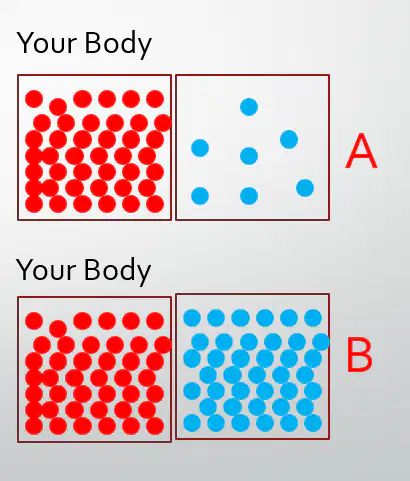
1) Which is a cold solid?
2) Which is a cold gas?
3) Which will absorb your body’s thermal energy faster?
4) Which would be considered a thermal insulator?
5) Which a thermal conductor?
1: B
2: A
3: B
4: A
5: B
1: A
2: B
3: B
4: A
5: B
1: B
2: A
3: A
4: B
5: B
1: B
2: A
3: B
4: B
5: A
1: B
2: A
3: A
4: A
5: B
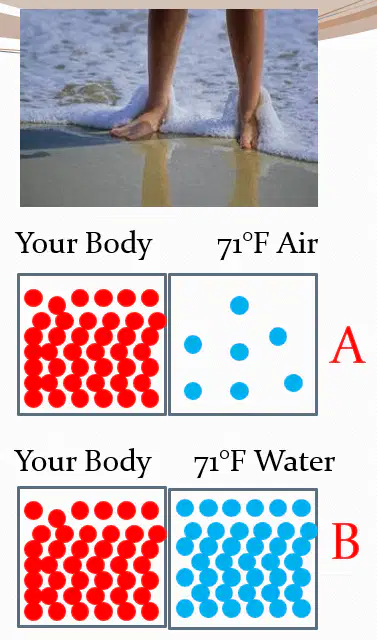
Which would feel colder to your body even though both have the same temperature?
A
B
Both will feel the same
1) The lower a material’s ___ is, the more its temperature rises when a given amount of energy is absorbed by a given mass.
2) Conduction in gases is slower than in liquids and solids because the particles in a gas collide ___ often.
3) All objects radiate energy. As an object’s temperature increases, the rate at which it radiates energy ___.
1: specific heat capacity
2: less
3: increases
1: entropy
2: less
3: increases
1: specific heat capacity
2: less
3: decreases
1: specific heat capacity
2: more
3: increases
1: entropy
2: more
3: decreases
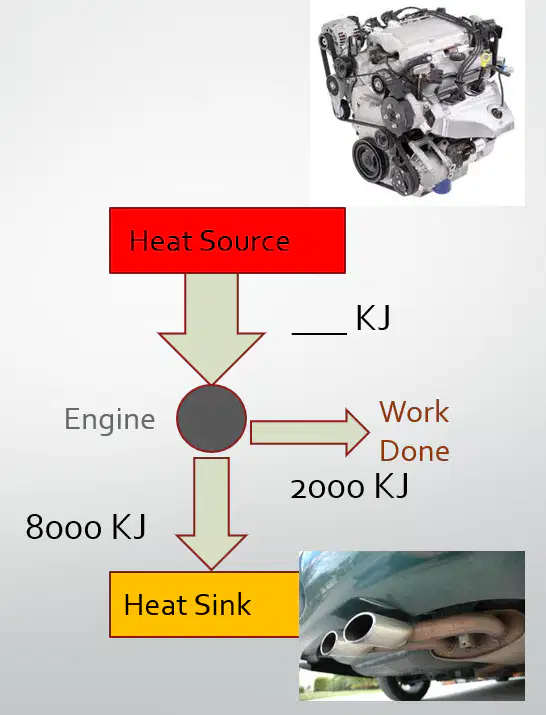
How efficient is this heat engine?
20%
25%
80%
100%
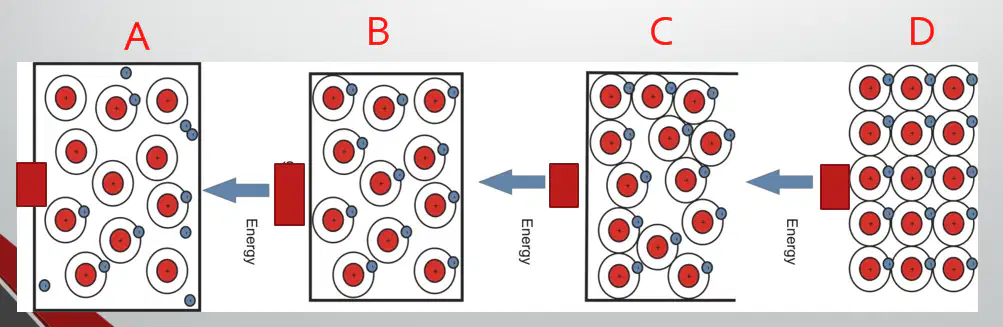
1) Which contains the most thermal energy?
2) Which conducts heat the best?
3) Which conducts electricity best?
1: A
2: D
3: A
1: A
2: B
3: C
1: B
2: D
3: C
1: A
2: D
3: B
1: C
2: D
3: A
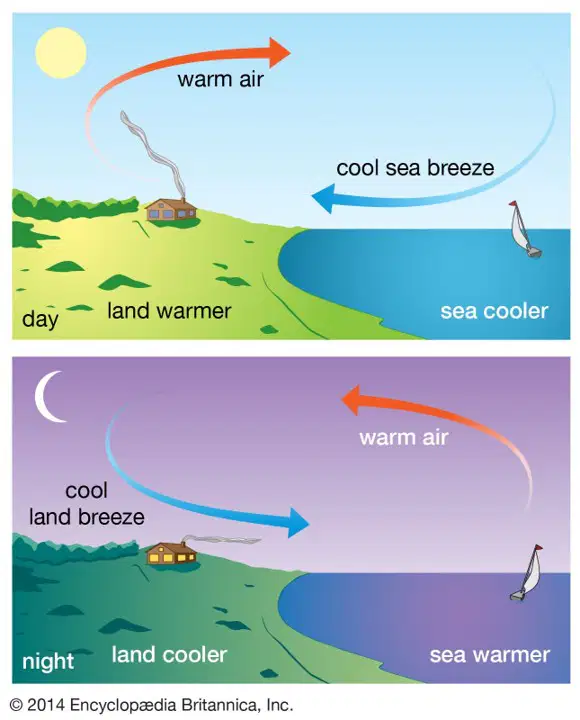
What is responsible for this change in breeze (wind) direction?
specific heat capacity
entropy
conduction
radiation
latent heat
T / F
1) All things emit radiation, and thus lose some energy.
2) Our star, the Sun, has a surface temperature of 6000 C. This surface emits all types of color light, ultraviolet light and infrared light.
3) The most common type of light our Sun emits is blue light.
4) Even cold hydrogen atoms in deep space emit visible light.
1: T
2: T
3: F
4: F
1: T
2: F
3: T
4: F
1: F
2: F
3: T
4: T
1: T
2: F
3: F
4: T
1: T
2: T
3: F
4: T

The striped structure of Jupiter's atmosphere is mainly the result of:
convection
conduction
radiation
its fast rotation upon its axis
its fast revolution around the Sun
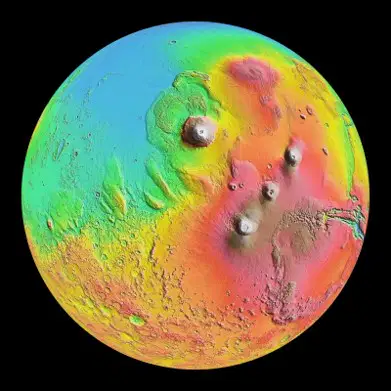
Mar's massive volcanoes are the result of:
No internal, planetary convection cycles
A hot spot similar to what has created the Hawaiian island chain
Heat causes material to expand and become less dense than its surroundings
Two answers are correct
All three answers are correct
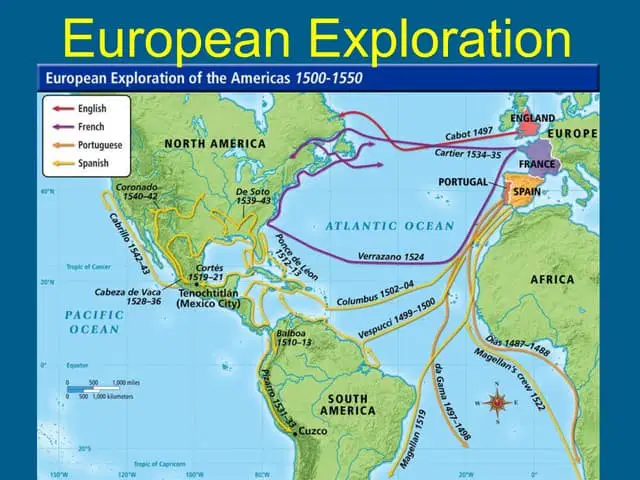
The European explorers and the trade routes that followed were dictated by winds across the oceans, which themselves are the result of which three of the following factors:
global, atmospheric convection cycles
the rotation of Earth about its axis
the high specific heat capacity of water
the 23.5 degree tilt of Earth's axis
the shape of Earth as a sphere means the equatorial regions receive much more solar radiation than the polar regions
1) Solids and liquids are good heat conductors because of their high molecular density. There will be ___ collisions between two substances which will allow the ___ of thermal energy.
2) Water having a high specific heat capacity also make it a ___ heat sink.
3) Gases are good heat insulators because of their ___ molecular density and thus infrequent collisions to slow the transfer of thermal energy.
1: many, transfer
2: great
3: low
1: few, transfer
2: great
3: low
1: many, transfer
2: bad
3: low
1: few, trapping
2: great
3: high
1: few, trapping
2: bad
3: low
Identify the heat insulators which slow down the transfer of thermal energy: