
 Worksheets
Cell parts (organelles) ,living needs and living chracteristics
Total questions: 200
Worksheet time: 3hrs 55mins
The human body is made up of skin cells, blood cells, and bone cells.
All living things need energy.
All living things contain cells.
All living things respond to their environment (stimulus)
All living things reproduce.

The human body is made up of skin cells, blood cells, and bone cells.
All living things need energy.
All living things contain cells.
All living things respond to their environment (stimulus)
All living things reproduce.

Identify the characteristic: A cactus grows toward the sunlight coming through the window.
Responds to stimuli
Grow and develop
Evolution
Take in and use energy
What do you use to see cells?
microphone
microscope
telescope
binoculars

What does this picture represent?
All living things are made of cells.
All living things grow.
All living things reproduce.
All living things need energy.

What does this picture represent?
All living things respond to stimuli.
All living things reproduce.
All living things are made of DNA.
All living things are made of cells.

All living things reproduce.
All living things are made of cells.
All living things grow.
All living things need energy.

What does this picture represent?
All living things grow.
All living things respond to stimuli.
All living things reproduce.
All living things are made of DNA.

All living things are made of DNA.
All living things grow.
All living things need energy.
All living things are made of cells.
Your dog had 5 new puppies last night.
All living things need energy.
All living things contain cells.
All living things reproduce.
All living things grow.
The roots of a plant grow towards a source of ground water.
All living things respond to their environment (stimulus)
All living things reproduce.
All living things need energy.
All living things contain cells.
Joey eats his favorite burger before his soccer championship.
All living things reproduce.
All living things contain cells.
All living things need energy.
All living things grow.
Over three years, Juan's height has increased from 5'4" to 5'11".
All living things contain cells.
All living things grow.
All living things need energy.
All living things respond to their environment (stimulus)
A plant growing towards a light source is an example of which of the following?
attracting a mate
destroying infectious germs
responding to a stimuli
obtaining moisture from the air

Which characteristic of living things is represented in the picture?
Share similar chemicals
Grows and develops
Responds to stimuli
Evolves (as a population)

Which characteristic is shown in the image?
Organisms grow and develop
Organisms react to stimuli
Organisms can adapt
Organisms use and obtain energy
Organisms are made up of cells

Which characteristic is shown in the image?
Organisms reproduce
Organisms react to stimuli
Organisms can adapt
Organisms use and obtain energy
Organisms are made up of cells

Which characteristic is shown in the image?
Organisms reproduce
Organisms react to stimuli
Organisms can adapt
Organisms use and obtain energy
Organisms are made up of cells

Which characteristic is shown in the image?
Organisms reproduce
Organisms react to stimuli
Organisms can adapt
Organisms use and obtain energy
Organisms are made up of cells

Which characteristic is shown in the image?
Organisms reproduce
Organisms react to stimuli
Organisms can adapt
Organisms use and obtain energy
Organisms are made up of cells

Which characteristic is shown in the image?
Organisms reproduce
Organisms react to stimuli
Organisms can adapt
Organisms use and obtain energy
Organisms are made up of cells

In the image shown, what is the response?
the plant bending towards the light
the light source
In the image shown, what is the stimulus?
the plant bending towards the light
the light source

In the image shown, what is the response?
burning hot pan
taking hand away
In the image shown, what is the stimulus?
burning hot pan
taking hand away
Which is NOT an example of adaptation?
camels have humps that store water for the dry days
night animals have special eyes to see in the dark
fishes developed gills to breath underwater
an elephant gives birth to one offspring
Choose the statement(s) TRUE for ALL organisms
have cells
can move
grow or develop
use sunlight to make food
have features that help them adapt
Any living thing is called a _____________.
organism
cell
matter
atom
The basic unit of living things are known as ____________.
cells
matter
atom
organism
Everything around you is made out of __________.
cells
atoms
organisms
blocks


Pick all that are needs of living things.
food
air
water
homeostasis
living space

Why do viruses have projections on the outside?
To send signals to other viruses.
To maintain their structure.
To attach to the host cell.
To reproduce.
takes over the cell's functions.
A virus is considered non-living because...
They do not have DNA
It does not have all the characteristics of life
They can't evolve
They make you sick
A virus needs a host cell in order to do which of the following?
Grow
Develop
Reproduce
Live
Which of the following can be used to prevent a viral infection?
Vaccine
Antibiotic
Probiotic
Anti-inflammatory
Which of the following statements is true?
All cells are prokaryotes
All eukaryotes have a nucleus
All viruses are prokaryotes
All viruses are living
Which of the following is able to carry out all life functions?
Viruses
Cells
Both cells and viruses
Neither cells or viruses
Choose all the heterotrophs below:
cactus
polar bear
bull frog
pine tree
dolphin
Choose all the autotrophs below
crocodile
camel
python
bison
grass
The process of keeping things inside your body constant
homeostasis
hibernation
migration
organism
This is the process when sugar is broken down into energy, carbon dioxide, and water.
homeostasis
cellular respiration
ingestion
digestion
Identify the characteristics unique to Eukaryotes
Ribosomes to assemble proteins
Having a membrane bound nucleus
Having a cell wall to provide shape and structure to the cell
Having cytoplasm to hold organelles
The cell membrane is
permeable to all substances
impermeable to all substances
semipermeable to its surroundings controlling substances in or out,
This organelle converts Glucose to ATP during aerobic cell respiration
Nucleus
Vessicle
Golgi apparatus or body
Mitochondria
The rough Endoplasmic Reticulum is covered with
protein
spots
ribosomes
vesicles
Smooth Endoplasmic Reticulum makes
Carbohydrates
Lipids
Proteins
Nucleic Acid
The Central Vacuole in plants
allows for support of the leaf
stores water
stores waste
All of the above
What is the purpose of the centriole
to provide support to the cell
to help animal cells divide
the power house of the cell
holds waste
Which organelles are only found in plants
Chloroplasts and cell membranes
chloroplasts and cell walls
golgi apparatus and cell membranes
golgi apparatus and vacoule
These characteristics are found in both plant and animal cells except
membrane organelles
chloroplast- making the cell autotrophic
eukaryotic cells with nuclei
cell membrane
Modifies sorts and packages proteins for use inside or outside the cell.
Nucleolus
Mitochondria
Golgi Body
Cytoplasm
Lysosomes
Stores water and Salts to aid in structure
Is located out side the cell membrane
Makes Proteins and packages the in vesicles
Break down / digest lipids and proteins and removes unwanted substances from cells
Gives the cell shape and organization and helps in movement. This is composed of microfilaments and Microtubules
Cytoskeleton
Cytoplasm
cytosol
Chloroplasts
This cell structure provides support and protection to the cell and is located outside the cell membrane
Nuclear membrane
cell wall
cilia
cytoplasm
The Heart is an organ made of smooth muscle tissue that requires energy. These cells would have more of which organelle?
mitochondria
nuclei
rough endoplasmic reticulum
lysosomes
in glandular tissue the golgi apparatus is used to
holds genetic information coding for proteins
break down proteins
create proteins
sort and package proteins for secretion
is semi permeable allowing some substances such as gasses and water in while keeping other substances out
cell wall
cell membrane
mitochondria
smooth endoplasmic reticulum
What is the correct hierarchy of cells?
tissues-cells-organ systems-organs-organisms
cell-organisms-tissues-organs-organ systems
cells-tissues-organs-organ systems-organisms
organs-tissues-cells-organ systems-organisms


Stores food and water like a refrigerator for the cell
Chloroplast
Vacuole
Lysosome
Cytoplasm
What is the function of the mitochondria?
Structure that manufactures ribosomes
Structures that converts nutrients to energy
Stack of membranes that packages chemicals
Structure that contains DNA and directs the cell
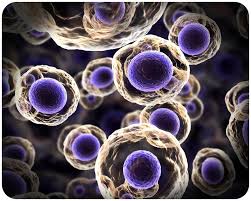


What is the name of the starred organelle?
(a)
This holds water, food, or waste.
lysosome
vacuole
cell wall
cell membrane
The cell membrane is located...
underneath the cell wall of a plant cell.
outside of the cell wall of a plant cell.
This is responsible for removing waste and dead parts from the cell.
mitochondria
lysosome
vacuole
cell wall
Which statement is part of the cell theory?
All cells come from existing cells
All cells are prokaryotic or eukaryotic
All cells can make a tissue
All cells grow and develop

Cell Membrane
maintains homeostasis by controlling what enters and leaves the cell
suspends the organelles and provides an environment for chemical reactions within the cell
makes proteins
provides structure for cells and movement of organelles
Cytoplasm
maintains homeostasis by controlling what enters and leaves the cell
suspends the organelles and provides an environment for chemical reactions within the cell
makes proteins
provides structure for cells and movement of organelles
Ribosome
maintains homeostasis by controlling what enters and leaves the cell
suspends the organelles and provides an environment for chemical reactions within the cell
makes proteins
provides structure for cells and movement of organelles
Cytoskeleton
maintains homeostasis by controlling what enters and leaves the cell
suspends the organelles and provides an environment for chemical reactions within the cell
makes proteins
provides structure for cells and movement of organelles
Nucleus
stores genetic information (DNA)
makes and transports proteins
makes lipids and membranes (also detoxifies and stores calcium)
modifies, sorts, and ships proteins
Rough Endoplasmic Reticulum
stores genetic information (DNA)
makes and transports proteins
makes lipids and membranes (also detoxifies and stores calcium)
modifies, sorts, and ships proteins
Smooth Endoplasmic Reticulum
stores genetic information (DNA)
makes and transports proteins
makes lipids and membranes (also detoxifies and stores calcium)
modifies, sorts, and ships proteins
Golgi Bodies
stores genetic information (DNA)
makes and transports proteins
makes lipids and membranes (also detoxifies and stores calcium)
modifies, sorts, and ships proteins
Mitochondria
creates energy (ATP) from food; site of cellular respiration
stores food, water, or wastes with the cell; plant cells have a special vacuole
uses enzymes to digest bacteria, viruses, and old organelles (old cell parts are recycled)
create special structures called spindle fibers that are used in cell division
Vacuole
creates energy (ATP) from food; site of cellular respiration
stores food, water, or wastes with the cell; plant cells have a special vacuole
uses enzymes to digest bacteria, viruses, and old organelles (old cell parts are recycled)
create special structures called spindle fibers that are used in cell division
Lysosome
creates energy (ATP) from food; site of cellular respiration
stores food, water, or wastes with the cell; plant cells have a special vacuole
uses enzymes to digest bacteria, viruses, and old organelles (old cell parts are recycled)
create special structures called spindle fibers that are used in cell division
Centrosome/Centrioles
creates energy (ATP) from food; site of cellular respiration
stores food, water, or wastes with the cell; plant cells have a special vacuole
uses enzymes to digest bacteria, viruses, and old organelles (old cell parts are recycled)
create special structures called spindle fibers that are used in cell division
Cell Wall
provides shape, structure, and protection for the cell
site of photosynthesis; uses the sun's energy to produce food
stores water in order to maintain plant shape (if a plant needs water, it wilts)
site of cellular respiration
Chloroplast
provides shape, structure, and protection for the cell
site of photosynthesis; uses the sun's energy to produce food
stores water in order to maintain plant shape (if a plant needs water, it wilts)
site of cellular respiration
Central Vacuole
provides shape, structure, and protection for the cell
site of photosynthesis; uses the sun's energy to produce food
stores water in order to maintain plant shape (if a plant needs water, it wilts)
site of cellular respiration
When you step out into the cold, your body shivers in order to keep its temperature at 98.6F. Which characteristic of life does this represent?
All living things use energy
All living things contain cells
All living things maintain homeostasis
All living things grow
Which statement describes ALL living things?
They are composed of one or more cells.
They must reproduce sexually.
They have organ systems to carry out the processes of life.
They are capable of making their own food.
A baby song bird hatches from its egg with both parent songbirds watching. Which characteristic of life does this represent?
All living things reproduce
All living things maintain homeostasis
All living things use energy
All living things grow
The following are all characteristics of life EXCEPT:
made of cell(s)
eat food
respond stimuli
reproduce

Which of these is not true about all organisms?
all living things are multicellular
all living things obtain and use energy
all living things reproduce

The following list represents characteristics of a living thing :
made of cells, has lungs, can reproduce
made of cells, grows and develops, uses energy
has similar chemicals, makes noises, made of cells


Living things are based on a universal genetic
code. What molecule is responsible for that code?
RNA
Lipid
Protein
DNA
The combination of chemical reactions through
which an organism builds up or breaks down
materials as it carries out its life processes is called ...
absorption
metabolism
digestion
consumption
Maintaining a stable internal
environment is called
homeostasis
equilibrium
balance
evenness

The combination of chemical reactions through
which an organism builds up or breaks down
materials as it carries out its life processes is called ...
absorption
metabolism
digestion
consumption
Maintaining a stable internal
environment is called
homeostasis
equilibrium
balance
evenness
Green plants produce their own food through the process of photosynthesis. Which characteristic of life does this represent?
All living things use energy
All living things contain cells
All living things maintain homeostasis
All living things grow
Which characteristic of living things is represented in the picture?
Share similar chemicals
Grows and develops
Responds to stimuli
Evolves (as a population)

Which characteristic of living things is represented in the picture?
Respond to stimuli
Grow and develop
Evolution
Made of cells
The substance in plants and animals that act as an energy currency.
DNA
RNA
ADP
ATP
In which mode of nutrtion does an an organism make it's own food?
Saprophytic
Autotropic
Heterotrophic
Parasitic
The combination of chemical reactions through
which an organism builds up or breaks down
materials as it carries out its life processes is called ...
absorption
metabolism
digestion
consumption
True or False: Living things must be multicellular.
True
False
Which organelle contains genetic material?
Endoplasmic Reticulum
Golgi Complex
Nucleolus
Nucleus
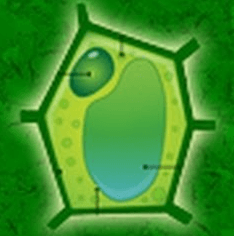


Which of the following shows the levels of organization in order from simple to complex?
1. Cell
2. Tissue
3. Organ
4. Organ System
5. Organism
1. Cell
2. Tissue
3. Organelle
4. Organ
5. Organ System
1. Tissue
2. Organelle
3. Cell
4. Organ
5. Organism
1. Organ
2. Tissue
3. Cell
4. Organism
5. Organ System
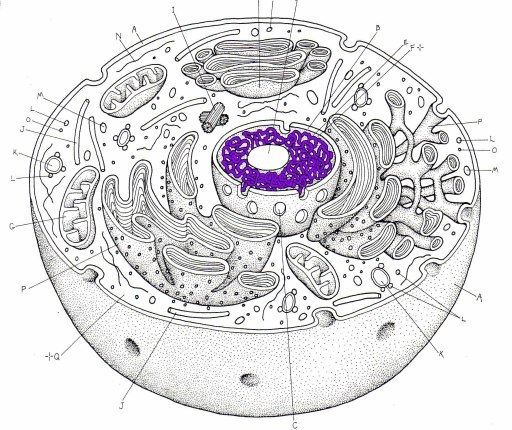
Label the parts of cell. DO NOT LABEL 9.
Mitochondria
Golgi Body
Nucleolus
Cell Membrane
Ribosome
Cytoplasm
Lysosome
Nucleus
Endoplasmic Reticulum (ER)
Centrioles
Label the Parts of the Cell (2,4,5,7,8,11,13,14 and 15)
Nucleolus
Endoplasmic Reticulum
Cell Membrane
Cell Wall
Golgi Body
Chloroplast
Vacuole
Ribosomes
Nucleus
Mitochondria
Which cell organelle is a storage tank for nutrients, water and waste? (Larger in plants)
nucleus
vacuole
ribosomes
mitochondria
Which cell organelle commands cell functions and holds DNA?
nucleus
vacuole
ribosomes
mitochondria
Which cell organelle is the power house of the cell. Turns glucose and oxygen to ENERGY?
nucleus
vacuole
ribosomes
mitochondria
Which cell organelle creates protein. They are found in the Rough ER and cytoplasm.
nucleus
vacuole
ribosomes
mitochondria
Only plant cells have these organelles that uses sunlight to create glucose
chloroplast
lysosome
golgi apparatus
endoplasmic reticulum
These organelles are cleaners that break down large molecules and digest bacteria
ribosomes
golgi bodies/apparatus
endoplasmic reticulum
smooth and rough
lysosomes
This organelle had a rigid layer of material that surrounds the cells of plants and protects it. It helps hold it up as it grows.
Cell wall
Cell membrane
Chloroplast
Tiny cellular structures that perform specific functions within a cell.
Plant cell
Cell membranes
Organelles

Which organelle's job is to package and ship out proteins and lipids?
Rough ER
Golgi Body
Smooth ER
Nucleus
Both a plant and animal cells have a cell wall
True
False
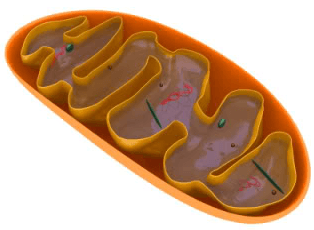
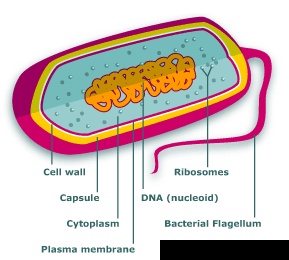

Bacteria is what kind of cell?
Eukaryotic
Prokaryotic

What kind of cells are these?
Eukaryotic
Prokaryotic



