
 Worksheets
Health 8A_Chapter 7_Lessons 3-7 Quiz
Total questions: 40
Worksheet time: 21mins
Which of the following is recommended when creating a fitness program?
Make your program unrealistic to challenge yourself
Include a variety of activities you enjoy
Only do one type of exercise
Ignore your current fitness level
Why should strength training be scheduled on alternate days or for different muscle groups?
To avoid getting bored
To allow muscles to recover
To save time
To increase the number of workouts per week
Why is it important to take a gradual approach when starting an exercise program?
To avoid getting bored
To prevent muscle strain and injuries
To finish your program quickly
To impress others
What should you do if changes in your work or class schedule disrupt your exercise program?
Stop exercising completely
Adjust your routine but don’t give it up
Only exercise when you have free time
Wait until your schedule returns to normal
Which of the following is NOT a recommended way to combine exercise with other healthy behaviors?
Eating a nutrient-dense diet
Smoking and drug abuse
Avoiding smoking and drug abuse
Maintaining regular exercise
According to the text, what is the principle of reversibility in fitness?
You can store fitness for future use
If you stop being active, you lose fitness and health benefits
Fitness levels never change
Exercise has no impact on health
What is a common reason for a decline in physical activity during adulthood?
Increased free time
Major life changes such as starting a family or moving
Lack of interest in exercise
Too many exercise options
What should every pregnant woman do before starting a new exercise program?
Begin exercising without consulting anyone
Consult with her health-care provider
Only do high-intensity workouts
Avoid all exercise
According to the table, which activity has the highest flexibility rating?
Weight training
Yoga
Baseball
Basketball
What is the typical caloric expenditure range (in calories per minute) for running as listed in the table?
2–4
4–6
7–16
5–10
Which of the following activities is rated as "Poor" for cardiorespiratory endurance?
Soccer
Bowling
Tennis
Cross-country skiing
What is one of the recommended guidelines for exercise during pregnancy according to the text?
Exercise should be avoided completely.
Do not increase the amount of exercise typically performed before pregnancy.
Only perform high-intensity exercise.
Exercise only once a week.
Which of the following should pregnant women avoid during exercise after the first trimester?
Lying on the back
Wearing supportive footwear
Drinking water
Monitoring exercise intensity
What is the recommended amount of water intake per hour of exercise for pregnant women?
2 additional glasses (8 oz. each)
1 glass (4 oz.)
4 additional glasses (16 oz. each)
No additional water is needed
Which of the following is a primary danger of exercising during pregnancy at high temperatures?
Elevated body temperature and lack of blood flow to the baby
Increased muscle strength
Improved hydration
Reduced risk of joint strain
What is the recommended RPE (Rating of Perceived Exertion) range for monitoring exercise intensity during pregnancy?
12-14
6-8
16-18
20-22
Why is it important for people with disabilities to engage in regular exercise?
It is important to the health of people with physical and mental/emotional challenges
It is only for competitive athletes
It is not recommended for people with disabilities
It increases the risk of injury
What is the primary purpose of exercise for older adults?
To increase body weight
To maintain good health and manage physical and mental changes
To avoid all physical activity
To decrease bone strength
Which of the following is a characteristic of adapted sports?
Played only by professional athletes
Played solely by people with a disability
Played without any rules
Played only outdoors
What happens to bone and joint health as people age?
Bones become stronger
Bones and joints remain unchanged
People gradually lose bone strength
Joints become more flexible
Why is regular exercise important for older adults?
It increases the risk of injury
It helps maintain a healthy body composition and cardiovascular function
It decreases muscle mass
It is not important for older adults
What is one way older adults can maintain their level of cardiovascular functioning?
Avoiding all physical activity
Maintaining a regular exercise program
Eating only junk food
Sleeping all day
Which of the following is a common age-related change in the skin?
Increased oil production and smoothness
Loss of oil production, wrinkling, and blotchiness
Thicker and more elastic skin
Increased hair growth
What is presbyopia?
Loss of taste and smell due to aging
Farsightedness that results from weakening of the eye muscles due to aging
Loss of memory due to brain cell loss
Loss of bone mass due to aging
What happens to hair as people age, especially after age 20?
Hair becomes thicker and darker.
Hair follicles produce more pigment.
Hair begins to thin and color fades to gray.
Hair grows faster.
What is a significant result of the loss of skeletal muscle mass in older adults?
Increased flexibility
Increased risk of falls
Improved memory
Enhanced vision
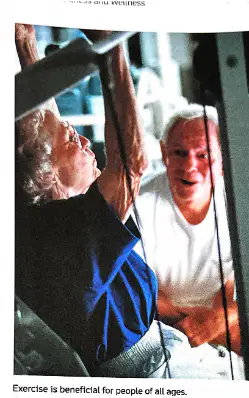
Exercise is beneficial for people of all ages.
Exercise is only beneficial for young people.
Exercise is beneficial for people of all ages.
Exercise is not recommended for older adults.
Only resistance training is beneficial for older adults.
Why should older adults consult with their health-care providers before beginning an exercise program?
To consider issues of safety such as risk of falling, strength, balance, and coordination
To get a prescription for medication
To avoid paying for a gym membership
To learn new sports techniques
Why should men over age 45 and women over age 55 consult with a health-care provider before engaging in vigorous physical fitness programs?
Because the risk of heart disease increases with age
Because they need to buy special equipment
Because they need to join a club
Because exercise is not recommended for them
How many days per week is exercise frequency recommended for older adults to reduce the risk of injury?
3 to 4 days per week
Every day
Once a month
Only on weekends

The ability to perform moderate to vigorous levels of activity, and to respond to physical demands without excessive fatigue
Exercise
Aerobic exercise
Physical fitness
Physical activity


Strength
Muscular Endurance
Cardio
Flexibility

Cardio
Flexibility
Strength
Muscular Endurance
Cardio
Flexibility
Strength
Muscular Endurance

