
 Worksheets
Movement Terms and Medication Dosage Worksheet
Total questions: 18
Worksheet time: 10mins
The drug concentration of a medication is 250 milligrams per 10 milliliters. Based on the weight of the animal, the veterinarian determined he should receive a concentration of 225 milligrams. How many milliliters of medication should you give the animal?
8 mL
9 mL
10 mL
1.1mL
Use the number line to find what is the average pulse rate for a dog?
110-130
90-110
80-120
110-140
Which of the following carries deoxygenated blood?
Pulmonary vein
Aorta
Pulmonary artery
Coronary artery
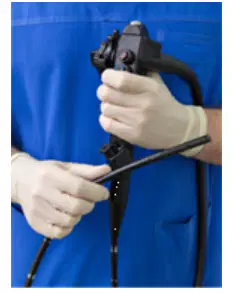
Which of the following common veterinary medical equipment is represented in the picture?
Endoscope
Stethoscope
Syringe
Thermometer
A very strong ammonia smell to an animal’s urine could indicate which of the following?
Bleeding in the urinary tract
Bacterial infection in the urinary tract
Dehydration
Intestinal parasites
Caroline’s cat was prescribed an antibiotic for an infection. However, the cat continued to have the same symptoms and remained ill. What is likely the reason for the antibiotic being ineffective in this instance?
The infection was viral
The infection was bacterial
Veterinarian Sam orally administered a drug to Tara’s dog. The medicine will have to first be dissolved in the animal’s gastric/intestinal fluids before entering systemic circulation. This is due to which of the following factors?
Effective medication
Drug absorption
Bioavailability
Passive diffusion
When a newborn kangaroo is born, he will crawl into the mother’s pouch and begin nursing. This is a result of which of the following animal behavioral responses?
Genetics
Adaptation
Instinct
Pheromones
Rank the following functions of the digestive system in correct order, from beginning to end.
1. Ingestion 2. Mechanical processing 3. Secretion 4. Digestion 5. Absorption 6. Excretion
1. Ingestion 2. Secretion 3. Mechanical processing 4. Digestion 5. Absorption 6. Excretion
1. Mechanical processing 2. Ingestion 3. Secretion 4. Digestion 5. Absorption 6. Excretion
1. Ingestion 2. Mechanical processing 3. Digestion 4. Secretion 5. Absorption 6. Excretion
Which of the following lists the correct order of steps for drawing medication into a syringe?
1. Remove the aluminum cap from the medicine bottle. 2. Remove the cap from the needle. 3. Draw the plunger to the desired amount of medicine, filling the barrel with air. 4. Poke the needle through the rubber cap. 5. Push the air in the barrel into the bottle. 6. Raise the bottle and pull back the plunger to draw medicine. 7. Point the needle upwards and eject air bubbles. 8. Lower the bottle and remove the needle.
1. Remove the cap from the needle. 2. Remove the aluminum cap from the medicine bottle. 3. Draw the plunger to the desired amount of medicine, filling the barrel with air. 4. Poke the needle through the rubber cap. 5. Raise the bottle and pull back the plunger to draw medicine. 6. Push the air in the barrel into the bottle. 7. Point the needle upwards and eject air bubbles. 8. Lower the bottle and remove the needle.
1. Remove the aluminum cap from the medicine bottle. 2. Draw the plunger to the desired amount of medicine, filling the barrel with air. 3. Remove the cap from the needle. 4. Poke the needle through the rubber cap. 5. Push the air in the barrel into the bottle. 6. Raise the bottle and pull back the plunger to draw medicine. 7. Lower the bottle and remove the needle. 8. Point the needle upwards and eject air bubbles.
1. Remove the aluminum cap from the medicine bottle. 2. Remove the cap from the needle. 3. Poke the needle through the rubber cap. 4. Draw the plunger to the desired amount of medicine, filling the barrel with air. 5. Push the air in the barrel into the bottle. 6. Raise the bottle and pull back the plunger to draw medicine. 7. Point the needle upwards and eject air bubbles. 8. Lower the bottle and remove the needle.
Which of the following veins is located near the thigh or hind leg?
Jugular vein
Lateral saphenous vein
Cephalic vein
Pulmonary vein
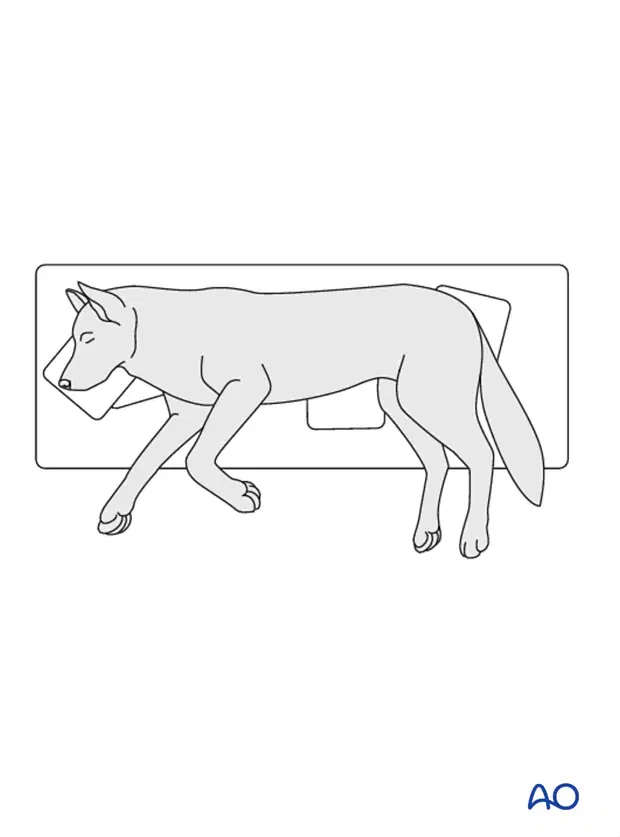
The illustration is an example of a dog in which of the following positions?
Lateral recumbency
Dorsal recumbency
Ventral recumbency
Sternal recumbency
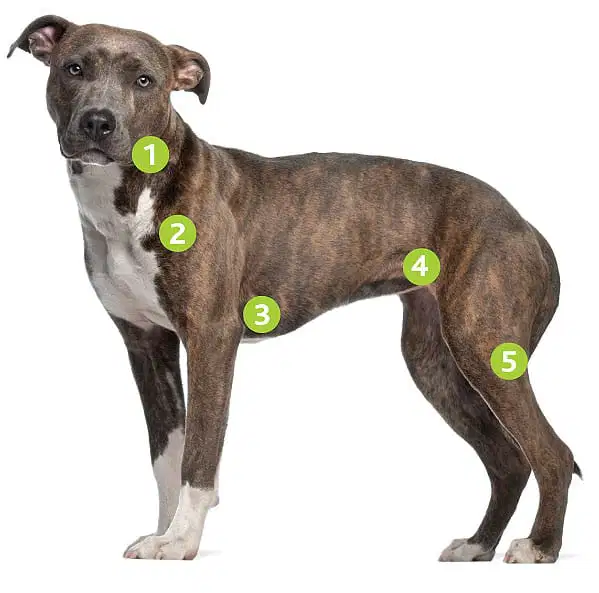
Using the word bank, label the lymph node locations on the dog diagram:
#1
submandibula
Prescapular
#2
#3
Inguinal
#4
Popliteal
If an animal is determined to have “red dirt,” then he/she most likely has which of the following?
Fleas
Mites
Ticks
Mange
Which of the following was signed and enacted to prohibit the illegal trade of fish or wild animals which were taken, processed, transported or sold in violation of any law, treaty or regulation of the United States?
The 28 Hour Law
Endangered Species Act
The Lacey Act
Animal Welfare Act
Using the word bank, fill in the blanks in the excerpt of the Veterinarian’s Oath. Being admitted to the profession of veterinary medicine, I solemnly swear to use my scientific knowledge and skills for the __________ of society through the protection of __________ and welfare, the prevention and __________ of animal suffering, the conservation of animal resources, the promotion of public health, and the __________ of medical knowledge.
benefit, animal health, relief, advancement
growth, animal safety, reduction, improvement
service, animal care, elimination, development
support, animal wellness, control, expansion
Which of the following can be used on cattle to restrain their head?
Twitch
Nose Tong
Veterinary assistant Shane is performing pre-surgical care. Before the IV catheter can be placed in the cephalic vein, what should Shane do first?
Clip and clean the forelimb
Nothing
Numb the forelimb
Draw blood from the forelimb

