
 Worksheets
Beat and Rhythm in Music Quiz
Total questions: 98
Worksheet time: 48mins
What is the definition of "beat" in music?
The steady pulse of the music
An organized pattern of short and long sounds & silences
The speed at which a song is played
The melody of the music
Which of the following best describes "rhythm" in music?
The steady pulse of the music
The loudness of the music
An organized pattern of short and long sounds & silences
The harmony of the music
In vocal music, what does the rhythm usually follow?
The melody
The lyrics
The beat
The tempo
Which of the following is an example of a "beat"?
The ticking of a clock
The changing notes in a melody
The volume of a song
The lyrics of a song
Explain how beat and rhythm are different using your own words.
Beat is the steady pulse, while rhythm is the pattern of sounds and silences.
Beat is the melody, while rhythm is the harmony.
Beat is the lyrics, while rhythm is the tempo.
Beat is the speed, while rhythm is the volume.
If you were to play a song together with others, why is it important to understand both beat and rhythm?
To ensure everyone plays at the same steady pulse and follows the same pattern of sounds and silences.
To make the song louder.
To change the lyrics.
To play faster than others.
How many beats does a whole note receive in 4/4 time?
2 beats
1 beat
4 beats
1/2 beat
Which note receives 1 beat in 4/4 time?
Whole note
Quarter note
8th note
16th note
In 4/4 time, what is the duration of an 8th note?
1 beat
2 beats
1/2 beat
4 beats
If you want a note to last for 2 beats in 4/4 time, which note should you use?
Whole note
Quarter note
Half note
16th note
Which note has the shortest duration in 4/4 time according to the material?
Whole note
Quarter note
8th note
16th note
A measure in 4/4 time contains only 16th notes. How many 16th notes fit in one measure?
4
8
12
16

What type of note is shown in the diagram above?
Quarter note
Whole note
8th note
16th note

Which rest symbol represents 4 beats in 4/4 time?
Whole rest
Half rest
Quarter rest
Eighth rest

How many beats does a quarter rest receive in 4/4 time?
4 beats
2 beats
1 beat
1/2 beat

If you combine two eighth rests, how many beats do they equal in 4/4 time?
1/4 beat
1/2 beat
1 beat
2 beats

Which rest symbol is used for 1/4 beat in 4/4 time?
Quarter rest
Eighth rest
Sixteenth rest
Half rest

A piece of music in 4/4 time has a measure with one half rest and two quarter rests. How many beats of silence does this measure have in total?
2 beats
3 beats
4 beats
5 beats
What is the main purpose of the Takadimi system?
To teach singing techniques
To read rhythms using syllables that show the beat and its subdivisions
To memorize song lyrics
To identify musical instruments

Which Takadimi syllable corresponds to a single quarter note?
Ta-Di
Ta
Ta-ah
Ta-Ka-Di-Mi
If you see a group of four sixteenth notes, which Takadimi syllables should you use?
Ta
Ta-Di
Ta-Ka-Di-Mi
Ta-ah
How does the Takadimi system help students learn rhythm? (Choose the best answer.)
By teaching them to play faster
By using syllables to show the beat, subdivisions, and longer sounds
By helping them memorize melodies
By focusing only on the lyrics
Which of the following is NOT a step listed for using rhythm counts to learn?
Describe beat vs. rhythm
Use beat & rhythm to play together
Use rhythm counts to learn
Memorize the names of composers
A half note in Takadimi syllables is represented as:
Ta
Ta-Di
Ta-ah
Ta-Ka-Di-Mi
Why might a musician use Takadimi syllables when learning a new piece of music?
To improve their singing voice
To better understand and perform rhythms
To learn the history of music
To memorize the lyrics
What does the top number in a time signature indicate in music notation?
The number of beats in each measure
The type of note that gets the beat
The tempo of the piece
The number of measures in the piece

What does the bottom number in a time signature represent?
The number of measures in the piece
The kind of note that gets one beat
The tempo of the piece
The number of beats in each measure
If a time signature is 4/4, how many beats are in each measure and what kind of note gets one beat?
4 beats, quarter note
4 beats, half note
2 beats, quarter note
6 beats, eighth note

In 4/4 time, how many beats does a whole note receive?
2 beats
1 beat
4 beats
8 beats
Which note value is equal to 1 beat in 4/4 time?
Quarter note
Eighth note
Half note
Sixteenth note
How many eighth notes are equivalent to one quarter note?
1
2
4
8

If a 16th note is 1/4 of a beat, how many 16th notes fit into one whole note in 4/4 time?
4
8
12
16

Explain how the value of an eighth note relates to both a quarter note and a whole note in 4/4 time.
An eighth note is half of a quarter note and 1/8 of a whole note.
An eighth note is twice a quarter note and 1/4 of a whole note.
An eighth note is equal to a quarter note and 1/2 of a whole note.
An eighth note is 1/4 of a quarter note and 1/16 of a whole note.

In 4/4 time, how many beats does a whole rest receive?
4 beats
2 beats
1 beat
1/2 beat
Which rest is equal to 1 beat in 4/4 time?
Quarter rest
Whole rest
Eighth rest
Sixteenth rest
If you have two eighth rests, how many beats do they add up to in 4/4 time?
1 beat
2 beats
1/2 beat
1/4 beat
Which of the following statements is true about a sixteenth rest in 4/4 time?
It is equal to 1/4 of a beat.
It is equal to 1 beat.
It is equal to 2 beats.
It is equal to 4 beats.
A measure in 4/4 time contains one whole rest. How many quarter rests would be needed to fill the same measure?
4 quarter rests
2 quarter rests
8 quarter rests
16 quarter rests
If a musical piece in 4/4 time has a half rest followed by two quarter rests, how many beats of rest are there in total?
4 beats
3 beats
2 beats
1 beat
What is the main purpose of the Takadimi system?
To read rhythms using syllables that show the beat and its subdivisions
To learn musical notes by their letter names
To memorize song lyrics
To identify musical instruments

Which Takadimi syllable corresponds to a single quarter note?
Ta
Ta-Di
Ta-ah
Ta-Ka-Di-Mi
If you see a rhythm with four sixteenth notes grouped together, which Takadimi syllable should you use?
Ta-Ka-Di-Mi
Ta-Di
Ta-ah
Ta
How does the Takadimi system help musicians?
By providing syllables that represent beats, subdivisions, and longer sounds
By teaching how to play instruments
By translating music into different languages
By composing new melodies
Which Takadimi syllable would you use for a note that lasts longer than a single beat?
Ta-ah
Ta-Ka-Di-Mi
Ta-Di
Ta
A student is given a rhythm with two eighth notes. Which Takadimi syllable should they use?
Ta-Di
Ta-Ka-Di-Mi
Ta-ah
Ta

What is the time signature shown at the beginning of the musical notation?
3/4
2/4
4/4
6/8

What is the correct sequence of syllables shown in the musical notation in the image?
Ta-di, Ta, Takadimi, Ta-Di, Ta, Ta, Ta-ka Di, Ta-DiMi
Ta, Ta-di, Takadimi, Ta-Di, Ta, Ta-ka Di, Ta-DiMi
Ta-di, Takadimi, Ta, Ta-Di, Ta, Ta-ka Di, Ta-DiMi
Ta, Takadimi, Ta-di, Ta-Di, Ta, Ta-ka Di, Ta-DiMi

Which musical note is held for 4 beats?
Whole note
Half note
Quarter note
Eighth note

If a note is held for 1/2 beat, what type of note is it?
Quarter note
Eighth note
Sixteenth note
Half note

How many quarter notes are equivalent to one whole note?
2
3
4
8

If you want to fill 2 beats in a measure, which combination of notes could you use?
Two half notes
Four quarter notes
One half note
Eight eighth notes

A sixteenth note is worth how many beats?
1 beat
1/2 beat
1/4 beat
2 beats
Which of the following is a tip for creating complementary rhythms?
Leave space for others ("windows in your music").
Play as loudly as possible at all times.
Ignore what other players are doing.
Repeat the same pattern as everyone else.
What does it mean to "play in the holes" when creating complementary rhythms?
Play when other players are not playing.
Play only the highest notes.
Play as fast as possible.
Play the same rhythm as everyone else.
Which of the following best describes the concept of "playing different tone colors" in a group rhythm setting?
Using a variety of sounds or timbres to add interest.
Playing only one note repeatedly.
Ignoring the dynamics of the music.
Playing as quietly as possible.
If you want to make your rhythm part fit well with others, which strategy should you use according to the tips for complementary rhythms?
Play different patterns than other players.
Play the same pattern as everyone else.
Play as loudly as possible.
Ignore the other players.
A group of students is creating a drum ensemble. How can they ensure their rhythms are complementary rather than clashing? (DoK Level 3)
By leaving space for others, playing different patterns, and using different tone colors.
By all playing the same rhythm at the same time.
By ignoring each other's playing.
By playing as fast as possible.

What is the purpose of the double bar line at the end of a musical staff?
It marks the end of a piece or section of music.
It indicates a repeat of the previous section.
It shows where to start playing.
It means to play louder.

Which of the following is a sixteenth note group as shown in the musical example?
Four notes beamed together with two horizontal lines.
Two notes beamed together with one horizontal line.
A single note with a filled-in head and a stem.
A note with an open head and no stem.

If you were to clap the rhythm shown in the first measure, which of the following best describes the pattern?
Long, short, very quick notes.
All notes are played at the same speed.
Only one note is played.
The notes get slower as you go.
What is the main difference between beat and rhythm in music?
Beat is the steady pulse, while rhythm is the pattern of sounds and silences.
Beat is the pattern of sounds, while rhythm is the steady pulse.
Beat and rhythm mean the same thing.
Beat is only used in classical music, while rhythm is used in all music.
How can musicians use beat and rhythm to play together in an ensemble?
By ignoring the beat and playing at their own speed.
By following the same beat and coordinating their rhythms.
By playing as fast as possible.
By only playing the rhythm and not the beat.
Which of the following is a way to create multiple drum parts that fit together in a song?
Use different rhythms that complement the main beat.
Play the same rhythm on every drum.
Only use one drum at a time.
Ignore the beat and play randomly.

What does the 4/4 time signature at the beginning of the staff indicate?
There are four beats in each measure, and a quarter note gets one beat.
There are four notes in each measure, and a half note gets one beat.
There are two beats in each measure, and a quarter note gets one beat.
There are four beats in each measure, and an eighth note gets one beat.

What does the top number in a time signature indicate?
How many beats per measure
What note gets one beat
The key signature
The tempo of the piece

What does the bottom number in a time signature represent?
The number of measures in the piece
The note that gets one beat
The number of sharps or flats
The speed of the music

If a piece of music has a 3/4 time signature, how many beats are in each measure?
2
3
4
6

In a 4/4 time signature, which note value receives one beat?
Whole note
Half note
Quarter note
Eighth note

A measure in 4/4 time contains four quarter notes. What does this demonstrate about the relationship between the time signature and the notes in a measure?
The time signature determines the key of the piece
The time signature tells how many notes are in a measure, regardless of value
The time signature tells how many beats are in a measure and which note gets one beat
The time signature changes with every measure

What does the time signature 4/4 mean in music notation?
There are 4 beats in each measure and a quarter note gets one beat.
There are 4 notes in each measure and a half note gets one beat.
There are 2 beats in each measure and a quarter note gets one beat.
There are 4 beats in each measure and a whole note gets one beat.

How many beats does a quarter note receive in 4/4 time?
1 beat
2 beats
3 beats
4 beats

Which note receives 2 beats in 4/4 time?
Quarter note
Half note
Whole note
Eighth note

If you want a note to last for the entire measure in 4/4 time, which note should you use?
Quarter note
Half note
Whole note
Eighth note

A measure in 4/4 time contains one whole note. How many quarter notes would be needed to fill the same measure?
2 quarter notes
3 quarter notes
4 quarter notes
5 quarter notes

What is the purpose of a bar line in musical notation?
To separate measures in a piece of music
To indicate the end of a song
To show the pitch of notes
To mark the tempo of the music
In a 3/4 time signature, what must the sum of the rhythm values in each measure equal?
2
3
4
6
What does the top number in a time signature indicate?
The number of measures in a piece
The number of beats in each measure
The type of note that gets one beat
The tempo of the music

What does the top number in a time signature represent in music notation?
The type of note that gets one beat
The number of beats per measure
The tempo of the piece
The key signature

In a time signature, what does the bottom number indicate?
The number of measures in a piece
The type of note that gets one beat
The number of beats per measure
The pitch of the notes

If a time signature is 4/4, what does the "4" on the bottom mean?
There are four measures in the piece
Each measure has four beats
A quarter note gets one beat
The tempo is four beats per second
Why is understanding the time signature important for musicians?
It tells them what key to play in
It helps them know how many beats are in each measure and what kind of note gets one beat
It shows them which instruments to use
It indicates the dynamics of the piece

Which note is represented by a symbol that looks like an open oval and occurs once per measure in 4/4 time?
Whole note
Half note
Quarter note
Eighth note
How many quarter notes are there in one measure of 4/4 time?
4
2
8
16
If you want to fill a 4/4 measure with only eighth notes, how many eighth notes would you need?
8
4
2
16
Which type of note would you use if you need 16 notes to fill a single measure in 4/4 time?
Sixteenth note
Quarter note
Half note
Whole note

Which Latin American country is highlighted as the origin of the percussion instrument called "claves"?
Brazil
Cuba
Mexico
Argentina

What is the name of the percussion instrument shown as two wooden sticks in the image?
Maracas
Bongos
Claves
Congas
Why might claves be considered an important part of Latin American percussion music?
They are used only in classical music.
They provide a rhythmic pattern that is fundamental to many Latin American music styles.
They are only decorative instruments.
They are used exclusively in African music.

What is the name of the musical instrument shown in the images on the page?
Guiro
Maracas
Conga
Bongo
From which regions is the Guiro instrument traditionally associated?
Cuba and Puerto Rico
Brazil and Argentina
Spain and Portugal
Mexico and Guatemala
Which of the following best describes how a Guiro is played?
By scraping a stick along its ridges
By blowing air into it
By striking it with a mallet
By shaking it
Why might the Guiro be considered an important instrument in Cuban and Puerto Rican music traditions?
It provides a distinctive rhythmic sound essential to traditional music
It is used as a wind instrument in orchestras
It is only used for ceremonial purposes
It is mainly a decorative object
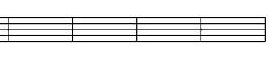


A _________________ separates the staff into measures
line
bar line
line
staff

This image is a half rest
True
False

Part 2 is called a
Cling
Stem
Swoop
Rib
Part 3 is called a
Rave
Note Head
Stem
Stick

