
 Worksheets
Health
Total questions: 42
Worksheet time: 21mins
According to the generally accepted definition, health is a state of complete ________, mental, and social well-being and not merely the absence of disease or infirmity.
physical
financial
spiritual
emotional
Health is defined as merely the absence of disease or infirmity.
True
False
What is wellness?
A) A state of health in which a person has a balanced combination of physical, mental/psychological, and social wellbeing.
B) Only physical health.
C) Only mental health.
D) Only social wellbeing.
What is self talk? Fill in the blank: Self talk is ongoing internal conversations (dialogue) with ourselves, which influence how we feel and _______.
behave
sleep
eat
travel

What is visualization according to the passage?
A) A physical exercise to improve strength
B) A mental rehearsal or mind trick in which you create images in your mind to help you improve your attitude and confidence
C) A way to memorize facts quickly
D) A method to solve math problems
Fill in the blank: What you focus on, you _______.
attract.
ignore.
lose.
forget.
What is the definition of Confidence?
the feeling or belief that one can rely on someone or something; firm trust.
a state of confusion or uncertainty about what to do.
the act of pretending to know something you do not.
a lack of interest or concern about something.

What is the definition of Self Confidence?
a feeling of self-assurance (trust) arising from one's appreciation of one's own abilities or qualities.
the ability to control others in social situations.
a tendency to avoid challenges and risks.
the act of relying on others for validation.
What is the definition of self-esteem? Fill in the blank: Self-esteem is confidence in one's own worth or abilities; _________.
self-respect
self-doubt
selfishness
self-pity
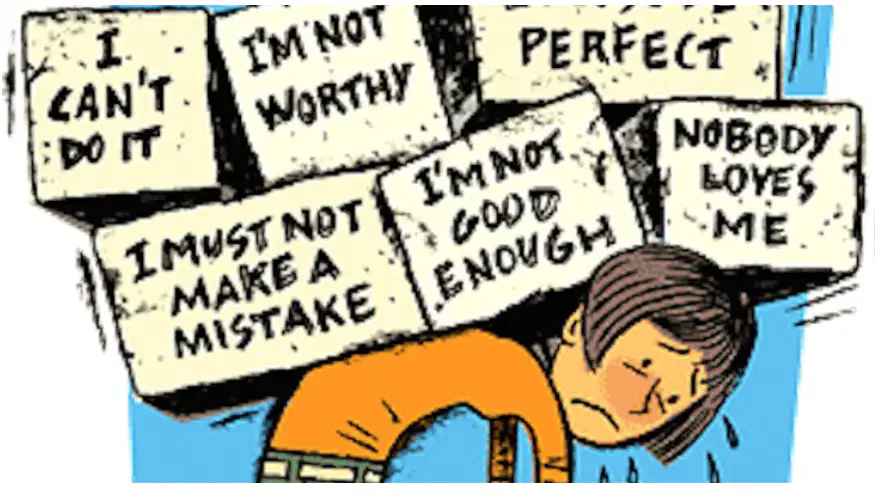
What is low self-esteem?
An overall optimistic and positive view of oneself
An overall pessimistic and negative view of oneself
A neutral view of oneself
None of the above
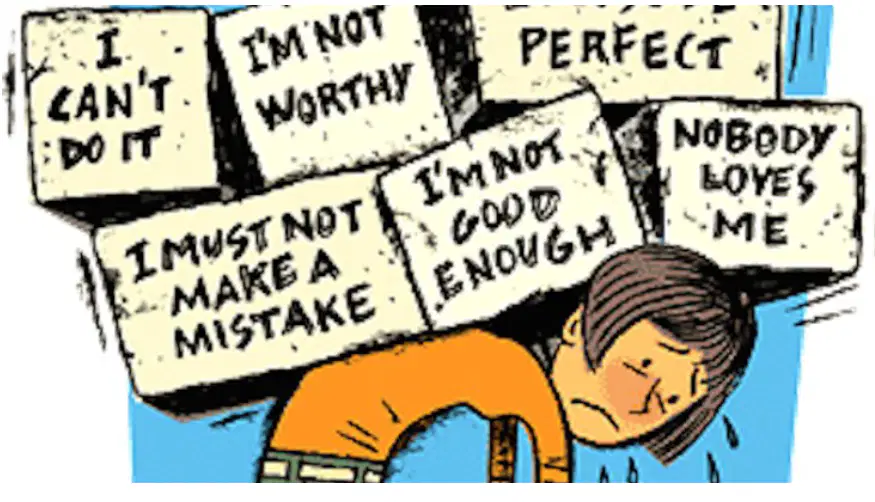
Which of the following thoughts is NOT associated with low self-esteem?
I can't do it
I'm not worthy
I am proud of myself
Nobody loves me
What is the definition of high self-esteem? Fill in the blank: High self-esteem is a ________, honest, and healthy view of oneself.
realistic
arrogant
critical
unrealistic

Which of the following is an example of high self-esteem?
Mary failed and gave up.
Mary failed, laughed it off, got right back up, and didn’t let it affect her high self-esteem.
Mary failed and felt bad about herself for days.
Mary blamed others for her failure.
What is learned optimism? Fill in the blank: Learned optimism is a mental state that can be trained by conscientiously challenging _________.
self talk.
other people.
your environment.
your habits.
Which of the following is a way to practice learned optimism?
Ignoring negative thoughts
Actively work on thinking positively, having a growth mindset
Avoiding challenges
Focusing only on failures
Fill in the blank: Learned helplessness occurs when an individual continuously faces a _______, uncontrollable situation and stops trying to change their circumstances, even when they have the ability to do so.
negative
positive
neutral
temporary
Fill in the blank: Growth Mindset is the belief that our abilities can be developed through ________ and dedication.
hard work
luck
natural talent
shortcuts
Emotional intelligence (EI) refers to the ability to _______, control, and evaluate emotions. Fill in the blank.
perceive
ignore
suppress
deny
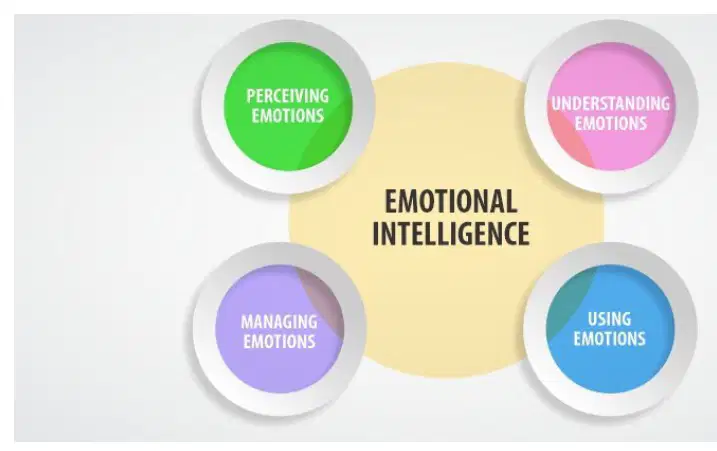
Which of the following is NOT a component of Emotional Intelligence?
A) Perceiving Emotions
B) Understanding Emotions
C) Using Emotions
D) Solving Equations
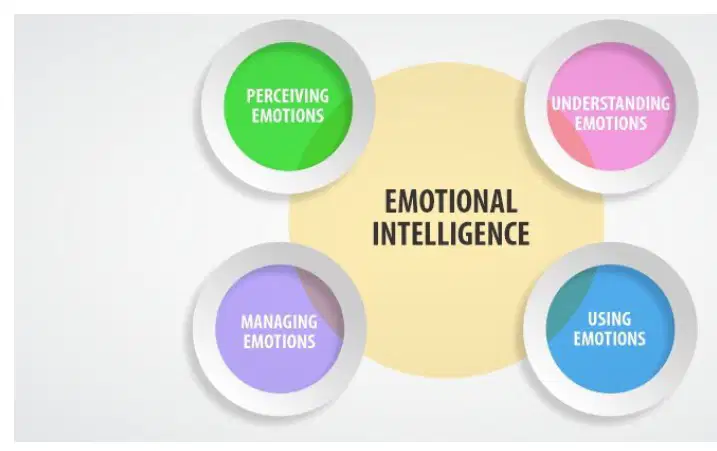
Which of the following is a component of Emotional Intelligence?
Managing Emotions
Calculating Numbers
Memorizing Facts
Drawing Pictures
What do people with an internal locus of control believe about what happens to them?
They believe that what happens to them is within their control, e.g. hard work.
They believe that fate determines everything that happens to them.
They believe that luck is the main factor in their lives.
They believe that other people are responsible for their successes and failures.
People with an internal locus of control are more able to resist following orders because they feel in charge of their life.
True
False
Fill in the blank: People with an external locus of control believe that what happens is outside their ________, e.g. fate.
control
knowledge
interest
ability
Which of the following is true about people with an external locus of control?
They believe they control their own fate
They are more likely to obey as they think events are out of their hands
They are less likely to obey because they feel in control
They think nothing is outside their control

What is the meaning of the word 'Adversity'?
A difficulty, hardship, misfortune
A celebration, joy, happiness
A simple task, easy job
A pleasant surprise
What is the capacity to recover after a setback or adversity called?
Resilience
Fragility
Negligence
Complacency
What is the definition of 'Grit' as described in the passage?
A) Intelligence and quick thinking
B) Perseverance and passion towards a long-term goal, not giving up and working towards a long-term goal
C) Physical strength and endurance
D) Ability to work alone
According to Angela Duckworth, what is a key determinant of success?
Intelligence
Grit
Wealth
Luck
Fill in the blank: Those who show grit are more apt to be ________, as they continue towards their goal, despite obstacles and setbacks.
successful
careless
indifferent
hesitant
Define Emotional Intelligence.
Emotional Intelligence is the ability to recognize, understand, and manage our own emotions and the emotions of others.
Emotional Intelligence is the ability to solve complex mathematical problems quickly.
Emotional Intelligence is the skill of memorizing large amounts of information.
Emotional Intelligence is the capacity to speak multiple languages fluently.
What is High self-esteem?
High self-esteem refers to having a positive view of oneself and feeling confident in one's abilities.
High self-esteem means always comparing yourself to others and feeling inferior.
High self-esteem is the belief that you are better than everyone else.
High self-esteem refers to ignoring your strengths and focusing only on your weaknesses.
What is Low self-esteem?
Low self-esteem refers to having a negative view of oneself and lacking confidence in one's abilities.
Low self-esteem means always being happy and satisfied with oneself.
Low self-esteem is the ability to solve complex mathematical problems.
Low self-esteem refers to being physically strong and athletic.
Define Visualization.
Visualization is the practice of imagining or mentally picturing positive outcomes or goals to enhance performance and motivation.
Visualization is the process of collecting data from various sources for analysis.
Visualization is the act of physically performing a task repeatedly to improve skills.
Visualization is the method of organizing team meetings to discuss project progress.
What is Self Talk?
Self Talk is the internal dialogue or thoughts that a person has with themselves, which can be positive or negative.
Self Talk is a conversation between two or more people.
Self Talk is a type of public speaking.
Self Talk is a written communication with others.
What is the Health Triangle?
The Health Triangle is a model that describes the balance of physical, mental/emotional, and social health.
The Health Triangle is a type of exercise routine for athletes.
The Health Triangle is a diet plan for weight loss.
The Health Triangle is a geometric shape used in mathematics.
Define Resilience.
Resilience is the ability to recover quickly from difficulties or setbacks.
Resilience is the tendency to avoid all challenges in life.
Resilience is the process of forgetting past experiences quickly.
Resilience is the inability to adapt to new situations.
What is Grit?
Grit is perseverance and passion for long-term goals.
Grit is the ability to memorize facts quickly.
Grit is a type of physical exercise.
Grit is a form of artistic expression.
Define Confidence.
Confidence is a feeling of self-assurance arising from one's appreciation of their own abilities or qualities.
Confidence is the act of doubting one's abilities in every situation.
Confidence is a state of constant fear and anxiety about the future.
Confidence is the inability to trust anyone, including oneself.
What is Learned Optimism?
Learned Optimism is the practice of recognizing and challenging negative thoughts to develop a more positive outlook.
Learned Optimism is the belief that success is determined solely by luck.
Learned Optimism is the tendency to ignore all negative experiences.
Learned Optimism is the process of avoiding challenges to prevent failure.
Define Growth Mindset.
Growth Mindset is the belief that abilities and intelligence can be developed through dedication and hard work.
Growth Mindset is the belief that intelligence is fixed and cannot be changed.
Growth Mindset is the idea that only talent determines success.
Growth Mindset is the belief that failure should be avoided at all costs.
What is Internal Locus of Control?
Internal Locus of Control is the belief that one has control over their own life and outcomes.
Internal Locus of Control is the belief that fate and external forces determine one's life.
Internal Locus of Control is the tendency to blame others for personal failures.
Internal Locus of Control is the idea that only luck shapes success.
What is External Locus of Control?
External Locus of Control is the belief that outside forces or fate determine life events and outcomes.
External Locus of Control is the belief that personal effort and actions solely determine outcomes.
External Locus of Control is the tendency to always blame oneself for failures.
External Locus of Control is the idea that only internal motivation matters in achieving goals.

