
NEW
Font size
 Worksheets
The Munsell Colour Circle and Metallic Colours
Total questions: 36
Worksheet time: 18mins
Fill in the blank: The Munsell colour circle systematically organizes colours based on their ______ relationships rather than pigment compositions.
visual
chemical
magnetic
thermal
Which of the following statements best describes how metallic colours are integrated into the Munsell system?
By using pigment compositions
By identifying their closest non-metallic equivalents on the circle and adding notation for their metallic properties
By mixing RGB and CMYK values
By using random assignment
The Munsell system is based on human visual perception, making it valuable for describing the complex visual effects of metallic finishes.
True
False
Fill in the blank: The system provides a notation method that allows for precise communication of metallic colour characteristics across different ______ conditions and viewing angles.
lighting
temperature
pressure
humidity
The main purpose of the Munsell colour circle in relation to metallic colours is:
to provide a systematic way to classify and compare metallic colours
to measure the brightness of metallic surfaces
to determine the chemical composition of metals
to predict the durability of metallic paints
Fill in the blank: In metallic colour terminology, variant shades refer to the different appearances a metallic colour may exhibit under different _______ conditions or viewing angles.
lighting
temperature
humidity
pressure
Which of the following statements best describes the technical notation for variant shades in metallic colors?
It uses only color names
It uses supplementary symbols or numerical values to indicate the range of appearance variation
It ignores observable shifts in appearance
It is not based on any standard notation
Understanding variant shades is important for designers because it helps them predict how colors will appear in different environmental conditions.
True
False
Fill in the blank: The concept of variant shades is particularly important when working with metallic colors because their appearance changes dramatically based on _______ direction and intensity.
lighting
temperature
humidity
pressure
What does hue refer to in the context of colour analysis?
The amount of light a colour reflects
The basic colour family (red, yellow, green, etc.)
The texture of a surface
The temperature of a colour
For metallic colours, hue is determined by the underlying ______ or metal type that gives the colour its distinctive appearance.
pigment
solvent
binder
coating
Why can metallic colours look like they change or shift when you move them around in the light?
Because of the base colour
Because of the shiny bits mixing with the base colour
Because of the temperature
Because of the texture
Metallic colours can look different when the ______ changes. To explain them properly, people write down the main colour they see and any other colours that show up too.
light
temperature
shape
size
What special tool helps people measure how metallic colours look from different angles?
Spectrophotometer
Colorimeter
Micrometer
Barometer
In the Munsell system, what does hue tell you?
Where a colour goes on the colour wheel
The amount of metal in a colour
The temperature of a colour
The brightness of a colour
What does chroma refer to in the context of metallic colors?
Chroma refers to the purity or intensity of a color's hue, indicating how far it deviates from a neutral gray of the same value.
Chroma refers to the reflectivity of a metallic surface.
Chroma refers to the texture of a metallic material.
Chroma refers to the temperature at which a metal melts.
Which factors influence chroma in metallic colors?
Both the base pigment and the reflective metallic particles influence chroma in metallic colors.
Only the base pigment influences chroma in metallic colors.
Only the reflective metallic particles influence chroma in metallic colors.
Neither the base pigment nor the reflective metallic particles influence chroma in metallic colors.
Why are standard colorimeters insufficient for measuring chroma in metallic colors?
Standard colorimeters are insufficient because measuring chroma in metallic colors requires multi-angle measurement tools to capture how chroma varies across different viewing angles and lighting conditions.
Standard colorimeters are insufficient because they cannot measure the temperature of metallic colors accurately.
Standard colorimeters are insufficient because they are only designed to measure the glossiness of surfaces, not chroma.
Standard colorimeters are insufficient because they can only be used for transparent materials, not metallic colors.
Chroma in metallic colors is less variable than in flat colors.
True
False
Why is multi-angle chroma specification critical in industries such as automotive finishing and product design?
Because it ensures precise color matching, which is necessary for accurate reproduction of metallic colors across different viewing conditions.
Because it reduces the cost of raw materials used in manufacturing.
Because it increases the speed of the assembly line process.
Because it eliminates the need for any quality control checks.

What are High Value Metallics?
Dark metallic colors with minimal reflectivity
Light, bright metallic colors with maximum reflectivity
Balanced metallic colors with moderate lightness

Fill in the blank: Mid Value Metallics are ______ metallic colors with moderate lightness.
Balanced
Dark
Vivid
Pastel

Low Value Metallics are dark metallic colors with ______ reflectivity.
minimal
high
average
maximum
In the Munsell system, value refers to the ______ or ______ of a color, ranging from black (value 0) to white (value 10).
lightness; darkness
hue; saturation
warmth; coolness
intensity; purity
Value must be measured at both the specular angle and at diffuse angles when matching metallic colors because:
metallic colors reflect light differently at various angles, affecting their appearance
it is only necessary for non-metallic colors
measuring at one angle is sufficient for all color types
the color does not change with angle in metallic finishes
What is subtractive colour mixing?
Mixing of lights to create new colours
Mixing of paints, inks, or dyes that removes colours from white light
Adding colours to white light
Mixing of digital colours
Which colours form the basis of subtractive colour systems?
Red, green, blue
Cyan, magenta, yellow
Red, yellow, blue
Orange, green, purple
Fill in the blank: The more colours you mix in subtractive colour mixing, the ______ it gets because more light is taken away.
darker
brighter
clearer
lighter
What percentage of white light interacts with pigments in subtractive mixing?
0%
50%
100%
25%
What is the theoretical light reflection when all subtractive primaries are combined?
100%
50%
0%
25%
Fill in the blank: Printers add extra black ink to make really dark colours when printing. This is called the ______ system.
CMYK
RGB
HSV
LAB
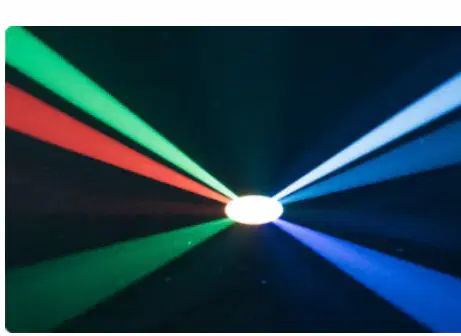
According to the RGB Principle, what happens when red, green, and blue light (the additive primaries) overlap completely?
They produce white light.
They produce black light.
They produce yellow light.
They produce purple light.

In digital displays, what does each pixel consist of?
Each pixel consists of red, green, and blue subpixels that emit light at varying intensities.
Each pixel consists of a single white light source.
Each pixel consists of yellow and cyan subpixels only.
Each pixel consists of a liquid crystal that changes color without subpixels.
Additive colour mixing begins with black (the absence of light) and becomes progressively lighter as colors are added.
True
False
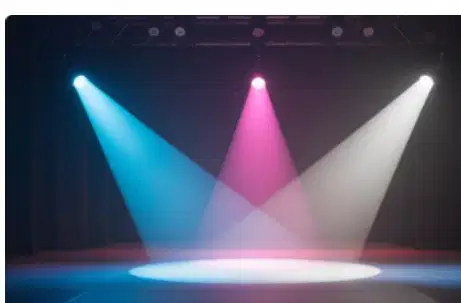
Which of the following is NOT a practical application of additive colour mixing?
Stage lighting
Photography
Colour calibration systems
Oil painting
What is the fundamental principle behind screens and digital displays as described in the worksheet?
Additive color mixing, where colored lights are added and brightness increases, producing white light when red, green, and blue overlap completely.
Subtractive color mixing, where colors are created by removing light, resulting in black when all colors overlap.
Polarization of light, where only certain light waves pass through the display to create images.
Reflection of ambient light, where external light is reflected to form visible images on the screen.

