
 Worksheets
Churches of the east Ch 4
Total questions: 110
Worksheet time: 57mins
What is the obligation of Christians regarding unity according to the introduction?
To work toward division
To work toward unity
To remain neutral
To avoid dialogue
How can the Churches of the East be distinguished?
By their geographical location
By their language
By two main groups
By their size
Which group of Churches is in full communion?
Eastern Orthodox Churches
Western Catholic Churches
Eastern Catholic Churches
Protestant Churches
Which group of Churches is outside of full communion?
Eastern Catholic Churches
Eastern Orthodox Churches
Western Catholic Churches
Protestant Churches
What does Scripture describe about the early Christian community?
The conflicts that divided the community
The harmony that governed the community
The economic struggles of the community
The political alliances of the community
What issue did the Apostles meet in Jerusalem to discuss?
The role of women in the church
The translation of scriptures
Whether Gentiles had to follow the Mosaic Law
The construction of new churches
What was the purpose of the meeting in Jerusalem according to the text?
To establish new religious holidays
To discuss the translation of the Bible
It was a precursor to the Ecumenical Councils
To elect a new leader for the church
How has the Magisterium responded to matters of disagreement?
By dividing the church into factions
By preserving the unity of faith
By rewriting the scriptures
By ignoring the issues
What was one of the main challenges faced by early Christians in the first three centuries?
They were welcomed by the Roman Empire.
They were persecuted.
They were given land by Jewish leaders.
They were ignored by Nero.
Who cast early Christians away from the Temple?
Roman soldiers
Greek philosophers
Jewish leaders
Egyptian priests
What was one of the reasons Nero targeted Christians?
To promote Christianity
As scapegoats for the fire that destroyed Rome
To build alliances
To gain their support
What was a focus of the Church during the first three centuries besides evangelization?
Building new temples
Mere survival
Expanding territories
Forming political alliances
What was a significant aspect of the Church's unity during the first three centuries?
The Church's unity was weak and divided.
Heresies were readily opposed by the leaders.
The Church had no leaders to oppose heresies.
The Church's unity was insignificant.
What was a common fate of most early Popes during the first three centuries?
They were exiled.
They were martyred.
They lived in peace.
They were ignored.
What would eventually require the Magisterium to clarify doctrine?
Disputes about the identity of Christ.
Disputes about the location of the Church.
Disputes about the language of the Bible.
Disputes about the number of apostles.
Who held the last great Roman persecution of the Church?
Constantine
Diocletian
Nero
Augustus
What significant action did Constantine take regarding Christian persecution?
He initiated a new persecution
He converted to another religion
He ended Christian persecution
He divided the kingdom
What was the purpose of the Edict of Milan issued by Constantine?
To start a new war
To restore civil rights to Christians
To divide the Roman Empire
To establish a new religion
What was established by Diocletian to manage the Roman Empire?
A monarchy
A democracy
A tetrarchy
A republic
What was the first major conflict of the Church?
The Great Schism
Arianism
The Reformation
The Crusades
Who was the priest that denied the divinity of Christ?
Athanasius
Augustine
Arius
Ambrose
What did Arius believe about Jesus?
Jesus was coeternal with the Father
Jesus was created by the Father and not equal to Him
Jesus was a myth
Jesus was superior to the Father
What key teaching of Arianism challenged the idea of the Blessed Trinity?
The immortality of the soul
The coequality and coeternity of the Father and the Son
The resurrection of the body
The divinity of the Holy Spirit
Who called for an Ecumenical Council to resolve the issue of Arianism?
Pope Leo
Emperor Constantine
King Henry VIII
Saint Peter
What was one of the main outcomes of the Council of Nicea in AD 325?
The establishment of the Nicene Creed
The beginning of the Protestant Reformation
The fall of the Roman Empire
The start of the Crusades
What does the term "Homoousios" mean as defined by the Council of Nicea?
Of different beings
Of the same being or substance
Of divine origin
Of separate entities
Despite the Council of Nicea's decisions, what continued to persist?
The spread of Islam
Arianism
The Great Schism
The Renaissance
What significant action did Constantine take to reunite the Roman Empire?
He abolished the Senate.
He moved the capital to Byzantium.
He divided the empire into two parts.
He declared war on neighboring states.
What was the new name given to Byzantium after Constantine moved the capital there?
New Athens
Constantinople
Rome II
Eastern Rome
How did the relocation of the capital to Byzantium affect the Roman Empire's power dynamics?
It shifted the balance of power from the East to the West.
It shifted the balance of power from the West to the East.
It centralized power in the North.
It decentralized the empire's power.
Who was the emperor of the East who took action against Arianism?
Constantine
Theodosius
Justinian
Augustus
In what year was the First Ecumenical Council of Constantinople held?
AD 325
AD 381
AD 451
AD 553
What was declared the official state religion of the Roman Empire by Theodosius?
Judaism
Islam
Christianity
Paganism
What did the First Ecumenical Council of Constantinople expand on?
The Apostles' Creed
The Nicene Creed
The Athanasian Creed
The Chalcedonian Creed
What was declared about the bishop of Constantinople at the First Ecumenical Council of Constantinople in AD 381?
The bishop should be seen as second in honor to the Bishop of Rome.
The bishop should be the supreme leader of Christianity.
The bishop should be equal to the Bishop of Alexandria.
The bishop should be subordinate to the Bishop of Jerusalem.
Why was the declaration about Constantinople not accepted by the Pope?
It went against the Council of Nicaea, which established Alexandria as second to Rome.
It contradicted the teachings of the Bible.
It was not supported by the majority of bishops.
It was seen as a political move by the Eastern Church.
What was the significance of making Constantinople a patriarchate?
It became a major governing center of Christianity.
It led to the decline of the Roman Church.
It caused the fall of the Byzantine Empire.
It resulted in the unification of all Christian sects.
How long did it take for the Western Church to recognize Constantinople as a patriarchate?
It took years.
It was immediate.
It took a few months.
It never happened.
What was one of the consequences of the Roman Empire's continued battle with barbarians since the mid-second century?
The Roman Empire expanded its territory significantly.
The Roman military and resources were drained.
The Roman Empire formed alliances with the barbarians.
The Roman Empire became more centralized.
By 476, what happened to the Western part of the Roman Empire?
It became a powerful independent state.
It was overthrown and no longer existed.
It merged with the Eastern Empire.
It expanded into new territories.
What was the status of the Eastern part of the Roman Empire by 476?
It was weakened and fragmented.
It remained strong as the Byzantine Empire.
It was conquered by the barbarians.
It became part of the Western Empire.
What was one consequence of chaos centered in the West during the fifth century?
Increased communication with the East
Religious thought and traditions developed independently
Unified cultural practices
Political stability
What factor contributed to the widening cultural gap between the East and West in the fifth century?
Economic prosperity
Political changes
Technological advancements
Military alliances
Which crisis was a result of doctrinal, cultural, and political factors in the fifth century?
The Protestant Reformation
The Nestorian crisis
The Great Schism
The Renaissance
What was the main issue in the doctrinal debate that arose in the Church over Christology?
The nature of the Holy Spirit
The title for the Blessed Virgin Mary
The role of the apostles
The structure of the Church hierarchy
What title did Bishop Nestorius object to for the Blessed Virgin Mary?
Christotokos
Theotokos
Mater Dei
Sancta Maria
What was the decision of the Council of Ephesus in AD 431 regarding the title for the Blessed Virgin Mary?
Declared her as the Queen of Heaven
Declared her as the Mother of the Church
Declared her as rightly called Theotokos
Declared her as the Patroness of Europe
What happened to the followers of Nestorianism after the Council of Ephesus?
They were excommunicated
They fled to the Persian Empire
They formed a new council
They accepted the council's decision
What is the modern name of the Church formed by the followers of Nestorianism?
Eastern Orthodox Church
Roman Catholic Church
Assyrian Church of the East
Coptic Orthodox Church
What was the belief called that claimed Christ had one divine nature?
Hypostatic Union
Monophysitism
Dualism
Trinitarianism
What did the Council of Chalcedon declare about Christ in AD 451?
Christ had only a divine nature
Christ had only a human nature
Christ is a divine person with both a human and divine nature
Christ's human nature was superior
What is the term used to describe the union of Christ's human and divine natures?
Monophysitism
Hypostatic Union
Dualism
Trinitarianism
Which group is known today as Oriental Orthodox Churches?
Those who accepted the Council of Chalcedon
Those who rejected Monophysitism
Those who held on to Monophysitism and separated from the Church
Those who believed in Trinitarianism
What were the main reasons for the growing differences between the Churches in the East and West after the Council of Chalcedon?
Politics and church governance
Economic policies
Military strategies
Agricultural practices
Which aspects contributed to the drift between the Eastern and Western Churches besides politics and church governance?
Culture, language, and theology
Trade routes and commerce
Art and architecture
Scientific discoveries
Despite the growing differences, what was the relationship between the Churches in the East and West?
They remained in communion
They declared war on each other
They completely separated
They formed a new unified church
What was one of the impacts of barbarian occupation in the West?
Strengthened the Western emperor's power
Assimilated and influenced broader culture
Increased Eastern regard for the Western Church
Unified forms of government
How did the East view the West during the barbarian occupation?
More cultured and civilized
Less cultured and civilized
Militarily superior
Economically advanced
What was a consequence of Arianism being kept alive in the West?
Strengthened ties with the East
Led to greater separation from the East
Unified religious practices
Increased power of the Western emperor
What language was predominantly used in the West for communication and worship?
Greek
Latin
Hebrew
Aramaic
Which language was primarily spoken in the East?
Latin
Greek
Hebrew
Aramaic
Who was a great Latin doctor from the West?
St. Basil
St. John Chrysostom
St. Augustine
St. Thomas Aquinas
Which theologians are associated with the East?
St. Augustine and St. Thomas Aquinas
St. Basil and St. John Chrysostom
St. Jerome and St. Ambrose
St. Gregory and St. Bernard
What was the role of Metropolitans in the Church structure?
Bishop with authority over a large geographical part of the Church
Bishop with a degree of oversight over more than one diocese
Bishop responsible for a single parish
Bishop with no specific oversight responsibilities
What was the role of Patriarchs in the Church structure?
Bishop with a degree of oversight over more than one diocese
Bishop responsible for a single parish
Bishop with authority over a large geographical part of the Church
Bishop with no specific oversight responsibilities
What was a significant factor in the divergence between Eastern and Western Church structures?
Differences in language
Reasoning and theology behind the patriarchates
Economic disparities
Political alliances
Why was the Bishop of Rome seen as having authority early on?
Due to his succession from Sts. Peter and Paul
Because of his wealth and power
Due to his military conquests
Because of his connection to Constantinople
What did the East associate Church governance with?
Military power
Governance of civil society
Economic control
Cultural influence
What happened after the capital moved to Constantinople?
Rome became more powerful
Constantinople grew in culture and power
The Church unified under one leader
The East lost its influence
What was one of the desires of Constantinople regarding its status?
To be recognized as a patriarchate
To be the sole ruler of the Church
To be independent from the Church
To be the center of economic power
What phrase describes how Rome was viewed in terms of primacy?
Supreme ruler
Primacy among equals
First among many
Leader of all
What was the main reason for the renewal of Arianism?
The influx of barbarian tribes
The addition of the Filioque
The rise of the Eastern Church
The decline of the Western Church
What word did Western Christians add to the Creed in the Fifth Century?
Filioque
Credo
Sanctus
Gloria
What does the term "Filioque" mean?
"And the son"
"From the father"
"With the spirit"
"In the beginning"
Why did the East not add the Filioque to the Creed?
They believed changes could only be made by an Ecumenical Council
They agreed with the Western Church
They did not understand the term
They had already added it
What is the primary role of icons in Eastern Churches according to the Iconoclastic Movement?
Decorative purposes
Aid to prayer and meditation
Historical documentation
Architectural support
By which century was the icon tradition becoming established in the East?
6th Century
7th Century
8th Century
9th Century
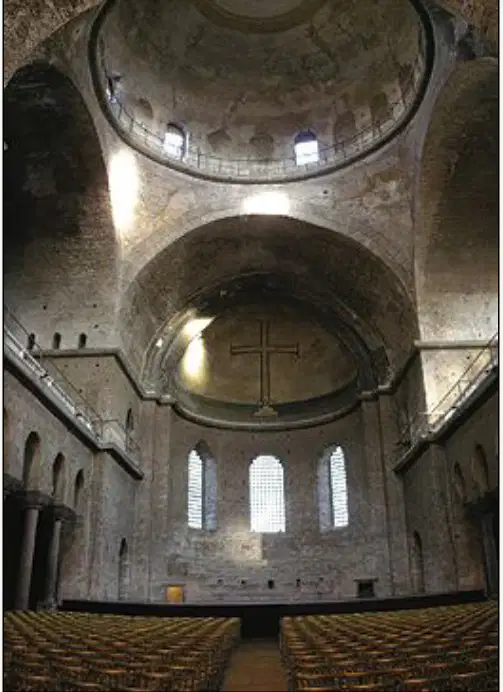
What does the Greek word for "icon" mean?
Painting
Sculpture
Image
Symbol
What action did Byzantine emperors take regarding religious images during the Iconoclastic Movement?
They encouraged the creation of new religious images.
They ordered all religious images to be destroyed.
They ignored the use of religious images.
They promoted religious images in public spaces.
Who condemned the iconoclast movement in the West?
Emperor Constantine
Pope Gregory III
Bishop Leo
King Charlemagne
What was the outcome of the Second Ecumenical Council of Nicaea in 787?
It banned all religious images.
It ruled that icons were licit, ending the movement.
It started a new iconoclastic movement.
It declared a new religious doctrine.
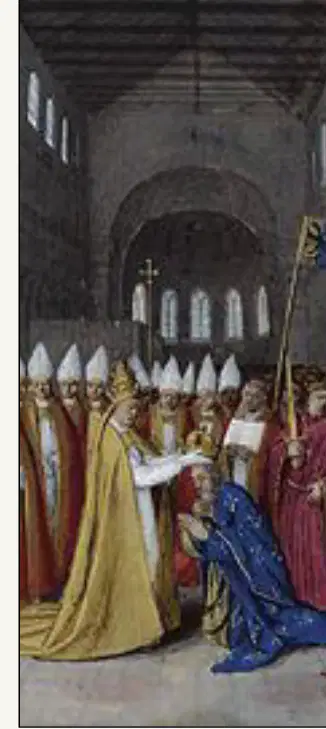
In what year did Pope Leo III crown Charlemagne as "Emperor of the Romans"?
800
850
900
950
What was one of the effects of Charlemagne being crowned "Emperor of the Romans" by Pope Leo III?
The legitimacy of the Empress of Constantinople was nullified
The Eastern Roman Empire was established
The Pope lost political power
The Byzantine Empire expanded
How did Charlemagne seek to unify Western Europe in the Faith?
Through peaceful negotiations
By military force, even confronting Muslims
By forming alliances with the Byzantine Empire
By establishing trade routes
What title was given to the Western European Empire by 962?
Byzantine Empire
Ottoman Empire
Holy Roman Empire
Carolingian Empire
What was the final breaking point leading to the excommunications of AD 1054?
Political disagreements
Liturgical practices
Economic issues
Military conflicts
Which liturgical custom did Southern Italy use that contributed to the tensions?
Use of unleavened bread
Use of leavened bread
Use of wine only
Use of water only
Who continued to enforce the liturgical custom despite local contestation?
The Pope
The local bishop
Cardinal Humbert
The Norman invaders
What additional disputes escalated the tensions leading to the excommunications?
Disputes about the authority of the Pope
Disputes about trade routes
Disputes about land ownership
Disputes about language use
What event is typically seen as the defining moment of the East-West schism?
The Council of Nicaea
The dual excommunication of 1054
The fall of Constantinople
The Treaty of Verdun
Who did Humbert denounce at the Liturgy at Hagia Sophia?
The Emperor
The Pope
The Patriarch
The Bishop of Rome
Why did Humbert not have the power to excommunicate in the Pope’s name?
He was not authorized by the church
The Pope had just died
He was not a cardinal
The Patriarch opposed it
What was the result of the dual excommunication over time?
The East and West united
The East and West viewed each other as separate entities
The East dominated the West
The West dominated the East
What was the main purpose of the Crusades according to the Byzantine Empire?
To expand the empire's territory
To liberate the Holy Land from Muslim rule
To establish trade routes
To convert Muslims to Christianity
Why did the Pope begin to call for a Fourth Crusade at the end of the 12th century?
To strengthen alliances with the Byzantine Empire
To recall Jerusalem
To establish a new religious order
To negotiate peace with Muslim leaders
What was one consequence of the army's actions during the Fourth Crusade?
Strengthened ties between the East and West
Established a new empire in Constantinople
Deepened divisions between the East and West
Created a lasting peace in the region
What was the main goal of the Second Ecumenical Council of Lyon in 1274?
To establish a new religious order
To unify the East and West with the cooperation of Byzantine Emperor Michael VIII
To create a new version of the Bible
To abolish the Nicene Creed
What significant change did the delegates agree to during the Second Ecumenical Council of Lyon?
The removal of the Nicene Creed
The acceptance of the Filioque into the Nicene Creed
The establishment of a new papal authority
The rejection of Byzantine traditions
What was the reaction of the Eastern Empire's Orthodox clergy to the news from the Second Ecumenical Council of Lyon?
They fully supported the council's decisions
They were indifferent to the council's decisions
They met the news with opposition
They immediately implemented the council's decisions
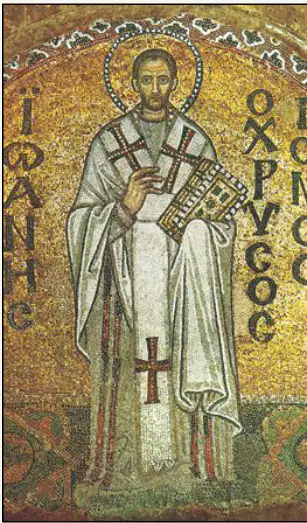
What happened after the death of Byzantine Emperor Michael VIII regarding the Second Ecumenical Council of Lyon?
The council's decisions were fully embraced
The council was reconvened for further discussion
The council's decisions were repudiated by his son and successor
The council's decisions were expanded upon
Which heresy says that Jesus is not God?
The Jesuits focused on bringing members back to the (a) Church by (b) .
According to the Gospels, there are (a) distinct Persons in the Trinity.

In the 1500s, Martin Luther’s Ninety-Five Theses, Henry VIII’s “Act of Supremacy” and John Calvin’s Institutes of the Christian Religion contributed to:
a decline in the power of the Catholic Church
an increased sense of nationalism in Tudor England
the growing power of the feudal nobility in Europe
a major conflict with Eastern Orthodox Christians
The Council of ______ took 18 years to complete, but resulted in good reforms.
Constantinople
Nicea
Trent
Rome
The idea that there is One God in three persons: the Father, the Son, and the Holy Spirit is known as the
Resurrection
Trinity
Annunciation
Sacrament
The Catholic Church celebrates ___ sacraments.
3
5
7
9
During a lively debate in history class, Emma asked, 'What was one of the main issues Martin Luther had with the Catholic Church?'
The use of Latin in services
The sale of indulgences
The building of cathedrals
The practice of celibacy

