
 Worksheets
What is Electricity?
Total questions: 49
Worksheet time: 25mins
Electricity is the movement of ______ creating electric charge that flows through materials called conductors.
electrons
protons
neutrons
atoms
What does electricity power?
Only industrial machinery
Only LED lights
Everything from the smallest LED lights to massive industrial machinery
Only household appliances
Electricity moves through wires just like ______ moves through plumbing systems.
water
air
sand
oil
What are materials called that allow electricity to flow through them?
Insulators
Conductors
Resistors
Magnets
What is the definition of Voltage (V)?
The electric "pressure" that pushes charges through circuits.
The rate at which energy is used in a circuit.
The amount of current flowing through a wire.
The resistance to the flow of electric current.
What is the unit of measurement for Voltage (V)?
volts (V)
amperes (A)
watts (W)
ohms (Ω)
What is the symbol for Voltage?
V
A
Ω
W
What is the definition of Current (I)?
The flow rate of electric charge through a conductor.
The resistance offered by a material to the flow of electrons.
The amount of energy stored in a battery.
The potential difference between two points in a circuit.
What is the unit of measurement for Current (I)?
amperes (amps, A)
volts (V)
ohms (Ω)
watts (W)
What is the symbol for Current?
I
C
V
R
What is the definition of Resistance (R)?
The opposition to current flow in materials.
The ability of a material to conduct electricity.
The rate at which energy is transferred in a circuit.
The amount of charge stored in a capacitor.
What is the unit of measurement for Resistance (R)?
ohms (Ω)
amperes (A)
volts (V)
watts (W)
What is the symbol for Resistance?
R
V
I
P
What is the formula for Ohm's Law that relates voltage (V), current (I), and resistance (R)?
V = I × R
V = R ÷ I
V = I + R
V = R - I
Given a 10V voltage across a 5Ω resistor, what is the current according to Ohm's Law?
2A
0.5A
5A
10A
According to Ohm's Law, if you know any two values among voltage, current, and resistance, can you calculate the third?
Yes
No
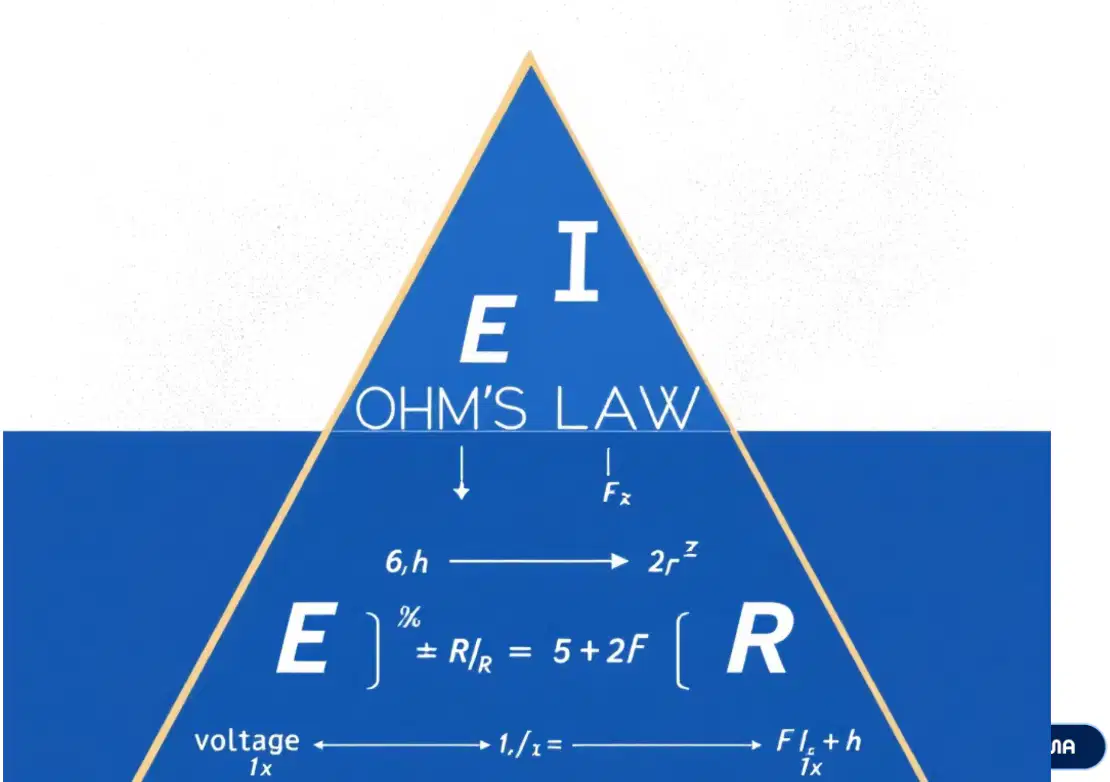
In the Ohm's Law triangle, which variable is found at the top of the triangle?
Voltage (E)
Current (I)
Resistance (R)
Ohm's Law states that the relationship between voltage, current, and resistance is:
Voltage equals current multiplied by resistance.
Current equals voltage multiplied by resistance.
Resistance equals voltage plus current.
Voltage equals resistance divided by current.
What does power (P) represent in electrical calculations?
The rate of energy consumption or production, measured in watts (W).
The amount of electric charge in a circuit, measured in coulombs (C).
The resistance to current flow, measured in ohms (Ω).
The potential difference between two points, measured in volts (V).
What is the basic formula for electrical power?
P = V × I
P = V / I
P = I / V
P = V + I
Which of the following is an alternative formula for electrical power?
P = I² × R
P = V × I
P = V + I
P = I ÷ R
Which of the following is another alternative formula for electrical power?
P = V² ÷ R
P = V × I
P = I × R
P = V + R
A 12V battery powers a 2A device. What is the power consumed by the device?
24 watts
12 watts
2 watts
6 watts
Electricity generation relies on __________ - moving conductors through magnetic fields to create electrical energy.
electromagnetic induction
thermal conduction
chemical reaction
static electricity

Which of the following can provide the mechanical force needed as an energy source for electricity generation?
Water
Steam
Wind
Gas
All of the above
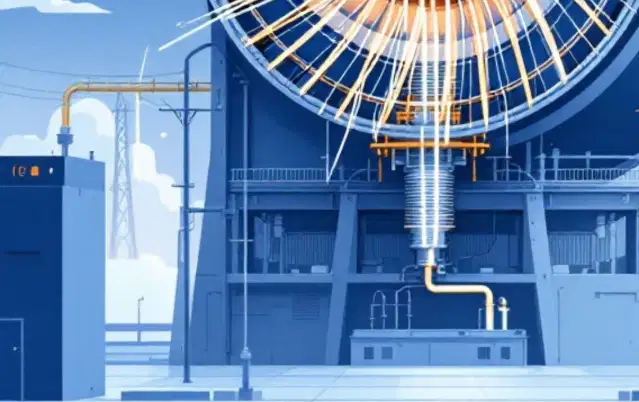
What is the purpose of the energy source in electricity generation?
To create electrical energy directly
To spin massive turbines at high speeds
To store energy
To cool the generator
What do rotating magnets inside a generator create?
Heat
Changing magnetic fields
Light
Sound

Mechanical energy converts to __________ energy for distribution.
electrical
thermal
chemical
nuclear
Direct Current (DC) electricity flows in ________ with steady voltage polarity, like water flowing steadily through a pipe. Fill in the blank.
one constant direction
alternating directions
random pulses
circular loops
Which of the following is a common application of Direct Current (DC)? Choose the correct option.
Alternators
Solar panels
Transformers
Induction motors
Who were the historical pioneers that developed early DC systems?
Thomas Edison and Alessandro Volta
James Clerk Maxwell and Michael Faraday
Nikola Tesla and George Westinghouse
Samuel Morse and Guglielmo Marconi
Direct Current (DC) provides stable, predictable power for most electronic devices.
True
False
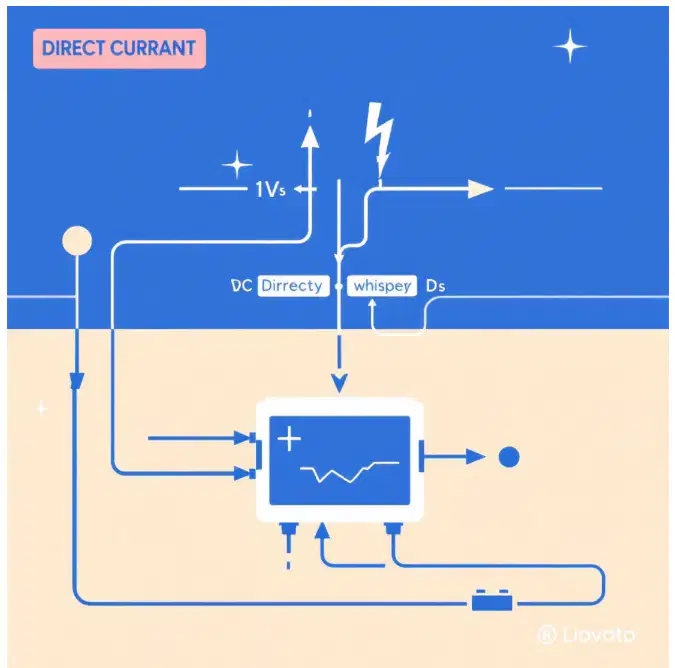
Refer to the diagram labeled 'DIRECT CURRENT'. What does the diagram illustrate?
The flow of alternating current
The flow of direct current in one direction
The conversion of DC to AC
The use of transformers in DC circuits
What does AC current do periodically?
Remains constant
Reverses direction
Increases voltage
Stops flowing
Fill in the blank: AC current is ideal for efficient ________ through power grids at high voltages.
long-distance transmission
short-circuiting
battery charging
local heating
Who enabled the modern electrical distribution networks that power cities worldwide with AC system innovations?
Nikola Tesla
Thomas Edison
James Watt
Michael Faraday
AC current's voltage polarity switches back and forth in a sinusoidal pattern.
True
False
Direct Current (DC): Fill in the blank. DC has a ______, consistent flow in one direction.
steady
random
intermittent
alternating
Direct Current (DC): True or False. DC is simple to understand and control.
True
False
Direct Current (DC): DC is ideal for ______ and short distances.
electronics
power plants
long-distance transmission
heavy machinery
Direct Current (DC): Which of the following is NOT a typical use for DC?
Batteries
Solar systems
LED lights
Powering homes and industrial facilities
Alternating Current (AC): Fill in the blank. AC is efficient for ______-voltage transmission.
high
low
medium
short
Alternating Current (AC): True or False. AC powers homes and industrial facilities.
True
False
Alternating Current (AC): AC is easy to transform ______ levels.
voltage
current
frequency
resistance
Which of the following is the standard for electrical grid systems?
Direct Current
Alternating Current
Fill in the blank: ________, current, and resistance govern how electricity flows through all circuits and systems.
Voltage
Capacitance
Frequency
Power
Which law and formulas provide the foundation for designing and understanding electrical systems?
Newton's Law and energy formulas
Ohm's Law and power formulas
Boyle's Law and gas formulas
Faraday's Law and magnetic formulas
Electromagnetic induction and ______ systems shape how we produce and distribute electrical energy.
AC/DC
hydraulic
thermal
mechanical
Understanding electrical basics empowers innovation, enables safe usage, and drives technological advancement.
True
False

