
NEW
Font size
 Worksheets
5 Unit 44 Forming processes
Total questions: 13
Worksheet time: 65secs
Non-traditional methods like CNC press brakes and CNC bending rolls deliver high accuracy, flexibility, and repeatability across complex profiles and large volumes, but require high capital investment.
True
False
Forming processes reshape sheet metal by applying force without ______ material. (Fill in the blank)
removing
adding
melting
painting
Unlike cutting, forming relies on which of the following processes?
Melting
Bending, stretching, or compressing
Painting
Welding
Springback means that the final bend angle is often ______ than the intended angle, requiring over-bending or compensation.
less
greater
equal
sharper
To ensure consistent bends, operators may use forming ______ and jigs to control angles and radii. (Fill in the blank)
gauges
screws
wires
clamps
The accuracy of a bar folder depends on operator skill, but tolerances of ±1–2 mm are common.
True
False
What is the most traditional method of forming, where the sheet is placed over a former and struck with a mallet or hammer to shape it?
Hammer and Former
Press Forming
Injection Molding
Vacuum Forming
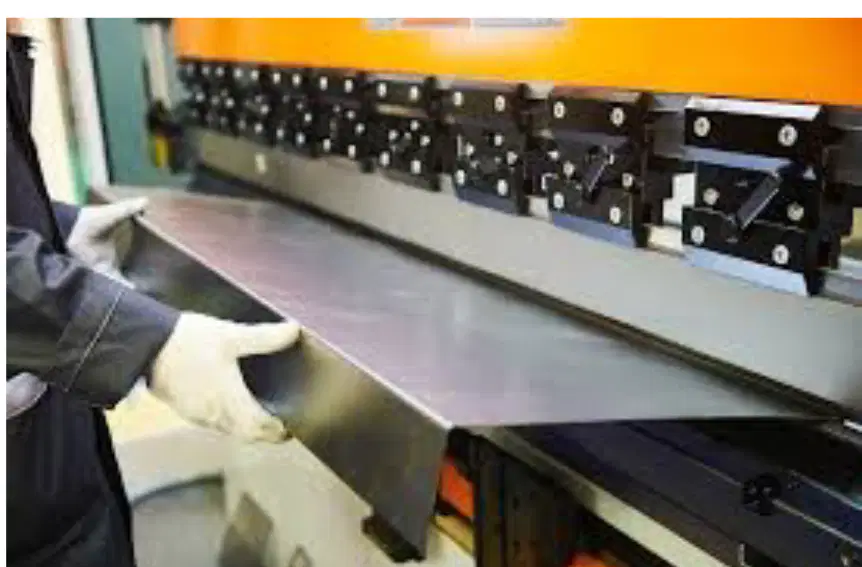
What is one of the most widely used forming machines in industry?
Press brake
Lathe machine
Milling machine
Injection molding machine
Which of the following is the standard method for press brake tooling?
Swan neck tooling
V-block and blade tooling
Rotary bending
Roll forming
Swan neck tooling allows deeper or more complex profiles to be formed.
True
False
Bottoming dies fully press the sheet into the die, giving higher accuracy and less springback.
True
False
What is a limitation of press brake forming?
Tooling costs for complex shapes and slower setup for multiple bends.
It is only suitable for plastic materials.
It cannot produce any bends in metal sheets.
It is the fastest method for mass production.
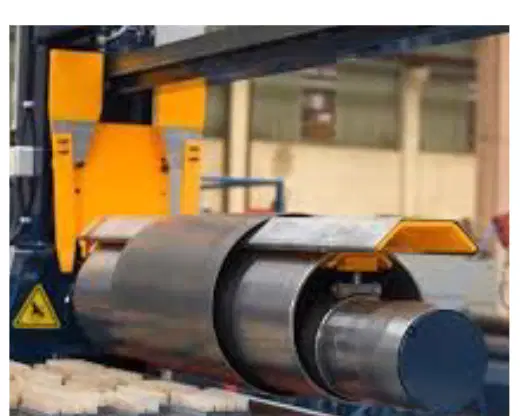
Refer to the image of the CNC bending roll machine. What is the primary function of this machine?
To automate the process of rolling sheet into cylinders or cones.
To cut metal sheets into precise shapes.
To weld metal components together.
To drill holes in metal sheets.

