
 Worksheets
Chemistry Unit 1 Quiz 1
Total questions: 40
Worksheet time: 26mins
What is the scientific method?
A random approach to solve problems.
An organized approach to solve problems.
A chaotic approach to solve problems.
An unstructured approach to solve problems.
What is the first step of the scientific method?
Hypotheses
Experiment
Observe
Conclusion
What is a hypothesis?
A random guess
An educated statement that is testable and measurable
A proven fact
A summary of the experiment
What is the purpose of experiments in the scientific method?
To create new hypotheses
To test each hypothesis
To compare results
To communicate results
What is the main goal of the analysis step in the scientific method?
Create new hypotheses
Test each hypothesis
Compare experiment results to the hypothesis
What does a law describe?
A hypothesis that has been proven false.
A natural phenomenon tested over time under different conditions.
A random event without explanation.
A theory that has not been tested.
What is matter?
Anything that can do work or produce heat
Anything that has mass and volume
The force of gravity acting on an object's mass
The amount of matter in an object
Which is a physical change?
Rusting of iron
Freezing of water
Burning of paper
Digestion of food
Which state of matter has a fixed volume but no fixed shape?
Solid
Liquid
Gas
Plasma
In a compound, elements are:
Blended together
Chemically bonded
Physically mixed
Loosely associated
Which mixture has visibly different parts?
Homogeneous mixture
Compound
Element
Heterogeneous mixture
Which is a homogeneous mixture?
Cereal with milk
Salt water
Granite
Sand and pebbles
Which of the following is a chemical change?
Melting ice
Cutting paper
Dissolving sugar in water
Rusting of iron
Which property describes a substance's ability to react with others?
Physical property
Chemical property
Intensive property
Extensive property
Which mixture can be separated by physical means?
Compound
Element
Heterogeneous mixture
Atom
Which of these is a pure substance?
Cereal
Sugar water
Oxygen gas
Pizza
Which of the following is a heterogeneous mixture?
Milk
Salad
CO₂
H₂O
Which is a homogeneous mixture?
Cereal
Sugar water
Oxygen gas
Pizza
Which of these is a heterogeneous mixture?
Saltwater
Air
Cereal
Vinegar
Label the states of matter
liquid
gas
solid
ice
Match the following properties with the state of matter
Definite shape and volume
Solid
No defined shape, but has a definite volume
Liquid
No definite shape or volume
Gas

What state of matter are the particles in this animation?
Solid
Liquid
Gas
Plasma

The diagram shows particles in a
Solid
Liquid
Gas
Identify which are the products and reactants

Match the following evidence with the observation

Physical Change - because it is melting.

Chemical Change - because it is burned.

Physical Change - because it is bent.

Physical Change - because size changes.

Chemical change - because acids/bases.

Match the following (place the empty one with no image)

Physical Change

Chemical change
No image
Empty

Match the following terms to their proper defintions
Matter
Anything that has mass and volume
Mass
The amount of matter in an object
Volume
The amount of space an object takes up
Atoms
The smallest particle of an element that still has the properties of that element
Elements
A substance that is made up of only one kind of atom.

Flammability is a (a)
Physical Property
Solution

Match the following
Not well mixed and will easily separate
heterogeneous
Is well mixed and will NOT separate easily.
homogeneous
Is made of two or more substances, chemically combined.
compound
Is made of two or mores substances, not chemically combined.
mixture
Is made of only one type of element.
element
The law of conservation of mass states:
Mass can be created or destroyed in chemical reactions
Mass is always conserved in physical changes
Mass is neither created nor destroyed in chemical reactions
Mass increases during exothermic reactions
If a reaction starts with 20g of reactants, it should produce...
40g of product
10g of product
80g of product
20g of product
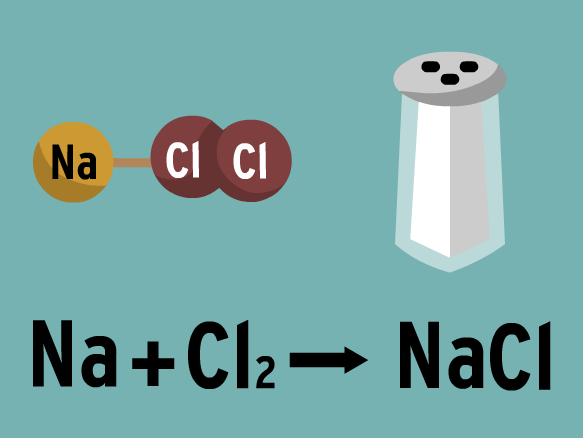
4 grams of sodium react with how many grams of chlorine to make 10 grams of table salt?
4 grams
6 grams
8 grams
10 grams
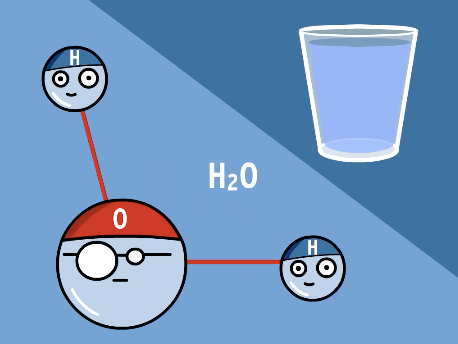
4 g hydrogen and 32 g oxygen combine to form:
36 g water
28 g hydroxide
32 g oxygen
36 g deuterium
A _____ property of water is that it is unreactive with oil.
Physical
Chemical
Mass
Theory
Phase changes are classified as _____ changes.
Chemical
Physical
Blended
Bonded
In a compound the elements are _____ together, whereas in a mixture the substances are blended together.
Blended
Bonded
Homogeneous
Heterogeneous
Anything that has mass or volume is called _____.
Matter
Theory
Experiment
Observation
For the following reaction, fill in the missing information: Iron (30 g) + Sulfur (___ g) → Iron (II) sulfide (40 g). What is the mass of sulfur?
10 g
20 g
30 g
40 g

