
 Worksheets
Narrative Writing Vocabulary
Total questions: 195
Worksheet time: 4hrs 16mins
There are eight parts of speech.
True
False
A noun is a
a word that shows action
a word that describes a verb
person, place, thing or idea
a word that shows relationship or direction
A pronoun is
a word that shows action
a word that connects words, phrases or sentences
a word that shows strong feeling or excitement
a word that replaces a noun
A verb is
a person, place or thing
a word that shows action
a word that describes a noun
a word that shows strong feeling or excitement
An adjective is
a word that describes a noun
a word that describes a verb
a word that shows action
a word that shows relationship or direction
An adverb is
a word that describes a noun
a word that describes a verb
a word that shows relationship or direction
a word that shows strong feeling or excitement
A preposition is
a word that shows relationship or direction
a word that shows action
a person, place or thing
a word that describes a noun
An interjection is
a word that shows relationship or direction
a person, place, or thing
a word that shows strong feeling or excitement
a word that shows action
A conjunction is
a person, place or thing
a word that shows action
a word that shows relationship or direction
a word that connects words, phrases, or sentences
Identify the underlined word in this sentence. Katie likes to watch television.
verb
noun
adjective
adverb
Which one of these is NOT a part of the conjunctions FANBOYS
for
nor
and
maybe
Identify the underlined word in this sentence. Yuck! I stepped in gum on the sidewalk!
noun
interjection
preposition
verb
Identify the underlined word in this sentence. The squirrel sat on the bench.
preposition
conjunction
interjection
verb
Identify the underlined word in this sentence. I read a hilarious story today.
adjective
adverb
noun
verb
Identify the underlined word in this sentence. He quickly ran down the field.
adjective
adverb
preposition
noun
Identify the underlined word in this sentence. She wandered around town for an hour before she went home.
verb
noun
preposition
adjective
What type of sentence is this:
I have a basketball game next week.
interrogative
exclamatory
imperative
declarative
because he was late.
Independent clause
Dependent clause
What is the complete subject of this sentence: My little sister works at the grocery store.
My
My little
My little sister
My little sister works
What must a sentence have?
subject
verb
predicate
all of the above
What can a subject be?
noun
verb
adjective
pronoun
What is the simple predicate?
noun
pronoun
verb
adjective
What is an example of a verb?
smile
angel
is
maybe
Identify the predicate: I see the blue lights.
I
see
I see
see the blue lights
Identify the subject: I see the blue lights.
I
see
blue lights
lights
Identify the verb: I see the blue lights.
I
see
see the blue lights
I see
Identify the subject: With gorgeous blond hair, the girl ran towards her mom.
With gorgeous blond hair
the girl
blond hair
her mom
Identify the verb: With gorgeous blond hair, the girl ran towards her mom.
With gorgeous blond hair
the girl
ran
towards
Identify the predicate: With gorgeous blond hair, the girl ran towards her mom.
ran towards her mom
ran towards
with gorgeous blond hair
none of the above
What is the complete subject?
the girl
her mom
With gorgeous blond hair, the girl
the girl with gorgeous blond hair
Which word or group of words is the subject in the following sentence? The cat chased the mouse.
The cat
Chased the mouse
mouse
The cat chased
Which word or group of words is the direct object in the following sentence? She bought a new car.
bought
a new car
She
new
Identify the subject in the sentence: They are going to the park.
Are
Going
To the park
They
Identify the direct object in the sentence: He ate an apple.
an apple
He
ate
an
Which word or group of words is the subject in the following sentence? The students are studying for the exam.
The students
Exam for the students
Studying for the exam
Are studying
Which word or group of words is the direct object in the following sentence? She painted a beautiful picture.
She
painted
a
a beautiful picture
Identify the subject in the sentence: We will visit our grandparents tomorrow.
Will
Visit
Grandparents
We
Identify the direct object in the sentence: He wrote a letter to his friend.
a letter
wrote
his friend
to his friend
Which word or group of words is the subject in the following sentence? The dog barked loudly.
The dog
Dog loudly barked
Barked loudly dog
Loudly barked dog
Which word or group of words is the direct object in the following sentence? They watched a movie last night.
watched
last night
They
a movie
What is the ACTION VERB in the following sentence?
"The boy wrestled his opponent to the ground."
boy
opponent
wrestled
to
What is the ACTION VERB in the following sentence?
"She politely told the cashier there was a mistake."
politely
there
told
mistake
Choose the sentence that has a PREPOSITIONAL PHRASE
He gave her a rose.
My teacher wrote my name.
They walked to the store.
He baked a cake.
Choose the sentence that has a PREPOSITIONAL PHRASE
I bought a house by the lake.
The flower smells nice.
My dog ate the bone.
I gave my daughter a necklace.
What is the OBJECT of the PREPOSITION in the following sentence?
"He ran and threw the ball through the hoop."
ball
ran
hoop
he
What is the OBJECT of the PREPOSITION in the following sentence?
"I must take the GMAP in two weeks."
weeks
GMAP
take
two
Ripe red strawberries always remind me of summer.
subject
direct object
indirect object
object of a preposition
At the new restaurant, you can get Vietnamese food.
subject
direct object
indirect object
object of a preposition
Minh chose lasagna, salad, and a roll for lunch.
subject
direct object
indirect object
object of a preposition
Kiera showed the dog the new toy.
subject
direct object
indirect object
object of a preposition
Her dad asked her to clean out the garage.
subject
direct object
indirect object
object of a preposition
She read a book about the Civil War.
subject
direct object
indirect object
object of a preposition
I timed the race with my stopwatch.
subject
direct object
indirect object
object of a preposition
I loaned Zoe my laptop.
subject
direct object
indirect object
object of a preposition
The choir has been performing the same piece for three years.
subject
direct object
indirect object
object of a preposition
The crew worked throughout the night.
subject
direct object
indirect object
object of a preposition
Chloe called Juan and Faith.
subject
direct object
indirect object
object of a preposition
Fred bought the children a book.
subject
direct object
indirect object
object of a preposition
The dogs at the park all run in the same direction.
subject
direct object
indirect object
object of a preposition
After the meet, we discussed our next event.
subject
direct object
indirect object
object of a preposition
Jason left his notebook in his locker.
subject
direct object
indirect object
object of a preposition
My aunt sent me a card.
subject
direct object
indirect object
object of a preposition
Throughout the winter, birds eat seeds from the bird feeder.
subject
direct object
indirect object
object of a preposition
Without enough sleep, I had a hard time focusing on my test.
subject
direct object
indirect object
object of a preposition
Alyssa chose the best outfit for picture day.
subject
direct object
indirect object
object of a preposition
Logan fed the birds sunflower seeds.
subject
direct object
indirect object
object of a preposition
The ________________ in a fiction story are the people, creatures, or animals.
characters
problem
solution
setting
The _______ is the time and place that the story takes place.
setting
plot
character
solution
What is plot?
the sequence of events in a story
where and when a story takes place
the problem that has to be solved
anybody who is in a story
What is the struggle or problem in the story?
conflict
resolution
setting
climax
The narrator is the person who...
tells the story
illustrates the story
writes the story
sells the story
A story that is told using pronouns such as me, my, I, we, or us.
first person
second person
third person
third person limited
A story that is told using pronouns such as he, they, she, them, and him where the narrator knows the internal thoughts and feelings of just 1 character.
third person limited
third person omniscient
first person
second person
In the summer during the day would be an example of the _____________ of a story.
setting
conflict
characters
climax
Which is the correct order of a story plot?
exposition, rising action, climax, falling action, resolution
resolution, climax, exposition, falling action, rising action
falling action, rising action, climax, exposition, resolution
rising action, resolution, exposition, falling action, climax
What part of plot is the introduction or background to a story?
exposition
resolution
characters
climax
The turning point is also known as the ________________.
climax
resolution
exposition
setting
The way that the conflict or problem is solved is the __________ of the story.
resolution
characters
setting
exposition
Who is the main character in the story?
protagonist
antagonist
narrator
author
The message/life lesson in the story that the author conveys to the reader is called...
theme
secret
setting
resolution
What does the word narrative mean?
story
plot
characters
beginning
What is a narrative?
a story
an essay
a poem
an article
All narratives or stories have the following: (CHECK ALL THAT APPLY)
setting
characters
conflict
plot
The central character in a story.
antagonist
minor character
protagonist
personification
the character who is opposed to or who struggles against the protagonist
antagonist
minor character
protagonist
personification
The entire story revolves around the _____. There would be no story without it.
setting
conflict
dialogue
resolution
The stage of the plot that introduces important background information.
climax
rising action
resolution
exposition
falling action
The stage of plot where events begin to occur that develop or build the conflict.
climax
rising action
resolution
exposition
falling action
The turning point in a conflict, event, or situation that has been developing throughout the narrative.
climax
rising action
resolution
exposition
falling action
The events that are a direct result of the climax and begin to draw the story to a close.
climax
rising action
resolution
exposition
falling action
The end of the story where the loose-ends are tied up.
climax
rising action
resolution
exposition
falling action
How does a writer create an effective setting?
through dialogue
through imagery
through the plot structure
through the reader's imagination
Select the word that correctly defines each story element.
The introduction, or exposition, of a short story is also its...
character.
beginning.
resolution.
main message
The rising action of a story is
at the end of the story.
the events that build tension and suspense.
the message the author shares with the reader.
the introduction
The problems, worries, and tensions between characters, situations, and the environment is known as the:
setting
conflicts
dialogue
resolution

She was a very intelligent girl
Indirect
Direct

He went for a run every morning
Indirect
Direct

They were always very tired
Direct
Indirect

Ron finds cash and turns it in
Direct
Indirect

Karen loved working at the soup kitchen
Indirect
Direct

Will was a small angry human
Direct
Indirect
"oh my gosh I'm shaking over what happened on Friday!"
Indirect
Direct

She had to get a stepladder out to reach the third shelf
Direct
Indirect

She was a gorgeous freckled red-head
Direct
Indirect
Ms. Conti the English teacher is KICKBUTT
Direct
Indirect
What is theme?
the message about life that the author expresses
the time and location of a story- the setting
sequence of events- beginning, middle, end of a story
the main events summarized
What is a theme?
a story line- the plot and the conflict
the topic/subject of a story
a universal (big world) message about life
what the story is mostly about
What is the main idea of a story?
A one word topic about what a story is about
the message about life that an author expresses
the sequence of events in a story- beginning, middle, end
a general description of what the story is mostly about
The important parts of the beginning, middle, and end of the story is a
thesis
summary
theme
plot
What does theme add to a story?
More information about the plot
An important message or "advice"
Motivation for the characters' actions
Dialogue between the characters
Which of the following is NOT a synonym for theme?
message
moral
life lesson
main idea
How do you justify (support) your theme?
with text evidence
summarizing the story
you can't
summarizing the plot
Which of these is not related to theme?
a life lesson that the character learns
a lesson learned from a character changing
how a character is feeling
the message of the story
Why can't trust be a theme?
There's nothing to learn from it.
Trust is a theme
It's only one word, which is a topic.
A story's theme might be difficult to figure out because:
Authors make it hard to figure it out
It has nothing to do with plot, characters, and other story elements
Some stories don't have themes
It is not explicitly(written) in the story
The theme of a piece of story is the same as its ...
message (lesson)
significance (importance)
subject (topic)
meaning (main idea)
You can often infer(create) the theme of a story by ...
evaluating how a character has changed
analyzing a character's experiences
determining how the conflict was resolved (solved)
ALL of the above
Which of the following statements about theme is TRUE?
Authors NEVER use the same theme twice
Themes only repeat in short stories
All poems have the same theme
Different stories can have the same theme
If the topic is kindness, which of the following is a good theme statement?
Don't cry over spilled milk.
Treat others the way you want to be treated.
When fear is present, wisdom cannot be.
Face your fears.
Which of the following is an example of theme?
Cinderella was thoughtful and kind.
Jack risked his life to save Jane.
Don't judge people by outward appearances.
Happiness
Which is an example of theme?
One person can make a difference.
Michelle knew she would always be grateful.
Miguel was stubborn and did not change.
Angel became famous for rapping.
Which option describes a plot that can only take place in a specific setting?
Which of the following settings suggest a tense and nervous mood?
Which option is the most likely setting for a story with the theme “humans vs nature?”
Which questions about a story will the setting answer?
What is the author’s attitude toward the characters?
Where and when does the story take place?
Who are the people the story is about?
Why and when did the author write the story?
Setting can give clues about a story’s ________.
plot
conflict
mood
all of the above
Which of the following might describe the setting of a story?
a frog and a witch
happy and loving
a high school in 1956
love is stronger than fear
What is the setting of the passage below?
One summer day, Randolph the Bright slept alone in his room in the castle at Reddington. The light of morning seeped slowly through his curtains. Randolph blinked against the day, smiling as his dream came to a peaceful conclusion.
winter in a train station of a busy city
a hospital in the future
a summer morning in a castle
a grocery store in the 1980s
In the passage below, what can you infer about Randolph using clues from the setting?
One summer day, Randolph the Bright slept alone in his room in the castle at Reddington. The light of morning seeped slowly through his curtains. Randolph blinked against the day, smiling as his dream came to a peaceful conclusion.
Randolph is a mean person.
Randolph is a prince or king.
Randolph has an older sister.
The setting doesn’t give us any clues about Randolph.
If the passage below were set at Lena’s birthday party, what could you infer?
Lena laughed loudly. “I can’t believe you did that!” she said, smiling.
Lena might have received an unexpected present.
Lena might be a very selfish character.
Lena might be mad at her best friend.
Lena might be talking to her uncle.
If the passage below were set in a snowy park where children were playing, what could you infer?
Lena laughed loudly. “I can’t believe you did that!” she said, smiling.
Lena might have been gently hit by a snowball.
Lena might be lost.
Lena might be playing a boardgame or card game.
Lena might be talking to herself.
Which description of a setting would best create a mood of loneliness for a story?
“The sun was bright, and the breeze was warm in the park. In the distance, there was the pleasant noise of children laughing.”
“The restaurant was packed. The waitress balanced three dishes on her arm and moved carefully around the large, round tables. Everyone’s plates were full.”
“At the amusement park, the ticket counter hadn’t opened yet. It was still too early. But the warm smell of hot dogs and pretzels was already filling the air with the promise of fun.”
“The sky was gray that cool November afternoon in the empty playground. The swings were rusted. The wood was rotted. There was silence except for the wind blowing through the dead leaves.”
In the passage below, what can you infer about the setting of the story?
When the men reached Oregon, they stepped out of their wagons and embraced. The journey was long and dangerous, but they made it. Soon, their families would follow their trail in their own wagons, leaving their homes in the East to meet them in this brand new land: the West.
The story might take place on a different planet.
The story might take place in the past.
The story might take place in a desert.
We can’t make any inferences about the setting from this passage.
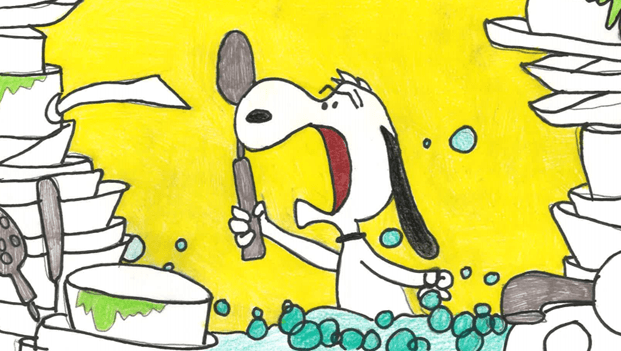
Before he was allowed to go to the movies, he had to wash a million dishes by hand is an example of what type of figurative language?
Metaphor
Personification
Hyperbole
Simile
When something that is not human is given human-like qualities, this is known as what type of figurative language?
Alliteration
Hyperbole
Personification
Symbolism
You are a ray of sunshine! is an example of:
onomatopoeia
alliteration
simile
metaphor
Becky borrowed Beth's book is an example of what type of figurative language?
Simile
Alliteration
Onomatopoeia
Metaphor
Her eyes were sparkling diamonds is an example of:
metaphor
simile
hyperbole
personification
A simile...
Naming a thing or an action by imitating the sound associated with it
Big exaggeration, usually with humor
A figure of speech comparing two unlike things using like or as
The repetition of usually initial consonant sounds in two or more neighboring words or syllables
She soothed her secret sorrow. Choose the best answer: What figurative language device is being used in this sentence?
Alliteration
Personification
Hyperbole
Metaphor
The tropical storm slept for days. This is an example of what figurative language device?
Personification
Simile
Alliteration
Hyperbole
An example of a simile is: I really do like ice cream
True
False
An exaggerated statement is a...
Alliteration
Onomatopeia
Simile
Hyperbole
What is onomatopoeia?
Words that sound like what they mean
an exaggerated statement
a comparison using like, as, or than
an expression not meant to be taken literally (ex. On cloud 9, raining cats and dogs)
Giving some non-human thing qualities of a human is an example of ...
Metaphor
Hyperbole
Personification
Alliteration
She’s as tiny as a mouse is an example of what type of figurative language?
Alliteration
Hyperbole
Oxymoron
Simile
Using the same consonant sound throughout the sentence is...
alliteratioin
metaphor
personification
onomatopoeia

I am as hungry as a bear! The kind of figurative language used here is ...
simile and personification
personification
simile
metaphor
A comparison between 2 unlike things without using 'like' or 'as' is ...
simile
metaphor
hyperbole
personification
"My mom can be as fiery as a volcano when I don't do my chores on time."
I am the happiest person in the on earth is an example of what type of figurative language?
alliteration
personification
hyperbole
simile
Who tells the story in first person point of view?
I, me, we
You, your
He or she
Who tells the story in second person?
I, me, we
He or she
You, your
Who tells a story in third person?
He or she
I, me, us
You, your
What point of view is this sentence in: "I went to the store and got ice cream."
First
Second
Third
Fourth
What point of view is this sentence in: "Lincoln won his hockey game on Saturday!"
Second
Third
First
Fourth
What point of view is this sentence in: "You seem very tired today."
Second
Third
First
Fourth
What point of view is this sentence in: "We went to Hersheypark and it was very fun!"
Third
Fourth
Second
First
What point of view is this sentence in: "Layla really likes the color purple."
First
Third
Fourth
Second
What point of view is this sentence in: "It ran across the street very fast."
Fourth
First
Second
Third
What point of view is this sentence in: "Our house is yellow."
First
Third
Second
If a sentence has the word, "I, me, ours, we, or mine", in it what point of view is the story in?
Second
Third
Fourth
First
If the story has, "You or your", in it what point of view is it in?
First
Third
Second
Fourth
If the story has, "He, she, or it," what point of view is the story told in?
Fourth
First
Third
Second
Which term means "the writer's attitude?
mood
tone
point of view
feeling
Mood is...
the feeling a text gives to readers.
the attitude of the writer
the point of view
the genre of a text
The tone is determined by the...
descriptions in the text
length of a written text
words and dialogue
descriptions, words and dialogue

The tone in the quote is...
melancholic
depressing
motivational
pessimistic
Which sentence has the most energetic tone?
It is raining heavily, and I don't have an umbrella!
It is raining heavily, I can't believe that I don't have an umbrella!
It is raining heavily, and I don't have an umbrella; let's splash and have fun!
It is raining heavily , and I hate it!
The mood in this passage is...
"My enemy was making his way down the hall, bursting open door after door. I needed to break through this window in two tries to make it out in time."
cheerful
scary
sad
pessimistic

The best word to describe the mood in this picture is...
calm
peaceful
depressing
optimistic
The best word to describe the mood in this picture is...
calm
peaceful
depressing
optimistic
Which tone would you use to write a letter to your grandmother?
formal and serious
serious and sad
warm and heartfelt
gloomy and pessimistic
The words that determine the tone in this passage are...
"although I had tried hard and had followed the steps of the scientific method, my experiment didn't work. I dragged myself into class and slouched in my seat, not raising my hand
experiment, science
method, class
dragged, slouched
raising hand
Grammar
15. What is _____ tallest animal in the world?
than
the
then
that
Grammar
9. Are you interested _______ buying flying cars ?
on
in
of
with
Grammar
12. The aeroplane was invented ________ the Write brothers.
by
on
in
with
Grammar
10. When did a man first land _____ the moon?
on
with
of
in
Grammar
1. I ate ______ cheese sandwich.
some
a
is
are
Grammar
2. River Nile is ________ longest river in the world.
the
than
then
this
Grammar
4. _________ rice good for you ?
are
does
is
do
Grammar
8. Will people travel in space ? yes, they ______ .
was
is
are
will
Grammar
3. Does Ali like reading ? Yes, _______ does.
she
they
you
he
Grammar
14. The bike _____ invented in 1893.
is
were
was
are
Grammar
7. The earth is larger ________ the moon.
than
then
those
the
Grammar
13. Paper was invented ______ China.
on
was
is
in
Grammar
6. ______________ was the telephone invented ? In 1876.
where
what
when
who
Grammar
11. _________ was the sun clock invented ? Egypt .
where
when
why
who
Grammar
5. How ______ brothers do you have ?
much
many
is
are

