
 Worksheets
Networking in Modern Digital Communication
Total questions: 29
Worksheet time: 15mins
What is the primary role of networking in modern digital communication?
To form the backbone of modern digital communication by connecting devices and systems across the world.
To create websites for businesses.
To design computer hardware.
To develop software applications.
Why is networking considered essential for modern digital communication? (DoK Level 2)
It enables the connection of devices and systems globally, allowing the sharing of resources, information, and services.
It helps in creating digital art.
It is used for printing documents.
It is only for personal entertainment.
Which of the following best describes an IP address?
A digital address that devices use to find and communicate with each other on a network.
A physical address assigned to a device on a network.
A method for dividing a network into smaller sections.
A type of protocol used for communication.
What are the two major versions of IP addresses?
IPv4 and IPv6
MAC and TCP
HTTP and HTTPS
LAN and WAN
Why are ports and protocols important in networking?
They allow devices to communicate using specific entryways and languages.
They assign physical addresses to devices.
They divide networks into smaller sections.
They provide internet access to devices.
What is the main purpose of subnetting in a network?
To divide a large network into smaller, more manageable sections.
To assign physical addresses to devices.
To encrypt data during transmission.
To translate domain names into IP addresses.
How do ports and protocols function in network communication?
Ports act as entryways to devices, and protocols are the languages they use to communicate.
Ports assign physical addresses, and protocols divide networks.
Ports encrypt data, and protocols assign IP addresses.
Ports are used for subnetting, and protocols are used for MAC addressing.
Why is it important for different services to use different ports and protocols?
To ensure that devices can communicate using the correct entryways and languages.
To assign unique physical addresses to each device.
To divide the network into subnets.
To encrypt all data transmitted over the network.
Which class of IP addresses is reserved and not used in regular networks?
Class A
Class C
Class D
Class E
Which type of network is limited to a small geographic area, such as a single building or a campus?
Local Area Network (LAN)
Wide Area Network (WAN)
Metropolitan Area Network (MAN)
Personal Area Network (PAN)
Which statement best defines an intranet?
A private network within an organization that uses internet protocols and services.
A public network accessible to anyone with internet access.
A network that connects different cities.
A network used for online shopping.
Which of the following is an example of an intranet?
An internal website accessible only to employees for sharing information.
A company’s public-facing website.
A supplier’s access to a company’s inventory system.
A social media platform.
What is the primary function of a network switch within a local network?
To act as an intelligent traffic manager, sending data only where it needs to go
To provide wireless connectivity to devices
To store large amounts of data for users
To convert digital signals to analog signals
A network administrator wants to implement a firewall that is efficient but does not require tracking the state of connections. Which type should they choose?
Stateful Inspection Firewall
Application Layer Firewall
Stateless/Packet Filtering Firewall
Proxy Firewall
Which layer does a Proxy Firewall primarily operate at?
Network layer
Application layer
Data link layer
Physical layer
Which of the following is a key feature of a Next-Generation Firewall (NGFW)?
Only packet filtering
Only network address translation
Intrusion prevention and deep packet inspection
Only port blocking
Evaluate why an organization might choose a Next-Generation Firewall (NGFW) over a traditional firewall.
NGFWs are less expensive than traditional firewalls
NGFWs offer only basic packet filtering
NGFWs provide advanced functionalities such as intrusion prevention and application-level control
NGFWs do not support deep packet inspection
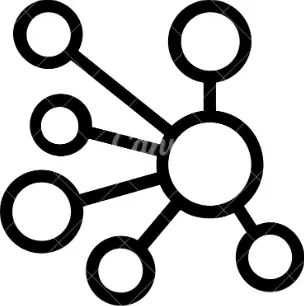
Which network topology connects devices to a central hub, similar to spokes on a bicycle wheel?
Star Topology
Mesh Topology
Ring Topology
Bus Topology
What is a key advantage of mesh topology in network design?
Simplifies management
Creates redundancy by connecting devices to each other
Forms a closed-loop structure
Reduces the need for security

When a network message arrives at a server, what does the port number help determine?
Which process should receive the message
The physical location of the server
The type of cable used for the connection
The operating system of the server

Port numbers are important for network communication between devices because:
They ensure messages are delivered to the correct process on a server
They provide power to network devices
They store data permanently
They control the speed of the network
Which of the following is an example of a well-known port?
Port 8080
Port 49152
Port 80
Port 50000
Suppose you are configuring a network application that requires a port not commonly used by standard services. Which port range would you most likely select from?
0 to 1023
1024 to 49151
49152 to 65535
80 to 443
What is the primary purpose of security protocols?
To ensure the secure transmission of data over a network
To increase the speed of data transfer
To reduce the cost of network hardware
To improve the visual appearance of websites
Compare the security focus of SSL/TLS and IPsec. Which layer does each protocol primarily secure, and what is the significance of this difference?
SSL/TLS secures the application layer, IPsec secures the IP layer; this means SSL/TLS is used for web traffic, while IPsec is used for network-level security.
Both secure the same layer; there is no significant difference.
SSL/TLS secures the physical layer, IPsec secures the transport layer; this means SSL/TLS is faster.
SSL/TLS secures the IP layer, IPsec secures the application layer; this means IPsec is used for web traffic.
A company wants to allow its employees to securely access internal resources from remote locations over the internet. Which technology should they implement?
VPN (Virtual Private Network) Protocols
Telnet
DNS (Domain Name System)
POP3 (Post Office Protocol 3)
Which layer in the OSI model defines the format of data on the network?
Data Link Layer
Network Layer
Transport Layer
Physical Layer

Which protocol is commonly used at the Application layer of the TCP/IP model?
HTTP
IP
TCP
Ethernet
Why is it beneficial for each step in the OSI model to have its own purpose, according to the text?
It leads to a successful and efficient result, like a delicious cake
It reduces the number of network devices needed
It increases the speed of internet connections
It eliminates the need for software updates

