
NEW
Font size
 Worksheets
Unit 1 Review- 1
Total questions: 24
Worksheet time: 48mins
Which factor contributed most to the rapid growth of industry in the United States during the late 1800s?
Advances in transportation
Expansion of small farms
Decline in urban populations
What was one effect of technological advancements on the development of industry in the United States?
They slowed down economic growth.
They led to more efficient manufacturing
They eliminated the need for skilled workers.
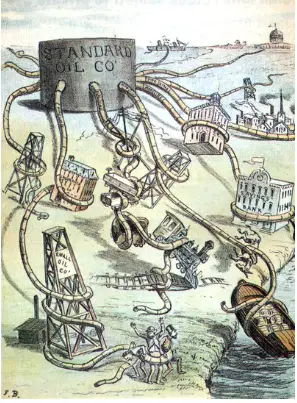
What message is the cartoonist trying to convey about the Standard Oil Company?
It was being controlled by the government
It had too much power over other businesses and institutions
It was helping the economy grow
In the Industrial Era, Big Businesses had more influence over society than the Government.
True
False
Which term describes an economic system where the government does not interfere with private businesses?
Communism
Monopoly
Laissez-Faire
Which two groups in the late 1800s would have most supported government intervention to protect their economic interests?
Farmers and factory workers
Industrialists and bankers
Railroad owners and Native Americans
The period in American history that appeared wealthy and successful on the surface, but was actually filled with political corruption and social problems, is referred to as the...
Golden Years
Gilded Age
Industrial Revolution
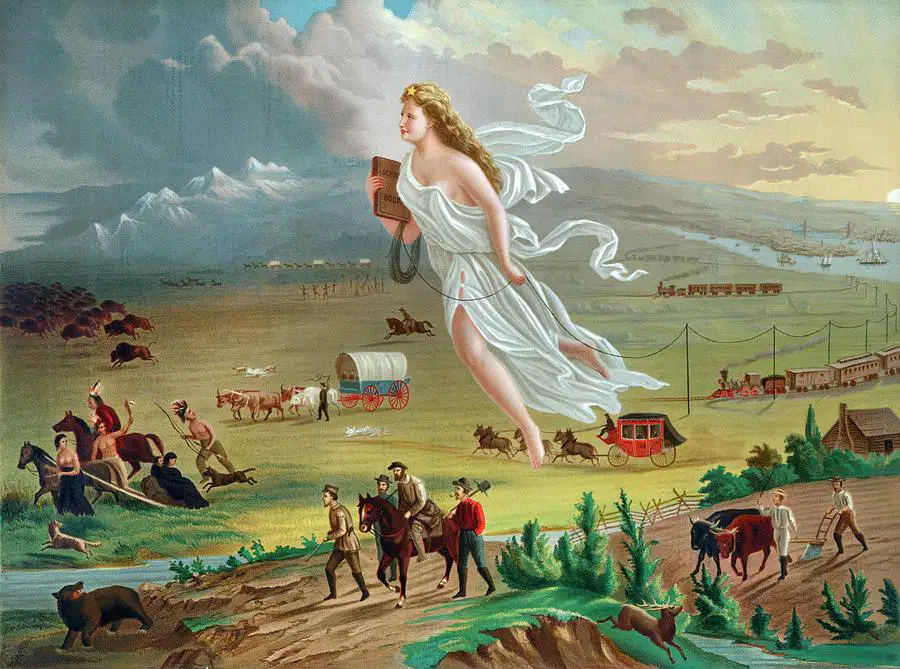
Which of the following was a requirement to receive land under the Homestead Act?
Living on and improving the land for a set number of years.
Paying a large sum of money upfront.
Owning property in another state.
What was one major advantage of the transcontinental railroad for the United States?
It made travel and shipping goods across the country much quicker and less expensive.
It allowed people to build houses on the railroad tracks.
It prevented people from moving to the West.
How did advancements in transportation during the 19th century impact American society, the economy, and government policies?
They promoted social interaction and migration, boosted trade and industry, and encouraged federal involvement in infrastructure.
They led to social isolation, reduced economic activity, and discouraged government participation.
They caused social unrest, economic decline, and political instability.
Why did the U.S. government establish Indian reservations in the 19th century?
To allow Native Americans to govern themselves independently.
To remove Native Americans from lands desired by white settlers.
What was one significant effect of industrialization in the United States between 1865 and 1900?
The immediate improvement of working conditions for all laborers.
A rapid increase in urban populations due to job opportunities in factories.
The widespread adoption of renewable energy sources.
What was a major reason many immigrants came to the United States between 1880 and 1920?
Opportunities for work and religious freedom
Compulsory military training
Lack of available land
How did waves of immigration influence both the economy and cultural identity of the United States over time?
They led to economic decline and loss of cultural diversity
They resulted in economic prosperity, cultural diversity, and occasional social challenges
They had no impact on the nation's development

Why did the United States government enact the Chinese Exclusion Act in 1882?
To reduce competition for jobs among American workers
To encourage Chinese immigration
To promote cultural exchange with China
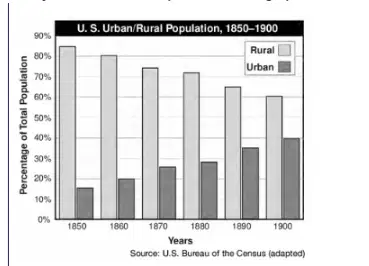
Which development most contributed to the changes in urban and rural populations shown in the graph?
Expansion of agricultural lands
Growth of factories and job opportunities in cities
Decline in immigration to the United States
Many people moved from rural areas to cities in search of...
Employment opportunities and urban amenities
More farmland
Quieter environments
In the late 1800s, most working-class families in American cities...
Struggled to escape poverty
Quickly gained wealth
Moved to rural areas
How did the rise of factories in the 19th century affect daily life for families?
Families spent more time together at home.
Children and adults often worked long hours in factories, changing family routines.
Most families moved to rural areas to avoid industrialization.
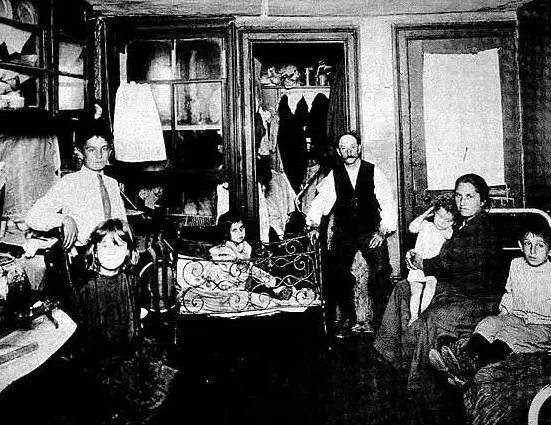
Why might a photographer have chosen to capture this scene?
To show the challenges faced by families living in crowded urban housing.
To highlight the luxurious lifestyle of city residents.
To promote city life as comfortable and spacious.
Workers in the United States were well-protected by labor laws during this period in history.
True
False

