
 Worksheets
History of Health Care Test Review
Total questions: 39
Worksheet time: 13mins
Name
Class
Date
1.
Who was the first person to categorize disease based on signs and symptoms?
a)
Aristotle
b)
Imhotep
c)
Hippocrates
d)
Pharoah
2.
Which ancient civilization was the first to maintain accurate health records?
a)
Ancient Egyptians
b)
Ancient Chinese
c)
Ancient Greeks
d)
Ancient Romans
3.
Which ancient civilization recorded a pharmacopoeia?
a)
Ancient Egyptians
b)
Ancient Chinese
c)
Ancient Greeks
d)
Ancient Romans
4.
Which ancient civilization was the first to establish wastewater practices?
a)
Ancient Egyptians
b)
Ancient Chinese
c)
Ancient Greeks
d)
Ancient Romans
5.
Which ancient civilization used therapies such as massage, art therapy, and herbal treatment to help with disease?
a)
Ancient Egyptians
b)
Ancient Chinese
c)
Ancient Greeks
d)
Ancient Romans
6.
What was the practice of boring a hole in the skull to treat insanity and epilepsy, used in primitive times, called?
a)
craniotomy
b)
trepanation
c)
skull piercing
d)
skullectomy
7.
Who developed the culture plate method?
a)
Robert Koch
b)
Louis Pasteur
c)
Francis Clarke
d)
Joseph Lister
8.
Who started using disinfectants and antiseptics during surgery to prevent infection in 1865?
a)
Gregory Mendel
b)
Wilhelm Roentgen
c)
Joseph Lister
d)
Paul Ehrlich
9.
True or False: Suturing of the body began to allow for a better understanding of anatomy and physiology.
a)
True
b)
False
10.
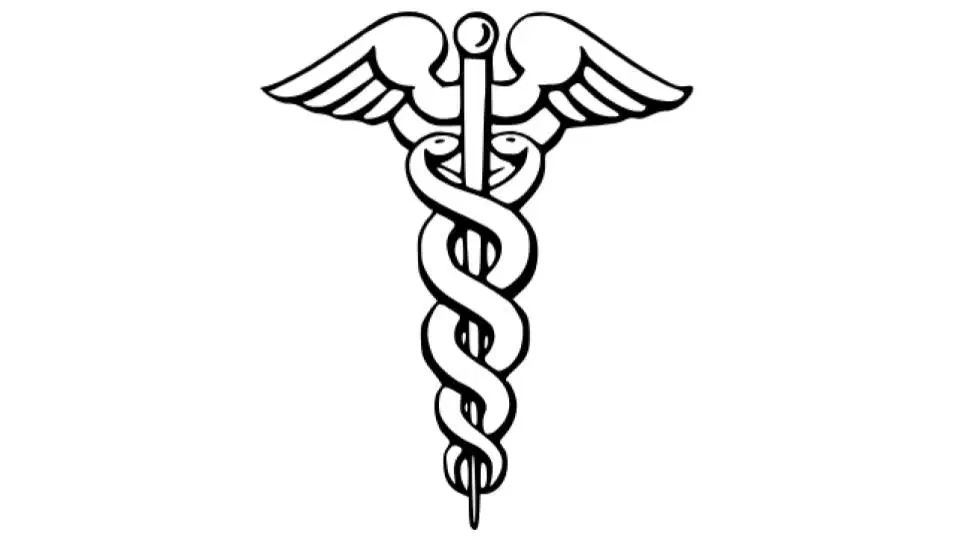
What is the image called?
a)
Asclepius
b)
Caduceus
11.
What type of wellness is promoted by showing concern, fairness, affection, tolerance, and respect for others?
a)
Physical wellness
b)
Emotional wellness
c)
Social wellness
d)
Mental and Intellectual wellness
e)
Spiritual wellness
12.
The polio vaccine was developed in 1952 by _________?
a)
Jonas Salk
b)
Francis Crick
c)
Clara Barton
d)
Sir Alexander Fleming
13.
A vaccination for smallpox was developed in 1796 by _________.
a)
Francis Crick
b)
Christian Barnard
c)
Edward Jenner
d)
Hippocrates
14.
Who were the first people to use medical gauze?
a)
Ancient Egyptians
b)
Ancient Chinese
c)
Ancient Greeks
d)
Ancient Romans
15.
Who's principles for sanitation helped control the spread of disease and provided ideas on how to prevent disease?
a)
Benjamin Carson
b)
Robert Jarvick
c)
Anton van Leeuwenhoek
d)
Louis Pasteur
16.
The first health insurance plans were developed during which century?
a)
17th
b)
19th
c)
20th
d)
21st
17.
What type of wellness is promoted by promoted by being creative, logical curious, and open-minded?
a)
Physical wellness
b)
Emotional wellness
c)
Social wellness
d)
Mental and Intellectual wellness
e)
Spiritual wellness
18.
Obtaining continual learning and using common sense are examples of ways to promote ________.
a)
Physical wellness
b)
Emotional wellness
c)
Social wellness
d)
Mental and Intellectual wellness
e)
Spiritual wellness
19.
What emphasis was placed on healthcare in the Dark Ages?
a)
cancer research
b)
dissection of bodies to learn more
c)
making the grass blue
d)
"saving the soul"
20.
During the Middle Ages, this disease led to the death of an estimated 75% of the population of Europe and Asia
a)
bubonic plaque
b)
smallpox
c)
swine flu
d)
tuberculosis
21.
What is an untrained person who practices false medicine?
a)
Monk
b)
Quack
c)
Spirt Eraser
d)
Priest
22.
What are homes for men following religious standards?
a)
hospitals
b)
monasteries
c)
churches
d)
temples
23.
The “rebirth of the science of medicine” occurred during which time period?
a)
Dark Ages
b)
Middle Ages
c)
Renaissance
d)
Primitive Times
24.
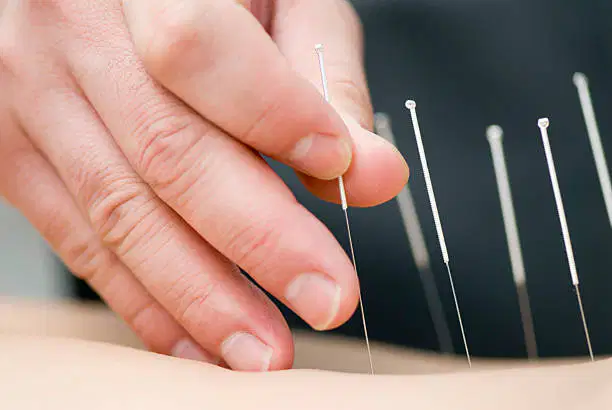
What type of CAM is represented in the image?
a)
Acupuncture
b)
Biofeedback
c)
Hypnotherapy
d)
Reiki
25.
True or False: In the Middle Ages, Arabs began requiring that physicians pass examinations and obtain licenses.
a)
True
b)
False
26.
True or False Because viruses are prone to mutation and exchanging genetic information, the creation of a new lethal virus can occur at any time.
a)
True
b)
False
27.
True or False: Gabriel Fahrenheit created the first mercury thermometer in 1714.
a)
True
b)
False
28.
True of False Formal training of nurses was started in the 19th century.
a)
True
b)
False
29.
Tre or False Clara Barton was the "founder of modern nursing".
a)
True
b)
False
30.
True or False: A medication called morphine that is used today to treat pain is made from the marigold plant.
a)
True
b)
False
31.
True or False: Telemedicine allows for a surgeon using a computer to guide a remote-controlled, robotic arm to perform surgery on a patient many miles away?
a)
True
b)
False
32.
True or False: The Romans were the first to require physicians to pass examinations and obtain licenses.
a)
True
b)
False
33.
True or False: Rene Laennec invented the first microscope and it was made of wood.
a)
True
b)
False
34.
True or False: Michelangelo and Leonardo da Vinci used dissection in order to draw the human body more realistically.
a)
True
b)
False
35.
True or False: The first prescriptions were written on papyrus.
a)
True
b)
False
36.
True or False: The Ancient Egyptians were the first to believe that illness was a result of natural causes and that diet and cleanliness could prevent disease.
a)
True
b)
False
37.
True or False: The printing press made it possible for information to be shared more easily and rapidly.
a)
True
b)
False
38.
True or False: Diagnostic related groups (DRGs) are one way Congress is trying to control costs for government insurance plans such as Medicare and Medicaid.
a)
True
b)
False
39.
True or False: There are medicinal herbs that were used in primitive times that are still used in healthcare today?
a)
True
b)
False
100 %

